600+ Types of Flowers A To Z (With Names and Pictures)
Types Of Flowers By Names (A-Z) Types Of Flowers By Color Types Of Flowers By Season Types Of Flowers By Blooming Time 600+ Types of Flowers No. Flower Name No.…

Tacca chantrieri, a perennial herb, is also known as Konjac Potato, Tiger Whiskers, Tiger Flower, Mountain Rhubarb, Big Water Seven, Grape Potato, and Large Leaf Chicken Head.
It is found in Vietnam, Laos, Cambodia, Thailand, Singapore, Malaysia, China, and other places, primarily growing in humid locations near water, under forests, and in valleys at an altitude of 170-1300 meters.
The Tacca chantrieri has a stout rhizome that is almost cylindrical; its leaves are long oval or oblong-elliptical, 20-60 cm long and 7-24 cm wide; it has a long inflorescence; four bracts, dark purple, with two outer ones being ovate-lanceolate; it blooms and bears fruit from April to November.
The shape and color of Tacca chantrieri resemble a black butterfly with its wings spread, adding to its aesthetic appeal.
In addition to its beauty, the rhizome of Tacca chantrieri has medicinal properties such as clearing heat, detoxifying, reducing inflammation, and relieving pain, making it a valuable plant for both ornamental and medicinal purposes.
Due to its medicinal and ornamental value, overharvesting and indiscriminate digging have caused this species to become endangered.

Arrowroot is primarily grown in the tropical to subtropical southern edge of China, thriving in areas with an average annual temperature of 16-24℃, and extreme temperatures ranging from -6 to 5℃.
It requires annual precipitation of 1200-2347 mm, with 145-500 mm falling in the dry season (November to April), and a relative humidity of over 80%.
It flourishes in the understory of tropical rainforests, by watersides, and damp valleys at altitudes of 170-1350 meters. In Xishuangbanna, China, it is commonly found in the humid understory of tropical or subtropical rainforests at altitudes of 500-700 meters.
As a shade-loving plant, arrowroot can grow, flower, and bear fruit under 70-90% shade. It prefers warm and humid conditions but can also survive through long tropical dry seasons. Its growth is rapid in hot and humid conditions, and slow under temperatures below 15℃ and in drought.
It is also found in Vietnam, Laos, Cambodia, Thailand, Singapore, Malaysia, and other areas of China.
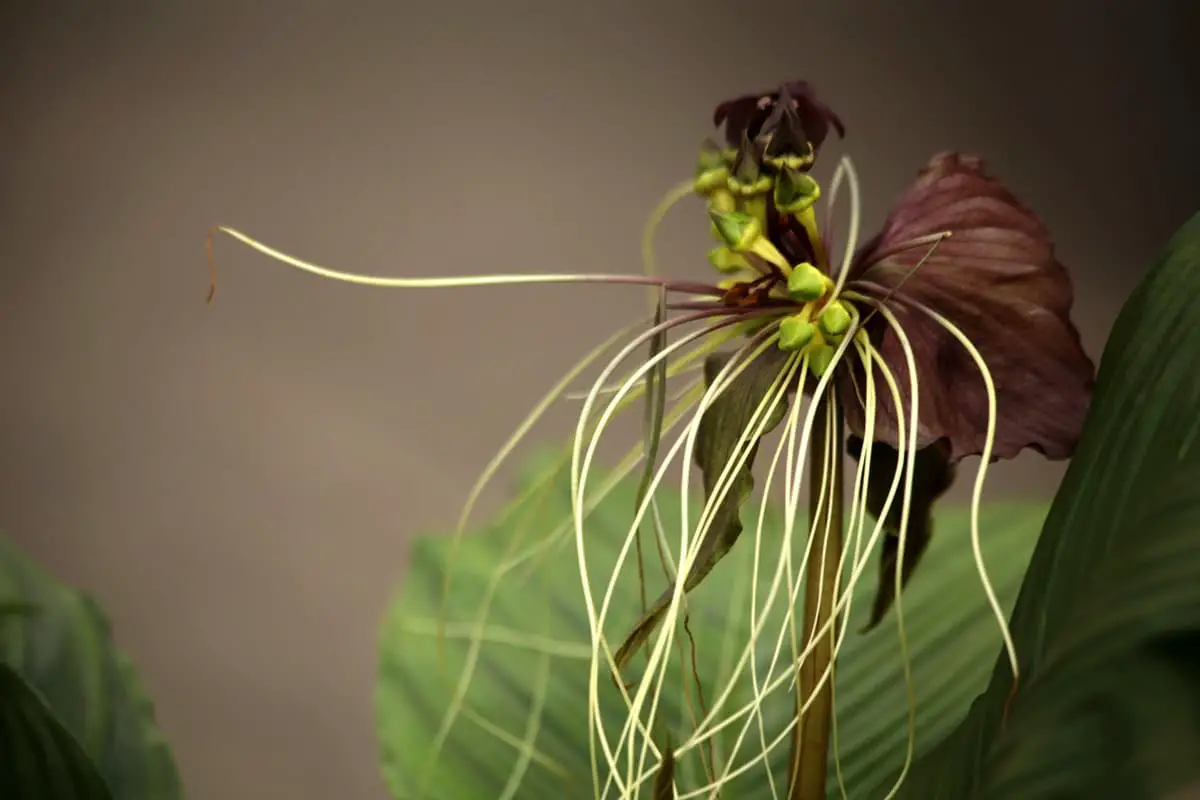
Arrowroot is a perennial herb with a thick, almost cylindrical rhizome. Its leaves are oblong to elliptical, 20-50(-60) cm long and 7-1(-24) cm wide, with a short, pointed tip and a wedge-shaped or round-wedge base, slightly unequal on either side, either hairless or covered with fine hairs on the back.
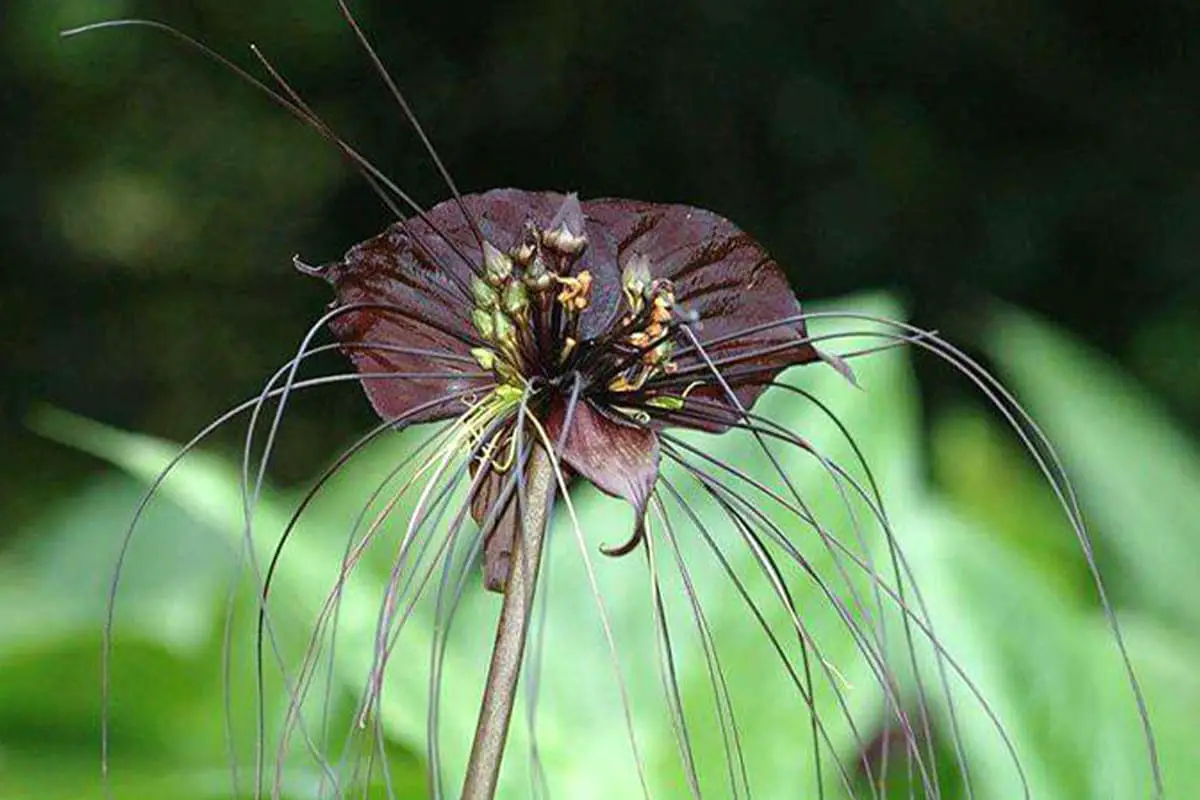
The leaf stalk is 10-30 cm long with a sheath at the base.The flower stem is quite long with 4 dark purple bracts, the outer two being ovate-lanceolate, 3-4(-5) cm long and 1-2 cm wide, tapering at the tip, and the inner two being broad-ovate, 2.5-4(-7) cm long and 2.5-3(-6.5) cm wide.
The small bracts are linear and approximately 10 cm long. The umbel inflorescence bears 5-7(-18) flowers. The tepals are purple-brown with the outer ones being lanceolate, about 1 cm long and 5 mm wide, and the inner ones wider, with small tips.
There are 6 stamens with the filaments forming a pouch at the tip. The style forms an umbrella shape, 3-lobed, with each lobe having two shallow lobes.
The berry is fleshy, elliptical, 6-angled, purple-brown, about 3 cm long with persistent tepals at the tip. The seeds are kidney-shaped, striped, and about 3 mm long. The flowering and fruiting period is from April to November.
Once the seedlings have 4-5 leaves, they can be transplanted with soil to a well-drained, fertile garden, watered and shaded. In tropical areas, arrowroot can be planted all year round, with a planting density of about 37,500 plants per hectare.
The planting substrate should be loose and breathable, ideally planted in ridges, watered thoroughly after planting, and the substrate kept moist. Fertilizer can be applied 15 days after transplantation.
Since the flowering and fruiting period is long, organic fertilizer should be applied in April, followed by a urea water fertilizer in May, July, and September, a revival fertilizer in June and August, and an organic fertilizer in October combined with soil loosening.
During the dry winter season, regular watering should be maintained to keep the substrate moist.
Seeds: Mature seeds of Arrowroot are used as the material to cultivate sterile seedlings. Then, young leaves and leaf stalks are used for test tube propagation.
The suitable culture mediums for each stage have been determined through experiments, which are MS+6-BA1 mg/L+NAA0.1 mg/L for seed germination, MS+6-BA1 mg/L+2,4-D1.5 mg/L+KT0.2 mg/L for inducing callus tissue, MS+6-BA0.5 mg/L+NAA0.5 mg/L for inducing cluster bud, and 1/2MS+NAA0.5 mg/L for root culture.
Flower organs: Different parts of the Arrowroot flower organs are used as explants. Through orthogonal experimental analysis, different factors affecting the induction, proliferation, differentiation, rooting, and survival rate of the transplanted tissue cultured seedlings of Arrowroot flower organs have been studied.
The results show that the stamen is the ideal part for inducing callus tissue among the flower organs. The best culture medium is MS+0.5 mg/L 6-BA+0.2 mg/L KT+2 mg/L 2,4-D. The suitable culture medium for callus tissue differentiation is MS+2-3 mg/L 6-BA, and the appropriate culture medium for root culture is MS+0.3 mg/L NAA.
The most suitable substrate for transplanting tissue-cultured seedlings is a 1:1 ratio of loam and fine sand.
Shoot tip: The study on rapid propagation with the shoot tip of Arrowroot as the explant shows that MS+6-BA1 mg/L+NAA0.5 mg/L, MS+6-BA0.4 mg/L+NAA0.05 mg/L, and 1/2MS+NAA0.5 mg/L+0.2% activated carbon are the suitable culture mediums for bud induction, proliferation, and root culture, respectively.
After seedling hardening, the seedlings are transplanted to a mixed substrate of humus soil: perlite = 2:1, and the survival rate reaches 95% after 30 days.
Arrowroot can also be propagated by seeds, i.e., mature seeds are harvested, the pulp is washed off, and the seeds are directly sowed on the seedbed for seedling cultivation. The seedbed substrate is sand: humus soil = 1:1, and it is sterilized.
The seedbed is kept warm and humid with a plastic greenhouse, and the shading rate is 50%. Generally, the seeds start to sprout 15 days after sowing, and the germination rate can reach 90% after 45 days.
The optimal temperature for seed germination is 25-30℃, and the soil moisture content is 60-70%. Seeds cannot germinate in dark conditions; the intensity and duration of illumination have no significant effect on seed germination.
There is no significant effect on the germination rate when the illumination duration is 14 hours daily, within the temperature range of 15-35℃, but the germination speed varies significantly at different temperatures.
There is no significant difference in the germination rate due to different seed moisture content. When the seeds are stored at 4℃ for a year, the germination rate does not decrease.
When stored at -18℃ for half a year, the germination rate does not significantly decrease, but if stored for more than half a year, the decrease is significant.
Arrowroot seeds are photoblastic seeds, and their germination requires a narrow temperature range and sufficient soil moisture. The seeds’ germination is better when they are stored dry at room temperature than when stored at room temperature under regular conditions.
High temperature and high humidity, as well as low temperature and high humidity, cause the germination rate to decrease rapidly. Arrowroot seeds are resistant to dehydration, low temperature, and storage.
They can be stored for a long period using conventional seed bank storage techniques. The effects of soaking temperature, soaking time, and light conditions on the germination rate of Arrowroot seeds stored at 4℃ for a year were studied.
The results show that soaking the seeds in 60℃ water for 24 hours or in 70℃ water for 8 hours are the best treatments, with germination rates of 73% and 72% respectively.
The best treatments for increasing the germination rate of fresh seeds are soaking in 60℃ water for 24 hours, 50℃ water for 48 hours, and 70℃ water for 24 hours, with germination rates of 73%, 69%, and 69% respectively.
The germination rate of untreated fresh seeds is low, only 3%, but the germination rate of seeds stored for one year can increase to 40%. Seeds that have not been treated begin to germinate after about 40 days of sowing, germinate more after about 60 days, and lose their germination ability after 90 days.
Hot water treatment can break the dormancy of fresh seeds, thus improving the germination rate and uniformity of germination.
The highest germination rate is under the condition of covering with thin soil, with 75% for stored seeds and 68% for fresh seeds. Too strong or too dark germination conditions cannot make the seeds germinate well.
Arrowroot is not seriously affected by pests, but snails and slugs may nibble on the stems and leaves. An insecticide diluted to 800-1000 times its strength can prevent this. In cool, dry seasons, the plant is prone to brown spot disease, which can be effectively prevented with fungicides.
Medicinal: The bitter, cooling rhizomes of the arrowroot plant have therapeutic properties, such as detoxification, inflammation reduction, and pain relief. They are used to treat cuts, stomach and duodenal ulcers, hepatitis, high blood pressure, stomach pain, burns, and sores. The entire plant is toxic, so caution is advised.
Decorative: With its moderate height, the arrowroot plant makes a suitable choice for indoor decoration or courtyard planting.
Research: The arrowroot is an important subject in the study of the evolution of the Amorphophallus plant family.

Peggie was once a high school mathematics teacher, but she set aside her chalkboard and textbooks to follow her lifelong passion for flowers. After years of dedication and learning, she not only established a thriving flower shop but also founded this blog, “Flowers Library”. If you have any questions or wish to learn more about flowers, feel free to contact Peggie.
 English
  العربية
  Bahasa Indonesia
  Deutsch
  Français
  Italiano
  Nederlands
  Português
  Русский
  日本語
日本語