Nymphaea ‘Pink Peony’: A Stunning Aquatic Hybrid
The Nymphaea ‘Pink Peony’ is a perennial aquatic herbaceous plant, a horticultural hybrid bred in the United States by Kirk Strawn in 1993. It belongs to the water lily family.…

The Pink Peony Lotus is a perennial aquatic herb, an American horticultural hybrid variety created by Kirk S. in 1993. It belongs to the water lily family and was introduced to China in the 1990s.
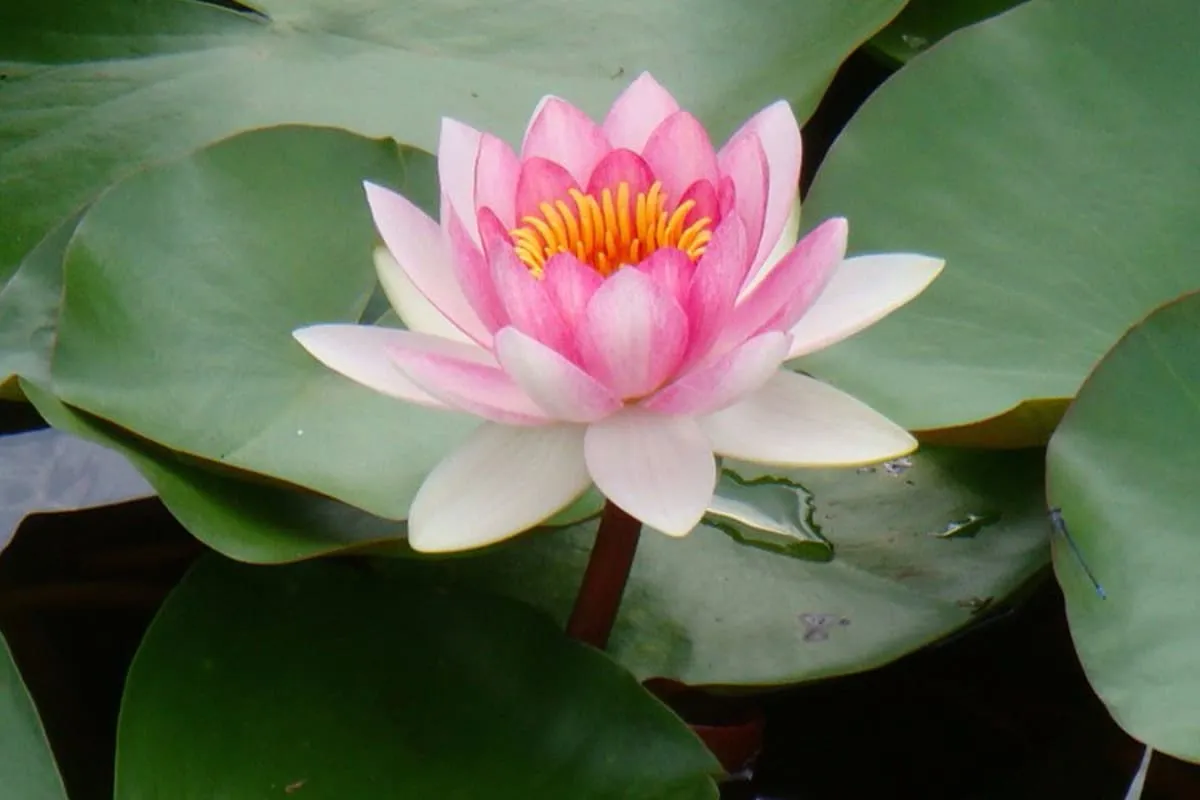
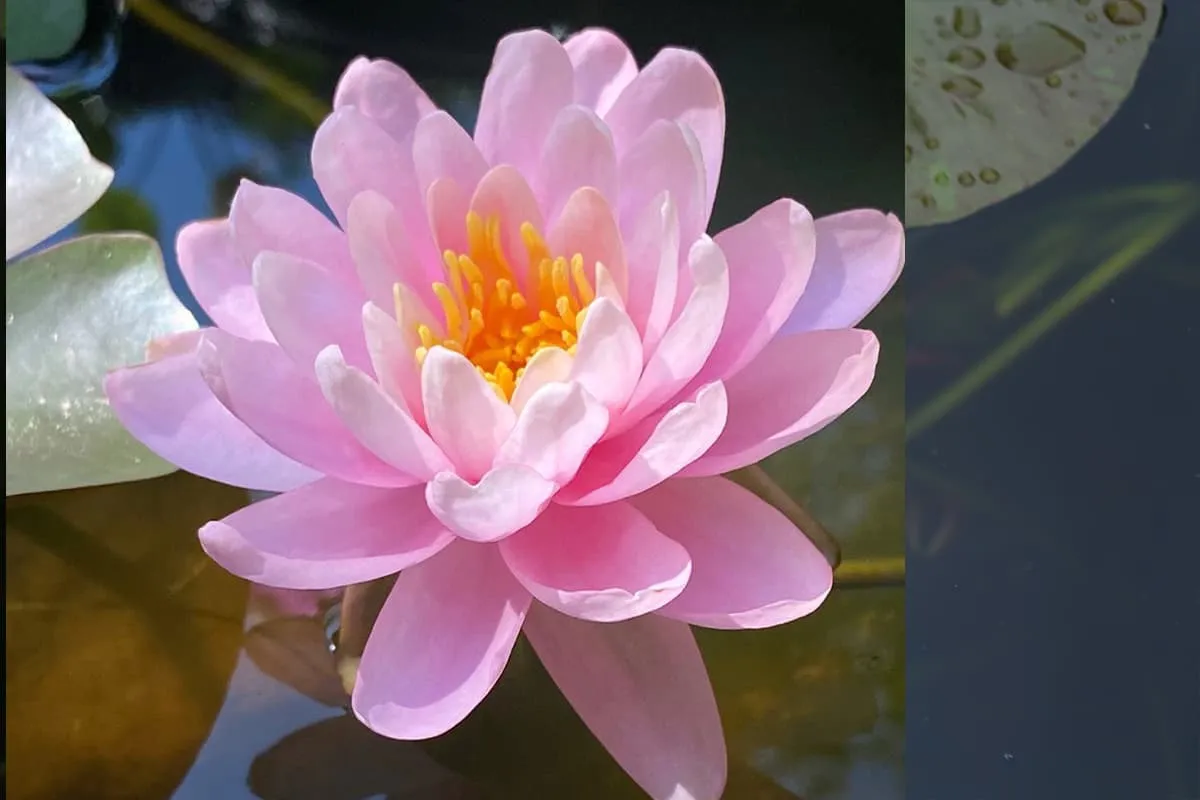
The Pink Peony Lotus is a medium-sized flower, star-shaped and pink, standing erect in the water with a diameter of 12-14 centimeters, floating or above the water surface.
The petals form multiple layers, with carpels ring-shaped and half submerged in the fleshy cup-shaped flower receptacle, partially fused at the base and extending into the style at the top.
The ovules are inverted and hang on the inner wall of the ovary. The fruit is spongy and irregularly split, maturing underwater. The seeds are hard and enveloped in a gelatinous substance.
The flowering period of the Pink Peony Lotus is from May to September. It blooms in the morning and closes in the afternoon or evening. After pollination, it submerges underwater. It is a cold-tolerant water lily variety, cultivated for its ornamental value.
The Pink Peony water lily is a perennial aquatic herb with short and thick rhizomes. Its leaves are papery, round, green on the front, green in the middle and reddish-brown on the edges on the back, with a diameter of 17×16 cm.
The petioles are reddish-brown and hairy. The leaf base is finely divided; mature leaves are green, while young leaves are dark red on both sides. The leaf stem is green and 30-50 cm long. The rhizome is tuberous and erect.
The pink flowers (250.m.p Pk) are star-shaped, standing erect in the water with a diameter of 12-14 cm. The flower buds are green and long peach-shaped. The sepals are green on the back and pink on the front. Both the male and female stamens are yellow.
There are 32-40 petals, spoon-shaped and wider, overlapping in multiple layers, reminiscent of peonies; the flower diameter; there are four sepals. The flower stem is reddish-brown and hairy. There are 70-100 stamens, with a strong ability to bear fruit.
The fruit is spherical, 2-2.5 cm in diameter, wrapped by persistent sepals. The seeds are elliptical, 2-3 mm long, and black.
The flowering period is from May to September. It blooms in the morning and closes in the afternoon or evening. When the flowers bloom, they float on the water surface, and after pollination, they sink underwater.
Water lilies like sunshine and good ventilation. Therefore, tropical and cold-tolerant water lilies, which bloom during the day, close their flowers at night and open them again in the morning.
In a pond with tree shade on the shore, although flowers can bloom, the growth is weaker. They are not strict about soil quality, can grow normally at pH values of 6-8, and prefer a water depth of 25-30 cm, not exceeding 80 cm.
They prefer loam rich in organic matter. They sprout and grow leaves in March-April, bloom continuously from May to August, each flower lasting 2-5 days. After flowering, they bear fruit.
In October-November, the stems and leaves wither. They sprout again in the spring of the following year. They live in ponds and lakes, and some are often cultivated in park ponds.
When planting, choose a flower pot about 50 cm high and with as large a diameter as possible, with no bottom hole. Place evenly mixed nutrient soil in the pot, controlling the soil filling depth at 30-40 cm for water storage.
Bury the propagation body that grows well in the center of the flower pot, with the depth just revealing the top bud above the soil.
After planting, add water but do not fill it, with the best depth being 2-3 cm above the soil layer, which is conducive to warming up and ensuring survival. As the plant grows, gradually increase the water level.
Choose a nutrient bowl without holes, 30 cm high and 40 cm in diameter. The planting method and nutrient soil are the same as for pot planting, with the soil filling height at about 25 cm.
After planting is completed, sink it into the water pool, controlling the water level just to submerge the nutrient bowl, and gradually increase the water level with growth. The advantage of this method is that it is easy to overwinter.
In winter, just raise the water level so that the water lily top bud remains below the ice layer to overwinter. The disadvantage is that you must enter the water pool for management.
Choose a pond with fertile soil, with at least 30 cm of mud at the bottom. The propagation body can be planted directly into the mud.
The water level should be shallow at the beginning, controlled at 2-3 cm, which is conducive to warming up, and the water level should be gradually increased with growth. Depending on the region, deepen the water level in the pond before winter so that the rhizome is below the ice layer for overwintering.
The advantage is that the group effect is better, and the growth volume is large. The disadvantage is that it is difficult to dig in the following year, and it is not easy to prevent and control pests and diseases.
Whether the cold-tolerant water lily can grow normally, the control of the water level is one of the important factors. Cold-tolerant water lilies have different requirements for water levels at different stages of growth, so attention should be paid to the control of water levels.
Because water temperature has a direct impact on the growth and flowering of water lilies, the water level should be as shallow as possible at the beginning of growth, as long as the leaves are not exposed to the air, in order to raise the water temperature as soon as possible, promote root growth, and improve survival rate.
As the leaves grow, gradually raise the water level. When it reaches the peak of growth, the water level reaches its maximum value, which makes the leaf stem grow, the leaf size increase, and helps store nutrients.
The principle of topdressing must be beneficial to the growth of water lilies and not wasted in the water, because the waste of fertilizer will lead to eutrophication of the water body and accelerate the growth of algae and aquatic plants, thereby polluting the water body.
You can use resilient, water-absorbent paper to wrap the fertilizer, and tie a few small holes in the package for the release of fertilizer, which should be applied to a position 15-20 cm away from the center and a depth below 10 cm.
You can also use damp garden soil or clay to mix with the fertilizer at a certain ratio (generally 10:1 with chemical fertilizer and 4:1 with organic fertilizer), knead it into soil balls (it is appropriate to not stick to the hands and not disperse when released), and apply it in a radial pattern at 3 points, 15-20 cm away from the center of the rhizome, 10-15 cm below the rhizome, kneading and applying as you go.
The time for topdressing is generally 15 days before the peak flowering period, and then once every 15 days to guarantee the amount of flowering, but excessive topdressing can increase vegetative growth and increase the number of leaves, affecting the overall effect of the flowering period.
Reasonable topdressing can prolong the group flowering period of cold-tolerant water lilies and increase the growth of propagation bodies in the following year.
Water lilies mainly reproduce through division. Cold-resistant varieties are usually divided 3-4 months before sprouting in early spring, while varieties that are not cold-resistant have high temperature requirements for air and water, so they can only be divided around mid-May.
When dividing, dig out the rhizomes and select the ones with full new buds, cut them into 8-10 cm long sections, each section should carry at least one bud, and then plant them.
The top bud is buried in the surface soil, and the covering soil should be level with the bud of the plant. Plant 5-7 sections per pot. After planting, let them sunbathe a bit before pouring in shallow water, which maintains the water temperature.
However, watering should not be too deep, otherwise it will affect sprouting. When the temperature rises and new buds sprout, the water level can be increased. Place in a well-ventilated, sunny area for maintenance.
The cultivation water depth should be 20-40 cm, and the water level can be increased appropriately in summer. During the high temperature season, it is necessary to keep the pot water clean.
Water lilies can also be propagated by seeding. After the flower blooms, it is transferred to the water. Before the fruit matures, the flower is bagged with gauze so that when the fruit bursts, the seeds fall into the bag.
After the seeds are harvested, they must still be stored in water. If they are dried, they will lose their ability to germinate. Seeds are sown in 3-4 months, and the pot soil should be fertile clay loam. Do not overfill the pot with soil, it should be 5-6 cm from the mouth of the pot.
After sowing the seeds, cover the soil by 1 cm, press down and immerse in water. The water surface should be 3-4 cm above the pot soil. Cover the pot soil with glass and place it in a sunny, warm place to increase the temperature in the pot.
The seeding temperature should be 25-30°C. After about half a month, the seeds will germinate and bloom in the second year.
Implement a 2-3 year rotation in severe disease fields.
Select disease-free lotus roots and spray with 50% carbendazim or 20% methylthiophanate wettable powder, 800 times liquid plus 75% carbendazim wettable powder, 800 times liquid. After spraying, seal the seeds with plastic film for 24 hours, dry and plant.
Deep plowing and harrowing in lotus fields, applying 1500-2250 kg of lime per hectare.
Strengthen fertilizer and water management, apply sufficient mature organic fertilizer, timely and appropriate top dressing, combine organic fertilizer with chemical fertilizer, and nitrogen fertilizer with phosphorus and potassium fertilizer.
According to the different growth stages of lotus root, manage the water layer well, achieve appropriate depth, adjust the temperature and fertilizer with water, and prevent disease caused by high water temperature or long-term deep water irrigation.
Remove diseased plants in time and spray with 50% carbendazim wettable powder, 600 times liquid plus 75% carbendazim wettable powder, 600 times liquid.
During harvesting, remove diseased plants and bury or burn them to reduce the source of bacteria.
At the onset of disease, spray with 50% carbendazim wettable powder, 800 times liquid or 70% methylthiophanate wettable powder, 800 times liquid or 30% basic copper sulfate suspension, 500 times liquid. Spray once every 10 days, 2-3 times in total.
During the growing season, collect diseased plants and bury or burn them.
Apply sufficient mature organic fertilizer, timely and appropriate top dressing, combine organic fertilizer with chemical fertilizer, and nitrogen fertilizer with phosphorus and potassium fertilizer.
Remove diseased plants in time and spray with 50% carbendazim wettable powder, 600 times liquid, 75% carbendazim wettable powder, 600 times liquid, 36% methylthiophanate suspension, 500 times liquid, 50% carbendazim wettable powder, 1500 times liquid or 80% anthrax Fumei wettable powder, 800 times liquid. Spray once every 10 days, 2-3 times in total.
This is a destructive pest. The adult beetles overwinter in vegetation near the pond. In early spring, they lay eggs on the leaf surface. They can produce 2-3 generations in a season.
At this time, you can wash the leaves with water, and the adults and pupae fall into the water and are eaten by fish. Once the larvae cause damage, they can be sprayed to death with a 1200 times liquid of enemy.
This pest infests many soft-leaved aquatic plants. In summer, it infests leaves and flower stems, causing the flowers to change color. Their eggs overwinter on prunus plants, especially on plum and hawthorn trees, and rarely on cherry trees.
Avoid planting prunus plants on a large scale near the water, or wash these host plants with tar water in winter. You can also wash the leaves with a water gun, spray insecticides, etc.
When damaging, you can mix furadan or enemy hundred insects into sawdust, put them in a cloth bag, tie them to the leaf stem, so that the bag floats on the water, and the medicine liquid diffuses with the water waves to kill the pests.
The method of biological control works very well. In a water surface of 1000m2, stocking 5 kg of loach can effectively stop the spread of pests.
Infected leaves can be sprayed with 1000-1200 times liquid of enemy, or 50% Le Fruit Emulsion Oil 2000-2500 times liquid.
In the history of lotus culture in China, the form of pot lotus appeared at the beginning just for private garden viewing. The combination of pot planting and pond planting enhances the ornamental value of pot lotus, which often appears in garden waterscapes and garden sketches.
Water lily bonsai is a new type of bonsai. It is the organic combination of water lily pot planting and water stone bonsai, which not only reflects the rugged and upright of the mountains and rocks, but also shows the delicate and charming.
According to the nutritional composition analysis of water lilies, the results show that water lilies are rich in 17 kinds of amino acids, and water lily protein is a high-quality protein. The analysis results also show that water lilies contain rich VC, flavonoid glycosides, trace element zinc, which have strong lead-discharging functions when used together.
Animal acute toxicity tests, micronucleus tests, and sperm deformity tests all indicate that water lily is a safe and reliable substance without any toxic side effects.
Water lily pollen is rich in nutrients, has the characteristics of completeness, balance, and concentration, and is a natural nutrient source with development and utilization prospects.

Peggie was once a high school mathematics teacher, but she set aside her chalkboard and textbooks to follow her lifelong passion for flowers. After years of dedication and learning, she not only established a thriving flower shop but also founded this blog, “Flowers Library”. If you have any questions or wish to learn more about flowers, feel free to contact Peggie.
 English
  العربية
  Bahasa Indonesia
  Deutsch
  Français
  Italiano
  Nederlands
  Português
  Русский
  日本語
日本語