600+ Types of Flowers A To Z (With Names and Pictures)
Types Of Flowers By Names (A-Z) Types Of Flowers By Color Types Of Flowers By Season Types Of Flowers By Blooming Time 600+ Types of Flowers No. Flower Name No.…

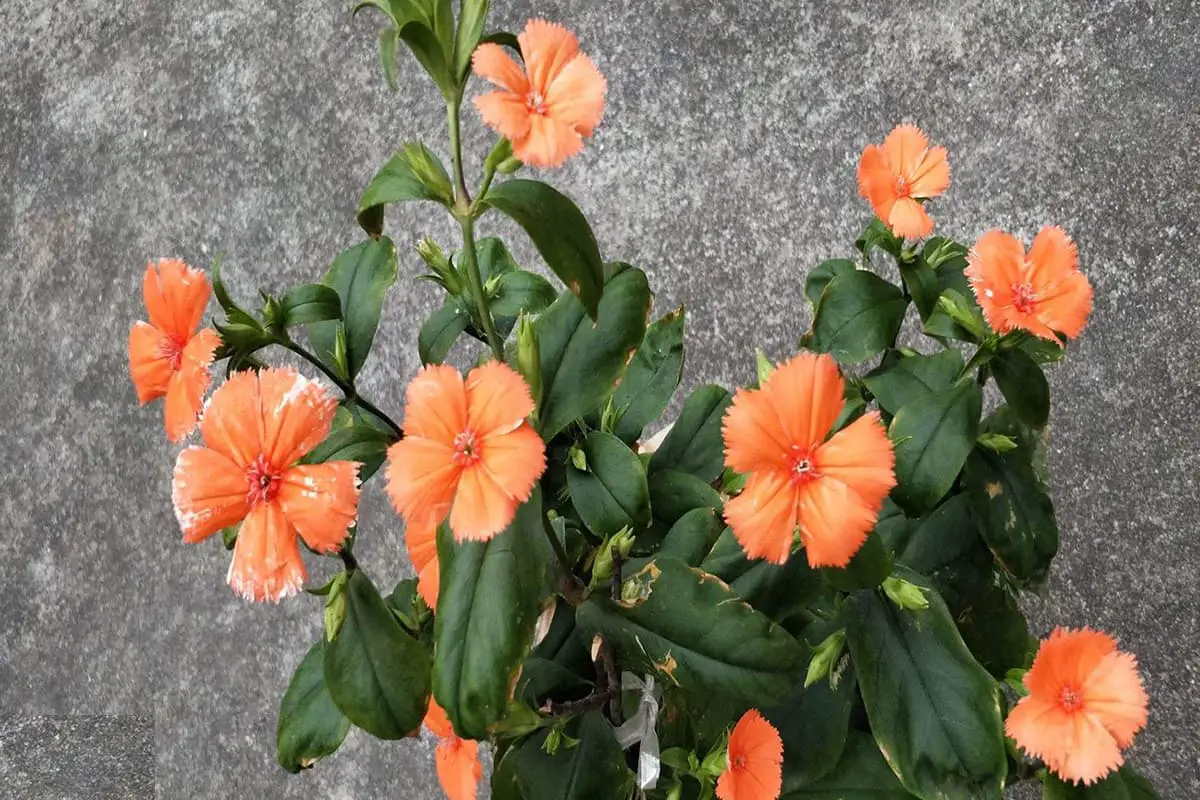
Lychnis coronata, also known as the Ragged Robin or Catchfly, is a vibrant and colorful flower that blooms from the start of summer until autumn. Its striking hues make it an excellent choice for ornamental gardens, flower beds, and landscaping.
It also works well as a potted plant or for use in cut flower arrangements. The Lychnis coronata typically flowers from June to July, and fruits from August to September.
Both the root and the whole plant have medicinal properties, and can be used to treat the common cold, rheumatoid arthritis, and diarrhea, while external application is used for treating shingles.

The plant thrives under sparse forests or in shrublands and grasslands. It prefers areas with plenty of sunlight and slightly dry climates. It grows best in fertile, loose soil rich in organic matter, which is neutral or slightly alkaline sandy soil.
Lychnis coronata is a perennial herb, standing 50-90 cm tall, with a nearly hairless body. The roots are cluster-grown, slender and cylindrical, yellowish-white, and slightly fleshy. The stem is solitary or sparsely clustered and stands upright.
The leaves are ovate-lanceolated or egg-shaped, measuring 8-15 cm in length and 2-5 cm in width, with a wedge-shaped base and gradually pointed tip. The plant is nearly hairless with marginal hairs around the edges of the leaves.
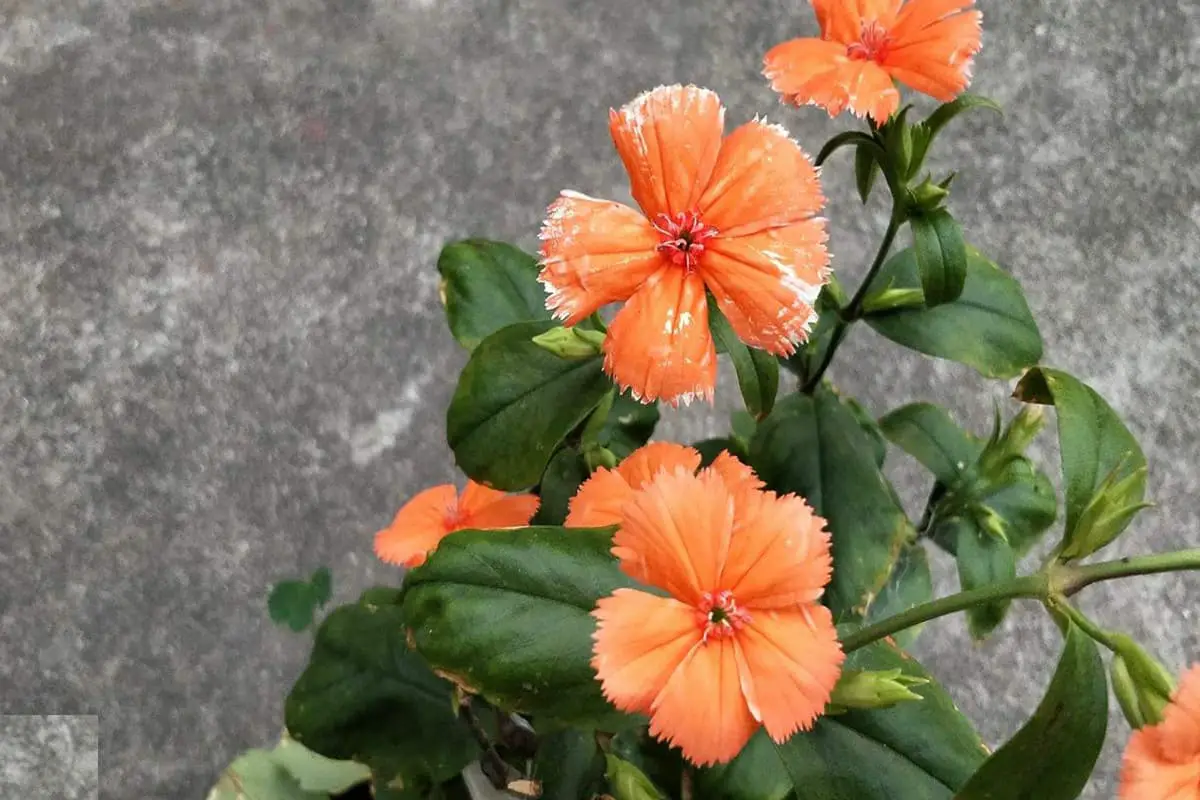
The flowers are usually arranged in several dichotomous umbels, each with a diameter of 4-5 cm and extremely short pedicels covered with sparse soft hairs. The calyx is tubular, 30-35 mm in length and 3.5-5 mm in diameter, with conspicuous longitudinal veins and no hairs.
The petals are orange-red, with a narrow wedge-shaped claw hidden within the calyx. The petals are ovate, measuring 20-25 mm in length with an unevenly toothed edge. The stamens are not protruding and the filaments are hairless.
The capsule fruit is elongated oval, about 20 mm long. Seeds are not observed. The flowering period is from June to July, and the fruiting period is from August to September.
Land Preparation: The Primrose is a shallow-rooted flower, it grows best in slightly elevated, fertile, and well-drained sandy soil, with a pH value of between 6.0 and 6.5.
Prior to planting, apply sufficient base fertilizer, with 8 kilograms of superphosphate and 3 kilograms of potassium sulfate for every 100 square meters, then proceed with deep plowing and bed leveling.
The bed should be 90 cm wide, with a ridge every 20 cm and a height of 10-12 cm. Leave a 60 cm space between beds for walkways.
Planting: When planting, select healthy seedlings and transplant them with their soil clumps. The space between plants should be 20-30 cm. The Primrose should not be planted too deeply, just enough to stabilize the plant.
After planting, water thoroughly, straighten and mound the plants, and keep the soil moist. After 10-15 days, the plants can be acclimated and normal water, fertilizer, temperature, and light management can be initiated.
Fertilizing: The Primrose has a strong and upright stem and is prolific in flowering, hence it requires a large amount of nutrients during the growing season.
Even with sufficient base fertilizer, it’s necessary to apply additional mature organic liquid fertilizer during the seedling stage, with a concentration of 1:6 or 1:8, every two weeks. This promotes robust growth. If in a public park, a 0.2-0.3% potassium dihydrogen phosphate solution can be effectively irrigated.
In the late stage of nutritional growth, apply more phosphorus and potassium fertilizer, and if necessary, apply 2-3 times of quick-acting compound fertilizer to supplement the nutrients required for reproductive growth, promoting bud differentiation in the plant.
For abundant flowering, after the formation of flower buds, a 0.2% potassium dihydrogen phosphate solution can be sprayed on the leaves to promote stronger roots and stems and more beautiful flowers.
Watering: The Primrose is a shallow-rooted flower and is not drought-tolerant, so regular watering is necessary. The water supply should vary depending on the different growth stages of the plant.
During the nutritional growth stage, the water supply should be sufficient. Depending on the local climatic conditions, water thoroughly every 2-3 days. During the bud differentiation stage, control watering, and water thoroughly every 3-4 days.
During the flowering stage, in high temperature and dry conditions, water frequently to keep the soil moist. Normally, just keep the soil loose and moist.
The Primrose is a long-day plant, loves sunlight, does not tolerate shade, and prefers to grow in sun-facing locations. The growing temperature for Primrose is between 15-28°C. Below 12°C, the growth gradually slows down, without budging or flowering.
Below 10°C, growth stops. Above 25°C, the growth speeds up, the stem is slender and weak, and the flowers are also small. Therefore, in summer, apply water spraying to cool down.
Move potted plants to a cool environment with scattered light, where the maximum daytime temperature is 25°C and the night temperature is 15°C. This way, the plant can bloom and grow vigorously.
If you want the plant to be short and stout, you need to do some pruning and pinching. When the plant grows to 15-20 cm high, you can pinch the top, leaving only 5-6 nodes per plant. After the lateral buds grow, keep 12-15 branches per plant and cut off all the rest. At the same time, make sure to provide support to prevent lodging.
To propagate Jian Chun Luo through seeding, the key is to choose the right variety and master the timing of flowering. Typically, you can select robust plants with beautiful and brightly colored flowers from the first batch of flowering plants.
Retain 10-15 flowers per pot, and trim the rest of the flower buds to concentrate nutrients for the growth and development of the fruit. After the seeds are harvested, they can be sown in a greenhouse in cool autumn.
If conditions are limited, the seeds can also be stored for sowing in the warmth of spring next year. For seeding Jian Chun Luo, you can modify old wooden boxes into nurseries. The size of the box should be convenient to move and can be determined according to the number of seeds.
In actual use, a box measuring 45-55 cm in length, 30-35 cm in width, and 20-25 cm in height is appropriate. The soil for seeding can be prepared using three parts plain sand, two parts vegetable garden soil, three parts forest leaf soil, and two parts humus.
These substrates must be fermented and fine-tuned, and can be used once they are sieved into pots. The seeds of Jian Chun Luo can be sown as soon as they are harvested.
After the capsule fruit matures, harvest and dry it in the shade, select full-grain seeds, and soak them in warm water of 30-35℃ before sowing. Constantly stir the seeds that have just been put into the warm water, and continue to soak for 24-48 hours after the water cools, allowing the seed coat to fully soften.
Then, scoop out the seeds, wrap them in a damp towel, and germinate under a constant temperature of 19-20℃ (note, too high temperature will delay germination). Soak the towel in warm water of 20℃ daily.
After a week of germination, sow the swollen seeds in the nursery bed at a row spacing of 1-2 cm. Spray water thoroughly with a fine-hole watering can, cover with a thin layer of sand soil (do not cover too thickly, just enough to cover the seeds), cover with glass, and place in a warm place for care.
The greenhouse temperature should be controlled between 18-20℃. Generally, after 14-15 days, the seeds begin to sprout. Once leaflets appear, move the seedlings to a place with scattered light, uncover the glass, and let the plants receive sunlight to facilitate photosynthesis in the seedlings.
When the seedlings have grown 2-3 true leaves, thin out the seedlings and widen the row spacing to help them grow. When the seedlings have grown 5-6 leaves, they can be transplanted into small flower pots and carefully nurtured to grow.
The division propagation of Jian Chun Luo can be done after the flowers bloom in autumn. Before division, place the potted plant in a sunny location and water thoroughly.
The next day, after the soil has absorbed the water and become loose, lift the whole plant out of the pot with the soil. Gently shake off the attached soil and sandy soil between the roots to expose the entire rootstock.
Divide or break the plant by hand according to its natural growth pattern, with 3-4 roots in one cluster for division. Before planting, apply sulfur powder to the cut of the divided plants for effective disinfection and drying.
When planting, choose a suitable plastic flower pot and use plain sand for cultivation. After planting, water thoroughly and place in a ventilated place for seedling recovery. After 10-15 days, the plants can regain vitality. At this point, move the flower pot to a sunny location for normal management.
Medicinal use: The root or the whole plant is used to treat colds, rheumatoid arthritis, or diarrhea. External use can treat herpes zoster.
Ornamental: Jian Chun Luo is a traditional famous flower in China. It blooms in early summer with bright and diverse colors, continuously blooming until autumn. It’s vivid and eye-catching, making it a great flower for garden beautification. It can also be potted or used as a cut flower.

Peggie was once a high school mathematics teacher, but she set aside her chalkboard and textbooks to follow her lifelong passion for flowers. After years of dedication and learning, she not only established a thriving flower shop but also founded this blog, “Flowers Library”. If you have any questions or wish to learn more about flowers, feel free to contact Peggie.
 English
  العربية
  Bahasa Indonesia
  Deutsch
  Français
  Italiano
  Nederlands
  Português
  Русский
  日本語
日本語