600+ Types of Flowers A To Z (With Names and Pictures)
Types Of Flowers By Names (A-Z) Types Of Flowers By Color Types Of Flowers By Season Types Of Flowers By Blooming Time 600+ Types of Flowers No. Flower Name No.…

Marsh Pennywort (Hydrocotyle vulgaris L.), also known as Common Pennywort or Water Pennywort, is a versatile perennial plant belonging to the Apiaceae family. This adaptable species thrives in aquatic or wetland environments, showcasing its remarkable ability to grow in various conditions.
Native to Europe and parts of western Asia, Hydrocotyle vulgaris has been introduced to North America and other regions globally. It was introduced to China in the 1990s, where it has since been cultivated in ecological parks and aquariums.
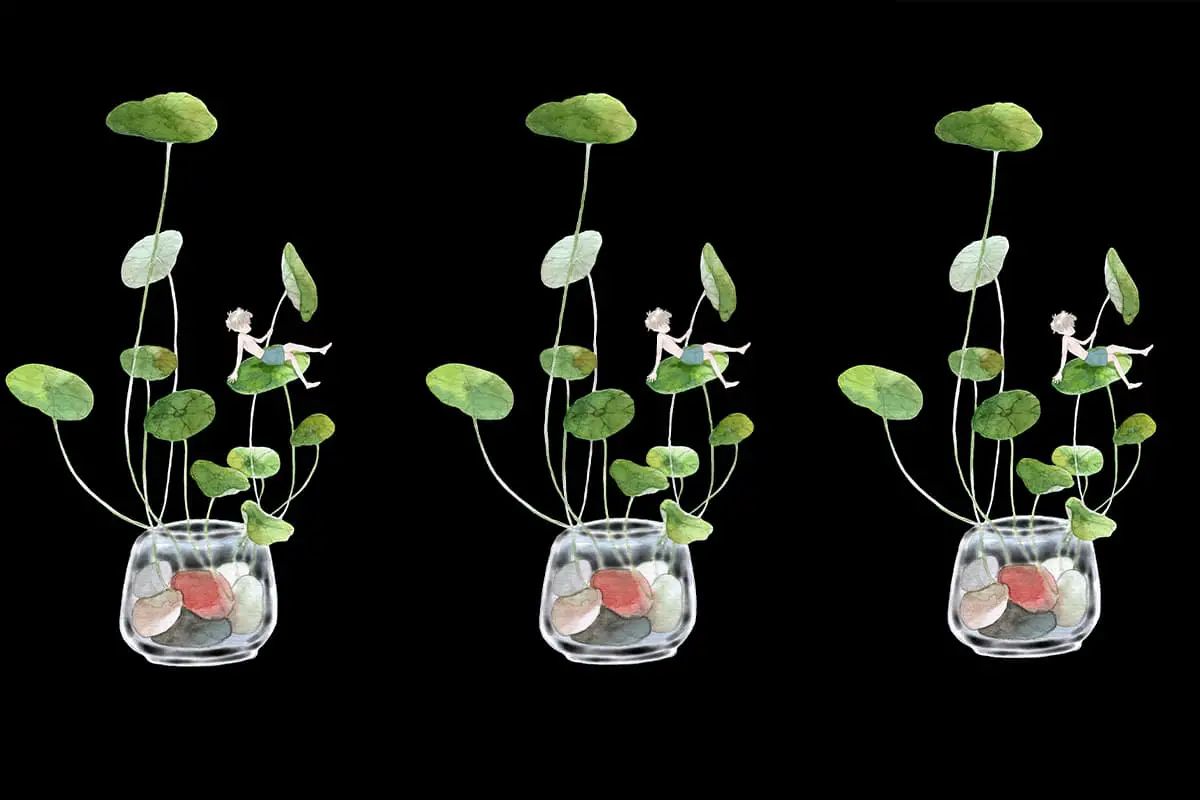
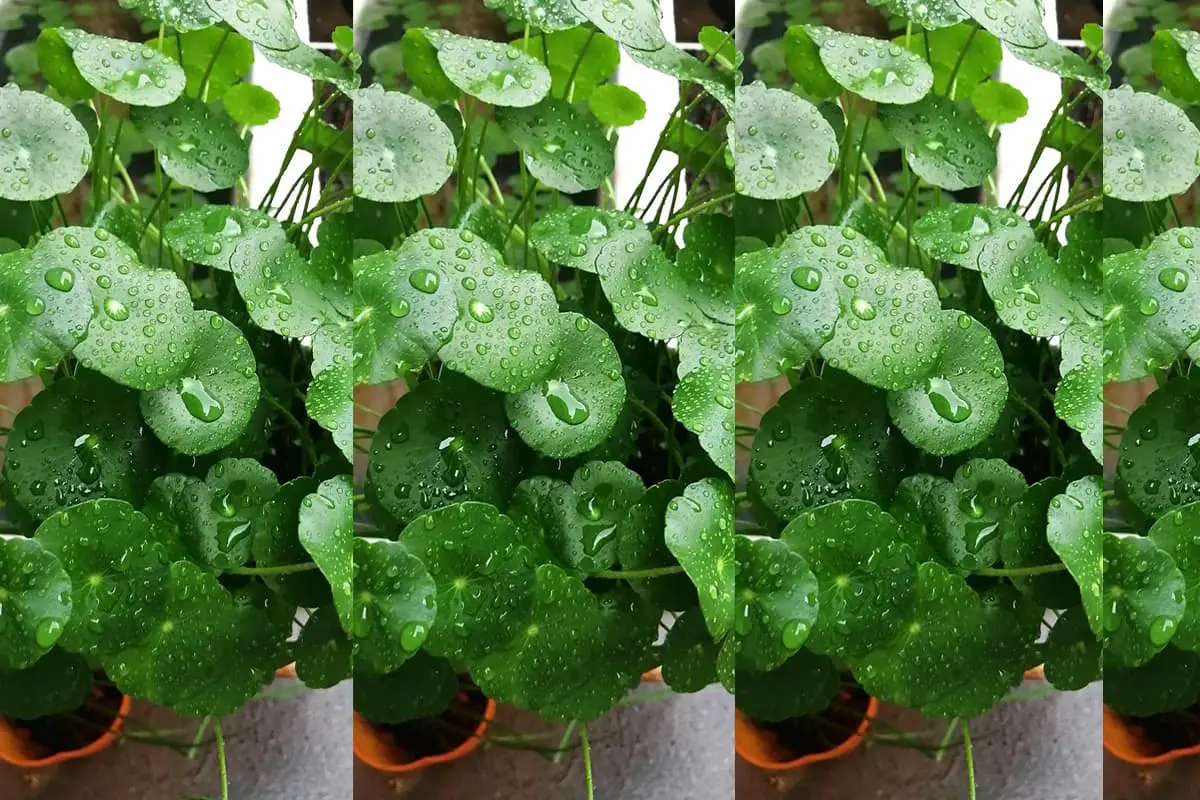
The plant exhibits a creeping growth habit, typically reaching heights of 5-15 cm. Its distinctive features include horizontally running stems that produce roots and leaves at the nodes. The stems are often reddish-brown, particularly near the top. The leaves are alternate, long-stalked, and peltate (shield-shaped), with a characteristic radial venation pattern.
Marsh Pennywort produces small, inconspicuous flowers that are bisexual and arranged in simple umbels. The flowers are typically white or pale greenish-yellow, occasionally with a pinkish tinge. Flowering occurs from June to August, followed by small, flattened fruits.
Hydrocotyle vulgaris is a fascinating member of the Apiaceae family, showcasing unique adaptations for life in aquatic and semi-aquatic environments. Its creeping habit and ability to root at nodes allow it to spread efficiently in suitable habitats.
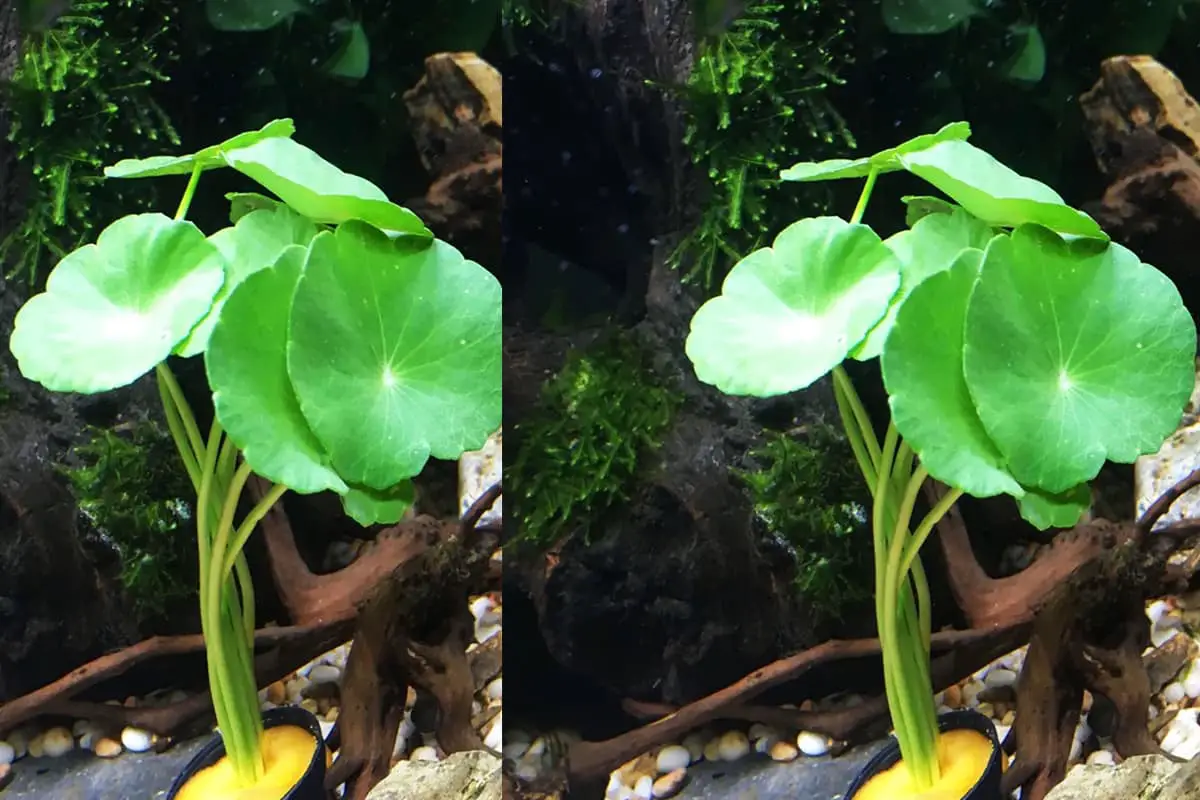
The plant’s most distinctive feature is its round, peltate leaves, which can vary in size depending on growing conditions. These leaves are attached to long petioles that arise directly from the creeping stems. The leaf margins are typically shallowly lobed or crenate.
While often overlooked due to its small size, Marsh Pennywort plays important ecological roles in its native habitats. It provides cover for small aquatic organisms and contributes to the biodiversity of wetland ecosystems.
In cultivation, Hydrocotyle vulgaris is prized for its versatility. It can be grown as an outdoor potted plant in warm climates, used for indoor water features, or as a popular foreground plant in aquascaping. Its ability to thrive in shallow water makes it an excellent choice for pond margins and bog gardens.
Historically, the plant has been used in traditional medicine for its diuretic properties, though modern medical applications are limited and require further research.

Hydrocotyle vulgaris exhibits remarkable phenotypic plasticity, allowing it to adapt to a wide range of habitats. This adaptability is key to its success in various environmental conditions:
Hydrocotyle vulgaris is native to a large part of Europe, extending from Ireland and Portugal in the west to Russia in the east, and from Scandinavia in the north to the Mediterranean region in the south. It’s also native to parts of western Asia.
The plant has been introduced to various regions globally:
It’s important to note that in some introduced areas, Hydrocotyle vulgaris can become invasive due to its rapid growth and adaptability. Responsible cultivation and management are crucial to prevent ecological disruption in non-native habitats.
A perennial, fully aquatic or semi-aquatic herbaceous plant. The plant typically stands at a height of 5-15 centimeters, though it can reach 10-45 centimeters in Hangzhou, China. The plant is glabrous, exhibiting a prostrate growth habit.
The rhizomes are well-developed, often forming an intricate, densely arranged network. These occasionally appear on the soil surface as stolons. Each node is densely covered with 20 to 60 adventitious roots.
Internodes measure 3-10 centimeters in length. Young terrestrial stems often exhibit nodal swelling, forming irregularly shaped, near-spherical bulges with diameters of 0.6-1.8 centimeters. Submerged leaves are opposite, long-petioled, and orbicular, measuring 3-7 centimeters in diameter.
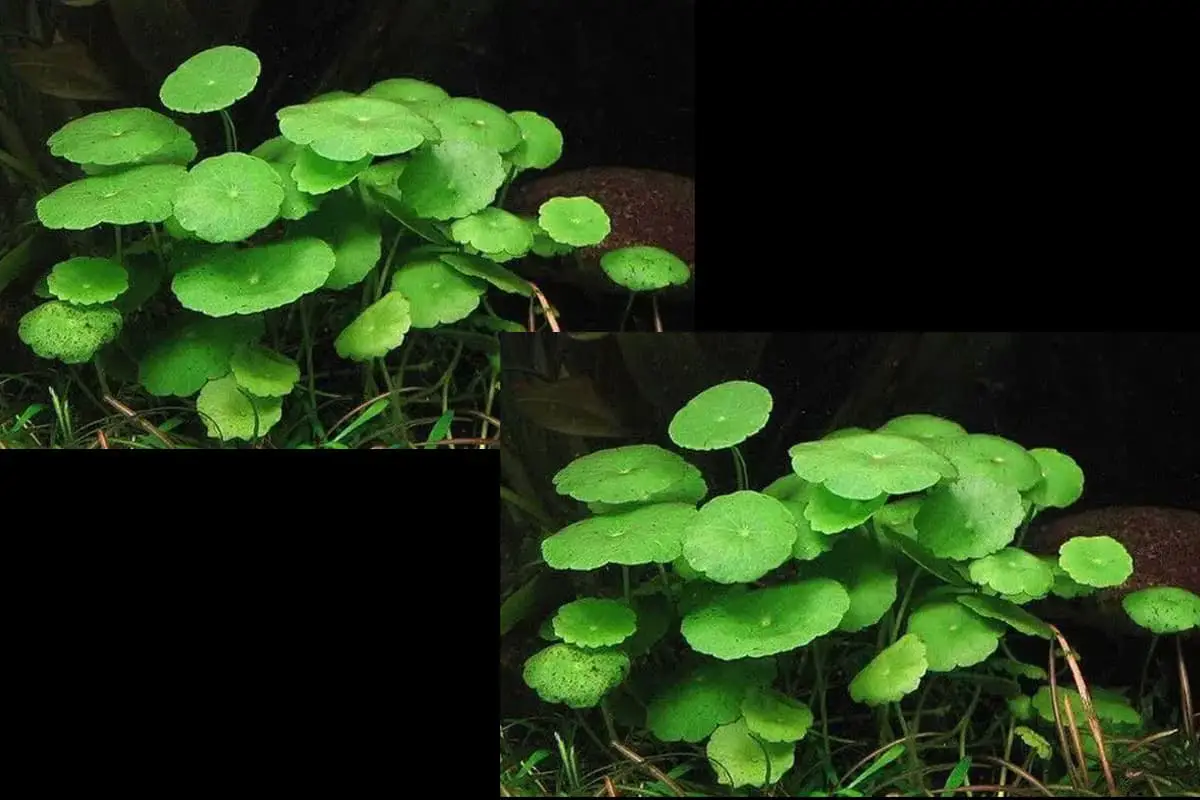
Leaf margins are undulate with rounded serrations. The leaves are glossy and olive green, featuring 13-20 radiate veins. Petioles are slender, lacking leaf sheaths, and stipules are small and membranous.
Flowers are bisexual, small, white or pale yellow-green, densely arranged in umbel-like inflorescences. Each inflorescence comprises 10-50 small flowers on a slender peduncle about 10-35 centimeters long, arising from rhizome nodes. The calyx lacks teeth.
Individual flower pedicels measure 2-6 millimeters long. The flowers have 5 small, white, ovate petals that are forceps-like in bud. There are 5 stamens and 2 pistils; the ovary is inferior and bilocular.
The fruit is a schizocarp, 1-2 millimeters long and 2-4 millimeters wide, flattened-orbicular with flat sides and prominent dorsal and central ridges. Lateral ridges are often hidden in the commissural face. The fruit surface lacks reticulation, and oil tubes are inconspicuous. The endocarp consists of a single layer of thick-walled cells surrounding the seed endosperm.
Flowering occurs from June to August.
The cultivation substrate can be a mixture of leaf mold, river mud, and garden soil in a volume ratio of 0.5:2:2. Planting can commence once seedlings have formed. Medium-sized flower pots without drainage holes are commonly used as containers. For optimal aesthetic results, plant one seedling per pot and water thoroughly after planting. To facilitate seedling hardening, planting is best performed on overcast days.
Hydrocotyle vulgaris is adaptable to various water qualities but thrives in fresh water with low hardness. Salinity should be kept low, and water pH should be maintained between 6.5-7, slightly acidic to neutral.
This species has high nutrient requirements, with poor growth occurring during vigorous growth stages if nutrients are inadequate. It requires 4-6 hours of diffused sunlight daily; alternatively, 8-10 hours of artificial light from special fluorescent lamps can support normal growth.
As a fast-growing perennial, established plants should be repotted at least every two years to prevent weakening.
Propagation of Hydrocotyle vulgaris primarily relies on vegetative methods, although seed propagation is possible. Vegetative propagation often involves rhizome cuttings, with spring and summer being optimal seasons.
For division propagation, large sections of the parent plant are excavated, divided into smaller pieces containing both roots and stems, and replanted. This method can be performed year-round and results in rapid establishment.
Seed propagation is also viable, with moist, fertile sandy loam being the ideal substrate. After sowing, maintain soil moisture; seedlings typically emerge after about a week.
Under proper management, Hydrocotyle vulgaris is relatively disease-resistant and rarely attacked by pests. It demonstrates considerable resistance to some herbivorous species. However, tender submerged leaves may be consumed by fish such as koi or goldfish. Aquatic snails may feed on the leaves, causing chlorophyll loss.
Hydrocotyle vulgaris is widely used in aquatic gardens as an emergent, floating, or submerged plant. It is prized for its broad adaptability, rapid growth, high propagation rate, quick coverage, and vigorous nature.
In wetland landscaping, it’s often used to green waterlines, planted in clusters or patches at water edges. It can be incorporated into rock crevices, used as a foreground plant in aquariums, or employed for potted ornamental and indoor water feature greening.
This species is particularly valuable for detailed wetland waterscape design. In warm climates, it’s suitable for outdoor potting or indoor water feature greening. In aquariums, it’s frequently used as a foreground plant.
Additionally, the whole plant has medicinal properties, notably a diuretic effect.

Peggie was once a high school mathematics teacher, but she set aside her chalkboard and textbooks to follow her lifelong passion for flowers. After years of dedication and learning, she not only established a thriving flower shop but also founded this blog, “Flowers Library”. If you have any questions or wish to learn more about flowers, feel free to contact Peggie.
 English
  العربية
  Bahasa Indonesia
  Deutsch
  Français
  Italiano
  Nederlands
  Português
  Русский
  日本語
日本語