600+ Types of Flowers A To Z (With Names and Pictures)
Types Of Flowers By Names (A-Z) Types Of Flowers By Color Types Of Flowers By Season Types Of Flowers By Blooming Time 600+ Types of Flowers No. Flower Name No.…

The Hydrangea macrophylla, also known as the Eight Immortals Flower, Purple Sun Flower, Seven Variations Flower, Pink Ball Flower, and Foreign Hydrangea, among others, has opposing leaves in an ovate to elongated ovate shape, blunt at the top and round at the base. The lateral veins are not prominent, approximately four pairs; the flowers are white, with a diameter of 2 centimeters.
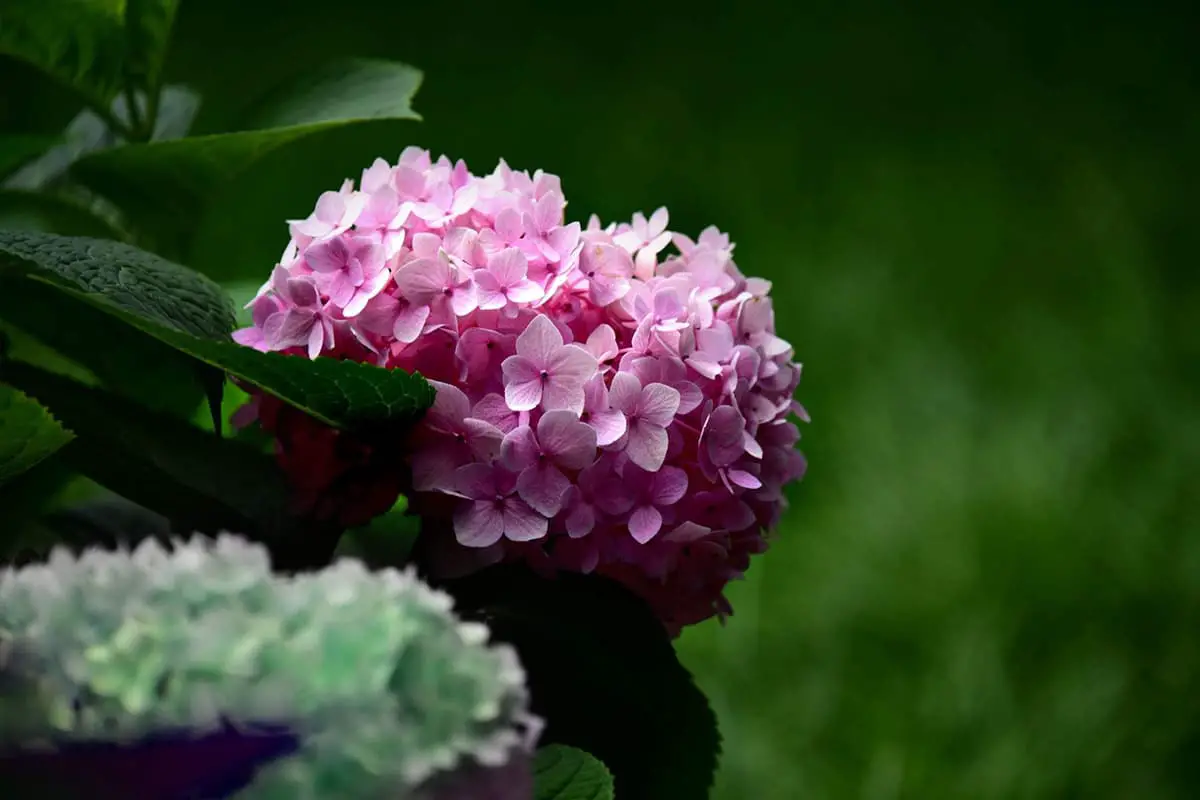
The floral crown is radiate, the corolla tube is short, and the lobes on the outside are hairless, while the inside is filled with papillary protrusions. The auxiliary corolla is star-shaped, with acute outer corners and a raised middle ridge, folded at the edges to form a gap, and the inner corners are acutely upright. It flowers from June to August and bears fruit from July to August.
The Hydrangea is native to China and Japan. It can be used medicinally, cut for bouquets, potted, or grown in open-air gardens. It is a well-known ornamental plant. The whole plant can be used for medicinal purposes, commonly to treat swollen joints, red and swollen eyes, pneumonia, and orchitis.
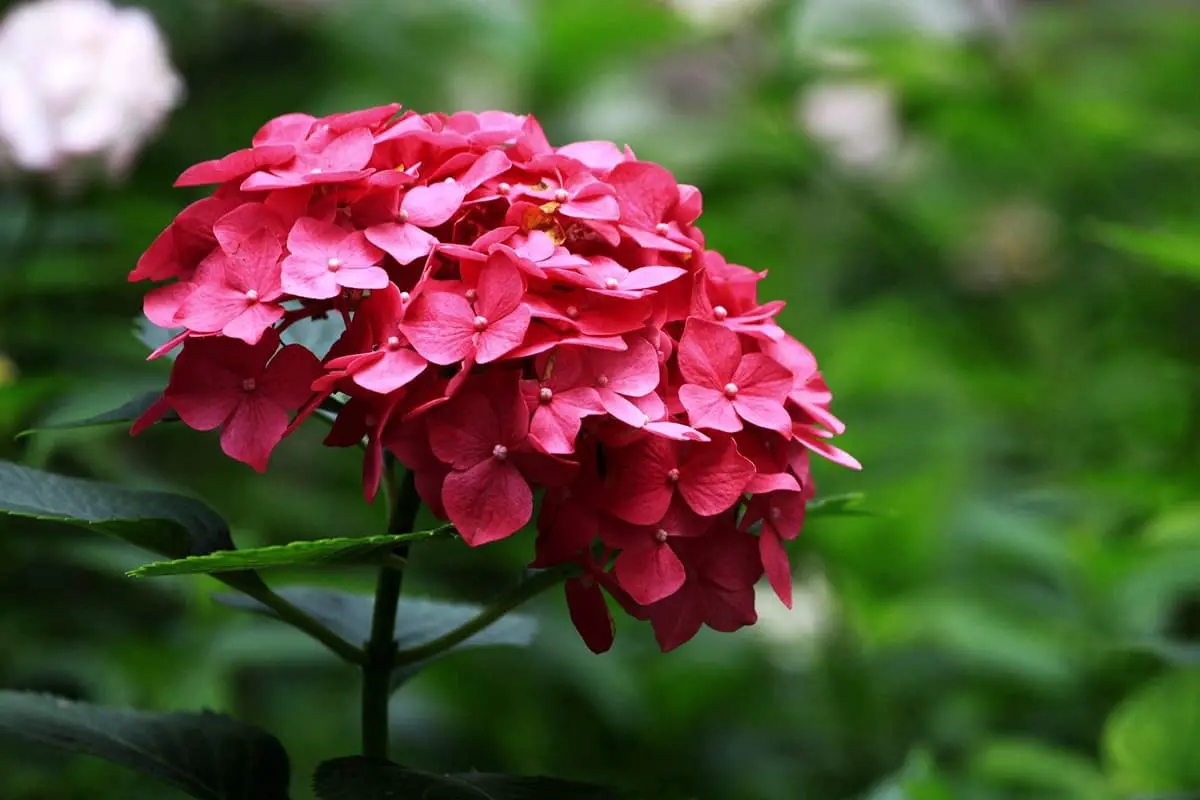
The leaves are opposite, ovate to elongated ovate, 3.5-12 cm long and 3-4.5 cm wide, blunt at the top, and round at the base. The lateral veins are not prominent, approximately four pairs. The umbellate inflorescences are umbel-shaped, axillary, bearing about 30 flowers. The flowers are white, 2 cm in diameter. The corolla is radiate, the tube is short, the lobes on the outside are hairless, and the inside is filled with papillary protrusions.
The auxiliary corolla is star-shaped, with acute outer corners, a raised middle ridge, and edges folded to form a gap, and the inner corners are acutely upright. Each pollen mass has one chamber, elongated, and transparent on the side. The achene is linear, smooth, 7.5-10 cm long; the seed at the top has white silky seed hairs. It flowers from June to August and bears fruit from July to August.
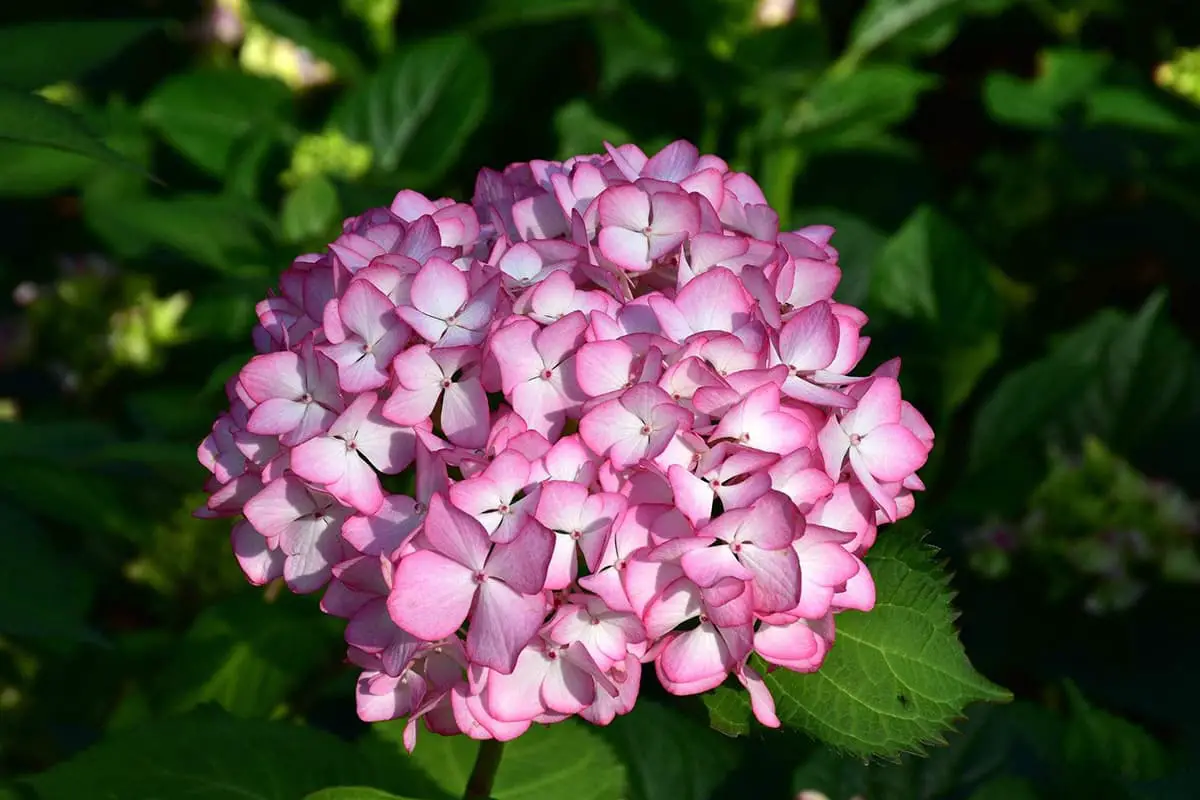
Hydrangeas are subtropical, shade-loving trees that tolerate the cold. They prefer moist, well-drained, and humus-rich loamy soil.
Hydrangeas are native to China and Japan. They thrive in warm, humid, and semi-shaded environments. The optimal growth temperature for hydrangeas is 18-28℃, with the winter temperature not falling below 5℃. Flower bud differentiation requires conditions of 5-7℃ for 6-8 weeks, and a temperature of 20℃ can promote flowering. After flowering, maintaining 16℃ can extend the viewing period. However, high temperatures cause the flowers to fade quickly.
The soil of potted hydrangeas should be kept moist, but not overly watered, especially during the rainy season, where drainage should be ensured to prevent root rot due to flooding. In winter, indoor potted hydrangeas are better off slightly dry. If they are too damp, the leaves are prone to decay.
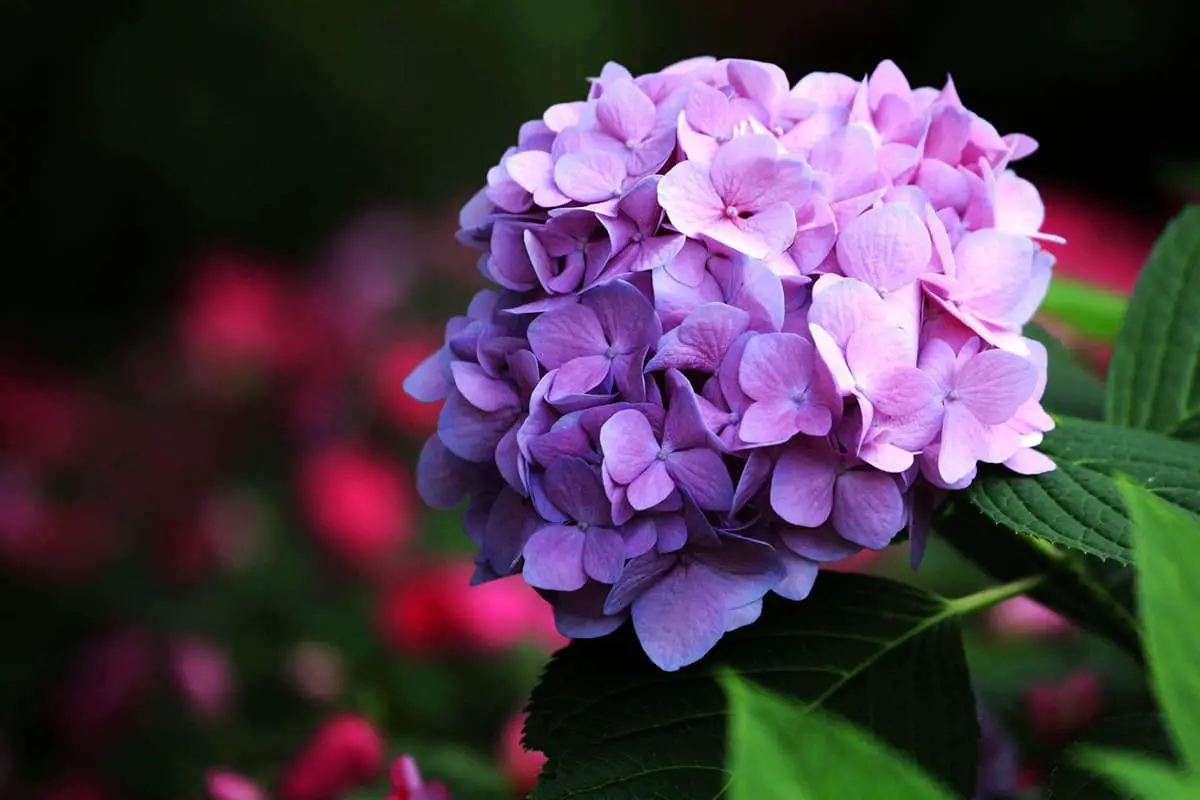
Hydrangeas are short-day plants, forming flower buds after approximately 45-50 days of 10 or more hours of darkness each day. Generally, during cultivation, exposure to direct sunlight should be avoided, with 60%-70% shade being ideal.
The soil should be loose, fertile, and well-drained sandy loam. However, changes in soil pH cause significant variations in hydrangea flower color. To deepen the blue color, aluminum sulfate can be applied during bud formation. To maintain the pink color, lime can be added to the soil.
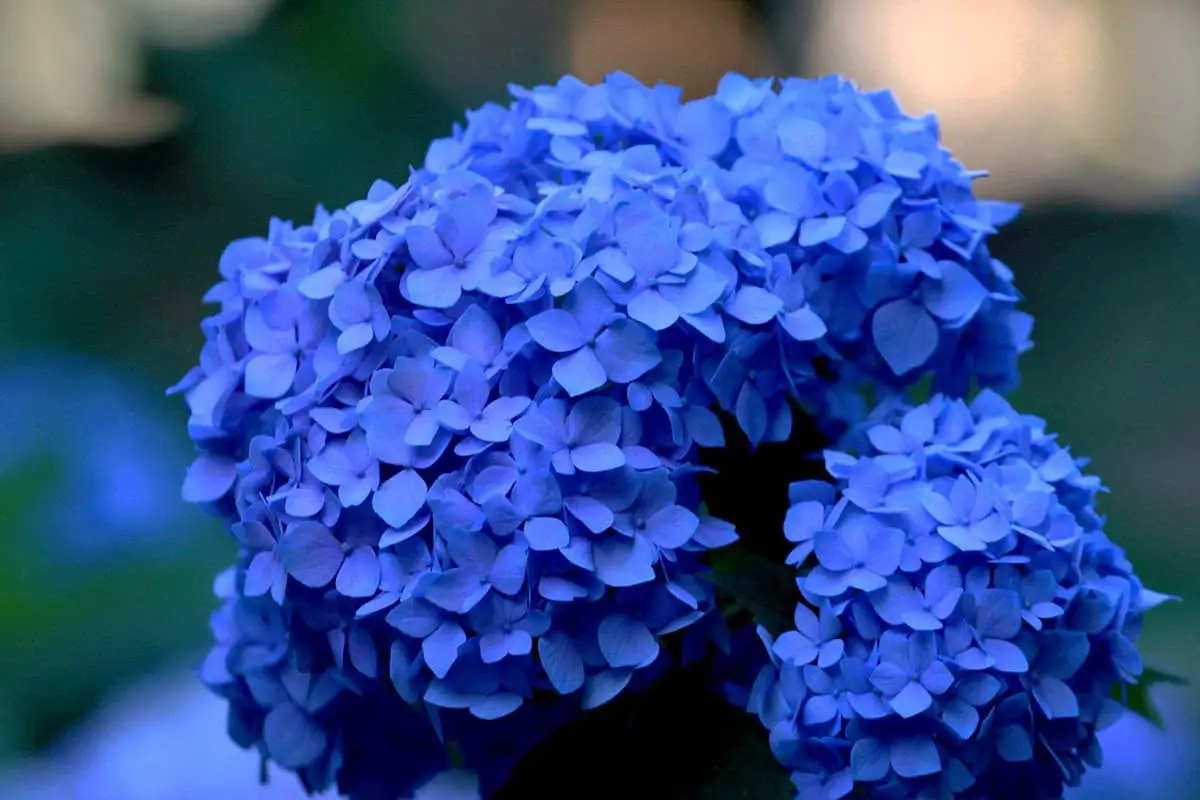
Hydrangeas are native to China and Japan and have been distributed across various provinces in China. They thrive either on plains, mountains, or attached to trees or rocks, and are cultivated in gardens both locally and abroad.
Hydrangeas were introduced to England in 1736. They are commonly cultivated in European countries such as the Netherlands, Germany, and France, where a wide array of hydrangea varieties in colors of red, blue, and purple can be seen in florist shops. The flower is also frequently planted in front of small gardens and buildings.
At present, Germany’s Lamp Jüngerfla Company is one of the world’s renowned producers of hydrangeas and is a primary cultivator and producer of new hydrangea varieties. Similarly, Holland’s Van Wijnen Company and Israel’s Yagel Nurseries are also major producers of the flower.
In Asia, Japan is the leading producer of hydrangeas, with a plethora of varieties available in garden shops. New varieties with unique colors are available at a premium price, primarily for household pot ornamental purposes.
Currently, annual hydrangea production reaches 2.7 million pots, with a production value of 17 million US dollars, ranking twelfth in Japan’s potted flower production value. In the Americas, the United States is a prominent cultivator of hydrangeas, both for potted and outdoor cultivation.
The propagation of hydrangeas can be accomplished through division, layering, and cuttings.
This method is most effective in early spring before sprouting. Separate rooted branches from the parent plant, pot them directly, avoid excessive watering, and nurture in semi-shade. Transfer to normal care once new buds emerge.
This process should be undertaken when buds begin to swell. After 30 days, growth can be expected, and the layer can be cut from the parent plant the following spring, transplanted with soil, and will potentially bloom within the year.
This process is best during the rainy season. Trim off the top tender branches, about 20 cm long, remove the lower leaves, and stick them in at a temperature of 13-18℃. The cutting will root after about 15 days.
Dormant buds are used as explants. After routine disinfection, they are inoculated on MS medium supplemented with 0.8 mg/L of 6-benzylaminopurine and 2 mg/L of indole acetic acid to cultivate indeterminate buds. When the sprouts reach a height of 2-3 cm, they are transferred to 1/2 MS medium with 2.0 mg/L of indole acetic acid to grow into complete seedlings.
Propagation primarily involves cuttings but layering and grafting can also be used. In spring or rainy season, healthy tender branches are chosen from young mother trees to make cuttings. The cutting should be 12-20 cm long, the base of the cutting needs to have nodes, and after dipping in mud, it should be shaded and kept moist.
After approximately one month, roots form and then the plant can be transplanted in the following year. In the south, hydrangeas can be cultivated in open ground, whereas in the north, they need to be potted and kept in a greenhouse over winter. Transplanting should take place after leaf fall or before budding, and the plant needs to have its native soil.
Management is extensive; the main branches easily sprout excessive branches, which need moderate pruning after flowering to maintain the shape of the tree. Adequate watering and fertilization ensures annual blossoming and lush growth.
When potting Bigleaf Hydrangea (Hydrangea macrophylla), commonly utilize pots of 15-20 cm in diameter. After the potted plants bud in spring, ensure sufficient watering to prevent leaf wilting. During the flowering period of June to July, provide abundant nutrients and water, and fertilize every half month using a 21-7-7 acidic fertilizer like “Plant Friend.”
If summer sunlight is too intense, provide shade to prolong the viewing period of the flowers. After flowering, remove the flower stems to encourage new branch growth. The color of the flowers is influenced by soil pH levels—blue in acidic soil and red in alkaline soil. Repot each spring. Prune appropriately to maintain the beauty of the plant form.
Hydrangeas thrive in warm, moist conditions, are drought-intolerant, and dislike flooding. They prefer a semi-shaded environment, are frost-sensitive, and grow best in fertile, well-draining acidic soil. Soil pH greatly affects the color of hydrangea flowers—blue in acidic soil and red in alkaline soil. Ideally, hydrangeas should be cultivated in acidic soil with a pH of 4-4.5.
Hydrangeas favor semi-shade and humid environments and are not particularly frost-hardy. Avoid exposing them to direct sun during the summer heat to prevent leaf scorch and yellowing. They do not thrive in overly dry conditions, preferring humus-rich, moist, well-drained loamy soil.
Their branches and leaves can wilt and dry up after frost. If grown outdoors, their aboveground parts die off in winter, with new shoots flowering from the rhizomes the following year. If kept as a potted plant in a greenhouse over winter, they can stay evergreen.
For potted hydrangeas, it is generally necessary to repot and replace the soil annually, preferably in early March. The new soil mix should be composed of four parts leaf mold, four parts garden soil, and two parts sand, with an appropriate amount of mature compost manure as base fertilizer.
During repotting, prune the plant’s root system, removing any decayed roots or overly long root hairs. After transplanting into a new pot, compact the soil, thoroughly water it, then keep it in a shaded place for about ten days. Afterwards, move it outside and resume regular maintenance.
To make the hydrangea crown beautiful and encourage abundant flowering, prune the plant. Hydrangeas are vigorous growers and tolerant to pruning. Generally, pinch the top off when the seedling grows to a height of 10-15 cm, enabling the lower axillary buds to sprout. Then select four well-sprouted upper new branches and remove all the lower axillary buds.
When the new branches grow to a length of 8-10 cm, pinch the tops again. Hydrangeas typically flower on two-year-old strong branches. After flowering, shorten the old branches, retaining 2-3 buds to control the plant’s height and promote new shoot growth. After autumn, trim the top of the new shoots to halt their growth, helping them to overwinter.
Main diseases include wilt disease, powdery mildew, and leaf spot disease. To prevent and control these, spray with a 600 times dilution of 65% Zineb wettable powder.
Main pests are aphids and stink bugs. To kill these, spray with a 1500 times dilution of 40% Dimethoate emulsion.
Hydrangeas can be used for medicinal purposes, cut flowers, potted plants, and open-field planting in courtyards. Modern parks and scenic areas often plant them en masse to form landscapes. If you cut off the entire flower ball and put it in a vase indoors, it becomes an excellent adornment. Hanging the flower ball inside the bed canopy creates a more elegant interest.
It is a renowned ornamental plant. The entire plant is used medicinally, and is popularly used to treat joint swelling and pain, red and swollen eyes, pneumonia, and orchitis, among other ailments.
Its primary functions are to clear heat, transform phlegm, reduce swelling, relieve pain, unblock meridians, and increase lactation. It is primarily used for epidemic encephalitis B, lung heat cough, abscesses, insufficient milk in nursing mothers, joint pain, orchitis, otitis media, mastitis, scrofula, insufficient milk in postpartum women, and blocked milk ducts.

Peggie was once a high school mathematics teacher, but she set aside her chalkboard and textbooks to follow her lifelong passion for flowers. After years of dedication and learning, she not only established a thriving flower shop but also founded this blog, “Flowers Library”. If you have any questions or wish to learn more about flowers, feel free to contact Peggie.
 English
  العربية
  Bahasa Indonesia
  Deutsch
  Français
  Italiano
  Nederlands
  Português
  Русский
  日本語
日本語