Heracleum moellendorffii, commonly referred to as short-haired hogweed, is a variant within the Umbelliferae family’s hogweed genus.
The plant features a conical, substantial root that often branches and exhibits a gray-brown tint. The stem is erect with distinct ridges and grooves, and it branches out towards its upper section.
Morphological Features:
Root: It has a conical and thick shape, branching out often and showcasing a gray-brown hue. The stem stands upright, characterized by ridges and grooves, and branches out at its upper section.
Leaf: Leaves are stalked, spanning a length of 10-30 cm. Their silhouette is broadly ovate and membranous in nature. They exhibit a trifoliate division, with their segments ranging from a broad ovate to a heart shape. These segments irregularly split 3-5 times, measuring 10-20 cm in length and 7-18 cm in width. Their edges boast large, sharp serrations that taper to an elongated tip. The petioles of these smaller leaves range from 3-8 cm, while the upper stem leaves have a noticeably expanded sheath.
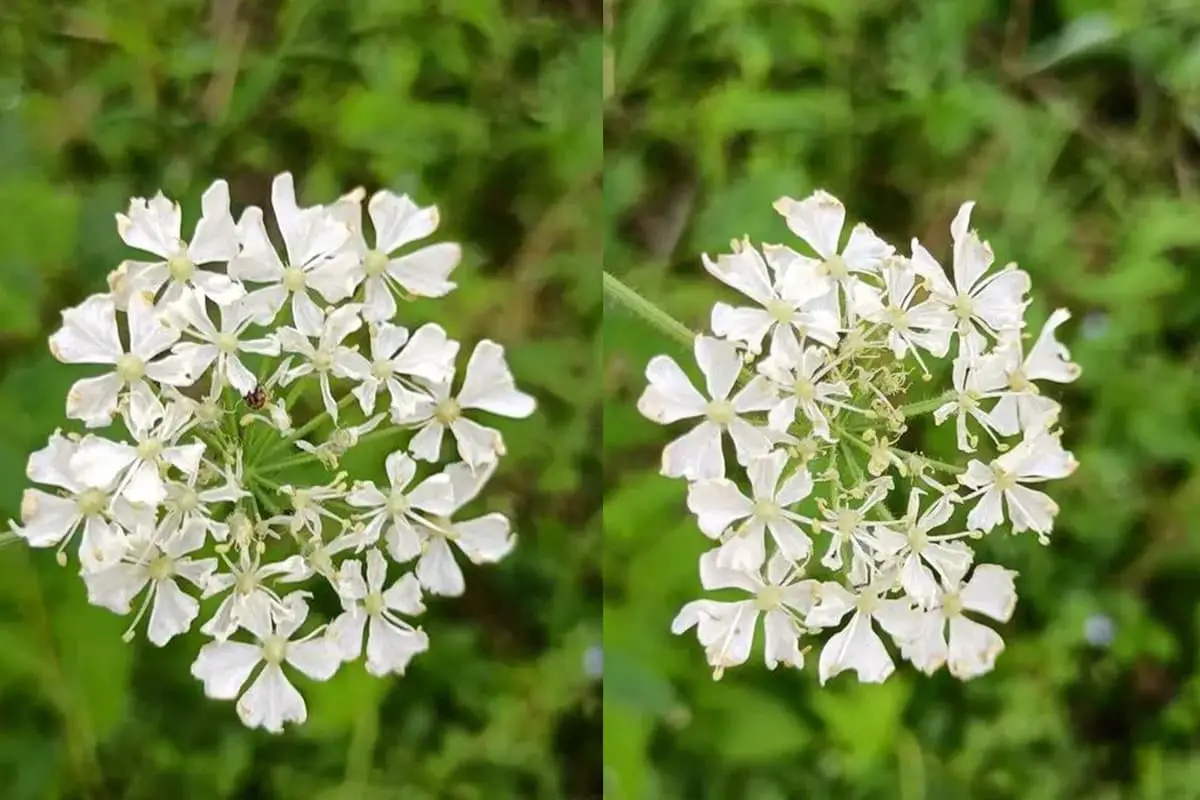
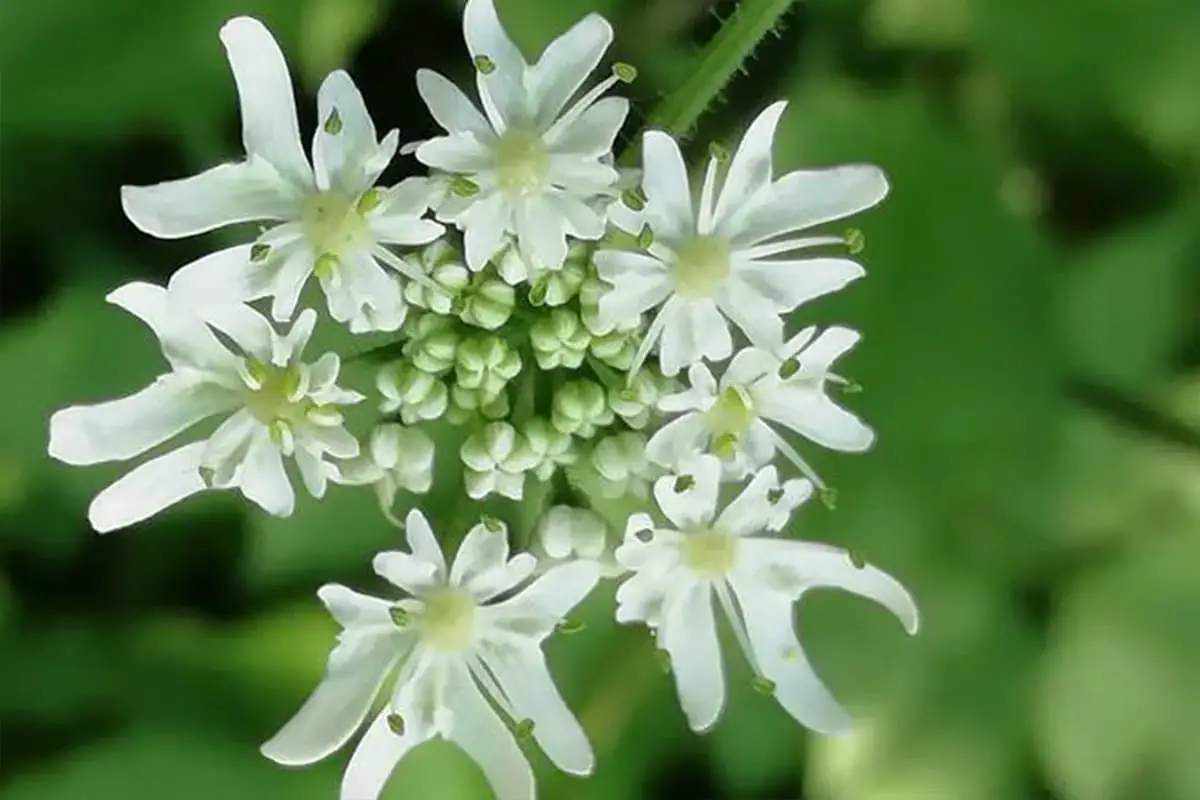
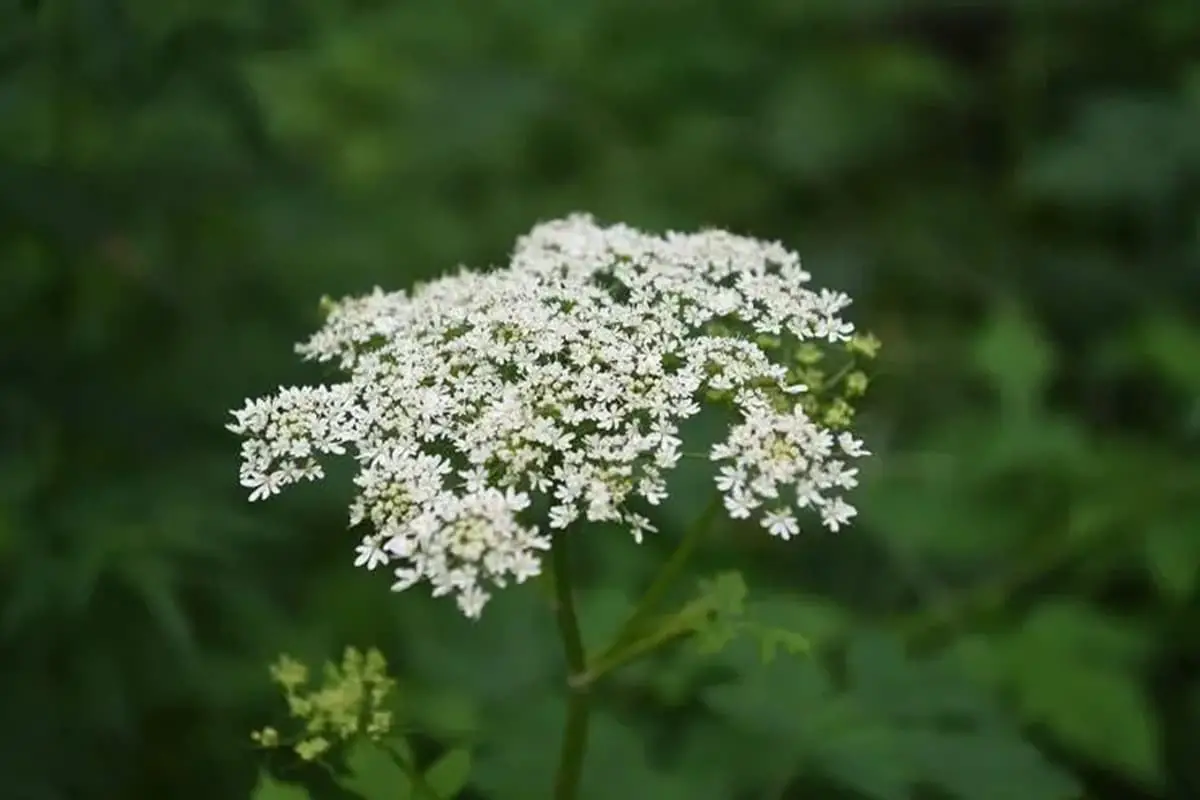
Flower: The compound umbel flower arrangement emerges both terminally and laterally. The flower stalk measures between 14-15 cm. It has a few slender, lance-shaped bracts. The rays are 12-30 in number and vary in length, with 5-10 slender lance-shaped secondary bracts. The pedicels are elongated, ranging from 4-20 mm. The calyx teeth aren’t very prominent. The petals are white and come in two types. The base of the flower’s style is short and conical, splitting at the end.
Fruit: The fruit, termed a mericarp, is round and ovate. Its top is indented, and its back is flat, approximately 8 mm in diameter. It can either be sparsely hairy or nearly smooth. The dorsal and central ridges protrude linearly, while the lateral ridges are broad. Each ridge groove houses one oil duct, and there are two on the commissural face, which are rod-shaped, half the length of the mericarp. The endosperm displays a flat ventral surface.
Distribution Range:
The plant is native to several provinces and regions, thriving alongside shadowed mountain slopes, near forest edges, or within meadows. The type specimen hails from Baihua Mountain in Hebei.
Primary Value:
Other Names: Northeastern Cow Parsnip, Short-haired Angelica, Buruga.
Collection and Processing: The roots are harvested in spring and autumn. The stems, leaves, and fibrous roots are removed. After being cleaned of soil, they’re dried, sliced, and set aside for future use.
Pharmacological Properties: The entire plant and its fruits contain coumarins. Injecting mice or rats with furanocoumarin compounds amplifies the anti-convulsive effects of barbiturates and phenobarbital. Moreover, furanocoumarin compounds can reduce rats’ body temperature.
Share
Facebook
Twitter
LinkedIn
Email
Share is Caring.
Peggie
Founder of FlowersLib
Peggie was once a high school mathematics teacher, but she set aside her chalkboard and textbooks to follow her lifelong passion for flowers. After years of dedication and learning, she not only established a thriving flower shop but also founded this blog, “Flowers Library”. If you have any questions or wish to learn more about flowers, feel free to contact Peggie.
Before you go
You May Also Like
We picked them just for you. Keep reading and learn more!
Types Of Flowers By Names (A-Z) Types Of Flowers By Color Types Of Flowers By Season Types Of Flowers By Blooming Time 600+ Types of Flowers No. Flower Name No.…
Lonicera maackii, commonly known as Amur honeysuckle, is a deciduous shrub that often grows in clusters. Its fragrant flowers provide an excellent nectar source for pollinators, while its fruit serves…
Liriodendron chinense, also known as the Chinese tulip tree, is a magnificent deciduous tree belonging to the Magnoliaceae family and the genus Liriodendron. This impressive species can reach heights of…
Viola variegata, commonly known as the Variegated Viola, is a perennial herb belonging to the Violaceae family and Viola genus. I. Physical Features: This diminutive plant typically grows between 3-12…
The Lily, also known as Lilium, is a perennial herbaceous bulbous plant belonging to the Liliaceae family. It is primarily distributed in the temperate regions of the Northern Hemisphere, with…
The Lilium tsingtauense, also known as the Qingdao Lily or Laoshan Lily, is a rare and beautiful species of lily. This perennial monocotyledonous herb is characterized by its striking orange-red…
Viola cornuta, commonly known as Horned Pansy or Horned Violet, is a perennial herbaceous plant belonging to the Violaceae family. Native to the Pyrenees mountains of Spain and France, this…
Callistemon viminalis, commonly known as Weeping Bottlebrush, is a distinctive evergreen tree belonging to the Myrtaceae family, native to Australia. Its lanceolate leaves range from grayish-green to dark green, and…
Lavandula lanata, commonly known as Woolly Lavender, is a distinctive and captivating lavender species native to the mountainous regions of southern Spain. This semi-hardy, aromatic plant is characterized by its…


 English
  العربية
  Bahasa Indonesia
  Deutsch
  Français
  Italiano
  Nederlands
  Português
  Русский
  日本語
日本語