600+ Types of Flowers A To Z (With Names and Pictures)
Types Of Flowers By Names (A-Z) Types Of Flowers By Color Types Of Flowers By Season Types Of Flowers By Blooming Time 600+ Types of Flowers No. Flower Name No.…

The Gardenia angkorensis Pitard, a plant from the Rubiaceae family, is found in Cambodia, particularly on hill slopes or in forests along streamsides or shrubs. It is a relatively rare variety.
The flower blossoms individually at the top of the side branches, exhibiting no or almost no flower stalk. The calyx tube is cone-shaped, ridged, measures 7-8 millimeters, and has a slight fuzz, while the calyx rim is tubular, with a six-part split at the top. The pistil and stigma stretch to 1 centimeter, with the pistil being robust.
The plant grows on hill slopes or in forests along streamsides or shrubs, and is not commonly seen. It is found in Cambodia.
This shrub grows to a height of 1-3 meters. The twigs are cylindrical, hairless, and turn grayish-white when dried. Leaves are small, almost leathery, and generally cluster at the top of the twigs.
They are either ovate or spoon-shaped, measuring between 1.5-4 centimeters long and 1-2.5 centimeters wide. The leaf stalks measure between 1-4 millimeters. The membranous stipules are 2-3 millimeters long, with a blunt or slightly pointed top.
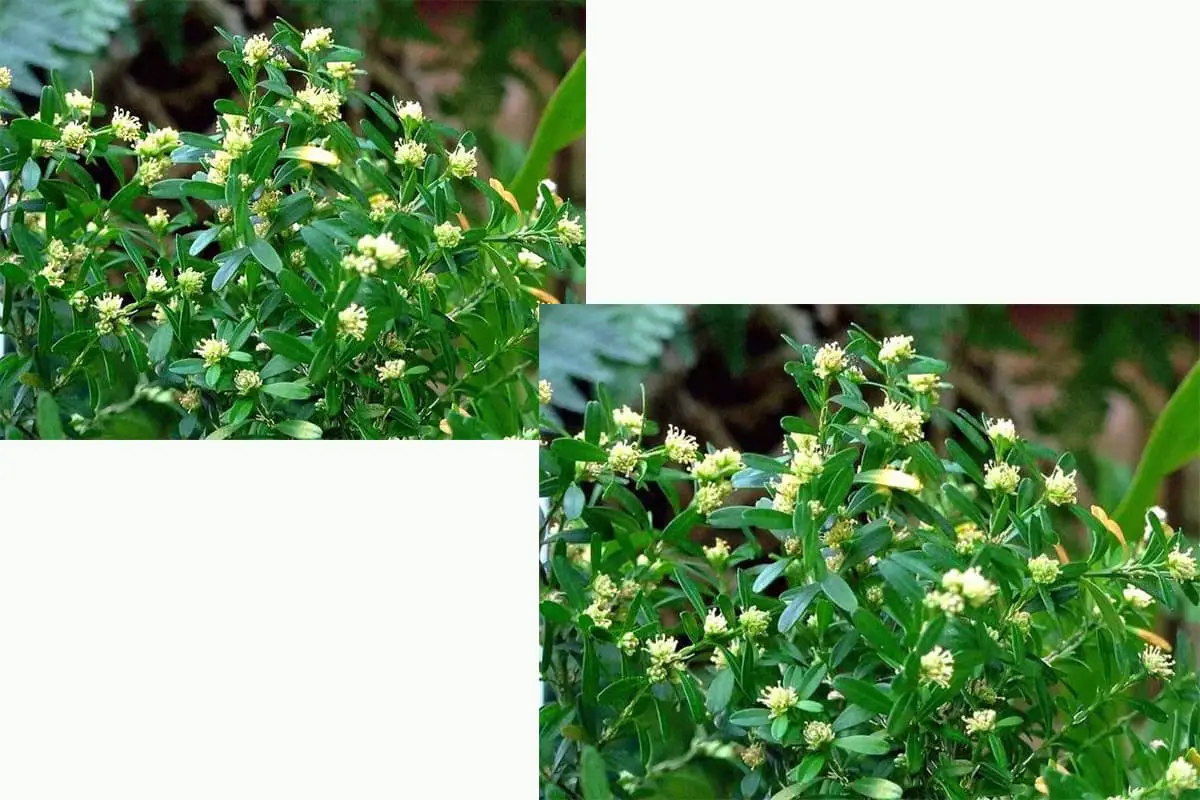
The flower blossoms individually at the top of the side branches, with no or almost no flower stalk. The calyx tube is cone-shaped, ridged, measures 7-8 millimeters, and has a slight fuzz. The calyx rim is tubular, with a six-part split at the top.
The corolla tube is 1.3-1.5 centimeters long, gradually expanding from the base upwards, hairless on the outside, and split into six parts at the top. The stamens are 6 in number and are attached at the throat, protruding without a filament.
The pistil and stigma stretch to 1 centimeter, with the pistil being robust. The ovules are numerous and attached to two linear placenta. The fruit is nearly spherical, 1.5-1.8 centimeters long, and 1-1.5 centimeters in diameter, with slightly protruding straight ridges.
The fruit stalk is about 3 millimeters long. The seeds are about 5 millimeters long and 3-4 millimeters in diameter. The fruiting period is from August to November.

Peggie was once a high school mathematics teacher, but she set aside her chalkboard and textbooks to follow her lifelong passion for flowers. After years of dedication and learning, she not only established a thriving flower shop but also founded this blog, “Flowers Library”. If you have any questions or wish to learn more about flowers, feel free to contact Peggie.
 English
  العربية
  Bahasa Indonesia
  Deutsch
  Français
  Italiano
  Nederlands
  Português
  Русский
  日本語
日本語