600+ Types of Flowers A To Z (With Names and Pictures)
Types Of Flowers By Names (A-Z) Types Of Flowers By Color Types Of Flowers By Season Types Of Flowers By Blooming Time 600+ Types of Flowers No. Flower Name No.…

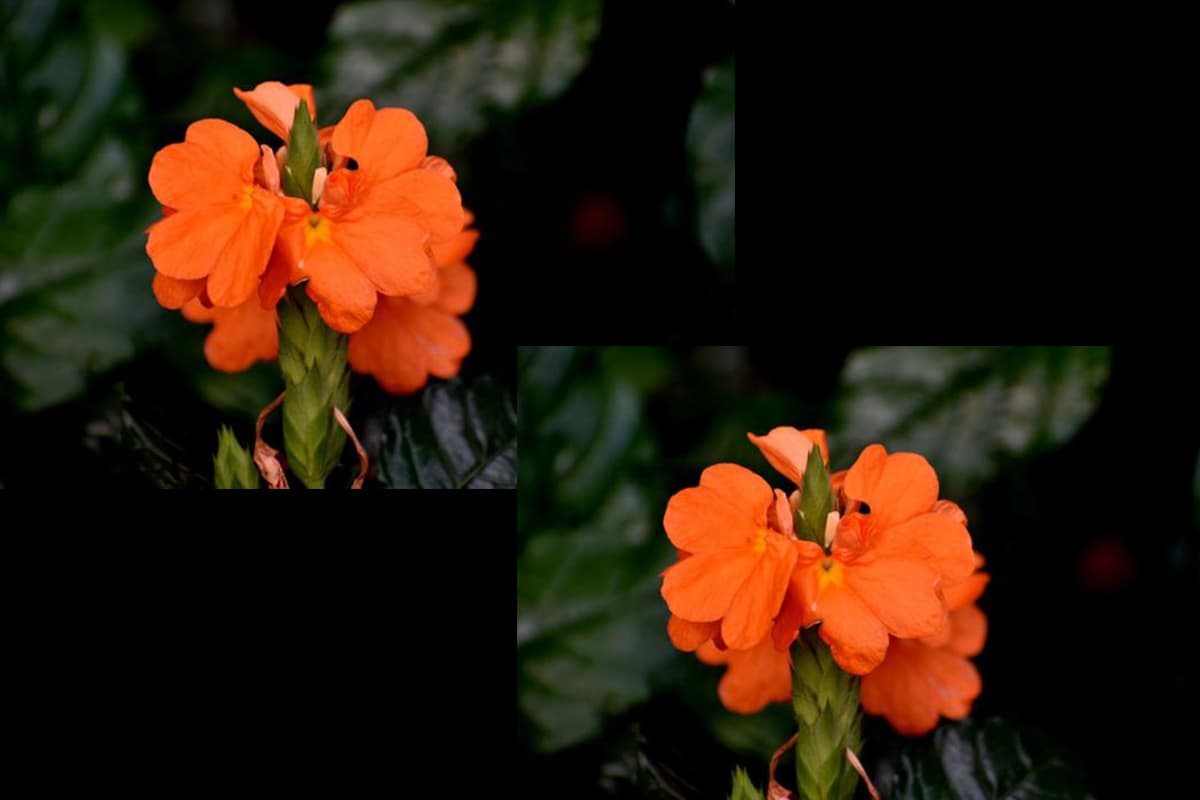
The Crossandra infundibuliformis, also known as the Bird’s Tail Flower or Firecracker Flower, is a perennial shrub from the Acanthus family. It stands 20-60 cm tall, thrives in semi-shaded, bright light, and prefers temperatures between 18-26°C.
Originally found in Angola, Burundi, the Democratic Republic of Congo, Ethiopia, Kenya, Somalia, and Sri Lanka, this plant is characterized by its lush branches, peculiar flower shape, and vibrant orange or pinkish-orange colors.
It blooms extensively from spring to summer, making it a highly ornamental plant. It can be used as a small potted plant or combined with other plants to create a poetic atmosphere indoors.
The Crossandra infundibuliformis is native to Angola, Burundi, the Democratic Republic of Congo, Ethiopia, Kenya, Somalia, and Sri Lanka.
It loves semi-shaded bright light and has strong adaptability to sunlight. It dislikes direct sunlight in the hot summer but requires it in winter. It grows best in temperatures between 18-26°C.
This shrub-like perennial stands 20-60 cm tall. The leaves are opposite, lanceolate, 5-12 cm long and 5 cm wide, with glossy, dark green surfaces and 1.3-2.5 cm long petioles.
The bisexual flowers are arranged in spike inflorescences; the corolla tube is cylindrical with a diameter of 4 cm. The stamens are four in number, two long and two short.
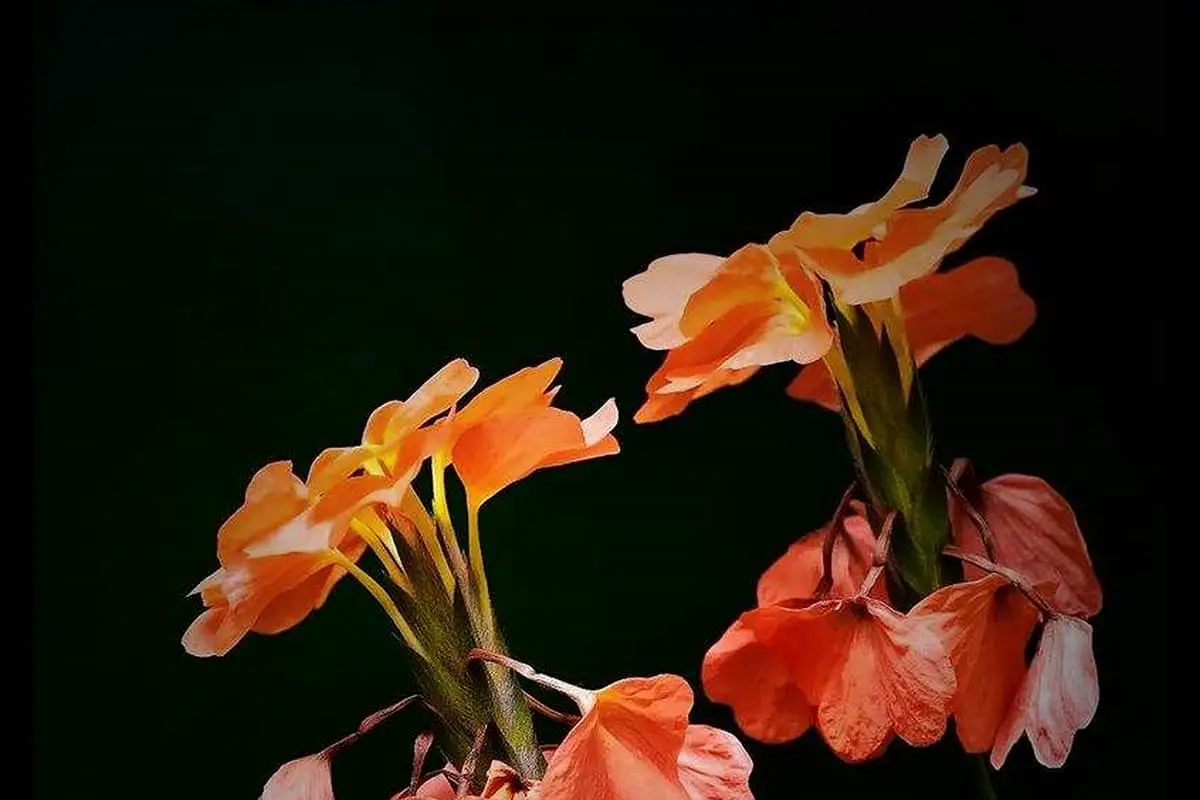
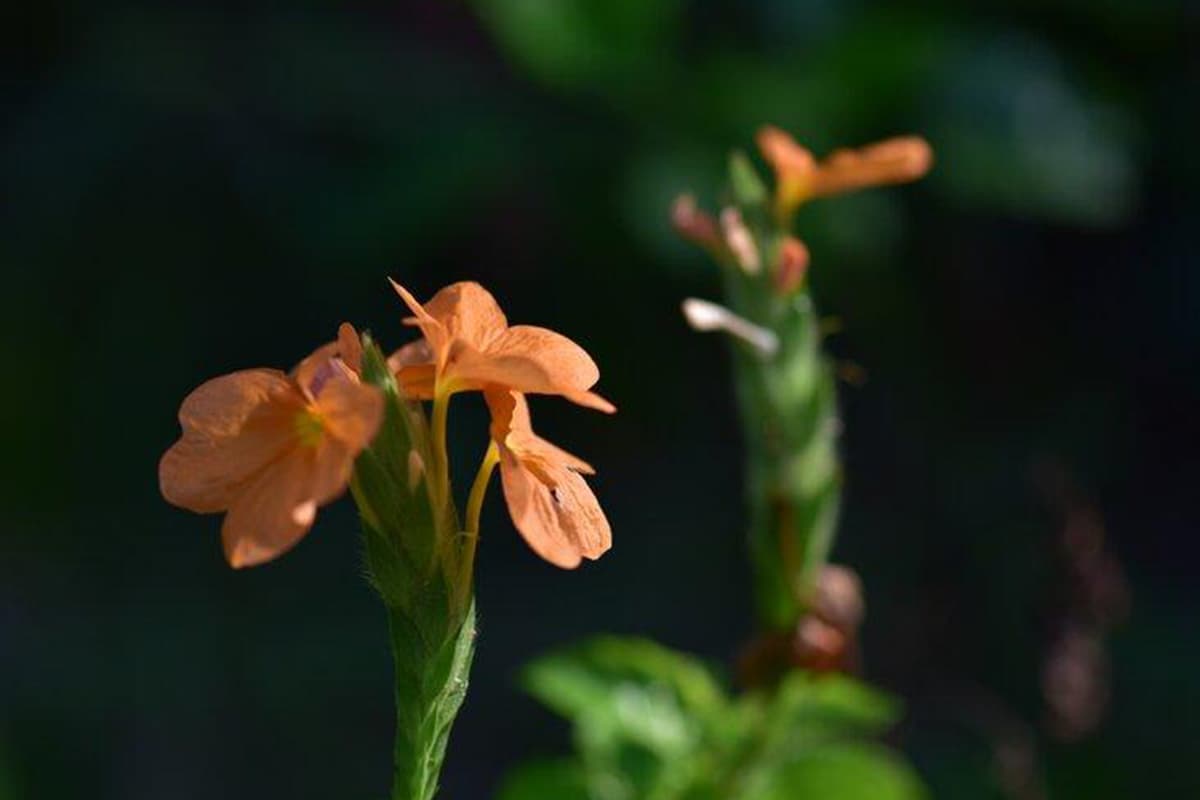
The flowers are clustered on the 15-20 cm long inflorescence axis, are orange or pinkish-orange, about 2 cm in diameter, with five petals that resemble a butterfly, usually featuring a yellow eye spot. It blooms in spring and summer. The fruit is a long oval shape and the seeds weigh 7.14 grams per thousand.
Cut the plant base and plant: Any substrate with good water retention and aeration can be used, with a soil pH of 6.2-7.0. Plant one seedling in a 10-11 cm pot, with a placement distance of 16.5 cm x 18 cm or 18 cm x 18 cm; for a 15 cm pot, plant three seedlings, with a placement distance of 23 cm x 23 cm.
The potting soil can be a mixture of garden soil and leaf mold in a 2:3 ratio, with bone meal or calcium superphosphate powder added as base fertilizer. Also, an inorganic mineral substrate can be used for soilless cultivation, with a non-polluting cultivation nutrient solution applied weekly or biweekly.
With appropriate sunlight or artificial light (3000-5000 lux) assistance, it can bloom. Water should be added frequently when new branches sprout in the spring.
In summer, in addition to ensuring sufficient water and light, the environment should be kept moist by often sprinkling water on the ground or placing the pot on a water basin with pebbles.
In autumn, water moderately to keep the potting soil moist, and only water when the soil is half-dry. During winter dormancy, keep the potting soil from drying out completely.
During the active growth period, apply a thin liquid fertilizer or a small amount of granular compound fertilizer every two weeks, after loosening the soil. After the flowers fade, cut off 2/3 of all stems to keep it neat and attractive. It’s not frost-tolerant, with a wintering temperature of 10°C.
Cuttings: In spring or early summer, cut 5-7 cm long branches from the top of the stem for cuttings. Use a mixture of peat soil, coarse sand, or perlite for the cutting substrate.
After inserting the cuttings, cover with a plastic bag and place in an environment of 21-25°C. It can root in about 4-6 weeks, and can be transplanted into a pot after new leaves grow.
Seed sowing: After sowing, cover the soil with 3 mm, maintain a temperature of 27-29°C, and germination takes 3-4 weeks. At a day and night temperature of 29°C and 21°C, it only takes 10-14 days. Root cuttings can also be propagated.
After treating the cuttings with rooting hormones, insert them directly into the pot, maintain a day and night temperature of 29°C and 21°C, reduce the light intensity to 16000-19000 lux, and they will quickly root and grow new branches.
The Crossandra infundibuliformis has lush branches, peculiar flower shapes, vibrant colors, and an extensive blooming period, making it a popular ornamental plant. It can be used as a small potted plant or in combination with other plants to enrich the poetic atmosphere indoors.

Peggie was once a high school mathematics teacher, but she set aside her chalkboard and textbooks to follow her lifelong passion for flowers. After years of dedication and learning, she not only established a thriving flower shop but also founded this blog, “Flowers Library”. If you have any questions or wish to learn more about flowers, feel free to contact Peggie.
 English
  العربية
  Bahasa Indonesia
  Deutsch
  Français
  Italiano
  Nederlands
  Português
  Русский
  日本語
日本語