600+ Types of Flowers A To Z (With Names and Pictures)
Types Of Flowers By Names (A-Z) Types Of Flowers By Color Types Of Flowers By Season Types Of Flowers By Blooming Time 600+ Types of Flowers No. Flower Name No.…

Chamaemelum nobile, commonly known as Roman chamomile, is a perennial herbaceous plant of the daisy family. It can grow up to 30 centimeters tall, with an erect stem. The leaves are alternate, sessile, and feathery with two to three degrees of separation.
The terminal divisions are very narrow. The flower heads are borne singly at the tops of stems and long branches, with flowers of different types.
Roman chamomile is native to the temperate regions of Asia and Western Europe and is also found in the Americas. It has been introduced and cultivated in China. Roman chamomile has a strong aroma and is a widely used medicinal and aromatic plant in Europe, America, Japan, and other places.
Roman chamomile is native to the temperate regions of Asia and Western Europe and is also found in the Americas.
Roman chamomile enjoys a warm and humid climate, has a wide range of adaptability, and does not require strict moisture. However, if it is watered frequently after planting, the growth will be particularly lush. The germination temperature is 18-20℃, it can grow normally at 10-30℃, and the most suitable temperature is 18-25℃.
Perennial herbs, with a strong aroma, 15-30 cm tall, usually multi-branched from the base, the whole plant is covered with soft hair. The stem is upright and branched.
The leaves are alternate, sessile, overall shape is rectangular or lanceolate, 1-6 cm long, 4-15 mm wide, two to three degrees of feathery division, the terminal divisions are very narrow, bar-shaped or wide lanceolate, the tip has a cartilaginous tip.
The capitulum is born singly at the top of the stem and long branches, about 2 cm in diameter, with different types of flowers; the involucre is 6-12 mm in diameter and 3-6 mm long; the involucre has a wide membranous margin, arranged in 3-4 layers like tiles.
The receptacle is cone-shaped, with wide blunt membranous scales; the ray florets are female, white, and the tongue reflexes downwards after flowering; the disc florets are bisexual, yellow. The achene is 1.2-1.5 mm long and about 0.6 mm wide, with 3 (4) protruding thin ribs and no crown-like pappus.
The soil is disinfected before sowing to prevent the occurrence of diseases and pests and to eradicate underground pests. A fungicide, Dichlorophen, is applied with irrigation to disinfect the soil and prevent diseases during the seedling stage. The dosage is 4 kg/667 square meters.
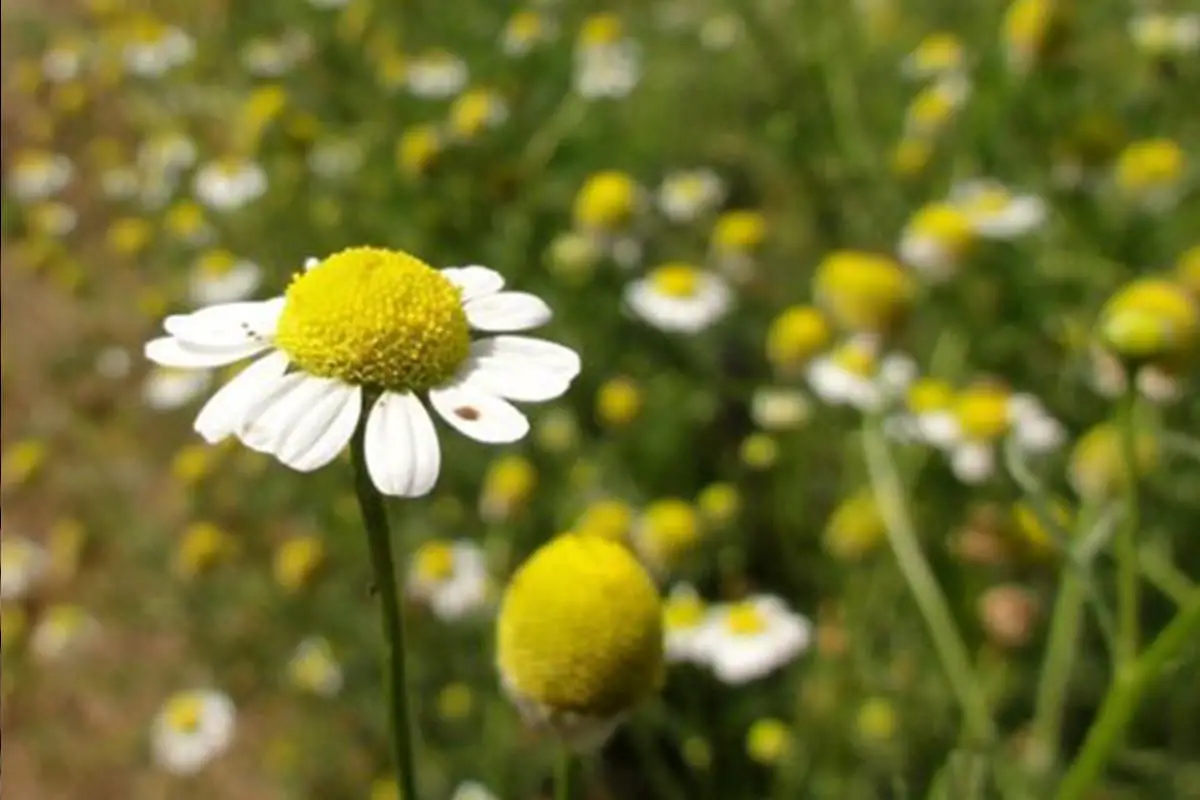
Cover the seeds with film before sowing. After a week, when the weeds have grown, use a hoe to turn the weeds into the ground and then level the seedbed. If you do not first clear the weeds before sowing, the weeds will proliferate after the Roman chamomile has sprouted.
If you pull the weeds, you will bring out the Roman chamomile seedlings, which will affect the survival rate of the Roman chamomile.
Seedlings are generally raised in early spring before February 20. In order to make the soil sufficiently moist, water it twice before sowing (for sandy soil).
Mix the seeds and sand in a 1:10 ratio, evenly spread it on the seedbed, use a flat hoe to evenly hoe it once, so that the seeds and soil are tightly combined, which is conducive to the seed absorbing water and germinating. After that, cover the seedbed with film to retain moisture.
Control the highest daytime temperature at 28℃, and the night temperature must not be lower than 12℃.
After the seedlings have emerged, preventing excessive growth is key during this period, mainly by controlling temperature and humidity. Before the true leaves come out, prevent large amounts of water from lowering the ground temperature.
Use a sprayer to spray water as the main method, provide the seedlings with the required water, promote the seedlings to take root, and in temperature management, the temperature should be lower than when the seedlings emerge.
Specifically, when the sun comes out in the morning, pull open the straw curtain to let the seedlings see the light fully. The daytime temperature cannot exceed 25℃, and it should not be lower than 8℃ at night, and the film should be removed.
(1) Soil conditions: Roman chamomile likes fertile soil, so choose high-fertility clay for planting. For land that hasn’t been irrigated in winter, spring water is added. This water is an important measure to wash away salt and alkali, and it is also an important measure to improve the survival rate of planting.
Apply enough base fertilizer, generally apply well-rotted organic fertilizer, organic fertilizers include sheep manure, pig manure, grass manure, etc.
(2) Planting: You can plant between the end of April and the end of May, but the best planting period is after the late frost. The planting density is 5000 plants/667 square meters, and the plants are spaced 25 cm apart on the ridge surface, 60×40 cm.
(3) Management after planting: Water the seedlings, water the seedlings 5-8 days according to the soil moisture, hoe and weed during intertillage. Avoid weeds from growing too tall and shading, affecting its light and reducing the photosynthesis of the leaves.
(4) Management during the nutrient growth period: During this period, the Roman chamomile branches rapidly, the branches take root when they touch the soil, and the growth is large. Apply a compound fertilizer of nitrogen, phosphorus, and potassium once, the dosage is 25 kg/667 square meters, to promote its nutrient growth.
(5) Management during the flowering period: Generally, it starts flowering in mid-June. This period lasts for about 130 days and is an important time to obtain yield. Generally, water is irrigated once after each harvest, according to the soil moisture. During this period, the plants have grown densely, so weeding is done frequently.
(6) Timely harvesting: When the flowers are flat and slightly raised, they can be harvested. The flower stem cannot exceed 2 cm. Harvest once every about 15 days. Stop watering at the beginning of September to let it stop growing, enrich the branches, enhance resistance, and store nutrients for overwintering.
(7) Winter irrigation: In early November, irrigate the plants for winter to prevent the branches from drying out and enhance their resistance to wintering.
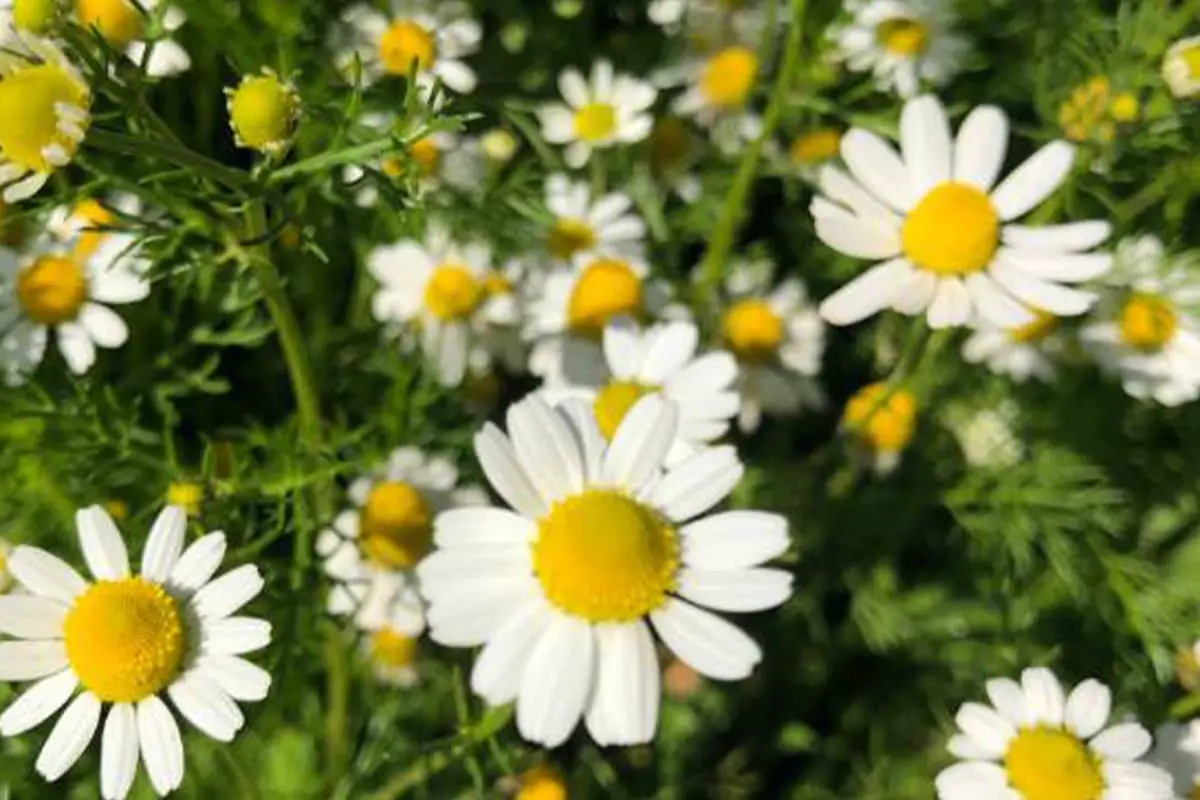
Roman chamomile has a strong fragrance and is a widely used medicinal plant and spice plant in Europe, the United States, and Japan. Roman chamomile has the effects of promoting digestion, antiemetic, antispasmodic, and mild sedative.
Roman chamomile can also be made into antibacterial ointments, creams, and adhesives, which are used to treat skin cracks, gum pain, rashes, inflammation, and promote wound healing.
The volatile oil and extracts of Roman chamomile can be used as flavorings for food and beverages, and volatile oils can be used as fragrances for the manufacture of high-end cosmetics.

Peggie was once a high school mathematics teacher, but she set aside her chalkboard and textbooks to follow her lifelong passion for flowers. After years of dedication and learning, she not only established a thriving flower shop but also founded this blog, “Flowers Library”. If you have any questions or wish to learn more about flowers, feel free to contact Peggie.
 English
  العربية
  Bahasa Indonesia
  Deutsch
  Français
  Italiano
  Nederlands
  Português
  Русский
  日本語
日本語