Camellia sasanqua, a small evergreen shrub belonging to the Theaceae family, is renowned for its elegant flowers and glossy foliage. Native to Japan and widely cultivated in China, this species has gained popularity in landscaping for its versatility and beauty.
I. Morphological Characteristics
Camellia sasanqua is characterized by:
- Growth habit: Small shrub or tree, typically reaching 1.5-6 meters in height.
- Branches: Young branches are covered with fine hairs.
- Leaves: Leathery, oval-shaped, 3-5 cm long and 2-3 cm wide. The leaf apex is shortly acuminate, and the base is cuneate, occasionally slightly rounded. The upper surface is dark green and glossy, while the lower surface is brownish-green and glabrous. Leaf margins are finely serrated. Petioles are 4-6 mm long with slight pubescence.
- Venation: 5-6 pairs of lateral veins, inconspicuous on the upper surface but visible on the lower surface.
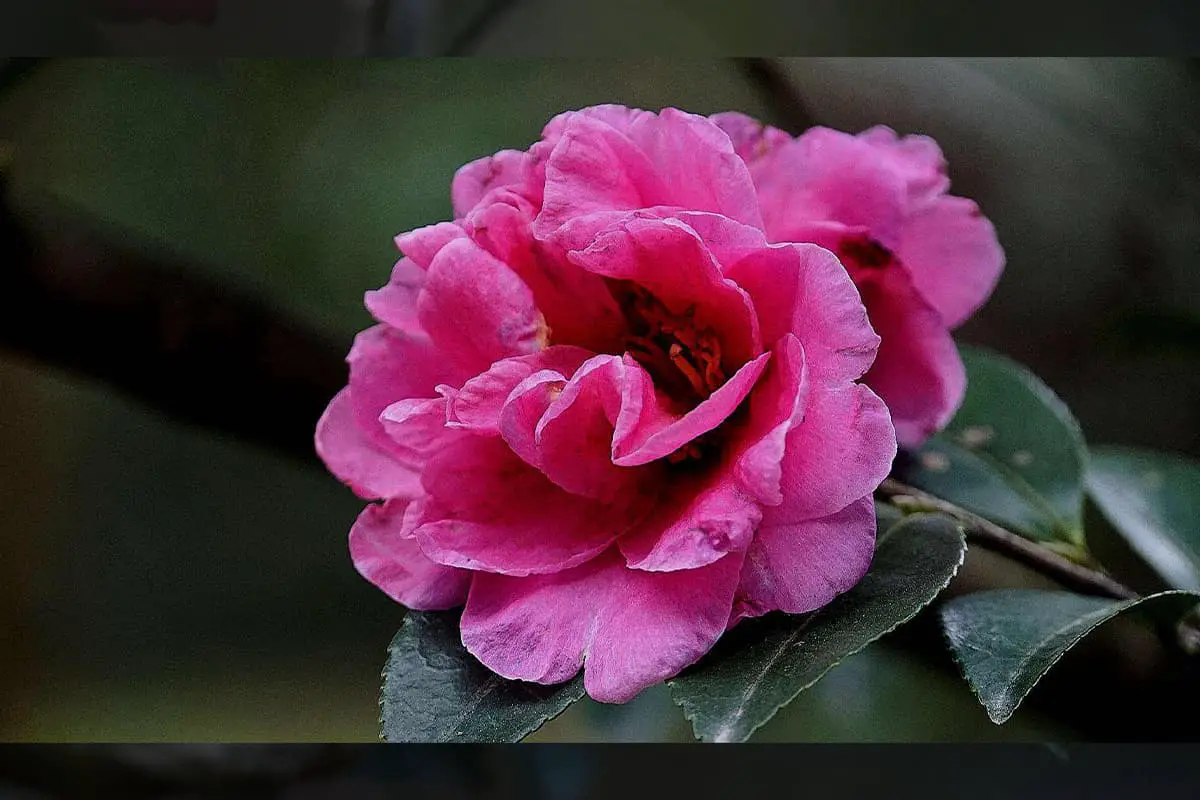
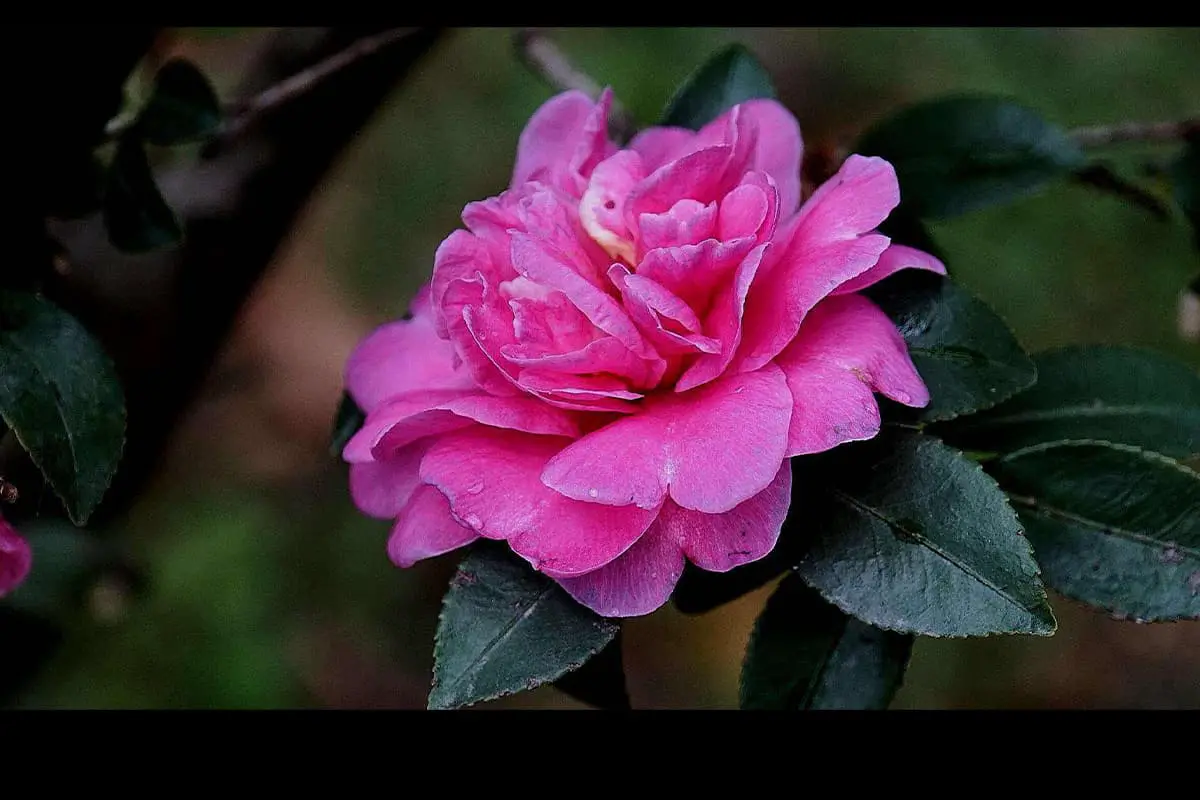
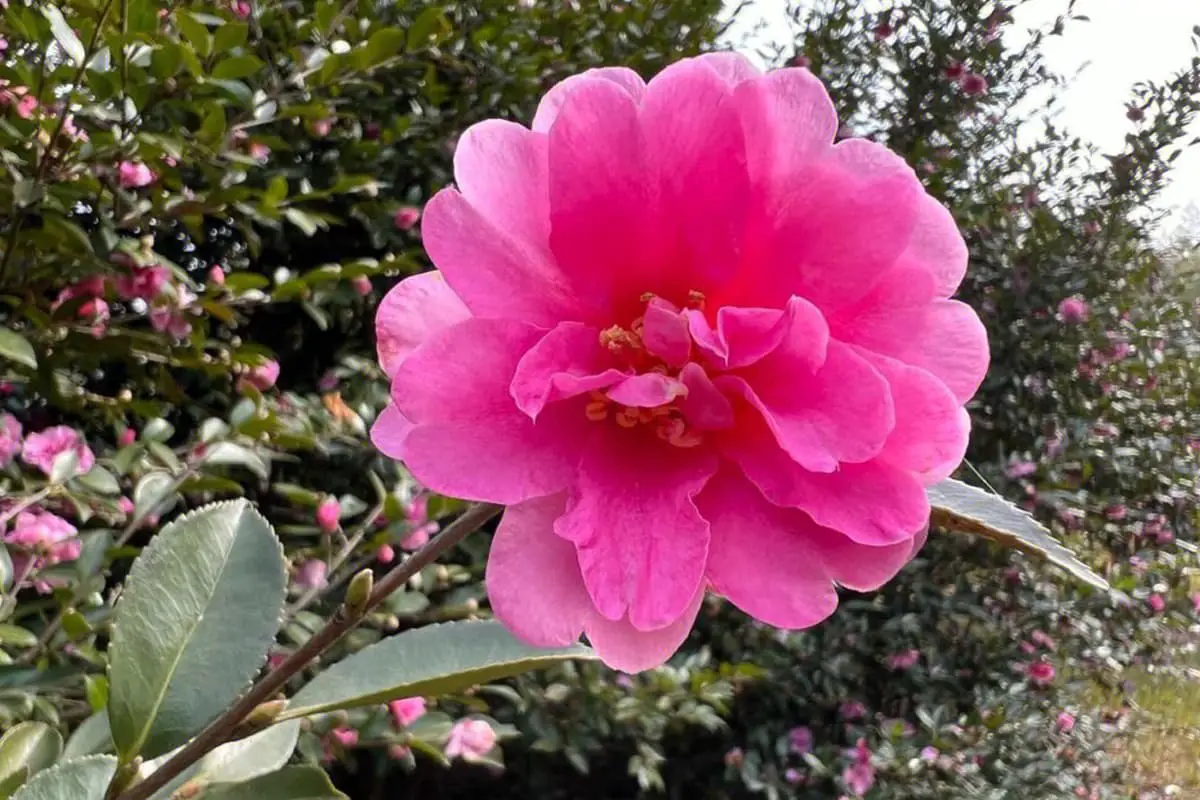
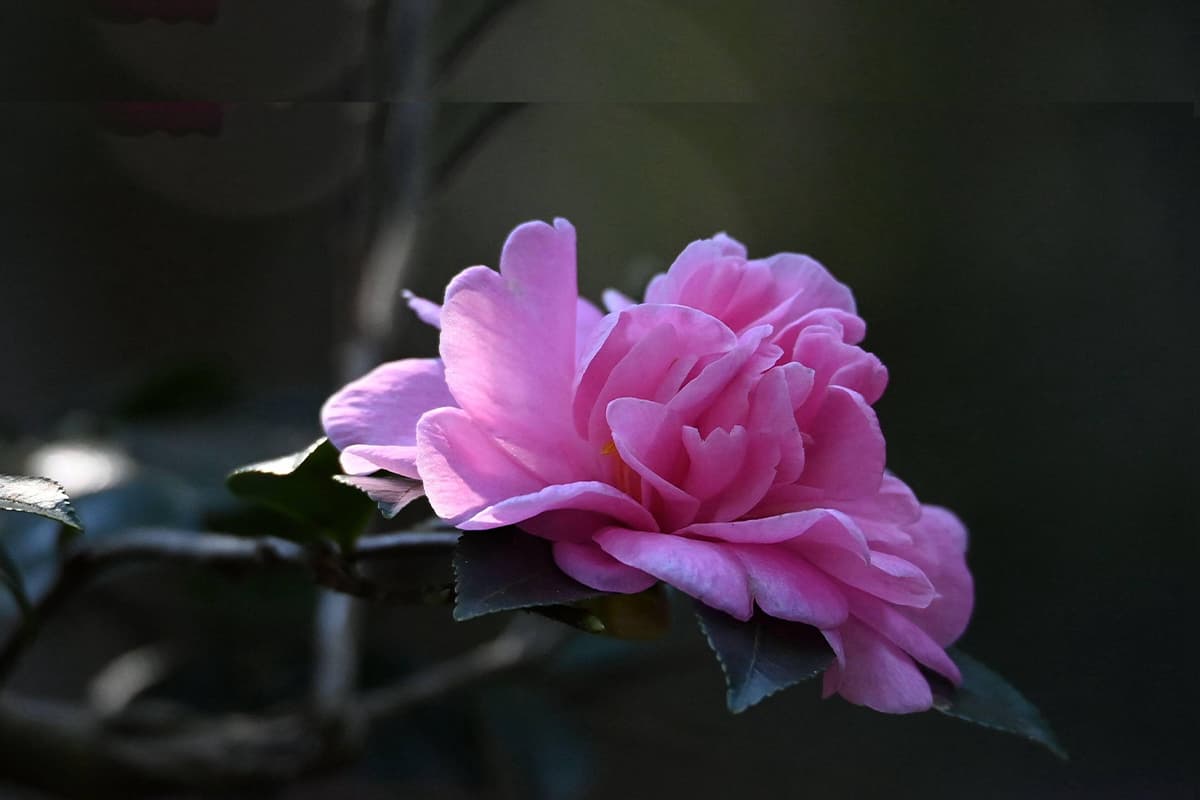
- Flowers: Solitary, 4-7 cm in diameter. They consist of 6-7 bracts and sepals covered in soft hair, and 6-7 broad, ovate petals that are nearly free. Petal color varies but is often white, pink, or red.
- Stamens: Numerous, separate, 1.5-2 cm long.
- Ovary: Covered with downy hair. The style is 1-1.3 cm long with three deep slits extending almost to the base.
- Fruit: Spherical capsule, 1.5-2 cm wide, with 1-3 locules.
- Seeds: Brown and glabrous.
II. Distribution and Habitat
Camellia sasanqua is indigenous to Japan but has been widely cultivated in China and other parts of the world. It thrives in warm, humid climates and is adaptable to various light conditions, from partial shade to full sun. However, it performs best in areas with filtered sunlight or protection from intense afternoon sun.
III. Growing Environment
To successfully cultivate Camellia sasanqua, consider the following environmental factors:
- Light: Prefers partial shade but can tolerate full sun in cooler climates. Avoid strong, direct sunlight, especially in hot regions.
- Soil: Well-draining, humus-rich, and slightly acidic soil with a pH of 5.5-6.0 is ideal.
- Moisture: Requires consistent moisture but is intolerant of waterlogged conditions.
- Temperature: Cold-hardy to about -10°C (14°F), but container-grown plants should be protected when temperatures drop below -2°C (28°F). Optimal growth occurs between 18-25°C (64-77°F).
- Humidity: Thrives in moderate to high humidity.
IV. Propagation and Growth
Camellia sasanqua is commonly propagated through single-leaf short branch cuttings, a method that offers high success rates and quality results. The process involves:
- Timing: Mid-June is optimal for taking cuttings.
- Selection: Choose semi-mature branches with reddish-brown bark and fully developed axillary buds.
- Preparation: Cut branches into short sections, leaving 1-2.5 cm below the single leaf and axillary bud.
- Disinfection: Soak cuttings in a 0.1% potassium permanganate solution for 3 minutes.
- Planting: Insert cuttings into a sterilized mixture of river sand and yellow clay.
- Care: Maintain consistent moisture without overwatering. Place in shade and cover with plastic film to retain humidity.
- Rooting: Expect roots to develop within about 50 days.
- Transplanting: Pot rooted cuttings in early April of the following year.
V. Pest and Disease Management
While Camellia sasanqua is generally resistant to pests and diseases, it can occasionally be affected by:
- Fungal diseases: Gray spot disease, sooty mold, and anthracnose.
- Pests: Scale insects and spider mites.
For effective management:
- Practice preventive care through proper cultural practices.
- If fungal diseases occur, apply a 300-fold dilution of Bordeaux mixture.
- For scale insects, manually remove them.
- For spider mites, spray with a mixture of tobacco leaf water and chili pepper water.
- Avoid chemical pesticides when possible to prevent environmental pollution.
VI. Landscape Applications
Camellia sasanqua offers versatile landscaping options:
- Specimen planting: Use as focal points in courtyards and lawns.
- Mixed borders: Combine with other flowering shrubs in beds or borders.
- Background planting: Utilize as evergreen backdrop along forest edges or building foundations.
- Hedges: Prune to form flowering or evergreen hedges.
- Container gardening: Grow in pots for patios, entryways, or indoor spaces.
- Woodland gardens: Plant in dappled shade of natural forest settings.
VII. Cultural Significance
In the language of flowers:
- Red Camellia sasanqua symbolizes elegance and modesty.
- White Camellia sasanqua represents ideal love.
With its exquisite blooms, lustrous foliage, and adaptability to various landscape designs, Camellia sasanqua continues to be a cherished ornamental plant, offering beauty and versatility in gardens worldwide.


 English
  العربية
  Bahasa Indonesia
  Deutsch
  Français
  Italiano
  Nederlands
  Português
  Русский
  日本語
日本語