600+ Types of Flowers A To Z (With Names and Pictures)
Types Of Flowers By Names (A-Z) Types Of Flowers By Color Types Of Flowers By Season Types Of Flowers By Blooming Time 600+ Types of Flowers No. Flower Name No.…

The Camellia reticulata, commonly known as the Yunnan camellia, is a magnificent shrub or small tree belonging to the Theaceae family. This impressive species can reach heights of up to 15 meters, featuring smooth, hairless young branches that contribute to its elegant appearance.
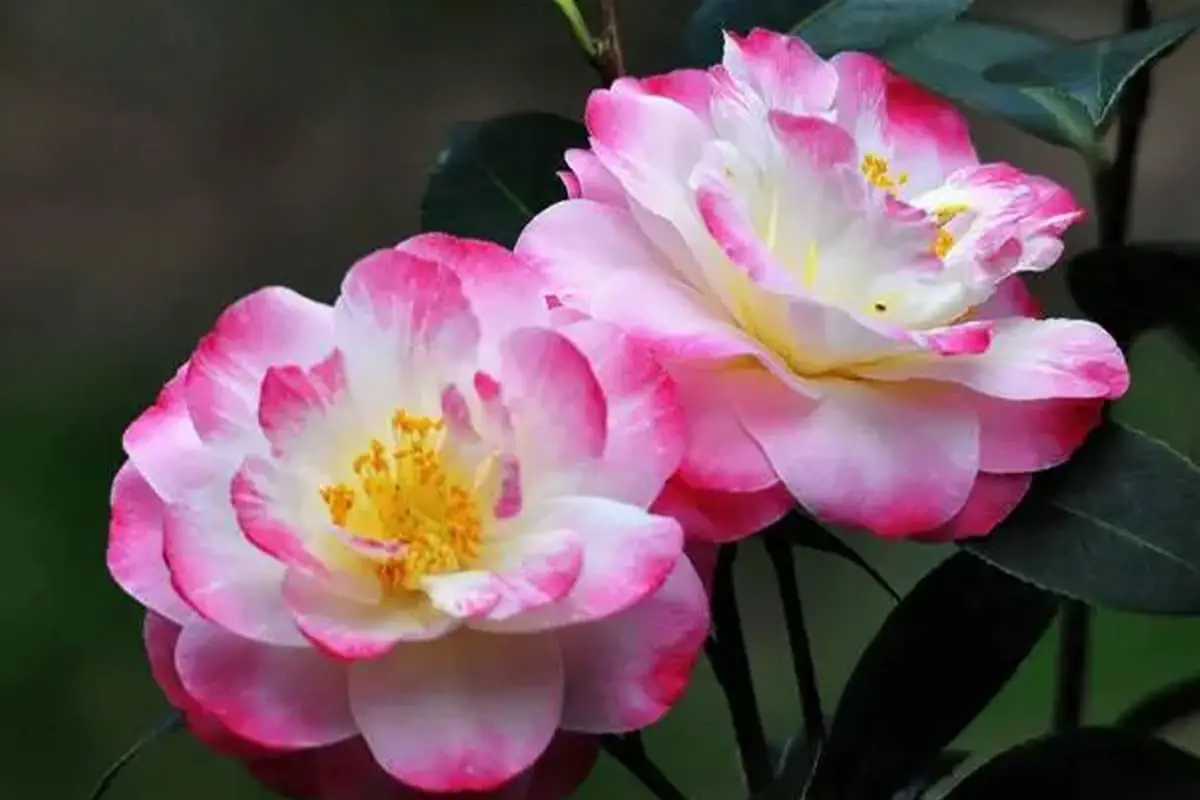
The Yunnan camellia is characterized by its broad elliptical leaves, measuring 8-11 cm in length and 4-5.5 cm in width. These leaves exhibit a distinctive shape, tapering sharply or abruptly at the tip and displaying a wedge-shaped or rounded base.
When dried, the upper surface of the leaves turns a lustrous dark green, while the underside takes on a deep brown hue, both devoid of hairs. The leaves feature 6-7 pairs of lateral veins, visible on the upper side and protruding on the lower surface. The leaf margins are adorned with fine serrations, and the hairless petioles measure 8-13 mm in length.
The flowers of the Yunnan camellia are truly spectacular, boasting a diameter of up to 10 cm. These vibrant red blooms emerge at the branch tips, lacking pedicels. Each flower is embraced by 10-11 bracts and sepals, forming a protective cup-like structure approximately 2.5 cm long. The lowermost 1-2 sepals are smaller and semi-circular, while the rest are circular, measuring 1.5-2 cm, with their exterior covered in silky yellowish-white hairs.
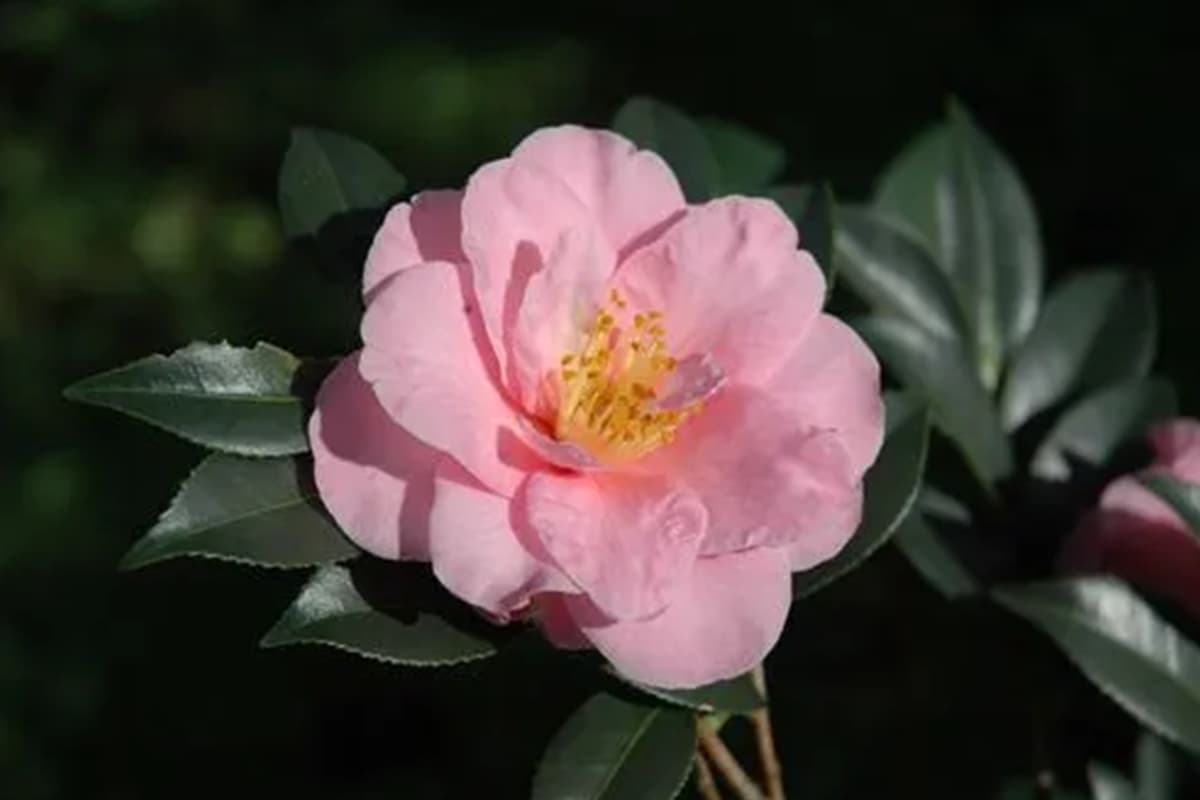
The floral display consists of 6-7 red petals. The outermost petal resembles a sepal, ovate-round in shape, measuring 2.5 cm in length, and backed with yellow silky hairs. The remaining petals are ovate-round, 5-5.5 cm long and 3-4 cm wide, with rounded or slightly indented tips. These petals are fused at the base and lack hair.
The stamens of the Yunnan camellia are approximately 3.5 cm long. The outer circle of filaments fuses at the base for 1.5-2 cm, forming a tube, while the free stamens are hairless. The ovary is covered with long yellow-white hairs, and the style measures 3-3.5 cm, either hairless or bearing white hairs at its base.
The fruit of C. reticulata is a flattened globose capsule, measuring 4.5 cm in height and 5.5 cm in width. It splits into three sections, each about 7 mm thick. The seeds are ovate-round, approximately 1.5 cm in length.
Among the various red-flowered camellias native to Yunnan, C. reticulata stands out for having the largest leaves and flowers, as well as hairless stamens.
The Yunnan camellia thrives at elevations between 1,500 to 2,800 meters, typically found in broad-leaved or mixed forests. It shows a preference for semi-shaded environments and acidic soils rich in organic matter with excellent drainage. This species is sensitive to direct sunlight and dry conditions, making it crucial to provide appropriate care in cultivation.
Optimal temperatures for Yunnan camellia growth range from 20-32°C (68-90°F). Growth slows significantly above 29°C (84°F), and leaf scorching may occur at temperatures of 35°C (95°F) or higher. Some temperature fluctuation is beneficial for the plant’s development.
The ideal relative humidity for camellia cultivation is 60% or higher. While the Yunnan camellia can generally withstand temperatures as low as -8°C (17.6°F), it is somewhat cold-sensitive. Most regions south of the Huai River in China are suitable for its overwintering.
Soil conditions play a crucial role in the successful cultivation of Yunnan camellias. They prefer acidic, well-aerated soils with good moisture retention capabilities. While they thrive in moist, nutrient-rich environments, they possess some drought tolerance. However, prolonged exposure to standing water can lead to root rot, emphasizing the importance of proper drainage.
Light management is essential for optimal growth. Yunnan camellias prefer partial shade, as intense summer sunlight can cause leaf scorching. When average daily temperatures exceed 35°C (95°F), most varieties enter a state of dormancy, ceasing growth.
Conversely, insufficient light results in weak photosynthesis, producing frail branches and small, thin leaves. Striking a balance between adequate light exposure and protection from intense sun is key to successful cultivation.
Yunnan Camellia thrives at altitudes of 1,500 to 2,800 meters in broad-leaved or mixed forests. It prefers semi-shaded environments with acidic soil rich in organic matter and good drainage. It does not fare well in direct sunlight or dry conditions.
Ideal temperatures for camellia growth range between 20-32°C. Growth ceases above 29°C, and at 35°C, leaves may scorch. A certain temperature fluctuation is beneficial.
An environmental humidity of 60% or more is ideal, and it generally withstands temperatures as low as -8°C. While the Yunnan Camellia is somewhat cold-sensitive, most regions south of the Huai River are suitable for overwintering.
Camellias favor acidic, well-aerated soils. While they thrive in moist, nutrient-rich environments, they are somewhat drought-tolerant. Prolonged water exposure can cause root rot. Loose, airy, and slightly acidic soils with good moisture retention are optimal for growth.
When it comes to light, camellias prefer partial shade. In peak summer, intense sunlight can scorch the leaves. When average daily temperatures exceed 35°C, most varieties enter dormancy, halting growth.
Conversely, insufficient sunlight weakens photosynthesis, resulting in frail branches and small, thin leaves. Both excessive and insufficient sunlight hinder camellia growth.
Yunnan Camellia propagation is typically achieved through seeding, grafting, and cuttings.
This method is straightforward, with September being the optimal month, though spring is also suitable. Select semi-woody branches that are growing vigorously.
Remove the leaves from the lower portion of the cutting while retaining the top three. Make a diagonal cut at the base using a sharp, sterilized knife. Dip the cut end in 200ppm to 500ppm indolebutyric acid (IBA) solution for 5 to 15 minutes. Once the treated end has dried, plant the cuttings in containers filled with coarse sand or pumice.
After planting, water the cuttings thoroughly. Callus formation typically occurs in about 40 days, with root development following around 60 days. Pumice as a rooting medium generally accelerates the rooting process compared to sand due to its excellent aeration and moisture retention properties.
Select suitable rootstocks such as Camellia oleifera (oil tea camellia) and graft them with desirable Yunnan Camellia varieties. Grafting is usually performed between the Qingming Festival (early April) and Mid-Autumn Festival (mid-September), when the cambium is active.
First, establish the rootstock in a pot. At the intended graft site, create a smooth, angled cut removing about half the diameter from both the scion and rootstock. Ensure the cambium layers of both parts align perfectly. Join the cuts tightly and secure with grafting tape or plastic film to prevent desiccation and promote healing.
Water the rootstock twice daily to maintain consistent moisture. The graft union typically heals in about 60 days. Afterward, place the grafted plant in a shaded area, avoiding direct sunlight to prevent stress. The following February, prune the remaining portion of the rootstock above the graft union and transplant to a suitable permanent location.
While stem cuttings are the conventional propagation method for camellias, certain valuable varieties, limited by branch availability or concerns about affecting the tree’s architecture, can be propagated via leaf cuttings.
A well-draining rooting medium consisting of two parts mountain soil mixed with one part river sand provides excellent aeration and moisture retention. Fill clay pots with this mixture for planting. Leaf cutting propagation is most successful during the rainy season when humidity is high.
Use one-year-old leaves as they strike roots more readily. Older leaves have difficulty rooting, while younger leaves are prone to rotting. Insert the petiole approximately 2cm deep into the soil at a slight angle, press down firmly to ensure good contact, water thoroughly, and place in a cool, ventilated area with bright, indirect light.
Typically, root development occurs in about three months. By the second spring, adventitious buds sprout from the base of the leaf cutting, giving rise to new shoots. Once the new plants are well-established, they can be carefully separated and potted individually.
Soil is the foundational element for the growth of potted camellias. The roots of camellias depend on soil for growth and development, extracting the majority of their required water and nutrients from it.
Camellias thrive in slightly acidic soil rich in organic matter, with good aeration and a texture similar to mountainous red or yellow loam. The optimal pH range is between 5.0 and 6.5. Alkaline or heavy clay soils are unsuitable for potting camellias.
For ideal soil preparation, combine:
After mixing, water the blend thoroughly and store it in bags to mature for at least 20 days during summer and autumn, or over 30 days in spring and winter. This soil mixture provides excellent aeration, moisture retention, and nutrient availability, promoting optimal camellia growth and development.
Camellias require adequate sunlight but are sensitive to direct, high-intensity sun exposure. During spring and late autumn, position camellias in a sunny location, such as a well-lit balcony or ground-level area, to receive full-day light exposure. This promotes plant growth, bud differentiation, and robust flower bud formation.
As summer intensifies, relocate the pots to a shaded, well-ventilated area, such as a north-facing balcony or beneath a south-facing balcony overhang. Alternatively, use a 75% shade cloth from 9 a.m. to 5 p.m. to protect plants from direct sunlight, preventing leaf damage and wilting, especially in young plants. If possible, place camellias under a dedicated sunshade structure during the hottest months for optimal protection.
Temperature is a crucial factor in camellia growth. These plants thrive in moderate warmth, with an ideal temperature range of 18°C to 25°C (64°F to 77°F) and relative humidity between 60% and 65%.
Camellia growth typically begins in mid to late March, with sprouting in April and terminal bud formation by late May. Growth then halts as buds gradually differentiate into leaf or flower buds. The period from bud formation to flowering spans 180 to 240 days.
Summer shoot growth commences in late July and ceases by early September. While camellias are generally cold-hardy, sudden temperature drops below 0°C (32°F) or exposure to dry, cold northwestern winds can cause frost damage to tender branches and buds, leading to wilting.
To protect camellias during colder months, relocate pots to a south-facing location sheltered from northern winds to ensure safe overwintering.
Camellias have numerous leaves with a large surface area, resulting in rapid transpiration. They prefer a humid climate and consistently moist soil. Ensure potted camellias receive adequate water, especially during their active growth periods.
Watering frequency:
Be cautious of overwatering, especially when using tap water, as it can lead to soil alkalinization over time. Always check soil moisture levels before watering to prevent waterlogging.
Camellias have high nutrient requirements due to their vigorous growth, abundant foliage, and extended flowering period. Provide both liquid fertilizers and slow-release fertilizers when repotting to ensure optimal nutrition.
Fertilizing guidelines:
When repotting, incorporate slow-release fertilizers into the new soil mix to provide sustained nutrition throughout the growing season.
Camellias thrive in environments with moderate air circulation and gentle breezes. They benefit from the moisture carried by southeast winds but are adversely affected by strong northwestern winds and gusty conditions, which can cause rapid water evaporation and imbalance between water supply and demand.
Ventilation recommendations:
Proper ventilation, combined with appropriate lighting, promotes healthy growth, aids in bud differentiation and flower bud development, and reduces the incidence of pests and diseases. Years of experience have shown that maintaining good air circulation is crucial for preventing various camellia health issues.
Camellias are renowned for their captivating beauty and exquisite blooms. They are among the eight famous flowers of Yunnan, China, and possess significant ornamental value. With a rich cultivation history in Yunnan spanning centuries, there are now over a hundred cultivars available.
These evergreen shrubs or small trees are globally recognized as prestigious ornamental plants, rivaling the fame of their close relatives, the mountain camellias (Camellia reticulata). Their abundant, diverse, and vibrant blossoms offer a unique spectacle in the Yunnan plateau during the winter and early spring seasons, typically blooming from late autumn to early spring.
Camellias can be planted individually as specimen plants or in groups in parks, courtyards, and scenic areas, making them excellent ornamental species. They are particularly valued for their ability to provide color and interest during the cooler months when many other plants are dormant. The flowers, which can be single, semi-double, or fully double, come in a wide range of colors including white, pink, red, and various bi-color combinations.
The Yunnan camellia (Camellia reticulata), in particular, stands out as a renowned ornamental plant, boasting over a thousand horticultural varieties. These camellias are prized for their large, showy flowers, which can reach up to 14-20 cm in diameter, and their glossy, dark green foliage that provides year-round interest.
Beyond their ornamental value, camellias, especially the Yunnan camellia, possess significant medicinal properties. In traditional Chinese medicine, various parts of the plant are used for their therapeutic benefits:
It’s important to note that while these traditional uses and potential benefits are widely recognized in Chinese medicine, many of these claims require further scientific research to be fully validated in Western medicine. As with any medicinal use of plants, it’s crucial to consult with a healthcare professional before using camellia or its derivatives for medicinal purposes.

Peggie was once a high school mathematics teacher, but she set aside her chalkboard and textbooks to follow her lifelong passion for flowers. After years of dedication and learning, she not only established a thriving flower shop but also founded this blog, “Flowers Library”. If you have any questions or wish to learn more about flowers, feel free to contact Peggie.
 English
  العربية
  Bahasa Indonesia
  Deutsch
  Français
  Italiano
  Nederlands
  Português
  Русский
  日本語
日本語