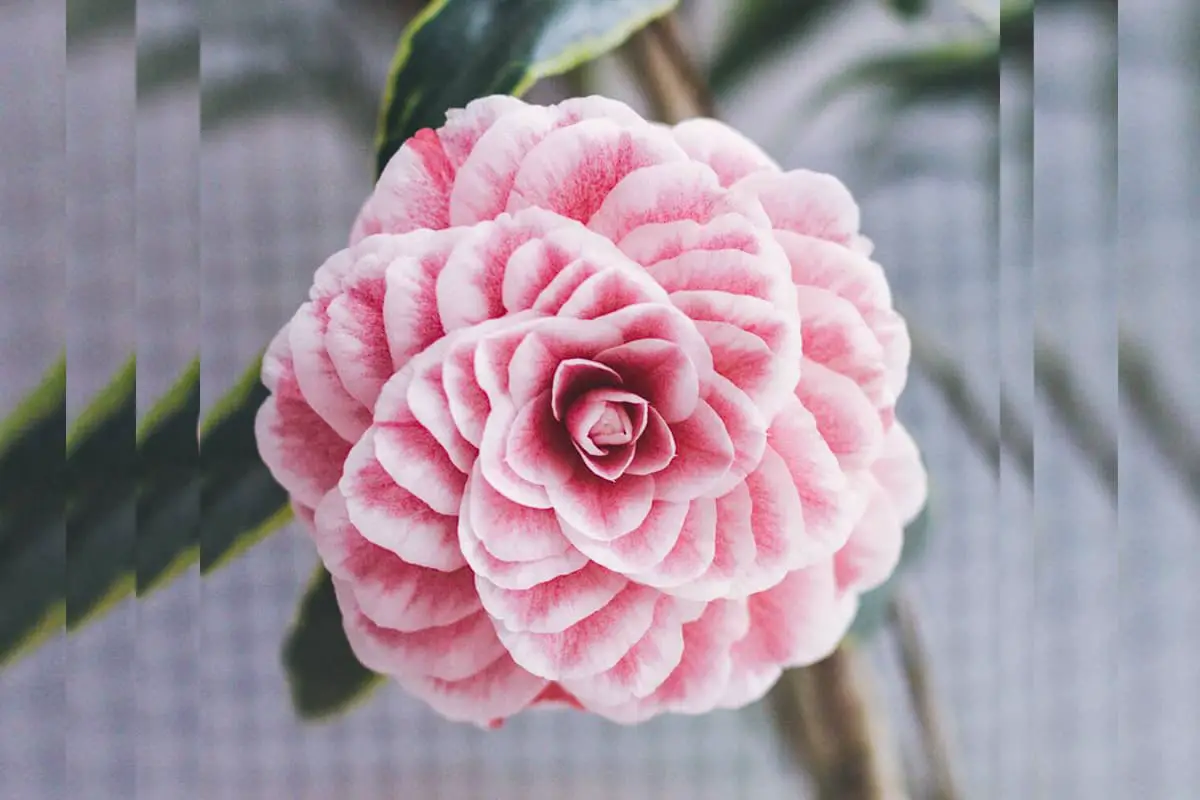
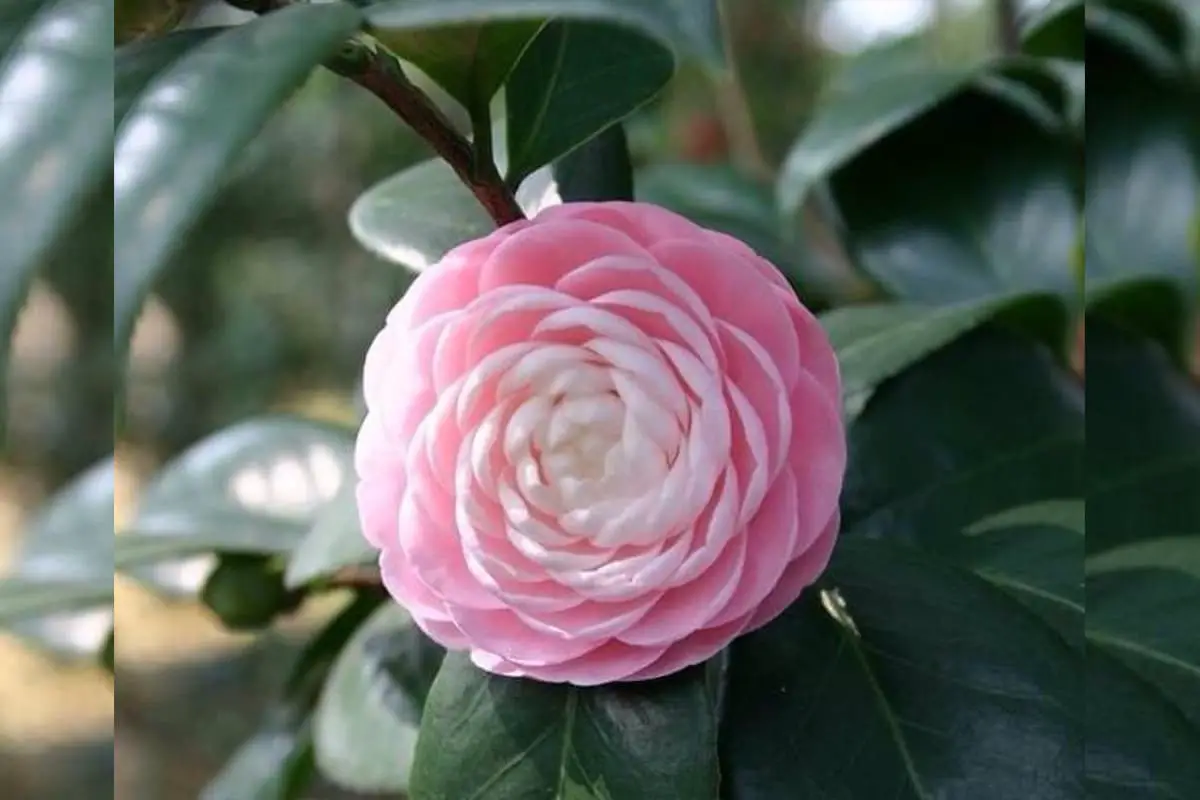
The Dehua Eighteen Scholars Camellia is a cherished variety within the camellia species, greatly adored by many. This plant possesses an elegant structure, featuring a peculiar flower design composed of 70-130 petals forming a hexagonal corolla.
This tower-like formation presents clear tiers in an orderly arrangement, making it truly beautiful. Typically, there are about 20 rotations of petals around each pair of adjacent angles, often consisting of 18 rotations, hence the name “Eighteen Scholars.”
I. Product Quality and Characteristics
The Dehua Eighteen Scholars Camellia is compact with upright branches and a full tree shape. Its leaves have a distinct wax-like quality, giving them a glossy finish. The flower buds are evenly distributed, with medium-sized flowers that belong to the fully double-petal type.
The flowers are vividly colored, but what’s most unique is their abundant color and shape variations. On a single plant, multiple flower colors and shapes can bloom.
Common colors include “multicolored,” white, pink, and red, with the “multicolored” Eighteen Scholars being the most famous.
II. Specific Production Methods
Site Selection: Choose a location with good drainage, deep soil layers, fertile and loose soil, and excellent ventilation, such as mountainous red (yellow) loam soil.
The site should be far from industrial pollution sources, and the soil environment, irrigation water quality, and air quality should all meet the requirements for growing the Eighteen Scholars Camellia.
Variety Selection: The common colors of the Eighteen Scholars Camellia are “multicolored,” white, pink, and red, with the “multicolored” Eighteen Scholars being the most famous.
Therefore, the main planting variety of the local Dehua Eighteen Scholars Camellia is the “multicolored” Eighteen Scholars Camellia. This variety is a rare specialty traditionally cultivated in the area.
Due to the unique natural conditions of the Dehua Daiyun Mountain area, the cultivated “multicolored” Eighteen Scholars Camellia is of excellent quality and can bloom with a variety of colors on a single plant, showcasing endless variations.
Production Process Management and Control Techniques: The growth of the Eighteen Scholars Camellia typically starts in mid to late March, with buds appearing in April.
By late May, the top buds are formed, and growth halts as leaf buds or flower buds begin to differentiate. It takes 180 to 240 days from the formation of the flower bud until it blooms.
The plant requires suitable sunlight but is sensitive to direct sunlight in high temperatures. Therefore, in spring and late autumn, the plant should be moved to a place with more sunlight to promote growth and flower bud differentiation.
During the intense sunlight of summer, the plant should be moved to a well-ventilated area with shade. The Eighteen Scholars Camellia is a heavy feeder due to its robust growth, numerous leaves, and long blooming period.
During fertilization, the use of prohibited pesticides must be avoided. All pesticide usage must comply with the relevant regulations for non-polluting agricultural products. Agricultural management systems should be established, with production processes thoroughly tracked and recorded.
Production Record Requirements: A production log must be kept throughout the entire process of the Eighteen Scholars Camellia’s cultivation.
All aspects, including the production situation, occurrence of pests and diseases, technical measures, the use of pesticides and fertilizers, harvest dates, quality inspection results, and sales situations, should be thoroughly documented. These records should be kept for more than two years for future reference.
Share
Facebook
Twitter
LinkedIn
Email
Share is Caring.
Peggie
Founder of FlowersLib
Peggie was once a high school mathematics teacher, but she set aside her chalkboard and textbooks to follow her lifelong passion for flowers. After years of dedication and learning, she not only established a thriving flower shop but also founded this blog, “Flowers Library”. If you have any questions or wish to learn more about flowers, feel free to contact Peggie.
Before you go
You May Also Like
We picked them just for you. Keep reading and learn more!
Types Of Flowers By Names (A-Z) Types Of Flowers By Color Types Of Flowers By Season Types Of Flowers By Blooming Time 600+ Types of Flowers No. Flower Name No.…

Lonicera maackii, commonly known as Amur honeysuckle, is a deciduous shrub that often grows in clusters. Its fragrant flowers provide an excellent nectar source for pollinators, while its fruit serves…
Liriodendron chinense, also known as the Chinese tulip tree, is a magnificent deciduous tree belonging to the Magnoliaceae family and the genus Liriodendron. This impressive species can reach heights of…
Viola variegata, commonly known as the Variegated Viola, is a perennial herb belonging to the Violaceae family and Viola genus. I. Physical Features: This diminutive plant typically grows between 3-12…
The Lily, also known as Lilium, is a perennial herbaceous bulbous plant belonging to the Liliaceae family. It is primarily distributed in the temperate regions of the Northern Hemisphere, with…
The Lilium tsingtauense, also known as the Qingdao Lily or Laoshan Lily, is a rare and beautiful species of lily. This perennial monocotyledonous herb is characterized by its striking orange-red…
Viola cornuta, commonly known as Horned Pansy or Horned Violet, is a perennial herbaceous plant belonging to the Violaceae family. Native to the Pyrenees mountains of Spain and France, this…
Callistemon viminalis, commonly known as Weeping Bottlebrush, is a distinctive evergreen tree belonging to the Myrtaceae family, native to Australia. Its lanceolate leaves range from grayish-green to dark green, and…
Lavandula lanata, commonly known as Woolly Lavender, is a distinctive and captivating lavender species native to the mountainous regions of southern Spain. This semi-hardy, aromatic plant is characterized by its…