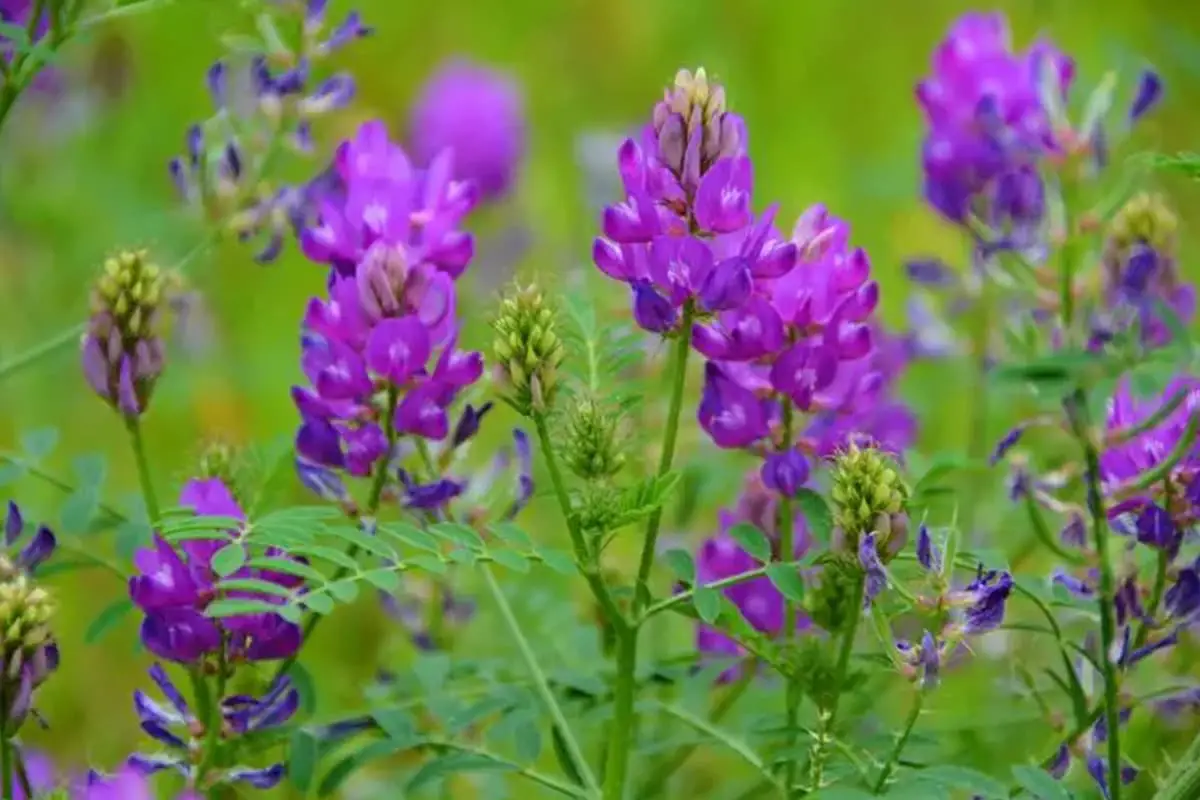
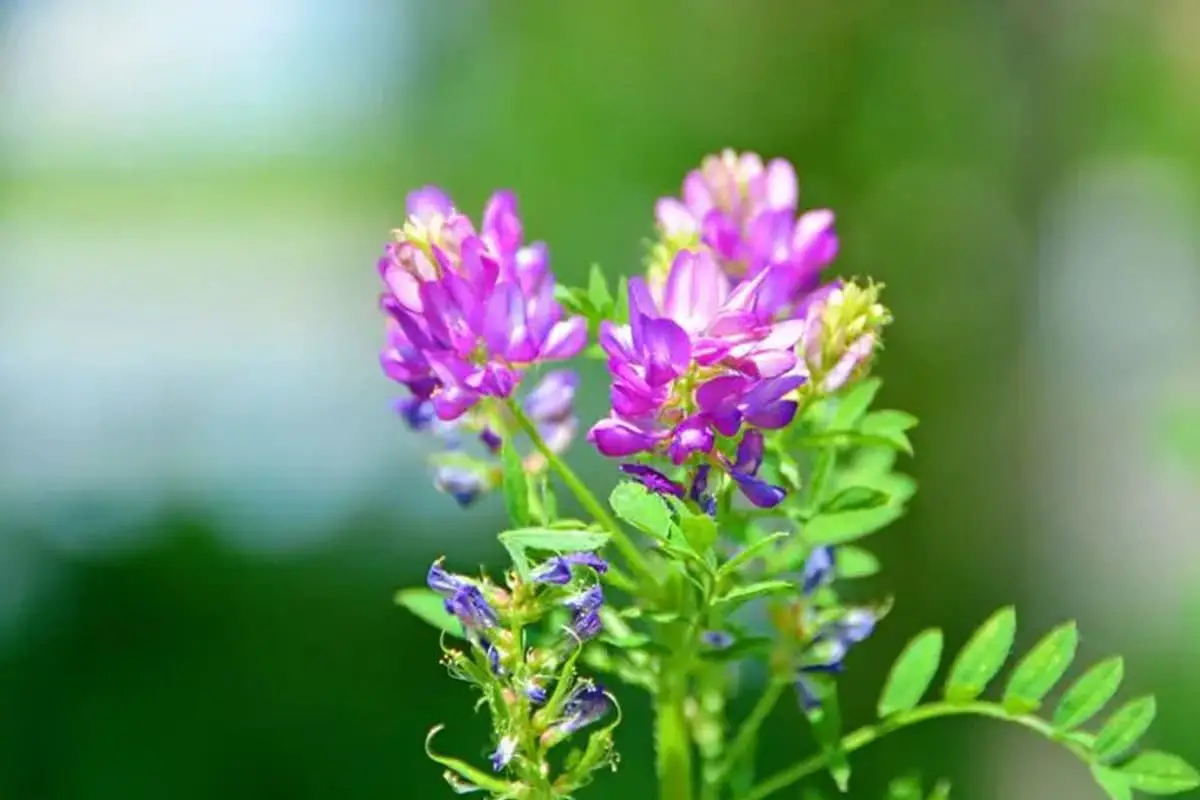
Astragalus dahuricus is a plant species belonging to the Fabaceae family, specifically the genus Astragalus. It can be either an annual or biennial herb.
The flowering period is from July to September, while the fruiting period is from August to October. It is native to the northeastern parts of China, among other places.
Morphological Features:
This plant is either an annual or biennial herb, covered with spread-out, white soft hairs.
The stem stands upright, can grow up to 80 cm tall, is branched, and has fine edges.
It has odd-pinnate compound leaves with 11-19 (sometimes 23) leaflets, each 4-8 cm long.
The petiole is less than 1 cm long.
The stipules are separate, lanceolate or linear, 4-8 mm long.
The leaflets are oval, ovate-oblong, or oblong-elliptical, 5-20 mm long, and 2-6 mm wide. They have a rounded or slightly pointed tip and a blunt or nearly wedge-shaped base. The petiolule (leaflet stem) is less than 1 mm long.
The racemose inflorescence is quite dense, bearing 10-20 flowers and is 3.5-10 cm long. The main flower stalk is 2-5 cm long. Bracts are linear or bristle-shaped, 3-4.5 mm long.
The calyx is obliquely bell-shaped, 5-5.5 mm long, with a tube 1.5-2 mm long. The calyx teeth are linear or bristle-shaped, with the upper two teeth being shorter and the lower three teeth longer (up to 4 mm).
The corolla is purple. The standard petal is almost ovate, 12-14 mm long and 6-8 mm wide. The wing petals are approximately 10 mm long, with the blade being curvilinear, about 7 mm long and 1-1.4 mm wide.
The ovary is stalked, hairy, with a stalk about 1.5 mm long.
The legume is linear, 1.5-2.5 cm long and 2-2.5 mm wide. It’s beaked at the tip and stands upright, bending inwards, having cross-veins, appearing two-chambered, and contains 20-30 seeds. The fruit neck is short, 1.5-2 mm long.
Seeds are light brown or brown, kidney-shaped, 1 mm long, approximately 1.5 mm wide, spotted, and smooth.
Distribution:
Astragalus dahuricus is found in Northeast, North, and Northwest China, as well as in Shandong, Henan, and northern Sichuan. It grows on mountain slopes and riverbank grasslands at altitudes of 400-2500 meters. It is also distributed in the former USSR, Mongolia, and North Korea.
Main Value:
The entire plant can be used as fodder. Large livestock, especially donkeys, are particularly fond of it, leading to its nickname as “donkey’s dry ration.”
Share
Facebook
Twitter
LinkedIn
Email
Share is Caring.
Peggie
Founder of FlowersLib
Peggie was once a high school mathematics teacher, but she set aside her chalkboard and textbooks to follow her lifelong passion for flowers. After years of dedication and learning, she not only established a thriving flower shop but also founded this blog, “Flowers Library”. If you have any questions or wish to learn more about flowers, feel free to contact Peggie.
Before you go
You May Also Like
We picked them just for you. Keep reading and learn more!
Types Of Flowers By Names (A-Z) Types Of Flowers By Color Types Of Flowers By Season Types Of Flowers By Blooming Time 600+ Types of Flowers No. Flower Name No.…

Lonicera maackii, commonly known as Amur honeysuckle, is a deciduous shrub that often grows in clusters. Its fragrant flowers provide an excellent nectar source for pollinators, while its fruit serves…
Liriodendron chinense, also known as the Chinese tulip tree, is a magnificent deciduous tree belonging to the Magnoliaceae family and the genus Liriodendron. This impressive species can reach heights of…
Viola variegata, commonly known as the Variegated Viola, is a perennial herb belonging to the Violaceae family and Viola genus. I. Physical Features: This diminutive plant typically grows between 3-12…
The Lily, also known as Lilium, is a perennial herbaceous bulbous plant belonging to the Liliaceae family. It is primarily distributed in the temperate regions of the Northern Hemisphere, with…
The Lilium tsingtauense, also known as the Qingdao Lily or Laoshan Lily, is a rare and beautiful species of lily. This perennial monocotyledonous herb is characterized by its striking orange-red…
Viola cornuta, commonly known as Horned Pansy or Horned Violet, is a perennial herbaceous plant belonging to the Violaceae family. Native to the Pyrenees mountains of Spain and France, this…
Callistemon viminalis, commonly known as Weeping Bottlebrush, is a distinctive evergreen tree belonging to the Myrtaceae family, native to Australia. Its lanceolate leaves range from grayish-green to dark green, and…
Lavandula lanata, commonly known as Woolly Lavender, is a distinctive and captivating lavender species native to the mountainous regions of southern Spain. This semi-hardy, aromatic plant is characterized by its…