600+ Types of Flowers A To Z (With Names and Pictures)
Types Of Flowers By Names (A-Z) Types Of Flowers By Color Types Of Flowers By Season Types Of Flowers By Blooming Time 600+ Types of Flowers No. Flower Name No.…

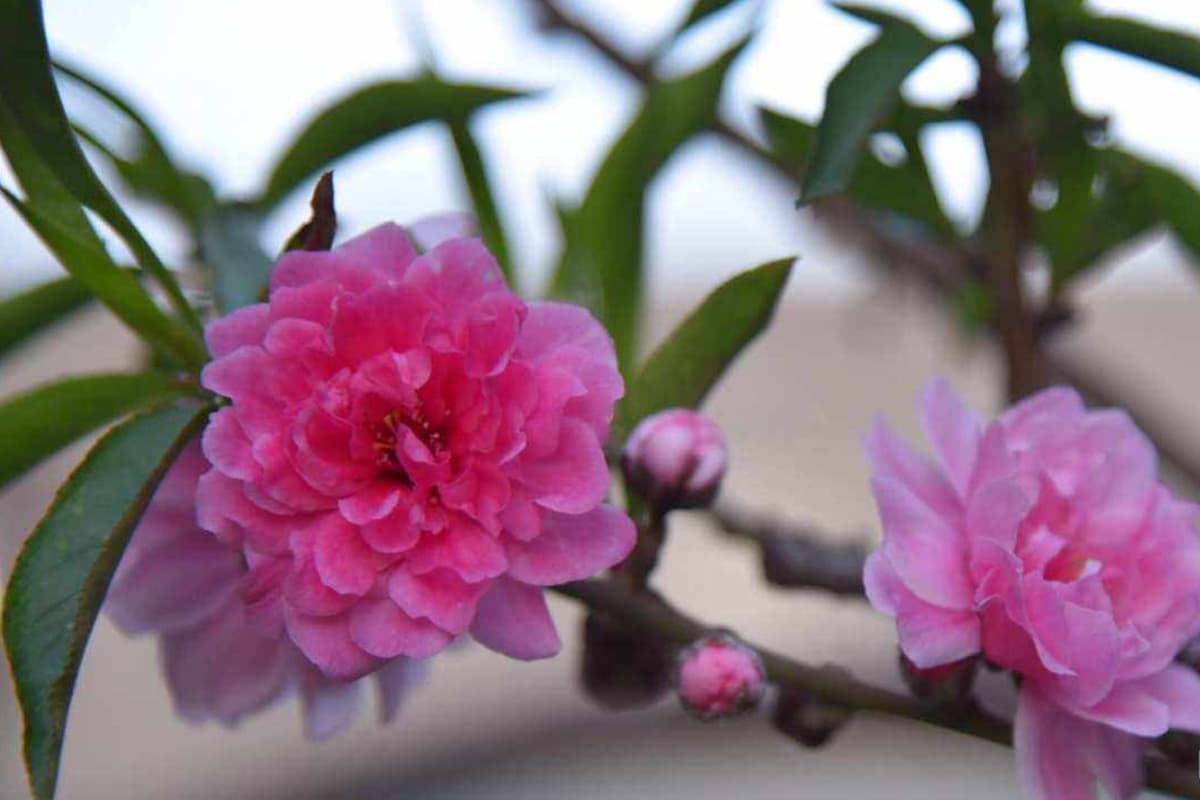
The Weeping Peach, scientifically known as Amygdalus persica, is a semi-double and double variety of ornamental peach blossoms. Its blooming period is from March to April each year.
The flowers are predominantly single, and their color ranges from red to various shades of pink, with some white blossoms as well. A distinguishing feature of this plant is its drooping branches.
The plant boasts large, brightly colored flowers and holds high ornamental value. It is commonly planted along roadsides or arranged in parks, and is also suitable for pot planting.
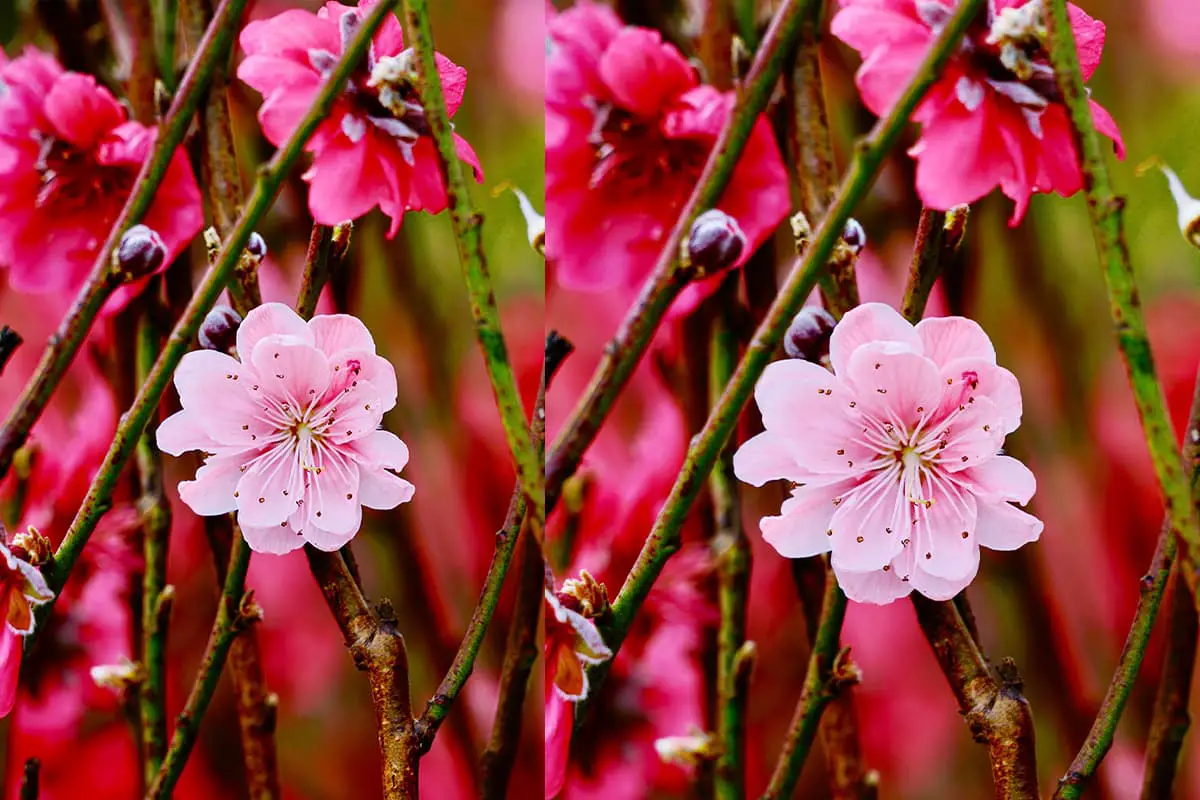
The Weeping Peach (scientific name: Amygdalus persica L. var. persica f. pendu-la Dipp.) is a variant of the peach genus in the Rosaceae family. Its leaves are narrow elliptical to lanceolate, 15cm long and 4cm wide, with a pointed tip.
The leaf edges are finely toothed and glossy dark green, with nectar glands at the base. The bark is dark gray, developing cracks as it ages. The flowers are single, varying from light to dark pink or red, sometimes white, with a short stem and 4cm in diameter.
The plant blooms in early spring. It produces nearly spherical drupes, hairy on the surface, with edible flesh that is orange-yellow tinged with red. The drupes are 7.5cm in diameter, containing a deeply pitted and grooved stone, which encloses a white seed.
The Weeping Peach is a semi-double and double variety of ornamental peach blossoms, commonly referred to as Bi Peach. In East China, the blooming period of the Bi Peach is from March to April.
The flowers are plump and rich in color, and there are many flower shapes. Common varieties include the Red Flower Green Leaf Bi Peach, Red Flower Red Leaf Bi Peach, and White-Red Bicolor Gold-Sprinkled Bi Peach.
The Bi Peach holds high ornamental value and is a beautiful plant commonly seen in residential areas, parks, and streets.
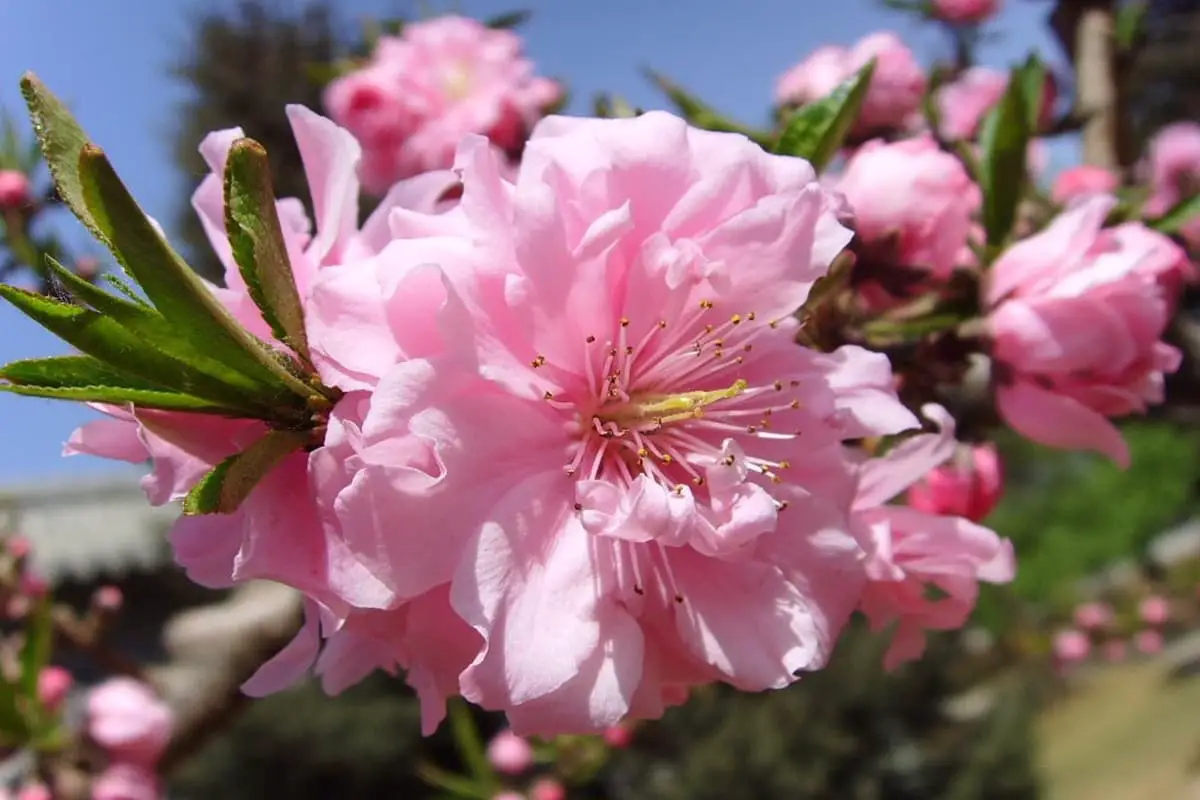
The Weeping Peach prefers sunlight and is drought-resistant, requiring fertile, well-drained soil. During the growing period, management needs to be enhanced, including fertilization, watering, weeding, and pest and disease prevention. Its cold resistance is not as strong as that of the peach.
Originally from China, it has now been introduced and cultivated in various countries around the world.
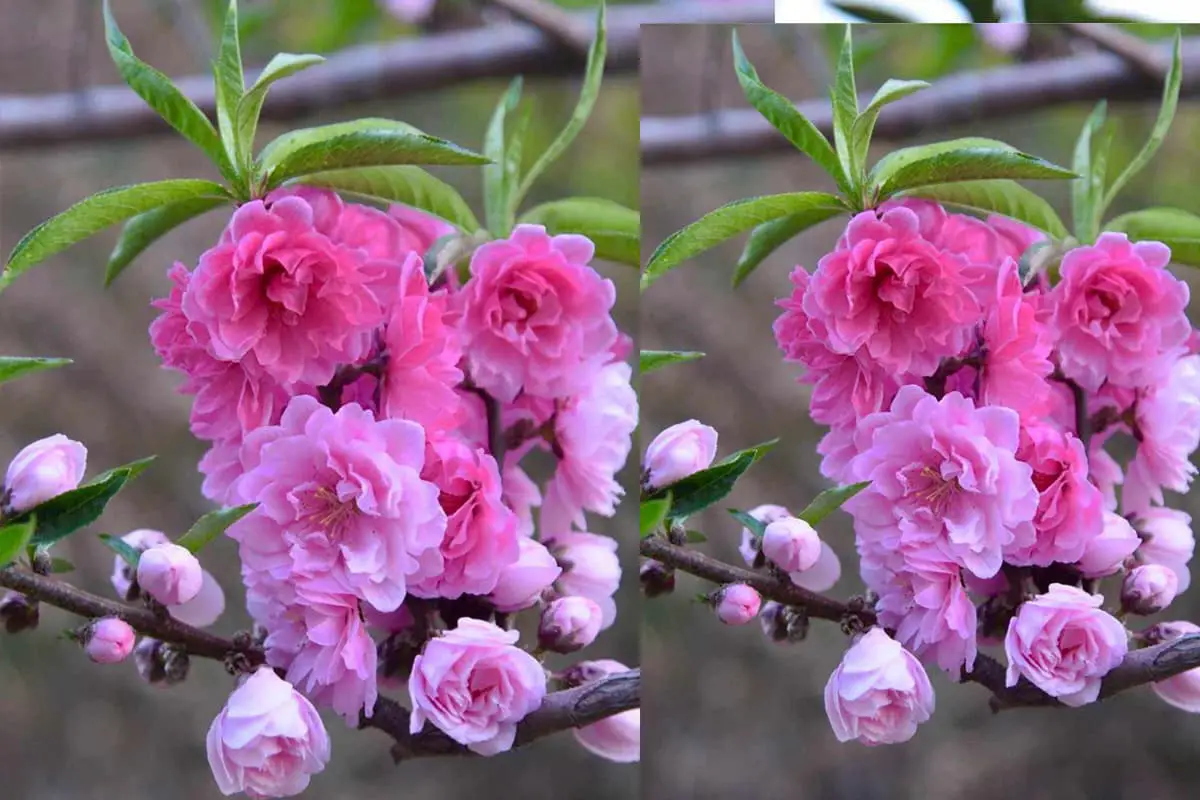
This is a tree that grows between 3 to 8 meters in height. The crown of the tree is broad and flat, the bark is dark reddish-brown and becomes rough and scaly with age.
The small branches are slender, hairless, shiny, and green, turning red in the sunlight, and covered with numerous tiny pores. The winter buds are conical, blunt at the tips, covered with short soft hairs, often grouped in clusters of 2-3, with the leaf bud in the middle and the flower buds on either side.
The leaves are long and elliptical, or inverted egg-shaped, measuring 7-15 cm in length and 2-3.5 cm in width. The tips of the leaves are pointed, and the bases are broadly wedge-shaped.
The upper surface of the leaves is hairless, while the underside has a few short soft hairs in between the veins or is hairless. The leaves have fine or coarse serrated edges, with or without glandular teeth. The leaf stalks are robust, 1-2 cm long, often with 1 to several glands, sometimes without glands.
The flowers are solitary, blooming before the leaves, with a diameter of 2.5-3.5 cm. The flower stalks are extremely short or nearly stemless. The calyx tube is bell-shaped, covered in short soft hairs, rarely hairless, green with red spots.
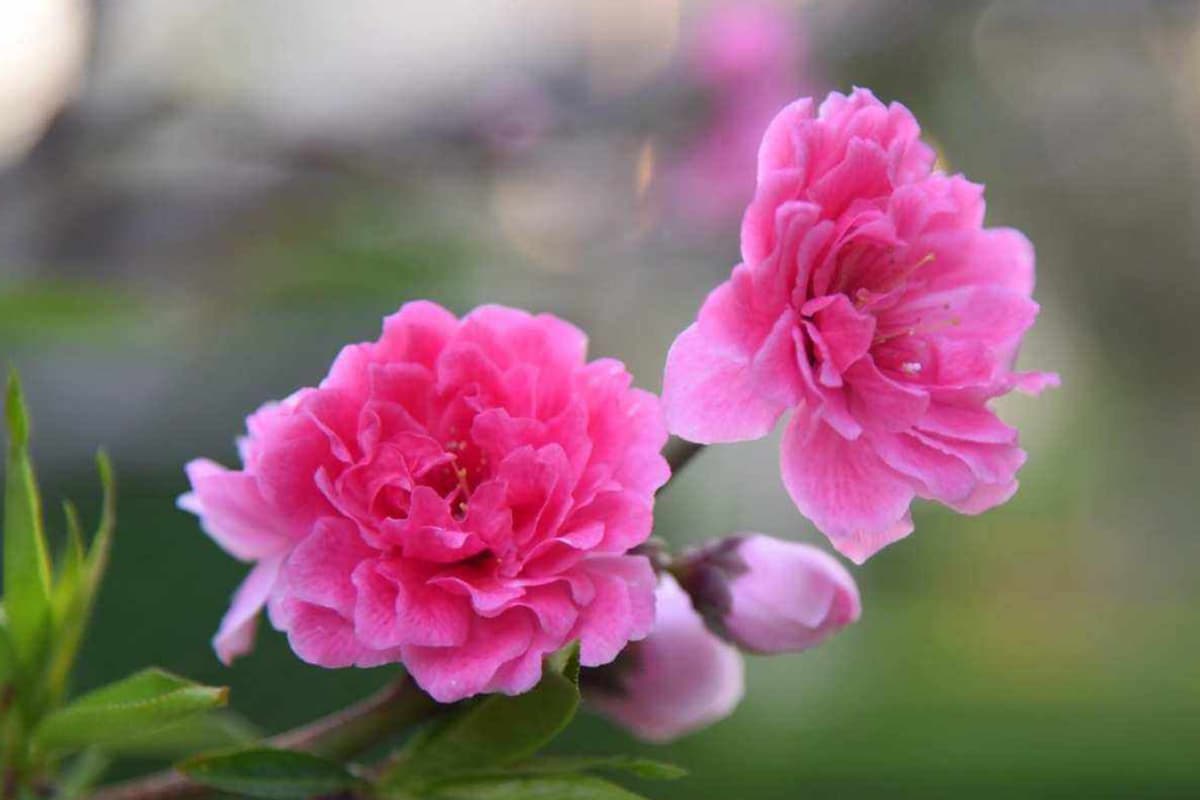
The petals are long and elliptical to wide and inverted egg-shaped, pink, rarely white. It has approximately 20-30 stamens, with scarlet anthers. The styles are about the same length as the stamens or slightly shorter. The ovary is covered with short soft hairs.
The shape and size of the fruit vary, from egg-shaped to wide elliptical or flat circular, with a diameter of (3) 5-7 (12) cm, and its length is almost equal to its width.
The color varies from pale green-white to orange-yellow, often with a red blush on the side facing the sun, densely covered with short soft hairs, rarely hairless, with a conspicuous abdominal seam. The fruit stalk is short and deeply embedded in the fruit pit.
The pulp is white, light green-white, yellow, orange-yellow, or red, juicy and fragrant, sweet or sour-sweet. The stone is large, free or clinging, elliptical or nearly round, flat on both sides, pointed at the tip, with longitudinal and transverse grooves and holes on the surface.
The seed tastes bitter, rarely sweet. The flowering period is from March to April, and the fruit ripening period varies according to the variety, usually in August to September.
This deciduous small tree can grow up to 8 meters tall, usually controlled to 3-4 meters after pruning. The small branches are reddish-brown and hairless; the leaves are elliptical, 7-15 cm long, gradually pointed at the tip.
The flowers are solitary or two born in the leaf axils, double petals, pink. Other varieties have white, dark red, gold-sprinkled (multicolored), etc.
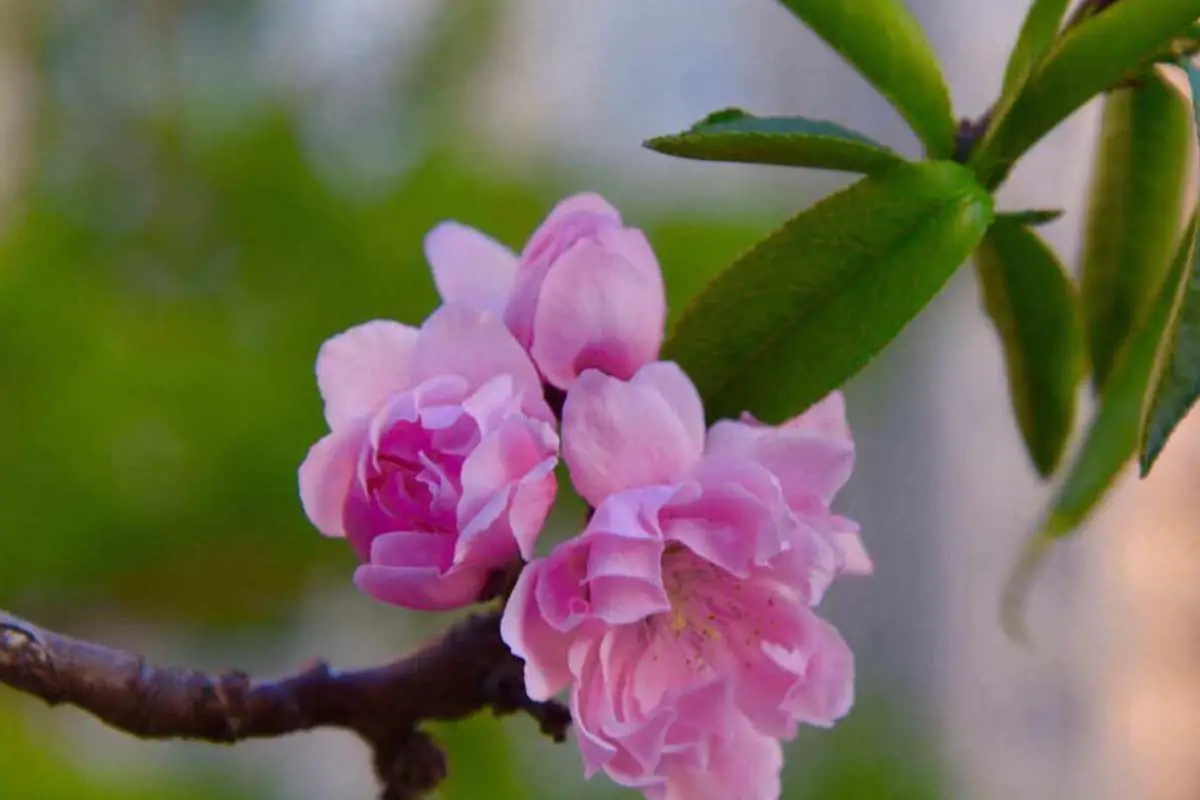
Grafting is used for propagation.
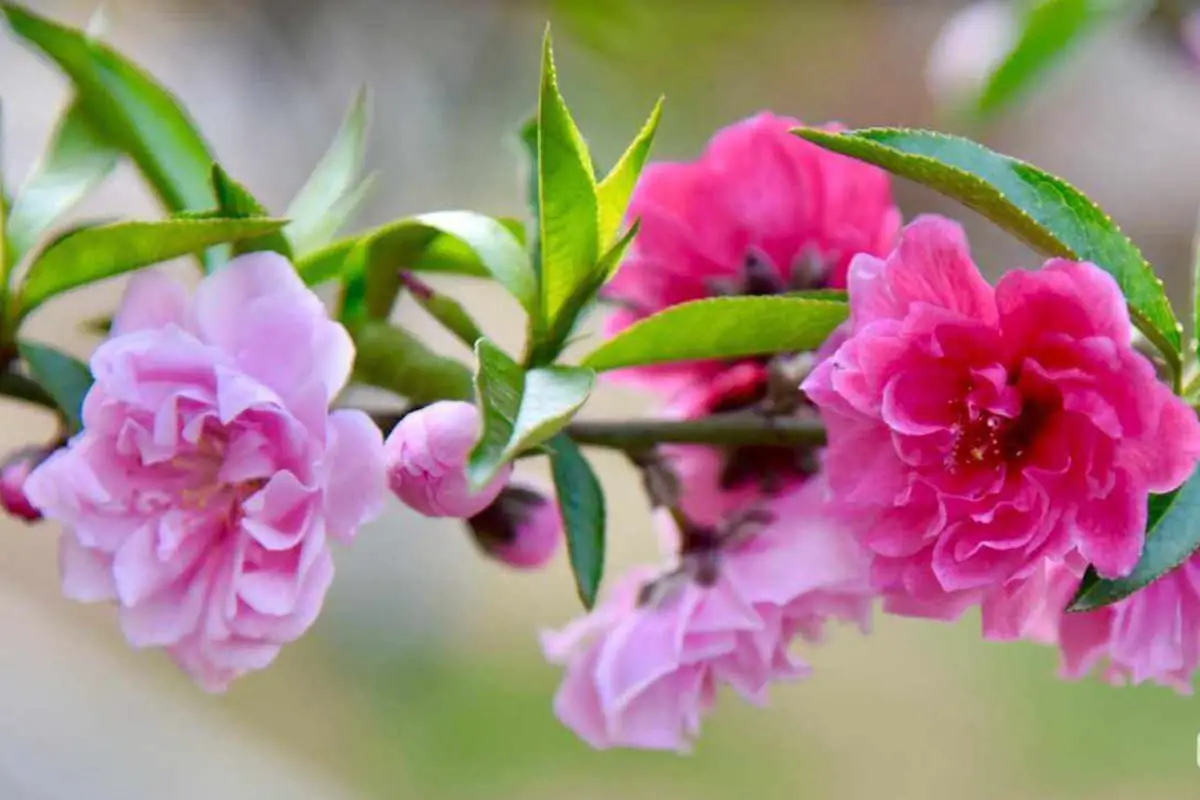
The lush peach blossoms are large and brightly colored, charming and enchanting. They are suitable for lakeside, streamside, roadside, and park arrangements, as well as for small courtyard decoration and potted ornamental use. They are also commonly used for cut flowers and bonsai making. The weeping peach tree is also common.

Peggie was once a high school mathematics teacher, but she set aside her chalkboard and textbooks to follow her lifelong passion for flowers. After years of dedication and learning, she not only established a thriving flower shop but also founded this blog, “Flowers Library”. If you have any questions or wish to learn more about flowers, feel free to contact Peggie.
 English
  العربية
  Bahasa Indonesia
  Deutsch
  Français
  Italiano
  Nederlands
  Português
  Русский
  日本語
日本語