600+ Types of Flowers A To Z (With Names and Pictures)
Types Of Flowers By Names (A-Z) Types Of Flowers By Color Types Of Flowers By Season Types Of Flowers By Blooming Time 600+ Types of Flowers No. Flower Name No.…

The Zinnia, also known as the Perennial Flower, is a type of annual herbaceous plant. Its side branches fork out like a candelabra, and it blooms in summer and fall. The capitulum, or flower head, grows singularly at the top of the stem, with the flowers reaching roughly 10 centimeters in diameter.
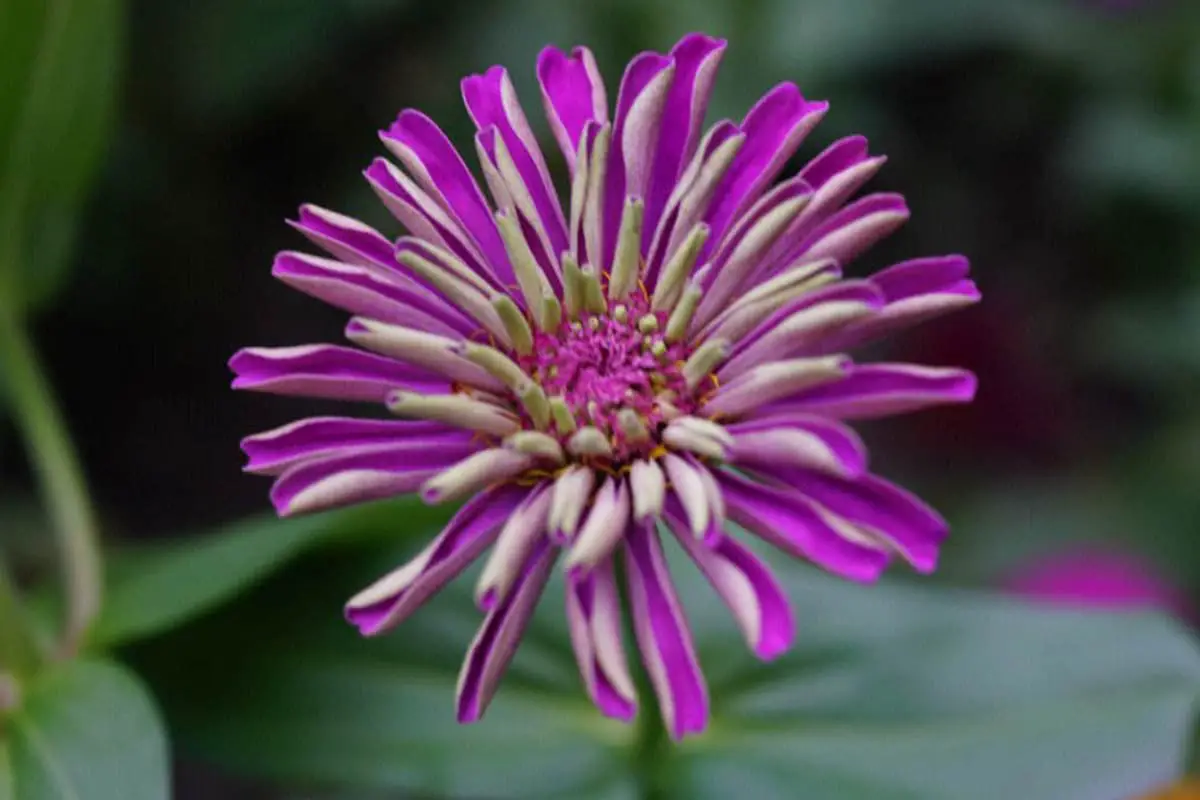
The petals showcase a diverse range of colors, and the flower presents a multitude of forms, with most being double-petal varieties. The achene of the female flower is an inverted ovate shape, approximately 6-7 millimeters long and 4-5 millimeters wide. It is flat, with one ridge each in the center and along the sides. The top is truncated, the base is narrow, and the surface is densely hairy.
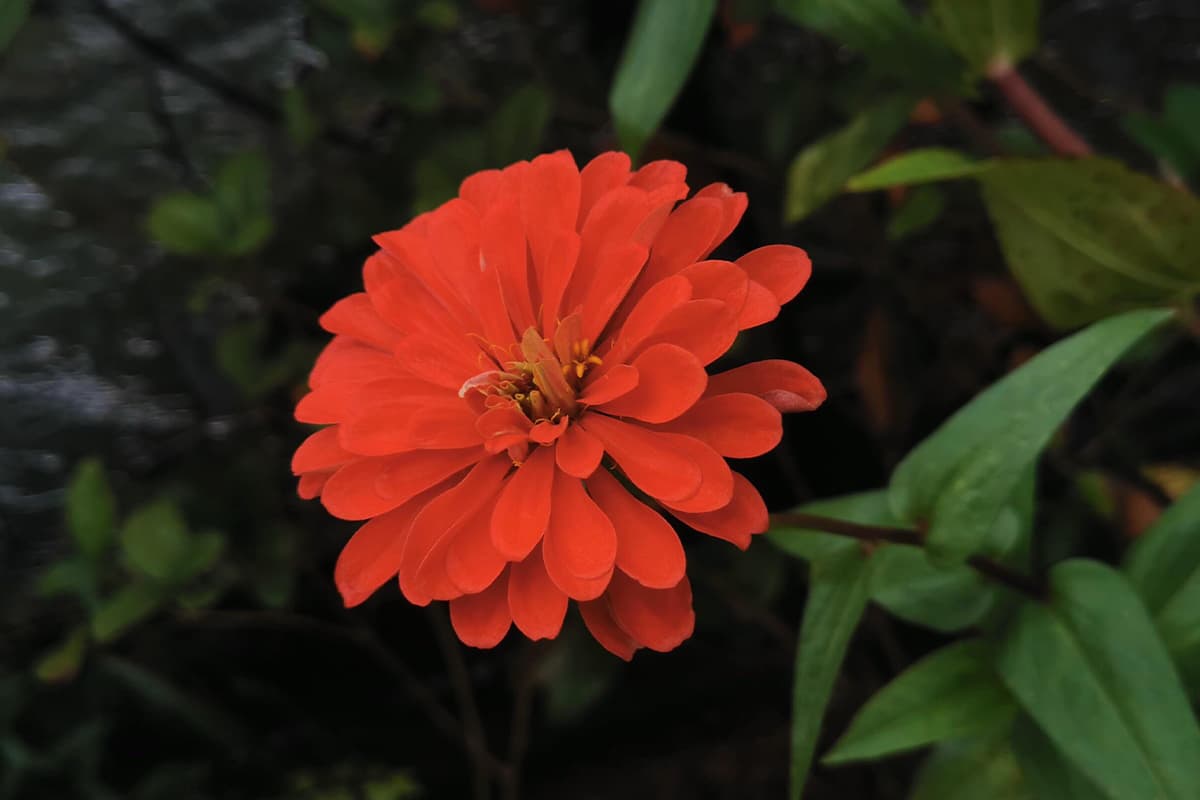
The tubular flower achene is an inverted ovate wedge shape, 7-8 millimeters long and 3.5-4 millimeters wide. It is extremely flat, sparsely hairy, and has short teeth at the top. The flowering period is from June to October, and the fruiting period is from July to October.
Native to Mexico, there are various horticultural varieties of Zinnia, including single-petal, double-petal, curled leaf, wrinkled leaf, and a myriad of colors. With large, vibrant flowers, the Zinnia is drought-resistant, blooms for an extended period, and boasts an attractive shape.
Depending on its height, it can be used in flower beds, landscapes, and flower belts, and it is also commonly grown in pots.
Morphological Features
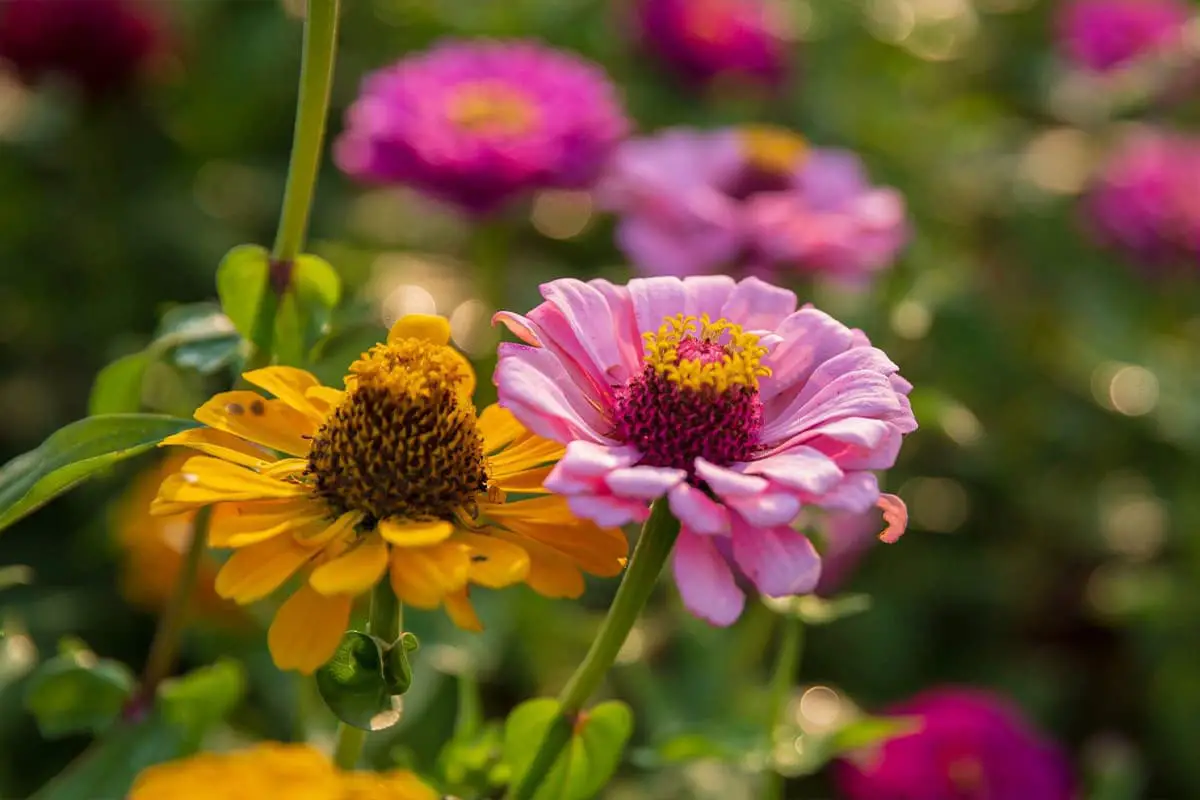
This annual herb has an erect stem, growing 30-100 centimeters tall, covered in rough or long hard hair. The leaves are broad ovate or oblong elliptical, 5-10 centimeters long and 2.5-5 centimeters wide. The base of the leaves is slightly heart-shaped, wrapping the stem.
Both surfaces are coarse, and the underside is densely covered with short rough hairs, with three veins emerging from the base. The flower head measures 5-6.5 centimeters in diameter, grows singularly at the end of the stem, and is supported by a thick, solid peduncle.
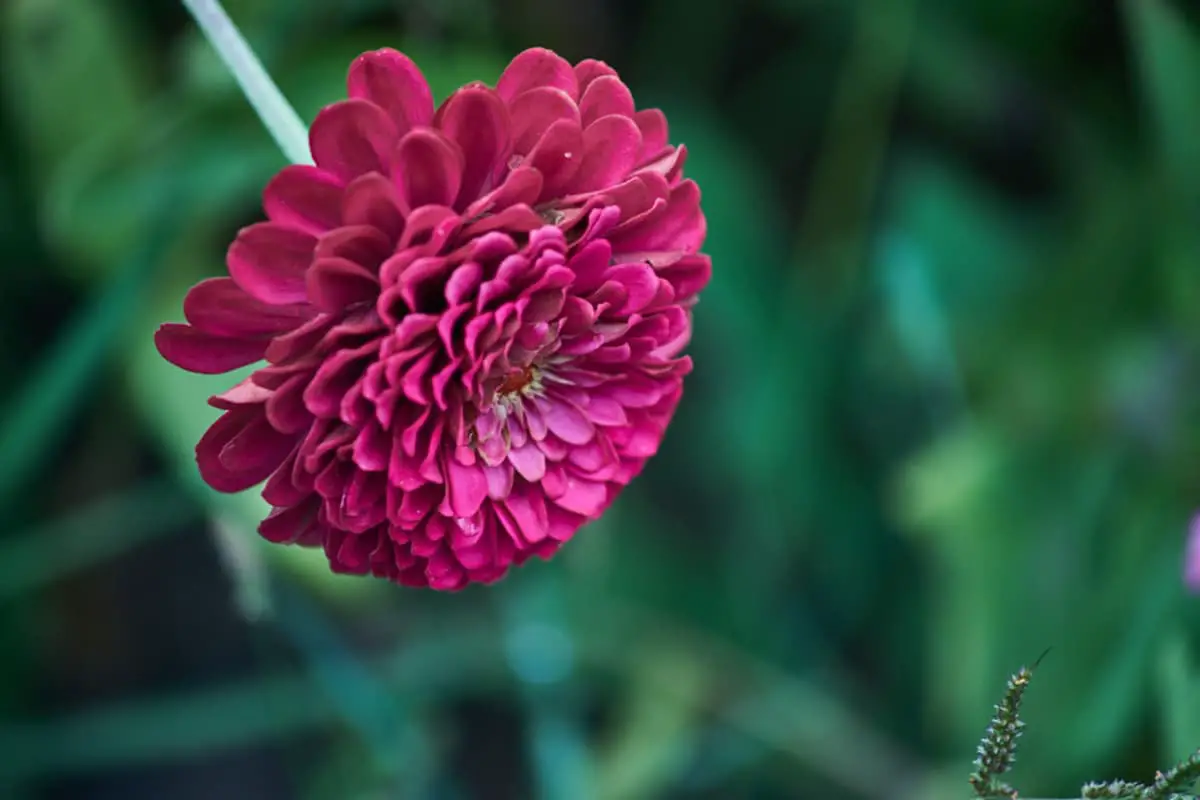
The involucre is broadly bell-shaped; the bracts are layered, broad ovate or ovate elliptical, the outer layer is about 5 millimeters long, the inner layer about 10 millimeters long, and the margins are black. The paleae, or chaffy bracts, have extended appendages at the top; the appendages are purple-red and fringe-triangular.
The ray flowers are deep red, rose, violet, or white, and the ligules are inverted ovate, with 2-3 toothed or entire tips. The upper surface is short-haired, and the lower surface is long and soft-haired. The tubular flowers are yellow or orange, 7-8 millimeters long, and the tip’s lobes are ovate lanceolate, covered with yellow-brown dense floccose hairs.
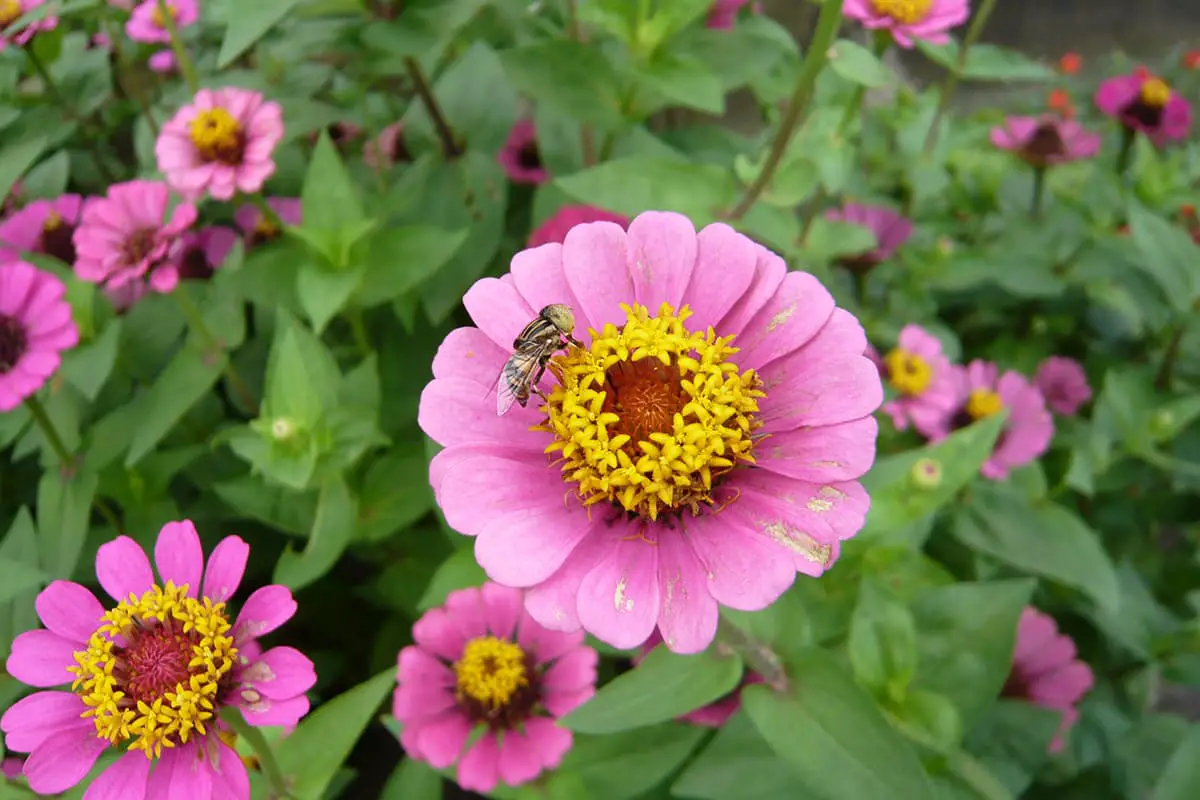
The achene of the female flower is an inverted ovate shape, about 6-7 millimeters long and 4-5 millimeters wide. It is flat, with one ridge each in the center and along the sides. The top is truncated, the base is narrow, and the surface is densely hairy.
The tubular flower achene is an inverted ovate wedge shape, 7-8 millimeters long and 3.5-4 millimeters wide. It is extremely flat, sparsely hairy, and has short teeth at the top. The flowering period is from June to October, and the fruiting period is from July to October.
Growing Environment
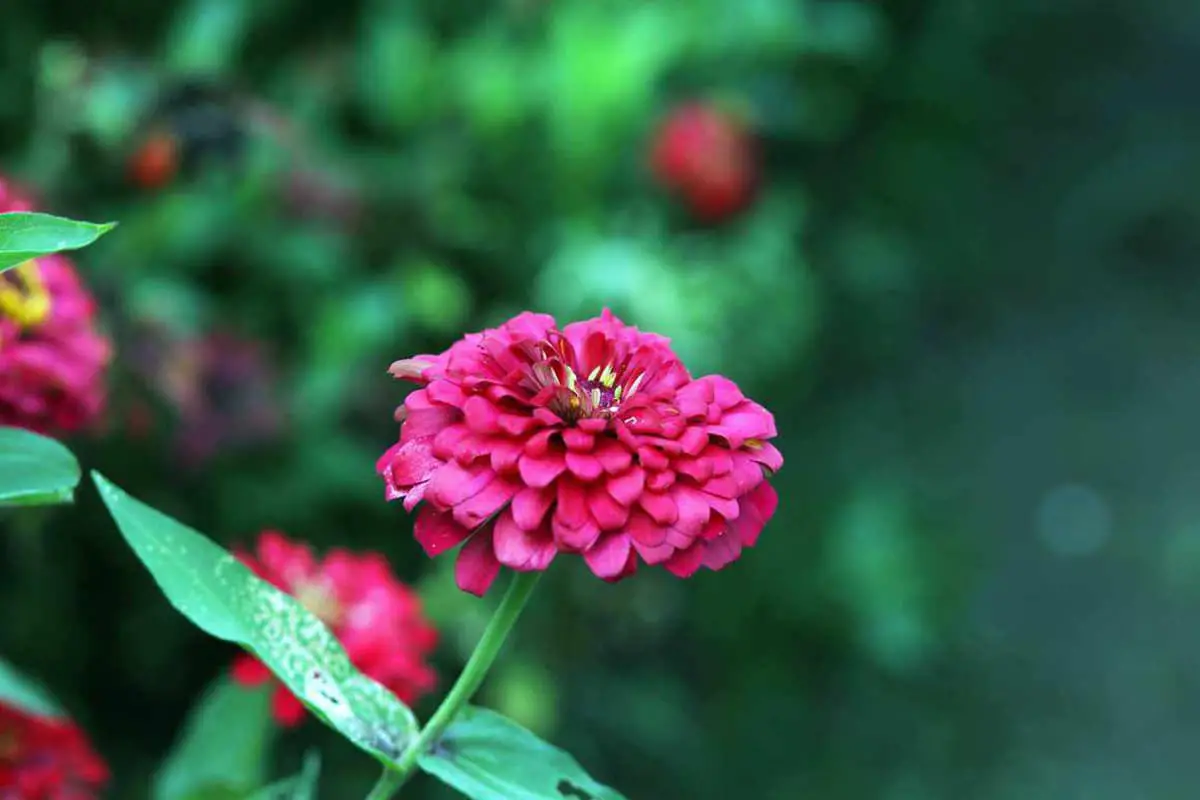
Zinnias thrive in warm temperatures, are not cold-hardy, love sunshine, are intolerant of extreme heat, and are robust plants. They are drought-tolerant, can grow in poor soil, and do not perform well in continuous cropping systems. They have deep roots and stiff stems, making them resistant to lodging. They grow best in fertile soil with a deep top layer. The optimal temperature for growth is 15-30°C.
Distribution Range
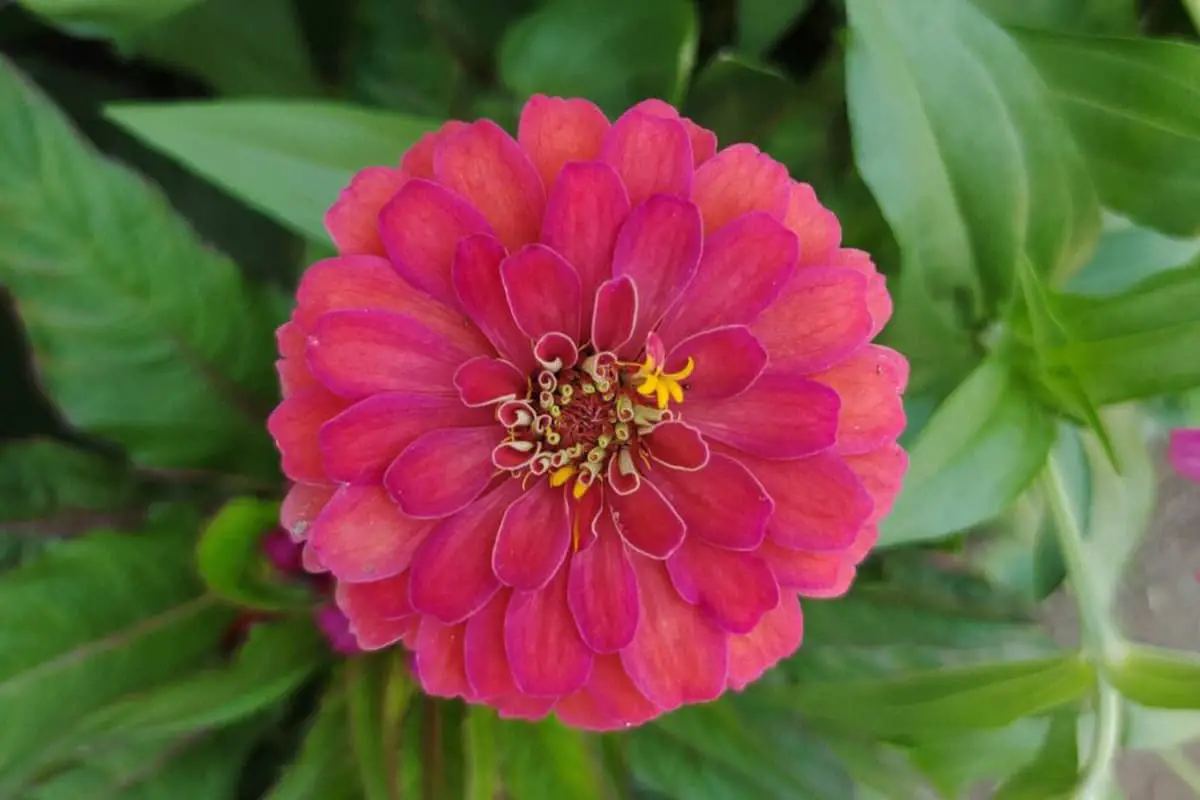
Native to Mexico, there are various horticultural varieties of Zinnia, including single-petal, double-petal, curled leaf, wrinkled leaf, and a multitude of colors. It is widely cultivated throughout China and sometimes grows wild. It has been introduced in Yunnan (Xishuangbanna, Mengzi, etc.) and southwestern Sichuan.
Propagation and Growth
Seed Propagation
Prior to sowing, both the soil and the seeds should undergo thorough sterilization to prevent pests and diseases during the growth period. Sowing can be done from early April to late June. Seeds should be disinfected by soaking in a 1% potassium permanganate solution for 30 minutes.
The substrate can be made from a mix of 2 parts leaf mold, 1 part river sand, 2 parts peat, and 2 parts perlite. It can be disinfected with 0.05% potassium permanganate or a 1000-fold dilution of formaldehyde.
The soil can be fumigated at high temperatures to kill bacteria, pests, and weed seeds. After the substrate is moistened, sow the seeds; zinnias prefer light, so the seeds should be covered with a layer of vermiculite after sowing.
At a temperature of 21-23°C, the seeds can germinate within 3-5 days. Light is not required during germination, but after germination, the seedbed should maintain a moisture content of 50%-60%. Avoid excess water to prevent root rot or damping-off disease.
Zinnia seeds have a lifespan of about 3 years, with a germination rate of around 60%. Try to choose plump seeds from the previous year to increase the germination rate. The sowing date can be determined according to the flowering time, which takes about 75-90 days from sowing. Seeds can be sown individually or broadcasted, covered with about 1 centimeter of thin soil, watered after sowing, and will germinate in 5-10 days. Transplant the seedlings when they have grown 2 leaves and are 5-8 centimeters tall. The time from transplanting to flowering varies between 45 and 60 days depending on the variety. The optimal growing temperature is 15-30°C. Besides shading and rain protection for the seedlings, ample sunlight is required. For potting, use a mix of 3 parts compost, 1 part sawdust, and 1 part river sand.
Cutting Propagation
Cutting propagation is not as uniform as seed propagation. Side shoots about 10 centimeters long can be used for cutting propagation. Generally, roots will form in 5-7 days. Subsequent cultivation and management are the same as for seedlings, and they can be moved out of the nursery in 30-45 days.

Peggie was once a high school mathematics teacher, but she set aside her chalkboard and textbooks to follow her lifelong passion for flowers. After years of dedication and learning, she not only established a thriving flower shop but also founded this blog, “Flowers Library”. If you have any questions or wish to learn more about flowers, feel free to contact Peggie.
 English
  العربية
  Bahasa Indonesia
  Deutsch
  Français
  Italiano
  Nederlands
  Português
  Русский
  日本語
日本語