600+ Types of Flowers A To Z (With Names and Pictures)
Types Of Flowers By Names (A-Z) Types Of Flowers By Color Types Of Flowers By Season Types Of Flowers By Blooming Time 600+ Types of Flowers No. Flower Name No.…

Pomegranate flowers, which are the blossoms of the pomegranate tree, are a sight to behold with their beautiful flowers and fruits. In early spring, the tender leaves start to emerge, displaying graceful and varied forms.
As summer arrives, the tree becomes a vibrant spectacle, adorned with colorful blossoms. In autumn, it bears abundant fruits, creating a lively atmosphere. Placing potted pomegranate plants on balconies or window sills adds a festive and elegant touch to the home environment.
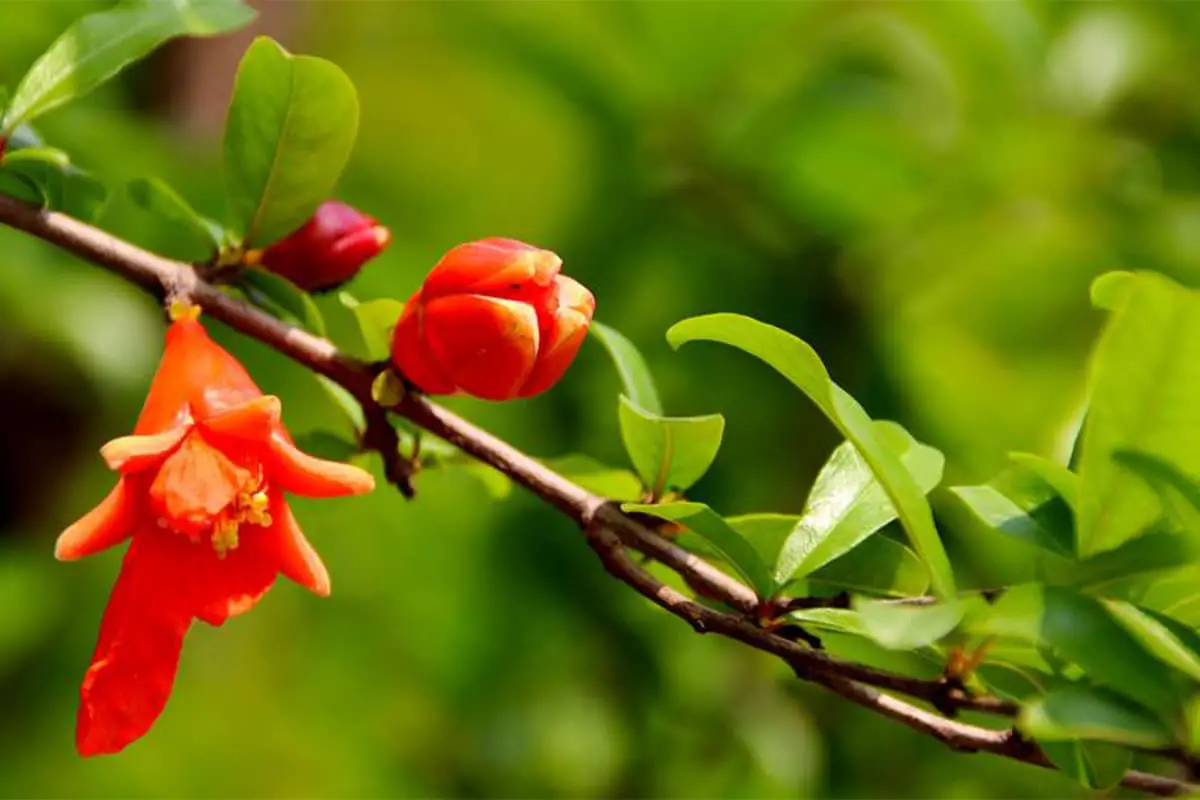
Compared to pomegranates, which everyone has surely eaten, not many people are familiar with pomegranate flowers.
Pomegranate flowers are also known as An Pomegranate, Jin Ying, Jin Pang, Tu Lin, Tian Jiang, Ruo Liu, Dan Ruo, Shan Li Ye, Zhu Shi, and so on.
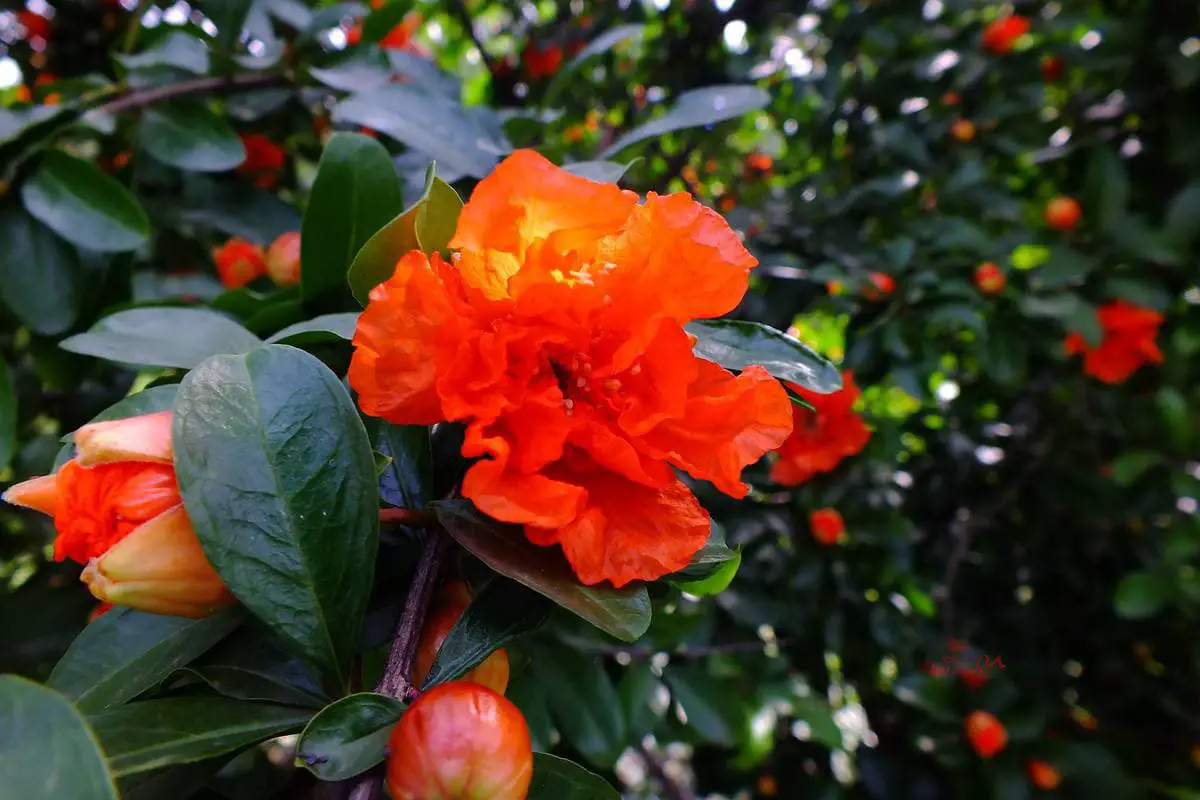
Pomegranate flowers are the blossoms of deciduous shrubs or small trees. Pomegranate plants can reach a height of 2 to 5 meters, with the tallest ones reaching 7 meters. The tree trunk is grayish-brown, and the pomegranate flowers have peeling bark.
The young branches are smooth and yellowish-green, often four-sided, with thorny tips and no terminal buds. The leaves are either opposite or clustered, rectangular or inverted-ovate in shape, ranging from 2 to 8 centimeters in length, with smooth surfaces, short petioles, and new leaves appearing tender green or bronze in color.
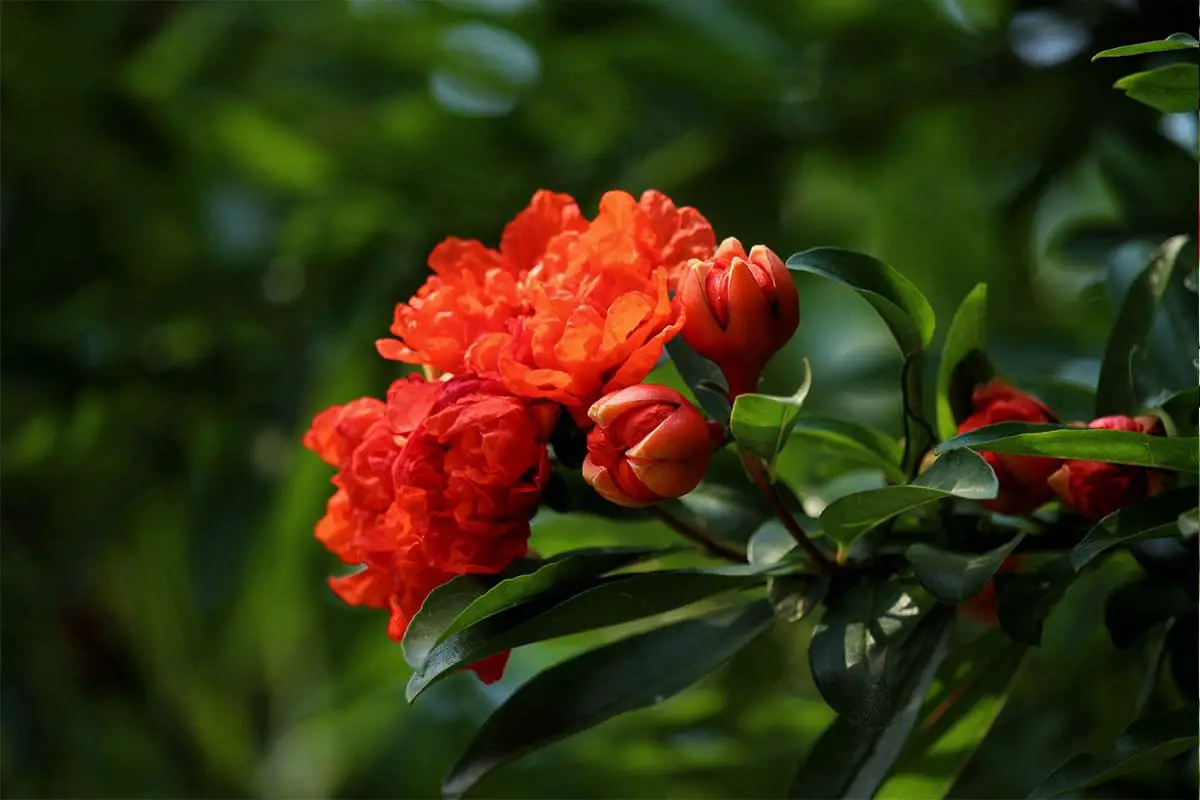
Pomegranate flowers bloom in clusters at the top of branches or leaf axils. The flowers have a bell-shaped, fleshy calyx that splits into six lobes at the apex. The surface is smooth and waxy, and the color ranges from orange to red.
The flowers have 5 to 7 petals, which can be red or white, and may be single or double. The fruits are spherical berries, yellowish-red in color, with numerous seeds covered in fleshy arils.
The fruits ripen between September and October. Cultivated pomegranate varieties are classified into fruit pomegranates and flower pomegranates.
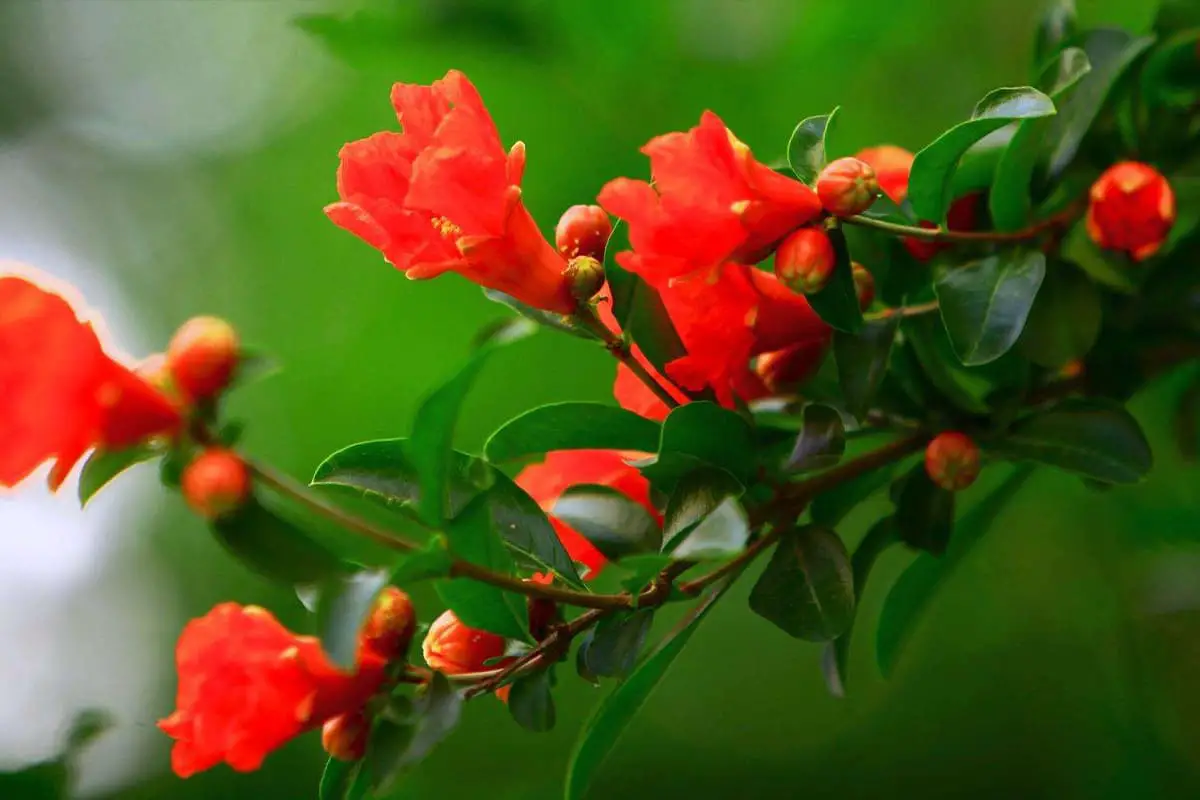
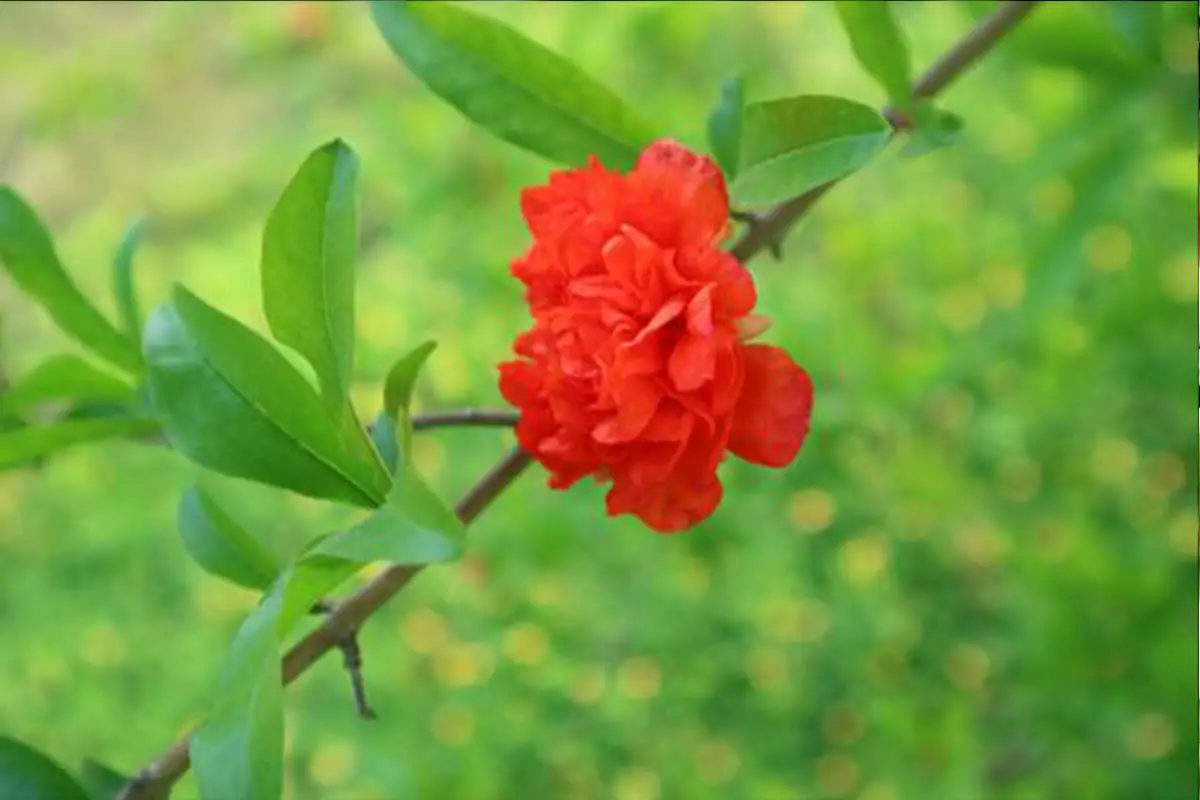
Pomegranate flowers are bisexual, meaning each flower possesses both stamens and pistils. The flowers can have multiple petals, with relatively smaller basal parts, known as double flowers.
Alternatively, the flowers can have fewer petals, with larger basal parts, referred to as single flowers. In double flowers, the stamens gradually degenerate during growth, eventually disappearing in the later stages, whereas single flowers retain their stamens.
The transition from single to double flowers is a gradual process. Generally, double flowers tend to be less fruitful in the later stages, while single flowers bear fruit.
The flowers, fruits, fruit peel, and roots of the pomegranate plant can all be used for medicinal purposes. The flowers have a sour taste and possess the effects of clearing heat and stopping bleeding.
When the fruits mature, they split open, revealing chambers filled with numerous seeds, resembling agate in red and crystal in white, with a delightful sweet and sour flavor.
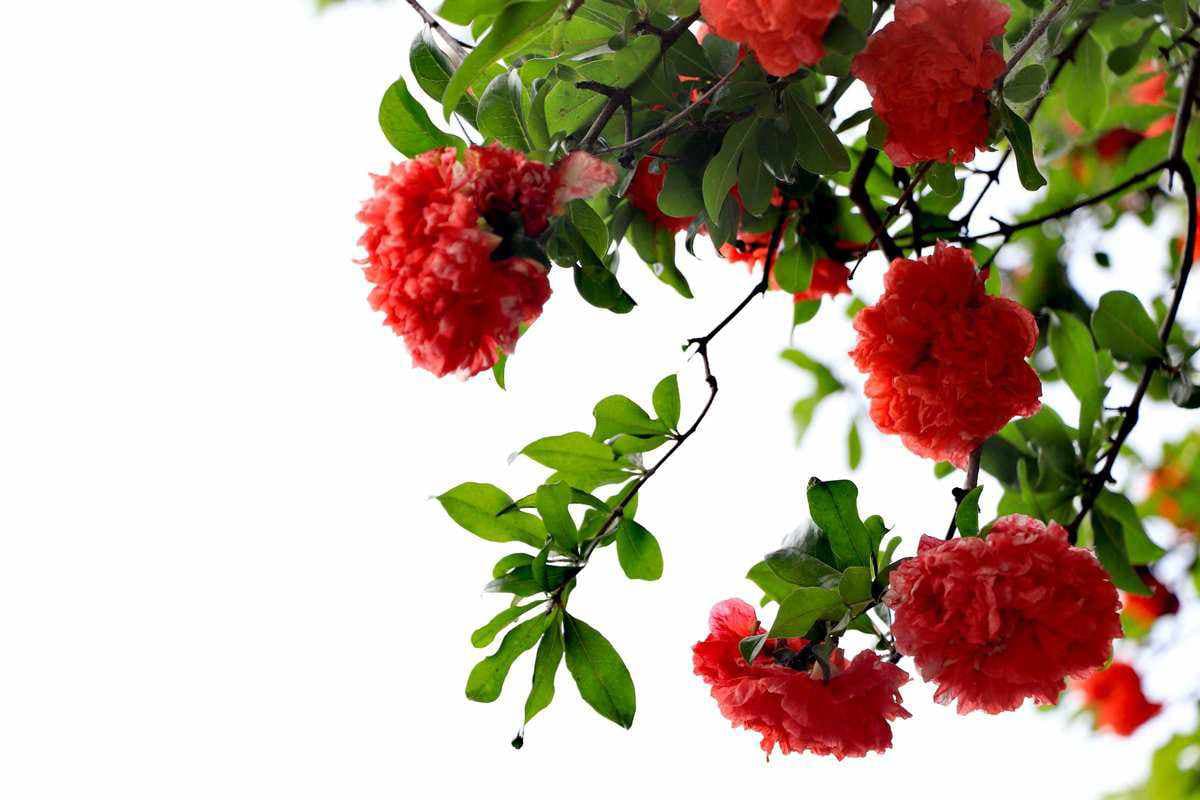
Pomegranate flowers prefer a sunny and dry environment. They are tolerant of cold and drought conditions and do not have strict soil requirements. However, they thrive best in fertile, loose, and nutrient-rich sandy loam soil.
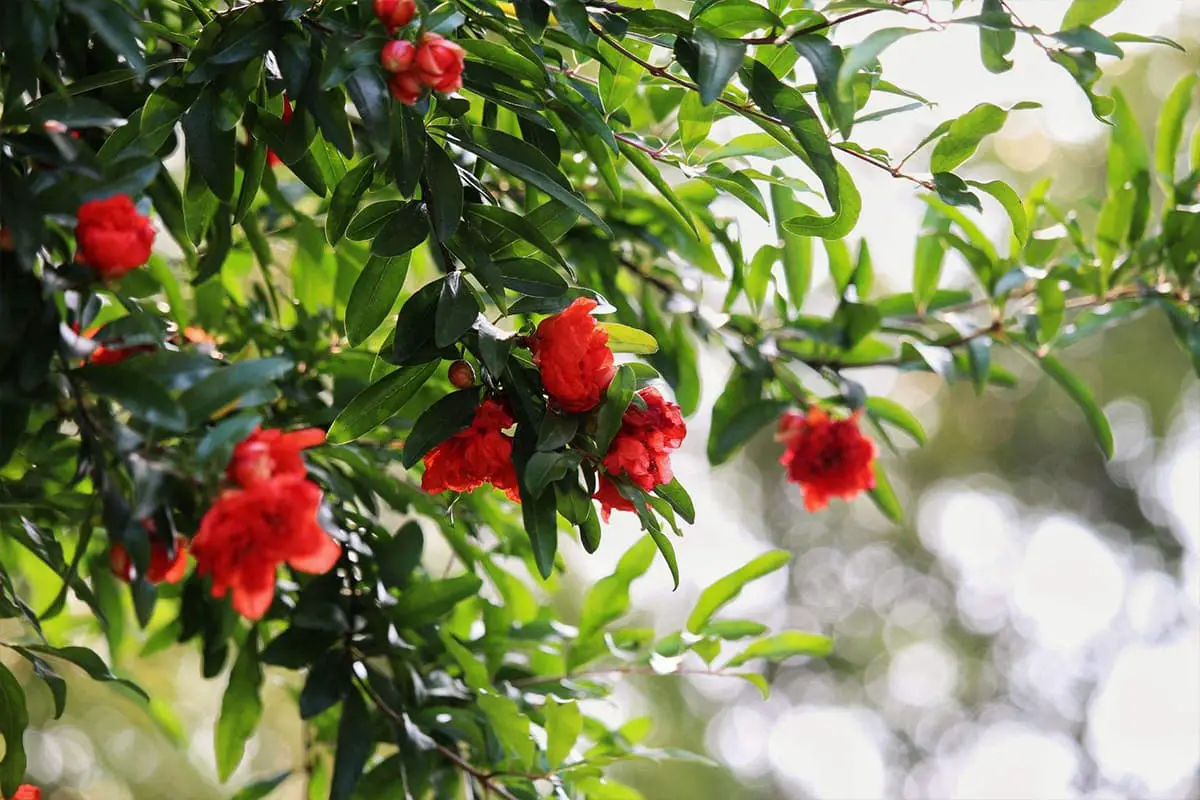
Pomegranate flowers are originally from Central Asia, specifically Iran and Afghanistan. They are also the national flower of Libya, a North African country.
In China, pomegranate flowers are recognized as one of the city flowers in cities such as Zaozhuang in Shandong Province, Shiyan, Huangshi, and Jingmen in Hubei Province, Xinxiang in Henan Province, Xi’an in Shaanxi Province, and Hefei in Anhui Province.
Pomegranate flowers are commonly propagated through cuttings, division, and layering. Cuttings can be taken from two-year-old branches in spring or semi-woody branches in summer, and they usually root within 15 to 20 days. Division can be done in early spring when the buds begin to sprout by digging out robust root suckers for transplantation.
Layering can be done in both spring and autumn. It does not require cutting or injuring the branches. Before bud sprouting, a lateral shoot with roots is pressed into the soil. After root development during the summer, it can be separated from the mother plant, resulting in a new seedling in autumn.
Ornamental Value
Pomegranate flowers exude a sense of passion and exuberance. When they symbolize good fortune and prosperity, their red color becomes deep and vibrant. The flowers and fruits of the pomegranate plant are delightful to behold, making them excellent materials for bonsai arrangements.
Potted pomegranate plants can be displayed on windowsills, balconies, and indoors, while larger pots can be placed in public areas and event venues. Pomegranate plants grown in the ground are suitable for landscaping in scenic areas.
Medicinal Value
Pomegranate has a long history of medicinal use, documented in various ancient medical texts. Throughout the ages, medical practitioners have recognized the cooling nature of pomegranate and its efficacy in clearing heat, detoxifying the body, promoting gastric health, moisturizing the lungs, astringing the intestines, and stopping bleeding.
Among the medicinal parts, pomegranate peel is the most commonly used, often after being stir-fried. Pomegranate flowers are known for their ability to stop nosebleeds, vomiting blood, and excessive vaginal discharge. They can also be used externally to treat middle ear infections.
The tender leaves of the pomegranate plant aid in promoting gastric health, regulating the intestines, aiding digestion, and are used externally to treat eye ailments and skin diseases.
Modern medical research has identified the presence of “pomegranate root bark alkaloids” in pomegranate peel, which exhibit inhibitory effects on various bacteria and skin fungi. Sour pomegranate contains a substantial amount of tannins, which have astringent and antimicrobial effects.
It can treat diarrhea and dysentery, stimulate the appetite, and aid digestion. The root bark of the pomegranate tree contains saponins, which have anthelmintic properties against tapeworms and roundworms.
Edible Value
Sautéed pomegranate flowers have a pleasant aroma and a savory and slightly salty taste, with a hint of bitterness. However, the bitterness in this dish can be addictive, making it hard to resist.
Pomegranate flowers are known for their ability to clear heat, detoxify the body, promote gastric health, moisturize the lungs, astringe the intestines, and stop bleeding. So, while indulging in this delicious dish, you can also achieve the goal of detoxification. It’s truly a win-win situation.
Of course, the male flowers are the most tender and delicious. If the female flowers are not prepared well, they may have a more mature taste that doesn’t blend well with other ingredients.
The language of pomegranate flowers signifies mature beauty, wealth, and a household filled with children and grandchildren.
Those who appreciate pomegranate flowers often lead a simple and unassuming lifestyle, giving off a sense of being old-fashioned. But it doesn’t matter because life is meant for oneself.
Those who understand the pursuit of truth, goodness, and beauty are the ones who truly understand life. Every flower has its beauty, and every person has their own way of living.

Peggie was once a high school mathematics teacher, but she set aside her chalkboard and textbooks to follow her lifelong passion for flowers. After years of dedication and learning, she not only established a thriving flower shop but also founded this blog, “Flowers Library”. If you have any questions or wish to learn more about flowers, feel free to contact Peggie.
 English
  العربية
  Bahasa Indonesia
  Deutsch
  Français
  Italiano
  Nederlands
  Português
  Русский
  日本語
日本語