600+ Types of Flowers A To Z (With Names and Pictures)
Types Of Flowers By Names (A-Z) Types Of Flowers By Color Types Of Flowers By Season Types Of Flowers By Blooming Time 600+ Types of Flowers No. Flower Name No.…

Albizia julibrissin, originally native to China and Japan, is a deciduous tree. Its bark is gray, with even pinnate leaves that are paired and open during the day, closing at night. The calyx and petals are yellow-green, the filaments are pink, and the pods are flat.
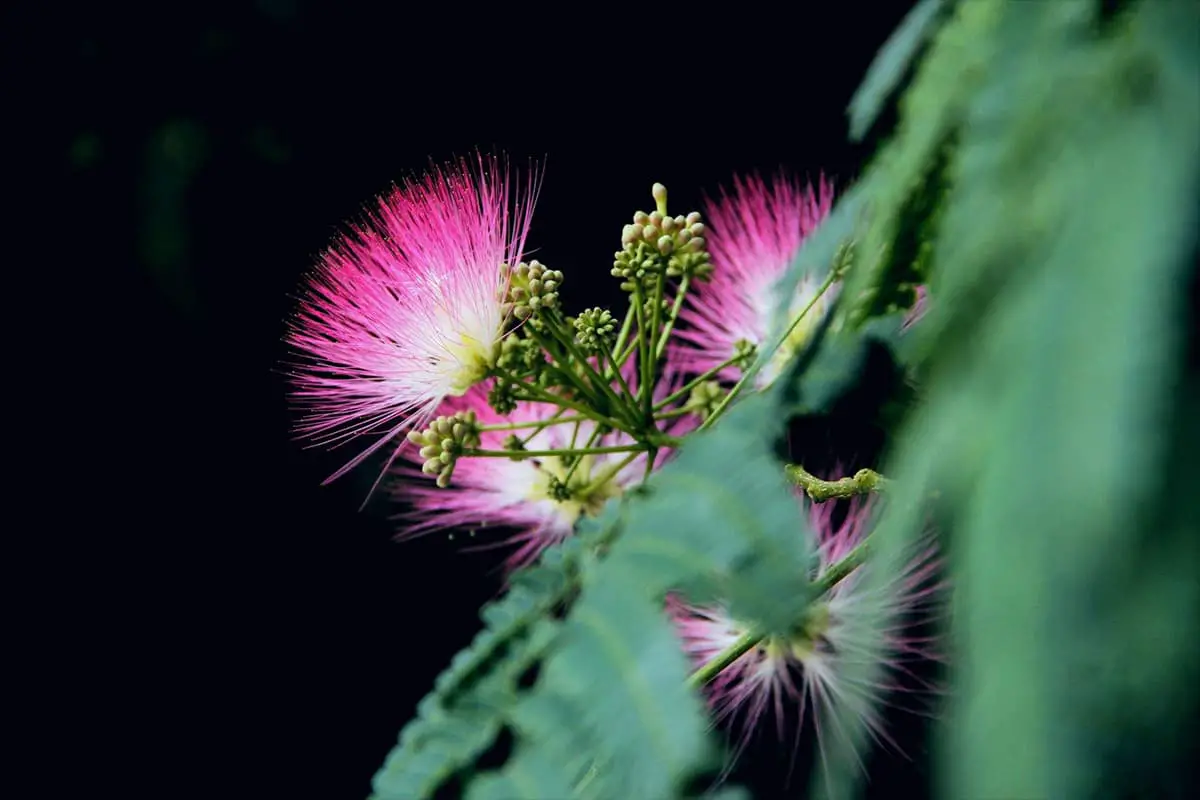
The Albizia julibrissin flower, also known as the Mimosa flower, is a traditional Chinese medicinal herb. It’s the flower or bud of the Albizia julibrissin tree, a deciduous species in the Fabaceae family.
The Albizia julibrissin flower is also known as Night Mimosa, Silk Tree, Bird Silk Tree, and Bitter Love Flower.
Albizia julibrissin is a deciduous tree that can reach up to 16 meters in height with a spreading crown. The twigs are angular, and the shoots, inflorescences, and leaf axis are covered with down or short soft hairs. The stipules are linear lanceolate, and the leaves are small and early deciduous.
The head-like inflorescences are arranged in a conical inflorescence at the top of the branch; the flowers are pink; the calyx is tubular, 3 millimeters long.
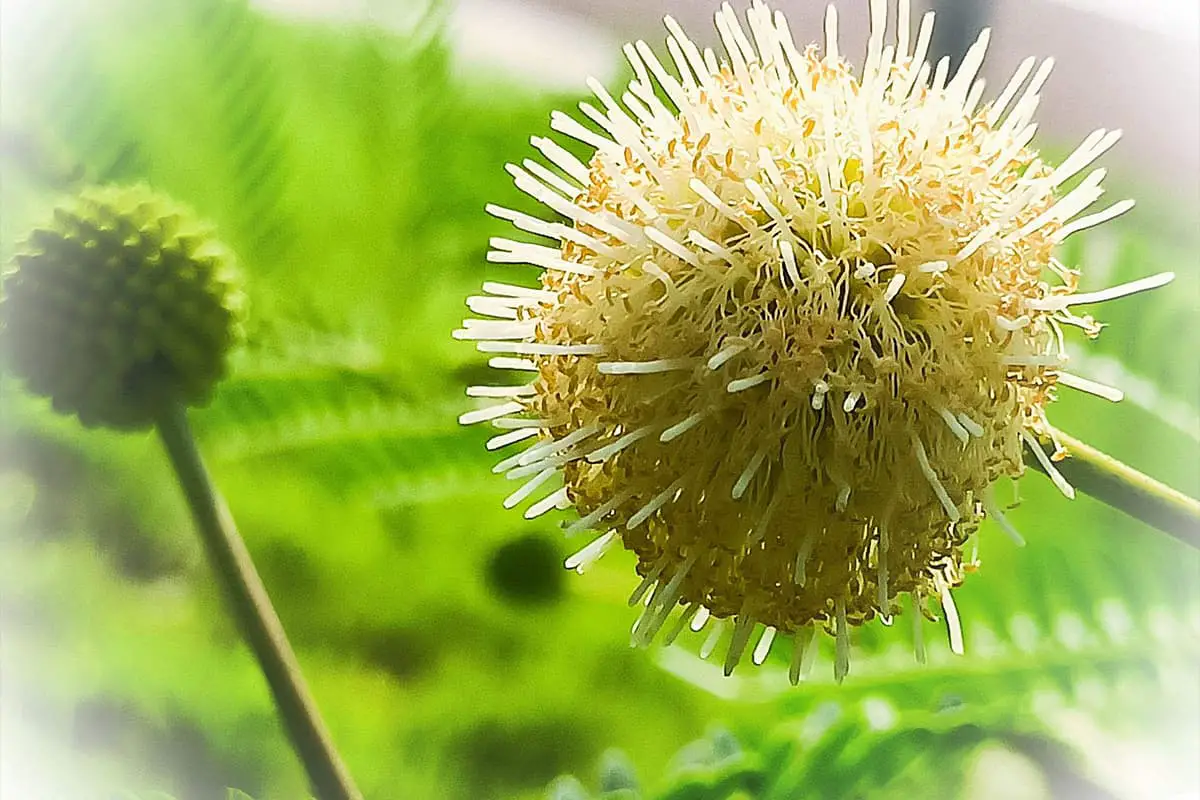
The corolla is 8 millimeters long, the lobes are triangular, 1.5 millimeters long, and the outer parts of the calyx and corolla are both covered with short soft hairs; the filaments are 2.5 centimeters long.
The pods are band-like, 9–15 centimeters long, 1.5–2.5 centimeters wide, the young pods are hairy, and the old pods are hairless.
The Albizia julibrissin flower blooms in June and July; the fruiting period is from August to October.
Albizia julibrissin, originally native to Asia and Africa, is widely cultivated from northeastern to southern and southwestern China. It often grows on slopes or is cultivated by humans.
It is distributed throughout Africa, Central Asia to East Asia, and is also cultivated in North America. Albizia grows quickly, enjoys sunlight, is slightly cold-resistant, drought-resistant, and can tolerate poor soil. It doesn’t tolerate flooding well. The main method of reproduction is by seeding.
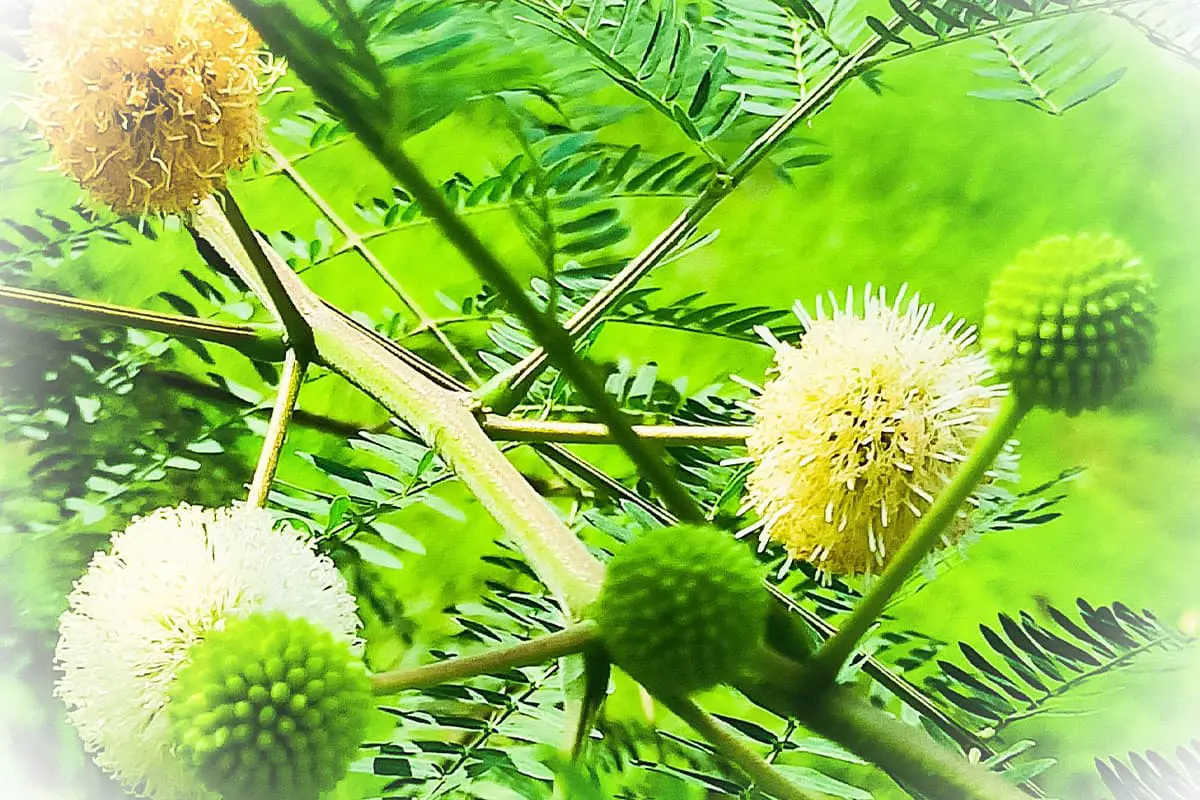
Albizia julibrissin prefers warm, humid, and sunny environments and has a strong adaptability to climate and soil.
Albizia julibrissin grows best in well-drained, fertile soil, but it can also tolerate poor soil and dry climates. However, it doesn’t tolerate flooding. It has rapid growth.
Albizia julibrissin has strong resistance to harmful gases such as sulfur dioxide and hydrogen chloride.
Medicinal Value
Albizia julibrissin bark can be combined with other medicinal herbs to treat restlessness, depression, insomnia, and other diseases. It can also be decocted or used externally, and albizia flowers are often decocted.
Albizia julibrissin flowers are neutral in nature, bitter in taste, non-toxic, and enter the heart, liver, and spleen meridians. They can “calm the mind and relieve depression”, suitable for depression, restlessness, insomnia, dreams, memory decline. It is effective for neurosis, menopausal syndrome, and insomnia and irritability caused by hypertension.
Ornamental Value
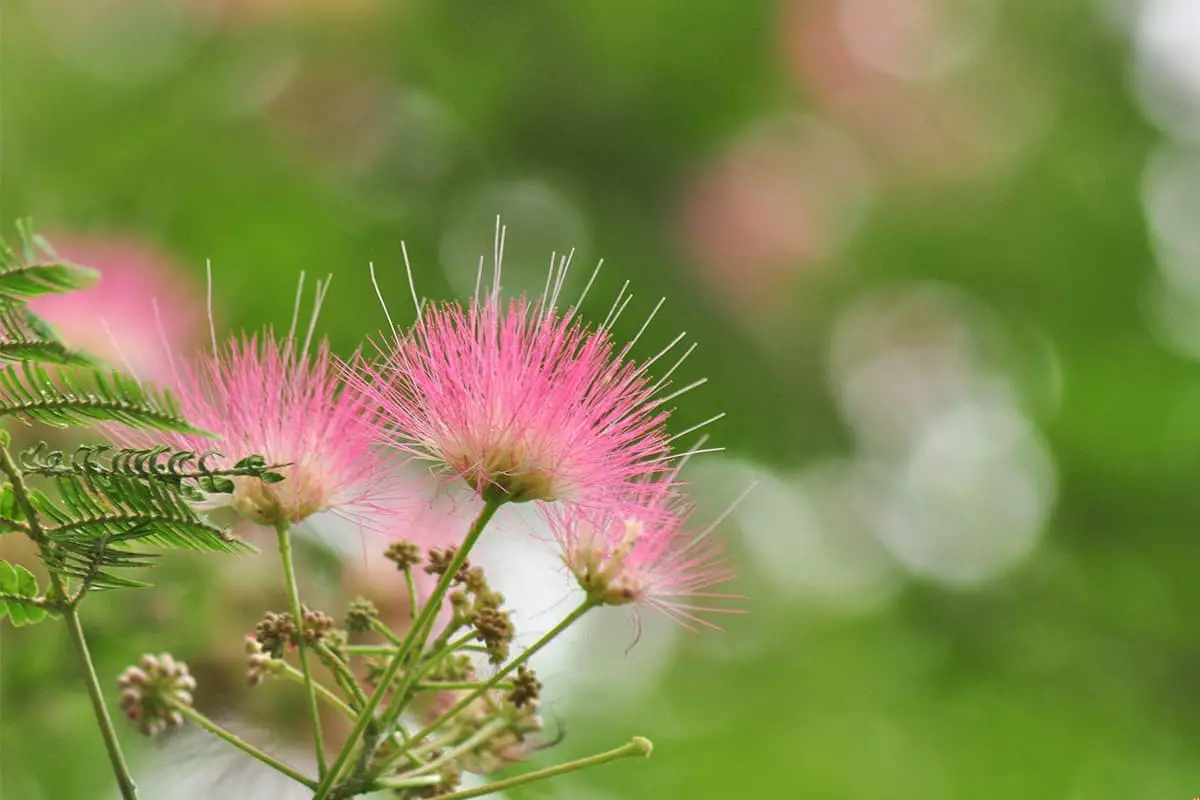
The Albizia julibrissin tree has a spreading shape, with a large crown and dense shade. In summer, when the flowers bloom, they are colorful and fragrant. The flowers look like fluffy clusters and can be used as garden trees, city avenue trees, ornamental trees, scenic spot trees, riverside greening trees, factory greening trees, and ecological protection trees.
Economic Value
Albizia julibrissin has huge economic value. Its wood has straight grain and fine texture, suitable for making furniture and farm tools; young leaves can be eaten, and old leaves can be used to wash clothes.
Cultural Value
In May 1993, the Standing Committee of the People’s Congress of Weihai City, China, determined that the city tree of Weihai City, China, is Albizia.
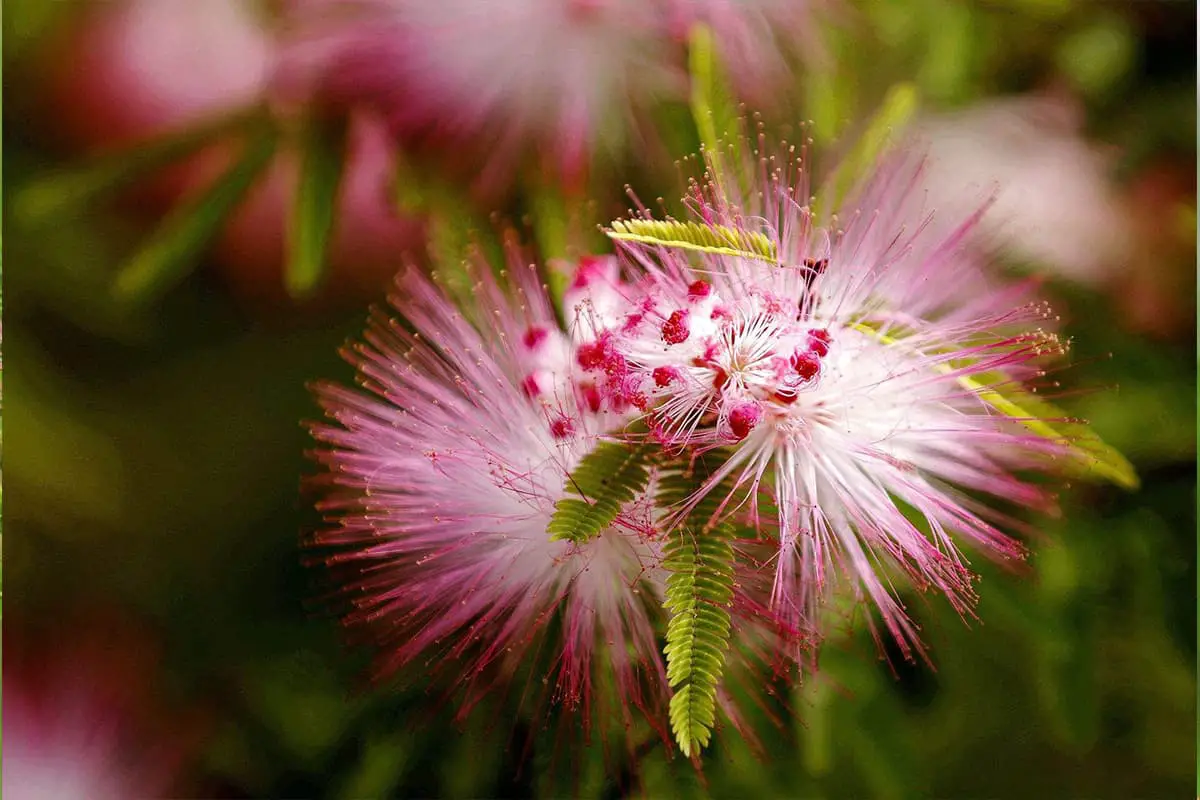
Albizia Julibrissin flowers are often used for ceremonial cultural communication, to give to friends to reconcile, and to give to lovers to express faithful love.
Albizia Julibrissin symbolizes eternal love, pairwise opposition, and is a symbol of a harmonious couple.
In China, the Albizia Julibrissin flower is a lucky flower. Since ancient times, people have had the custom of planting Albizia trees next to houses, gardens, and ponds, implying harmony between husband and wife, unity among family members, being kind and harmonious with neighbors, and getting along well.

The small leaves of Albizia julibrissin flowers open in the morning and close in the evening. In ancient times, after a quarrel between husband and wife, they would drink tea brewed from Albizia flowers together. People often give Albizia flowers to quarreling couples or place them under their pillows, wishing them harmony and happiness, and a more fulfilling life.
If there is a misunderstanding between friends, they can also give each other Albizia flowers, implying reconciliation and making up.

Peggie was once a high school mathematics teacher, but she set aside her chalkboard and textbooks to follow her lifelong passion for flowers. After years of dedication and learning, she not only established a thriving flower shop but also founded this blog, “Flowers Library”. If you have any questions or wish to learn more about flowers, feel free to contact Peggie.
 English
  العربية
  Bahasa Indonesia
  Deutsch
  Français
  Italiano
  Nederlands
  Português
  Русский
  日本語
日本語