600+ Types of Flowers A To Z (With Names and Pictures)
Types Of Flowers By Names (A-Z) Types Of Flowers By Color Types Of Flowers By Season Types Of Flowers By Blooming Time 600+ Types of Flowers No. Flower Name No.…

Tropaeolum majus, commonly known as garden nasturtium, Indian cress, or monks cress, belongs to the dicotyledonous plant class of the Tropaeolaceae family.
This perennial is a semi-climbing or trailing plant that serves as a significant ornamental flower. The nasturtium reaches a height of 30cm to 70cm, with basal leaves that have long petioles and are shaped like small lily pads.
The flowers are solitary or clustered in groups of two to three in an umbel and come in a variety of vibrant colors such as yellow, red, orange, purple, cream, or mixed shades.
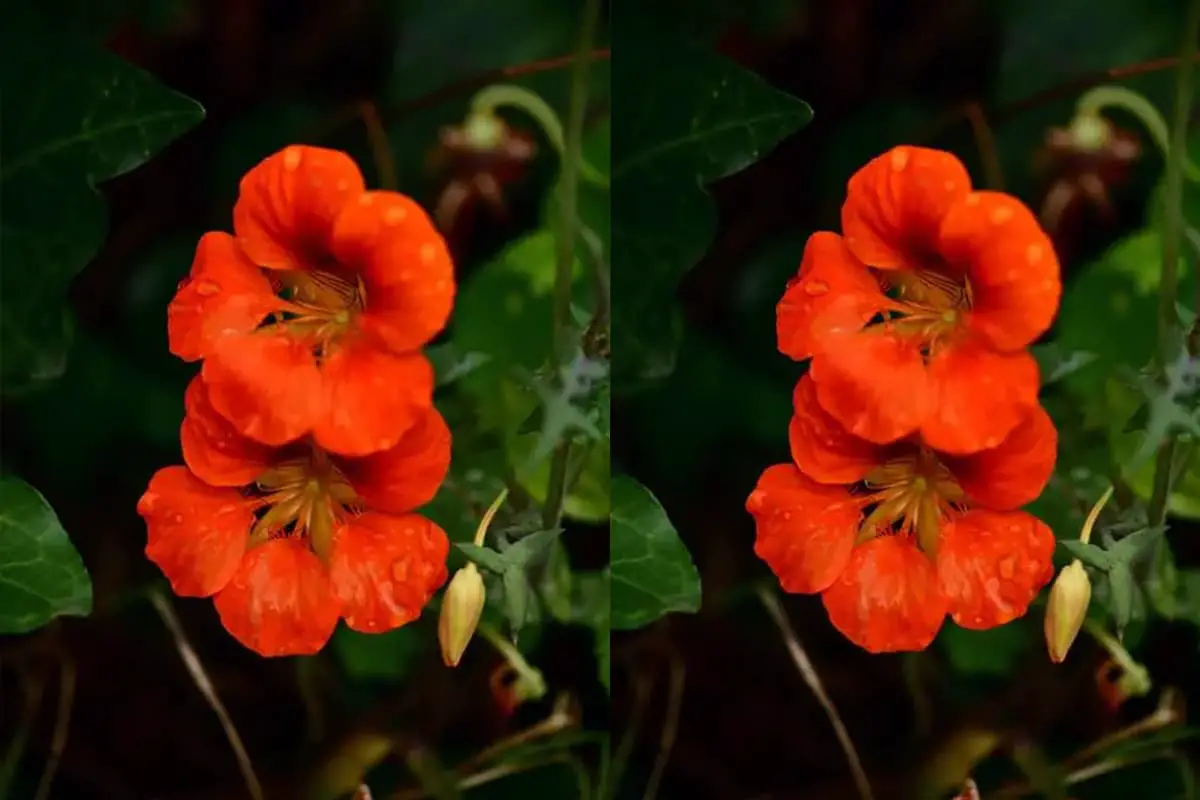
When in bloom, the entire plant can produce dozens of fragrant flowers simultaneously, creating a visually stunning display.
The flowering season peaks in July and August, yet with suitable environmental conditions, it can bloom year-round, with each flower lasting 8 to 9 days.
Garden nasturtiums are plants that feature a basal rosette of leaves with long petioles. The leaf blades are pentalobed with three complete divisions and secondary lobes that are finely dissected and serrated.
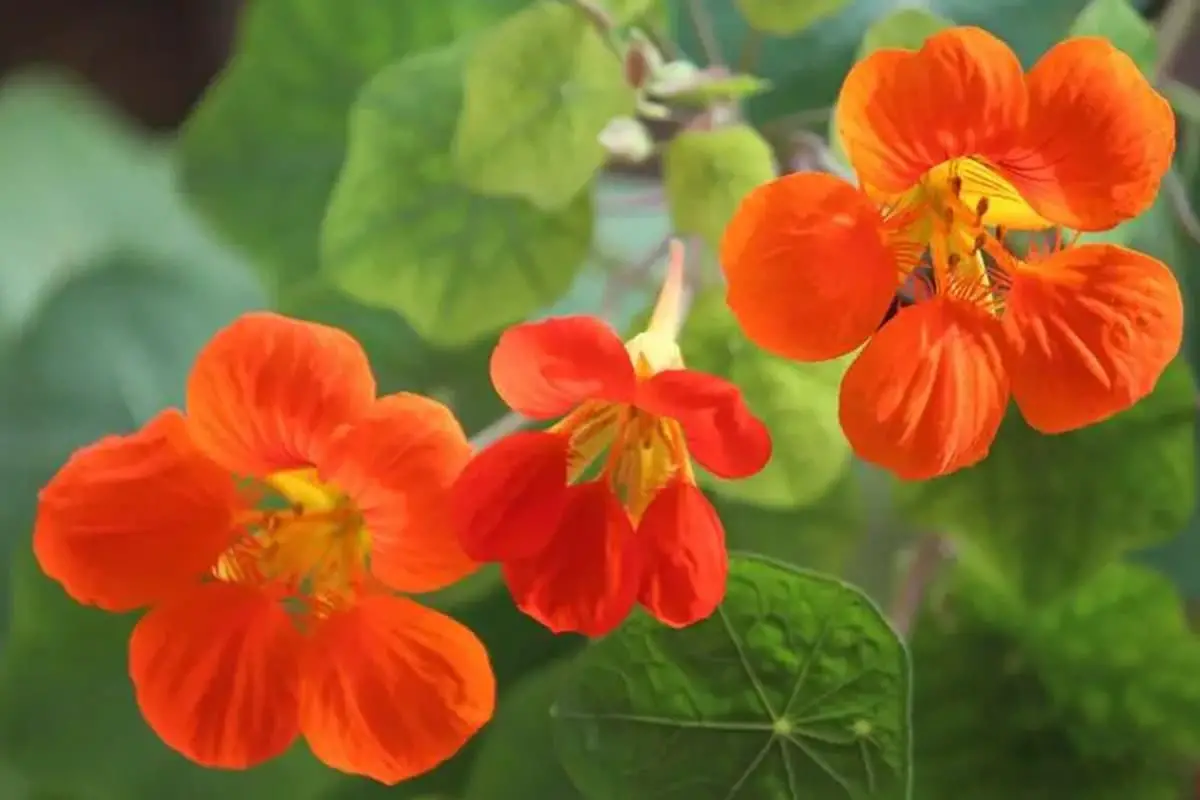
Each flower is composed of five petals and can have between 8 to 19 sepals that are yellow, elliptical, oval-shaped, or inversely ovate, matching the petals in length and are narrow in shape.
In northern regions, they are often cultivated as annuals or biennials. Under ideal conditions, they can flower throughout the year, with each bloom lasting 8 to 9 days.
With the whole plant capable of producing a multitude of blossoms at once, the intense fragrance and bright colors have made them a favorite among gardeners.
In Southern China, they are cultivated as perennials; in North China, they are typically sown in autumn and grown in pots indoors, blooming during New Year and Spring Festival, serving as festive floral decorations.
With lush foliage and stunning flowers that come in shades of purple-red, tangerine, and cream yellow, the nasturtium’s vining stems and bowl-lily-like leaves create a spectacle reminiscent of a fluttering swarm of butterflies when in full bloom, making it an essential ornamental plant.
The flowers of the garden nasturtium are also used medicinally. Its tender shoots, flower buds, and fresh seeds can be utilized as spicy condiments.
Tricolor Dry Marygold is one of the main varieties of Dry Marygold, known for its vibrant colors and shape reminiscent of a goldfish.
The flowers feature a combination of red, blue, and gold, with orange at the heart, making this variety particularly eye-catching. It thrives in moist environments.
Sky Blue Dry Marygold is another popular variety characterized by its vine-like stems that gradually form aerial roots to climb upwards.
It has relatively small leaves, but the flowers are large and sky-blue, creating clusters that appear refreshingly charming from a distance, offering high ornamental value.
The Short-Spurred Dry Marygold blooms golden-yellow flowers with petals larger than those of other varieties. Its appearance is similar to that of the sacred lotus, which can make it difficult to distinguish between the two in everyday settings.
The leaves are a rich green, and the plant prefers to grow in moist and warm environments. It is robust and easy to care for.
The defining feature of the Pentafoliate Dry Marygold is its leaves, which are split and shaped like a pentagon, making them quite unique.
The plant bears large flowers that bloom sporadically, with a striking golden-yellow hue. Adequate sunlight is required for the cultivation of this variety to encourage the development of buds and flowering.
The plant thrives in mild climates and does not tolerate extreme cold or heat. The optimal growing temperature ranges from 18 to 24 degrees Celsius.
It can withstand brief periods at 0 degrees Celsius and prefers warm and humid conditions, with a winter temperature above 10 degrees Celsius. During high summer temperatures, it does not flower easily, and growth is inhibited above 35 degrees Celsius.
It requires ample sunlight during winter, spring, and fall, while in summer, potted plants should be shielded from direct sunlight. The plant favors loose, fertile, and well-draining soil, and although it likes moisture, it is susceptible to waterlogging.
Native to South America, specifically countries like Peru and Brazil, it is now widely cultivated in China as an ornamental plant for gardens and greenhouses and can sometimes be found growing wild.
Cultivated as an annual but inherently a perennial, the plant has slightly succulent stems and leaves, is herbaceous, semi-vining, and either hairless or sparsely hairy.
The leaves are arranged alternately; the petioles are 6-31 centimeters long, twist upwards, and are shield-shaped, attached near the center of the leaf blade; the leaf blade is circular, 3-10 centimeters in diameter, with 9 main veins extending radially from the point of petiole attachment, with a wavy margin and shallow lobes; the underside is typically sparsely hairy or has tuberculate spots.
The solitary flowers grow in the axils, with flower stalks 6-13 centimeters long; the flowers are yellow, purple, orange-red, or multicolored, with a diameter of 2.5-6 centimeters; the floral receptacle is cup-shaped; there are 5 sepals, elongated elliptic-lanceolate, 1.5-2 centimeters long and 5-7 millimeters wide, fused at the base with membranous margins, one of which extends into a long spur, 2.5-3.5 centimeters long and tapering; there are 5 petals, usually rounded with notched margins, the upper two are typically entire, 2.5-5 centimeters long and 1-1.8 centimeters wide, attached at the opening of the spur, the lower three are narrowed at the base into a claw, fringed near the claw; there are 8 stamens of varying lengths, separate; the ovary has 3 chambers, with one style and a three-lobed, linear stigma.
The fruit is a flattened globe that splits into 3 one-seeded mericarps when mature. The flowering period is from June to October, with fruiting from July to November.
Growing Environment
Dry Marygold prefers a mild climate and does not do well in extreme cold or heat.
Soil Requirements
For potting Dry Marygold, use a mix of 4 parts leaf mold, 4 parts garden soil, 1 part compost, and 1 part sand.
Adequate Light
Dry Marygold requires sufficient light but should not be exposed to direct sunlight in the summer. It should be shaded properly and kept in a cool, airy place.
In North China, it should be moved indoors by mid-October to a spot where it can get sunshine. During winter, maintain an indoor temperature of around 15 degrees Celsius and ensure ample sunlight for continued growth and development.
Watering
Dry Marygold enjoys moisture but is prone to waterlogging. The soil moisture should be maintained at around 50%. During the growth period, adopt a method of watering little and often.
Water every 2-3 days in spring and autumn, and daily in the summer, spraying the leaves in the evening to maintain high humidity.
Fertilizing
During the growing season, apply a diluted solution of mature cake fertilizer at a 15% concentration every 3-4 weeks.
Stop applying nitrogen fertilizer during the flowering period and switch to 0.5% superphosphate every half month to promote lush foliage and abundant flowering.
Temperature Control
The ideal temperature for Dry Marygold is 18-24°C. It does not tolerate high heat, and flowering is difficult when the temperature exceeds 35°C.
Growth slows down or stops above this temperature. Dry Marygold cannot withstand cold and can only survive brief periods at 0°C. During winter, the temperature should be maintained above 10°C to enable overwintering.
Pruning and Shaping
With its lush leaves and beautiful flowers, Dry Marygold requires timely staking. Vine stems should be evenly tied to a bamboo frame so all leaves face in one direction. The size of the frame should be sufficient for the vine leaves to cover it fully as they grow.
Ensure Uniform Light Exposure
Portulaca thrives with regular exposure to light, so it’s important to rotate the plant regularly to ensure it receives even lighting.
Avoid Excessive Rainfall
During rainy days, make sure to provide adequate drainage for your potted Portulaca to prevent waterlogging issues.
Fertilization Control
Improper fertilization during Portulaca’s growth can lead to elongated stems with yellow leaves, thin stems with small leaves, or lush foliage with few flowers. Avoid applying too much nitrogen fertilizer to prevent excessive vegetative growth.
Temperature Control
In northern regions, potted Portulaca should be brought indoors or into a greenhouse to overwinter, with the temperature not dropping below 50°F (10°C).
Maintaining temperatures between 54°F and 61°F (12°C to 16°C) with proper watering and fertilization can promote growth throughout the winter.
Typically, seeding takes place from March to June, known as spring sowing, with the flowering period from August to December.
Seeding can also be done in late August or early September, referred to as autumn sowing, leading to blooms around New Year’s Day and the Spring Festival.
For sowing and seedling cultivation: The ideal germination temperature is between 64°F and 68°F (18°C to 20°C). Sow seeds at a depth of about 1 centimeter, thoroughly water, and keep moist. Germination occurs within 7 days.
When seedlings have 2-3 true leaves, pinch them back and pot them. Regularly prune leaves and branches to facilitate ventilation and expose the flowers.
Cuttings are done from April to June. Use tender stems as cuttings, removing the lower leaves. After planting, provide shade and keep moist.
Roots should form within 2-3 weeks. As the plant grows, timely support with bamboo stakes and tie the vines is necessary. Fertilize every 10-15 days and maintain ample moisture and high humidity throughout the growing period.
Each Portulaca flower contains 8 stamens and one pistil. The 8 stamens do not mature simultaneously. The pistil matures and extends to the mouth of the flower only after all the pollen has been dispersed.
Symptoms: The larvae bore into new shoots and tender leaves of the plant, forming convoluted tunnels between the upper and lower epidermis, preventing the shoots and leaves from unfurling properly and causing them to easily drop off; in severe cases, the entire autumn shoot can turn yellow and wither.
Patterns of Occurrence: There can be about 10 generations per year, with the pupae and larvae overwintering on the affected leaves.
From late April to early May, larvae begin to cause damage, with the peak incidence and severity occurring from July to September. Incidents significantly reduce after October.
The larvae mostly bore into the leaf edges, where they spin thin cocoons and pupate, often causing the leaf edges to curl.
Young plants and trees, due to their numerous and irregular shoots, are more conducive to adult egg-laying and larval damage, and thus often suffer more severely than mature trees.
Symptoms: Infected leaves display a pattern of alternating yellow-green and dark green variegation, with the leaves becoming smaller and the entire plant appearing somewhat wilted..
Pathogen: This is a viral disease, possibly caused by the Cucumber Mosaic Virus (CMV).
Control Methods: Spray insecticides to prevent the transmission of the virus by aphids; remove and burn infected plants promptly.
Symptoms: Infected leaves develop ring-shaped variegation or necrotic spots.
Pathogen: The Fababean Wilt Virus, belonging to the genus Fabavirus, also known as the Purslane Ring Spot Virus. It is an RNA virus with spherical virions measuring 26nm in diameter.
The virus consists of three components: T, M, and B. It contains two strands of RNA, RNA1 (2038nt) and RNA2 (3182nt), each encased within the M and B components respectively.
The virus is inactivated at 58°C; its dilution endpoint is between 10^-4 and 10^-5; and its survival period outside the host at 21°C is 2 to 3 days.
Patterns of Occurrence: Several species of aphids, such as the peach aphid and the bean aphid, are vectors for the Purslane Ring Spot Virus, transmitting it in a non-persistent manner.
The virus can also be transmitted through plant sap; however, it is not seed-transmitted.
Control Methods:
Medicinal Value
Nature and Flavor: Spicy and cool.
Functions and Indications: Clears heat and detoxifies. Used for conjunctivitis and carbuncles with swelling and toxicity.
Purslane is dazzling golden-yellow with a refreshing taste. It has the effects of clearing heat and detoxifying, nourishing yin and reducing fire, cooling the yin and heat, as well as sterilization.
Long-term consumption can clear the throat and make the voice clear and bright.
It is particularly effective for chronic pharyngitis, laryngitis, tonsillitis, and hoarseness, providing anti-inflammatory, preventive, and therapeutic effects, especially for those in vocal professions such as broadcasting, singing, education, and communication.
The effects are enhanced when consumed with an appropriate amount of rock sugar, goji berries, licorice, and Solomon’s Seal.
Landscape Application
Purslane has thick leaves and beautiful flowers, with leaves shaped like a bowl-lotus, arranged in a peltate alternate pattern with long petioles.
The flowers are uniquely shaped, axillary, and trumpet-like, with soft and graceful stems and vines. Both the leaves and flowers have high ornamental value.
They are suitable for potting to decorate balconies, windowsills, or for placing indoors on desks and shelves for enjoyment, as well as for cut flowers. Potted purslane can be used for indoor viewing or to adorn balconies and windowsills.
Language of Purslane Flowers
Purslane flowers symbolize fiery love and lively optimism.
The flowers of purslane are orange-red or golden-yellow, reminiscent of the burning passion between lovers, while the shape of its leaves, similar to a bowl-lotus, coupled with the open flowers, evokes the image of butterflies dancing around a disk, imparting a sense of liveliness and charm.

Peggie was once a high school mathematics teacher, but she set aside her chalkboard and textbooks to follow her lifelong passion for flowers. After years of dedication and learning, she not only established a thriving flower shop but also founded this blog, “Flowers Library”. If you have any questions or wish to learn more about flowers, feel free to contact Peggie.
 English
  العربية
  Bahasa Indonesia
  Deutsch
  Français
  Italiano
  Nederlands
  Português
  Русский
  日本語
日本語