600+ Types of Flowers A To Z (With Names and Pictures)
Types Of Flowers By Names (A-Z) Types Of Flowers By Color Types Of Flowers By Season Types Of Flowers By Blooming Time 600+ Types of Flowers No. Flower Name No.…

The Rhododendron russatum, also known as the Purple-Blue Rhododendron, is an exceptionally beautiful variety of rhododendron. Its vibrant and beautiful flowers make it a popular choice for artificial cultivation, boasting high horticultural value.
The flowers bloom at the top in an umbrella-shaped cluster, with 6-10 flowers per cluster. The corolla is wide funnel-shaped, 13-20 millimeters in length, and comes in colors ranging from purple-blue, indigo, purple, to rose.
The flowering period is from May to June, while the fruiting period is from July to August. The leaves are leathery, oval or elongated, greyish-green or dark green on top, while the underside varies in color.
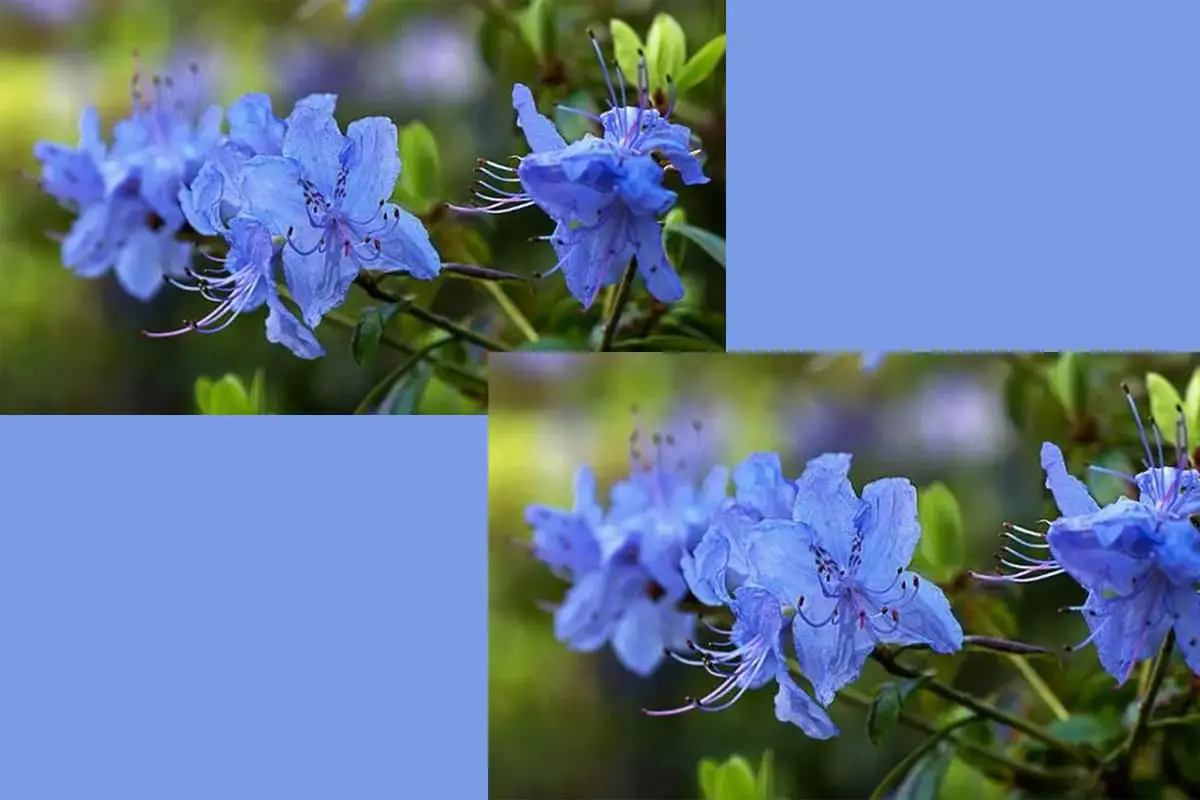
The Purple-Blue Rhododendron (Rhododendron russatum Balf. f. et Forrest) is an evergreen shrub, sometimes mat-forming or semi-prostrate, with a height of 0.3-1.5 meters. Young branches are densely covered with pale brown stalked scales.
The leaves are leathery, oval or elongated, greyish-green or dark green on top, while the underside varies in color. The flowers bloom at the top in an umbrella-shaped cluster, with 6-10 flowers per cluster.
The corolla is wide funnel-shaped, 13-20 millimeters in length, in shades of purple-blue, indigo, purple, or rose. The fruit is ovate. The flowering period is from May to June, while the fruiting period is from July to August.
This species thrives on rocky slopes, cliffs, forest edges, hillside grasslands, alpine meadows, and in rhododendron shrubs. It is found in Myanmar. This species is cultivated for its beautiful and vibrant flowers, and there are many hybrid varieties, all of which have high horticultural value.
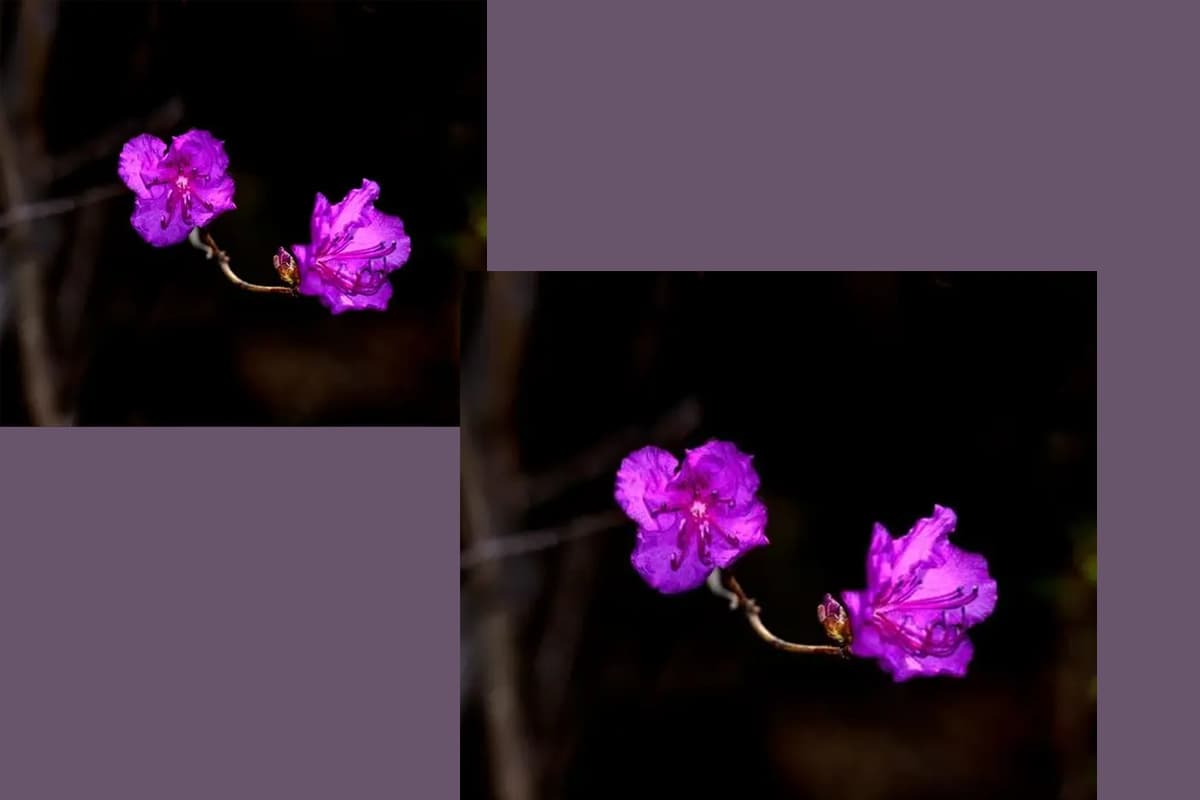
It thrives on rocky slopes, cliffs, forest edges, hillside grasslands, alpine meadows, and in rhododendron shrubs, at altitudes of (2500-) 3400-4300 meters.
The Purple-Blue Rhododendron is an evergreen shrub, sometimes mat-forming or semi-prostrate, with a height of 0.3-1.5 meters. Young branches are densely covered with pale brown stalked scales.
The leaves are leathery, oval or elongated, 1.6-4 (-6.5) cm long, 0.6-1.7 cm wide, rounded or blunt at the tip, with a short protruding tip at the base, sometimes extending to the leaf stalk, with a shallow wave-like edge.
The top is greyish-green or dark green, covered with pale and dark brown mixed scales, adjacent or overlapping.
The underside is covered with bicolor scales, the color of which varies, yellow or dark brown, yellow-brown or rust-colored, grey-white or deep yellow-brown, adjacent or overlapping. The leaf stalk is 1-6 (-9) mm long, covered with yellow-brown scales.
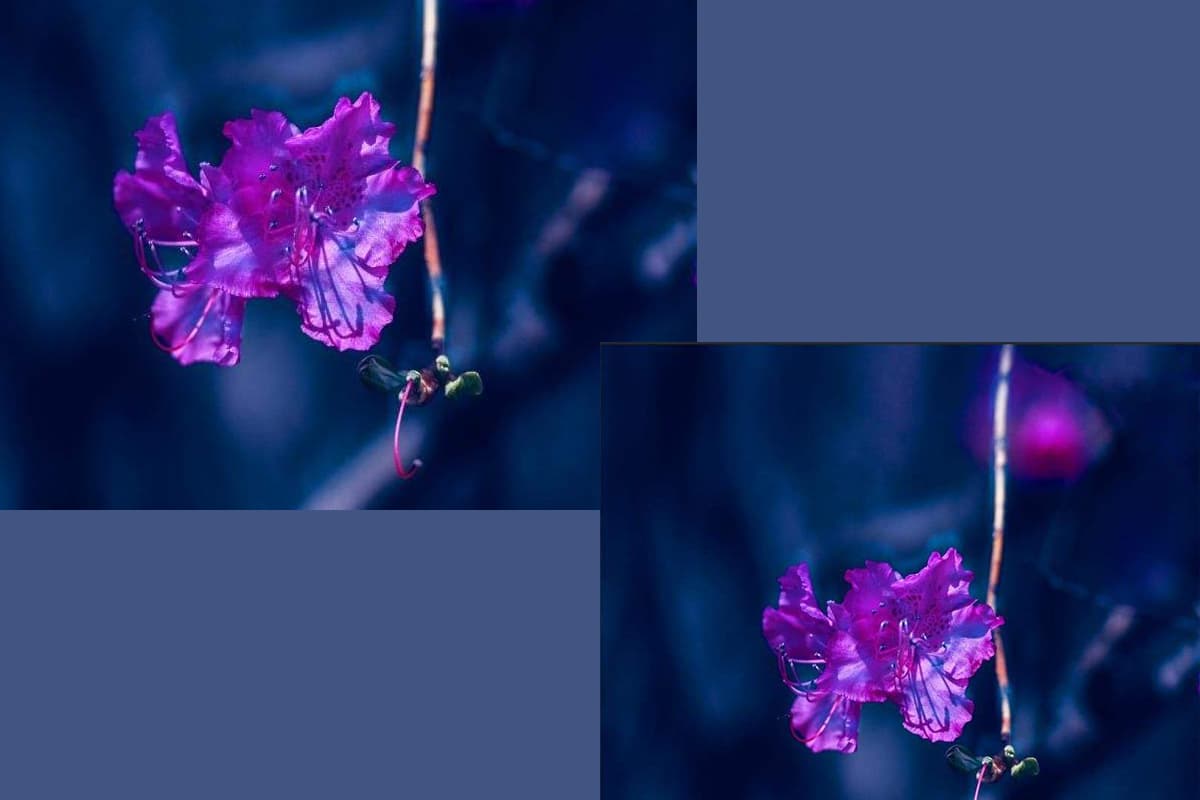
The flowers bloom at the top in an umbrella-shaped cluster, with (4-) 6-10 (-15) flowers per cluster, the bud scales persisting or occasionally falling off during flowering. The pedicels are very short, 1-2 (-5) mm long, covered with scales.
The calyx is well developed, green or purplish-red, 3-6 mm long, the lobes are elongated or oval, covered with a few scales at the base, with a central scale band, the edges have long eyelashes, or occasionally sparse scales.
The corolla is wide funnel-shaped, (10-) 13-20 mm long, in shades of purple-blue, indigo, purple, or rose, covered with short soft hairs on the outside, with no scales, the flower tube is 4-9 mm long, the inside of the throat is hairy, the lobes are spreading, longer than the flower tube, about 6-11 mm.
There are (5-8) 10 stamens, nearly equal to the corolla in length, the filaments are hairy near the base. The ovary is about 2 mm long, 5-chambered, covered with scales, sometimes with a tuft of hair at the top. The pistil is red, longer than the stamens, 14-20 mm long, often hairy in the lower half.
The fruit is ovate, 4-6 mm long, covered with scales, the top tuft of hair often persists. The flowering period is from May to June, while the fruiting period is from July to August.
Rhododendrons, native to high-altitude areas, thrive in cool, humid climates and struggle in harsh, hot, and dry conditions. They prefer acidic soils rich in humus, loose, moist, and with a pH between 5.5 and 6.5.
Some species and cultivated varieties are highly adaptable, tolerating drought, poor soil, and soil with pH between 7 and 8. However, growth is inhibited in heavy or poorly drained soils. Rhododendrons require a certain amount of light but do not tolerate direct sunlight.
During the summer and autumn, they should be shielded by deciduous trees or a shade net to block the intense sunlight, and the ground should be regularly sprayed with water. Their growth spurts usually occur in spring and autumn, primarily in spring.
The optimal growth temperature is between 15-20°C. They bloom from May to June and are tolerant of pruning. Pruning should generally be done before May. The new shoots that sprout can form buds in the same year, but late pruning may affect blooming.
Rhododendrons require acidic soil for growth and development. As the soil in the north is generally alkaline, the potting soil should be a mixture of decomposed pine needle leaf soil and other humus soils.
Rhododendrons have fibrous roots and require strict control over the concentration of fertilizer and water quality. Fertilization should be timely and moderately frequent, with thin fertilizer applications.
To promote the growth of branches, leaves, and buds before blooming in the spring, phosphate fertilizer can be applied once a month. After blooming, apply 1-2 times of mixed fertilizer, primarily nitrogen and phosphorus.
During the bud-forming period in September and October, apply phosphate fertilizer 1-2 times. During the growth period and blooming period, more fertilizer and water are required. During the winter dormancy and slow summer growth, control fertilizer and water to prevent root rot.
Rhododendrons prefer a humid and cool environment. In the dry northern climate, water should be applied promptly and mist sprayed to maintain high air humidity. The best water for watering flowers is alum fertilizer water and rainwater.
If using regular water, add a small amount of ferrous sulfate and vinegar. You can also cut watermelon or tomatoes into small pieces and apply them to the soil, which can improve soil quality and the quality of the flowers.
To accelerate blooming, rhododendrons often have their hearts picked to promote new branches. For clusters of flowers that affect the shape of the flower, thinning can be done early.
This not only makes the flowers bigger and brighter in the same year but also benefits the growth and blooming of the plant in the following year. Rhododendrons have strong sprouting power.
Branches severely affect the growth and development of the plant, reducing its ornamental and commercial value. Therefore, pruning is needed for adjustment. Pruning is generally done after the flowers fade in the spring and in the autumn.
Cut off dead branches, slanting branches, elongated branches, pest-infested branches, and some overlapping branches to avoid nutrient consumption, making the entire plant bloom fully.
Rhododendrons undergo flower bud differentiation in autumn. Through refrigeration and heating treatment, the flowering period can be artificially controlled.
To make rhododendrons bloom early, they can be moved to a greenhouse for cultivation, controlling the temperature at 20-25°C, and frequently spraying water on the branches and leaves to maintain a relative humidity of more than 80%.
In this way, they can bloom in about a month and a half. To delay the blooming of rhododendrons, keep the budded rhododendrons in a low-temperature condition, maintaining a temperature of 2-4°C, watering when the pot is dry, moving outdoors in summer and autumn, and they can bloom in about two weeks.
Cutting propagation is the most commonly used method in the cultivation of azaleas. Typically, in May or June, robust semi-woody new branches about 5-8 cm long are cut, removing the lower leaves while retaining 2-3 top leaves as cuttings.
The base of the cuttings should ideally be treated with a solution of indolebutyric acid or ABT rooting powder, and then inserted into loose, breathable, humus-rich acidic soil.
The temperature should be kept at 20-25°C, with shade and frequent misting to maintain humidity and promote the development of new roots.
Grafting propagation is used for valuable varieties that are difficult to survive, such as the West Cuckoo. First, a tender branch about 3-4 cm long is cut as a scion, and the base is trimmed into a wedge shape with a sharp knife.
It is then grafted onto a Rhododendron rootstock, and placed under a shade shed, bound with plastic film, and the scion and rootstock are covered together with a plastic bag to maintain humidity.
Before the disease occurs, particularly during the budding and leafing period, spray a 1:1:200 Bordeaux mixture. Remove diseased leaves as soon as they are spotted. Before budding, you can spray a 0.3-0.5 Pomegranate Sulfur compound or a 1:1:200 Bordeaux mixture 2-3 times, usually once every 7-10 days.
After the disease occurs, you can spray a 65-80% manganese zinc 500-times liquid or a 0.3-0.5 Pomegranate Sulfur compound 3-4 times, once every 7-10 days.
Leaf spot and brown spot diseases can be controlled effectively by spraying a 70% methyl tobujin 1000-times liquid, 20% rust-ning 4000-times liquid, or 50% manganese zinc 500-times liquid once every 10 days, a total of 7-8 times, from May to August. To prevent leaf yellowing, additional ferrous sulfate can be applied.
Affected tender branches and leaf tips are covered with a dense layer of white or pink mite substance. Sometimes, mite galls appear on the leaves, often caused by aphid bites.
For control, while removing the diseased leaves, spray a copper sulfate-containing solution, or spray an Oxidation Fruit Oil or put Fenamin directly in the pot. These methods can prevent aphids and other piercing pests.
Azaleas with their lush branches and leaves, vibrant colors, strong budding power, pruning resistance, and unique root blocks, are excellent for bonsai. In gardens, they are best planted in clusters by the edge of the forest, beside streams, ponds, or rocks.
They can also be scattered under sparse woods and are perfect for hedges, as they can be trimmed and nurtured into various forms. During the flowering season, blooming azaleas always give a lively and bustling feeling.
Even when it’s not the flowering season, its deep green leaves are suitable for planting in gardens as low walls or barriers.

Peggie was once a high school mathematics teacher, but she set aside her chalkboard and textbooks to follow her lifelong passion for flowers. After years of dedication and learning, she not only established a thriving flower shop but also founded this blog, “Flowers Library”. If you have any questions or wish to learn more about flowers, feel free to contact Peggie.
 English
  العربية
  Bahasa Indonesia
  Deutsch
  Français
  Italiano
  Nederlands
  Português
  Русский
  日本語
日本語