600+ Types of Flowers A To Z (With Names and Pictures)
Types Of Flowers By Names (A-Z) Types Of Flowers By Color Types Of Flowers By Season Types Of Flowers By Blooming Time 600+ Types of Flowers No. Flower Name No.…

Penstemon campanulatus, commonly known as Bellflower Beardtongue, is a perennial evergreen herb that grows 15 to 45 centimeters tall.
The entire plant is hairy, with leaves arranged in a rosette pattern, slightly succulent, and lanceolate, measuring about 7.5 centimeters long. It boasts a rich variety of flower colors, blooming from April to May.
Although perennial, it is often cultivated as an annual, with plants reaching 30 to 50 centimeters in height; the stems are smooth and lightly dusted with a white powder.
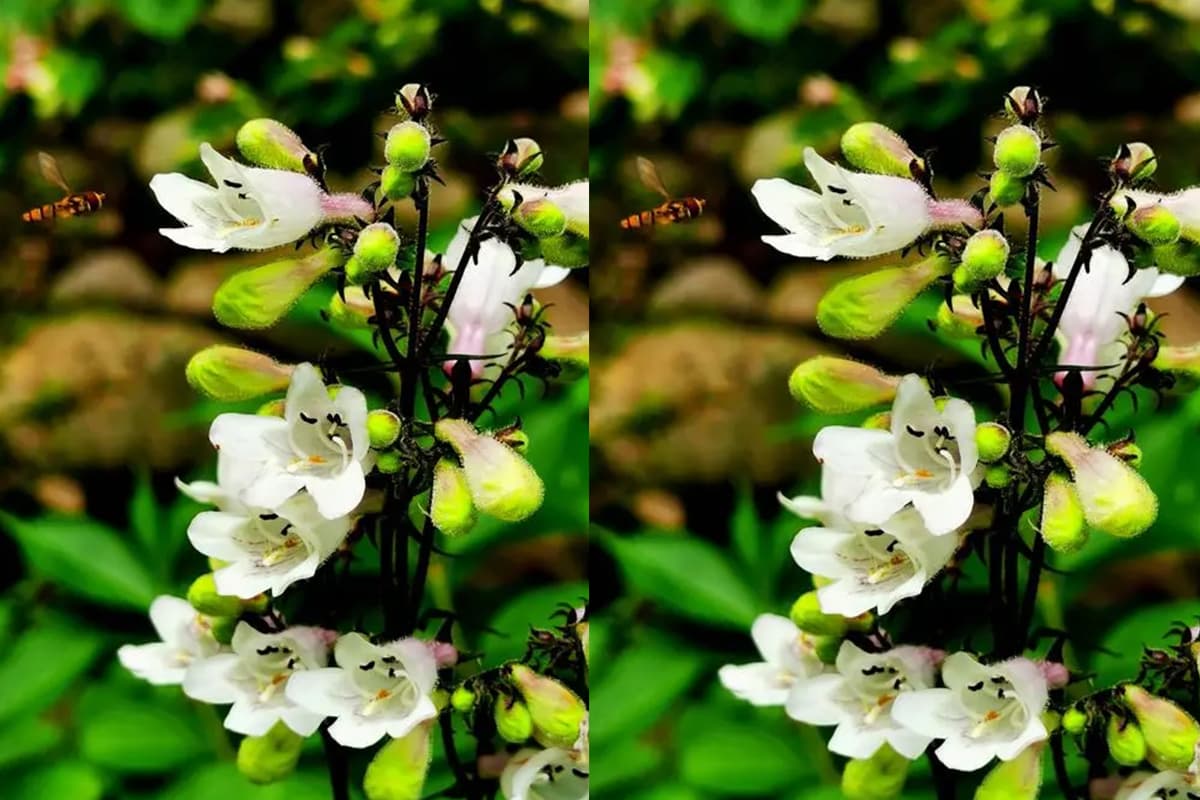
The leaves are opposite, with oval basal leaves and lanceolate stem leaves with entire margins. The inflorescence is a terminal panicle, and the flowers are tubular and lip-shaped, available in red, blue, purple, and pink shades.
This plant thrives in warm, well-lit, and well-ventilated environments, but it is sensitive to high summer temperatures. Native to the Americas, it is widely cultivated around the world.
With its long flowering period, Bellflower Beardtongue is ideal for flower bed planting and can create a vivid color landscape when paired with other blue perennial flowers. It is also suitable for container gardening.
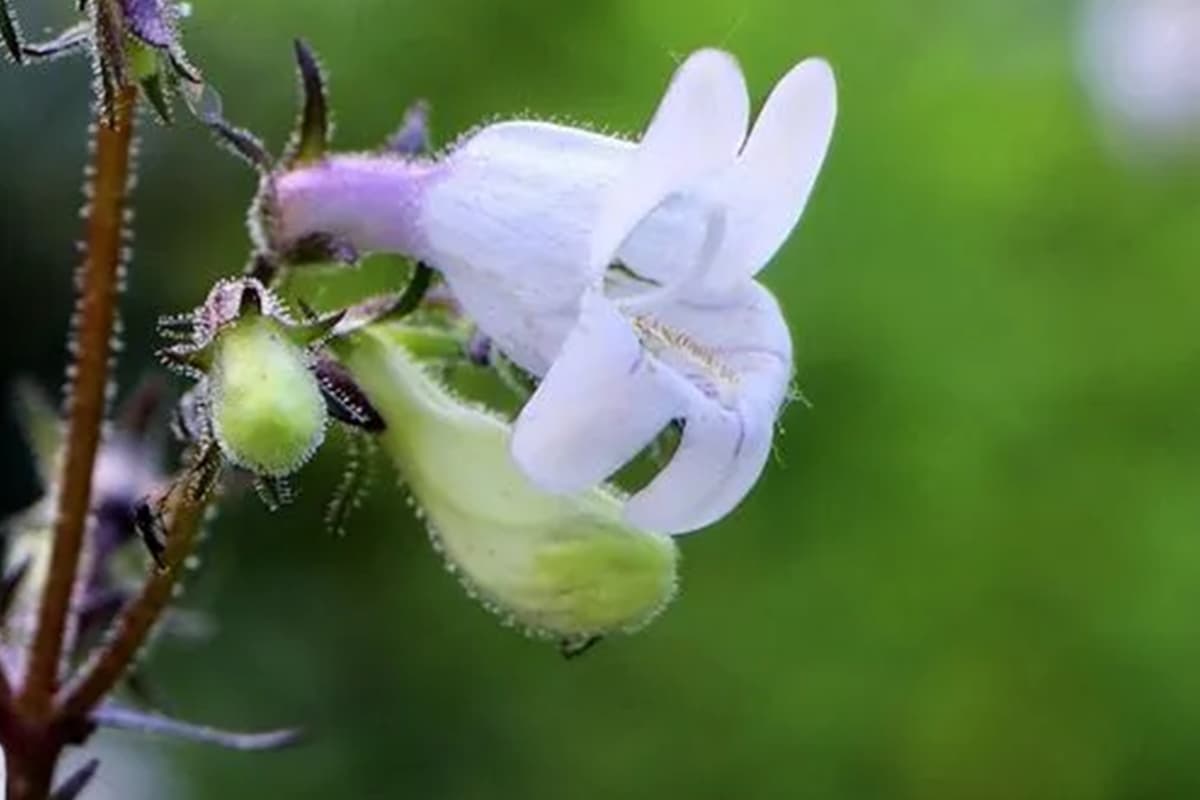
Bellflower Beardtongue is a perennial evergreen herb that stands 15-45 cm tall. It features conical flower clusters with bell-shaped, multicolored flowers and stems that are smooth with a slight white powder.
The plant is covered with fine hairs, and the leaves are opposite, with oval leaves at the base and lanceolate leaves on the stems.
Flowers are solitary or appear in groups of three to four in leaf axils and on the main stem, forming irregular terminal panicles with a corolla tube about 2.5 cm long.
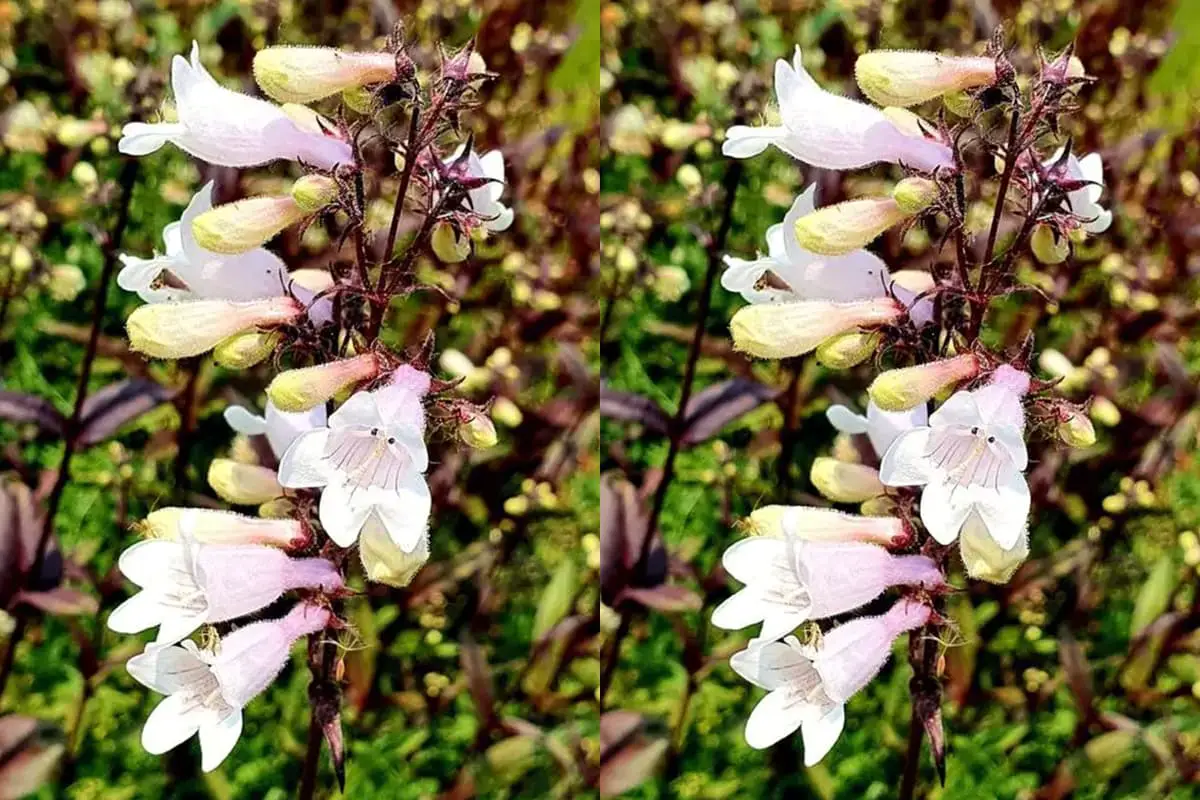
The flowers come in shades of purple, rose red, purplish-red, or white with white stripes, blooming in May through June, or from July to October.
This herbaceous perennial is often cultivated as an annual and requires smooth stems and well-drained soil for optimum growth. The branches are erect with a strong bushy nature, and the base often becomes woody.
The leaves are egg-shaped to narrowly lanceolate with finely serrated margins. The inflorescence is a conical panicle. The small flowers have a bell-shaped corolla with a two-lobed upper lip and a three-lobed lower lip, and the flowers tend to droop slightly.
Bellflower Beardtongue favors environments with abundant sunlight, moist air, and good ventilation. It does not tolerate cold, is averse to hot and dry conditions, acidic soils, and requires well-drained soil rich in lime and fertile sandy loam. It can tolerate partial shade but requires well-drained soil.
This species favors a warm climate with plenty of light and good ventilation. It does not tolerate the high temperatures and drought conditions often encountered in summer.
Penstemon campanulatus is ideal for planting in garden beds, ornamental borders, or green islands within landscape greenification projects.
Penstemon campanulatus prefers abundant sunlight, humid air, and a well-ventilated environment; it cannot withstand cold and detests hot, dry climates as well as acidic soils.
It necessitates well-draining soil and thrives in fertile, sandy loam that contains lime. While it can manage in semi-shaded conditions, good soil drainage is a must.
Originally from the Americas, Bellflower Beardtongue is now cultivated in many countries worldwide.
With its lengthy flowering period, Bellflower Beardtongue is suitable for flower border cultivation and can create a striking color landscape when coordinated with other blue perennial flowers. It is also ideal for container gardening.
Basic Symptoms: Excessive sprouting of axillary and adventitious buds, shortened internodes, yellowing and reduction in leaf size, prominent veins, little branches not falling off in winter resembling a bird’s nest, and severe cases leading to plant death within the year, with less severe cases dying within a few years.
The disease is most severe from July to August.
Cause: The disease is caused by mycoplasma-like organisms (MLOs). These organisms are seen in the phloem sieve tubes of diseased leaves, with pleomorphic particles ranging from 100 to 670 nm in size.
Conditions for Disease: The disease is mainly transmitted by the tea psyllid.
Methods of Prevention and Control: Girdling diseased branches in the spring can prevent the pathogen from spreading to other parts and is effective in disease control. At the onset of the disease, spraying a 4000-fold dilution of tetracycline antibiotics can be applied.

Peggie was once a high school mathematics teacher, but she set aside her chalkboard and textbooks to follow her lifelong passion for flowers. After years of dedication and learning, she not only established a thriving flower shop but also founded this blog, “Flowers Library”. If you have any questions or wish to learn more about flowers, feel free to contact Peggie.
 English
  العربية
  Bahasa Indonesia
  Deutsch
  Français
  Italiano
  Nederlands
  Português
  Русский
  日本語
日本語