600+ Types of Flowers A To Z (With Names and Pictures)
Types Of Flowers By Names (A-Z) Types Of Flowers By Color Types Of Flowers By Season Types Of Flowers By Blooming Time 600+ Types of Flowers No. Flower Name No.…

Nerium oleander, belonging to the Apocynaceae family and Oleander genus, is an evergreen shrub. As a shrub, the oleander can grow to a height of 2-6 meters. Its branches are gray-green, with young branches having ridges and being covered in fine hair, which falls off as the branches age. The flowering period of oleander is almost all year round, with the most abundant period being summer and autumn, specifically from June to October.
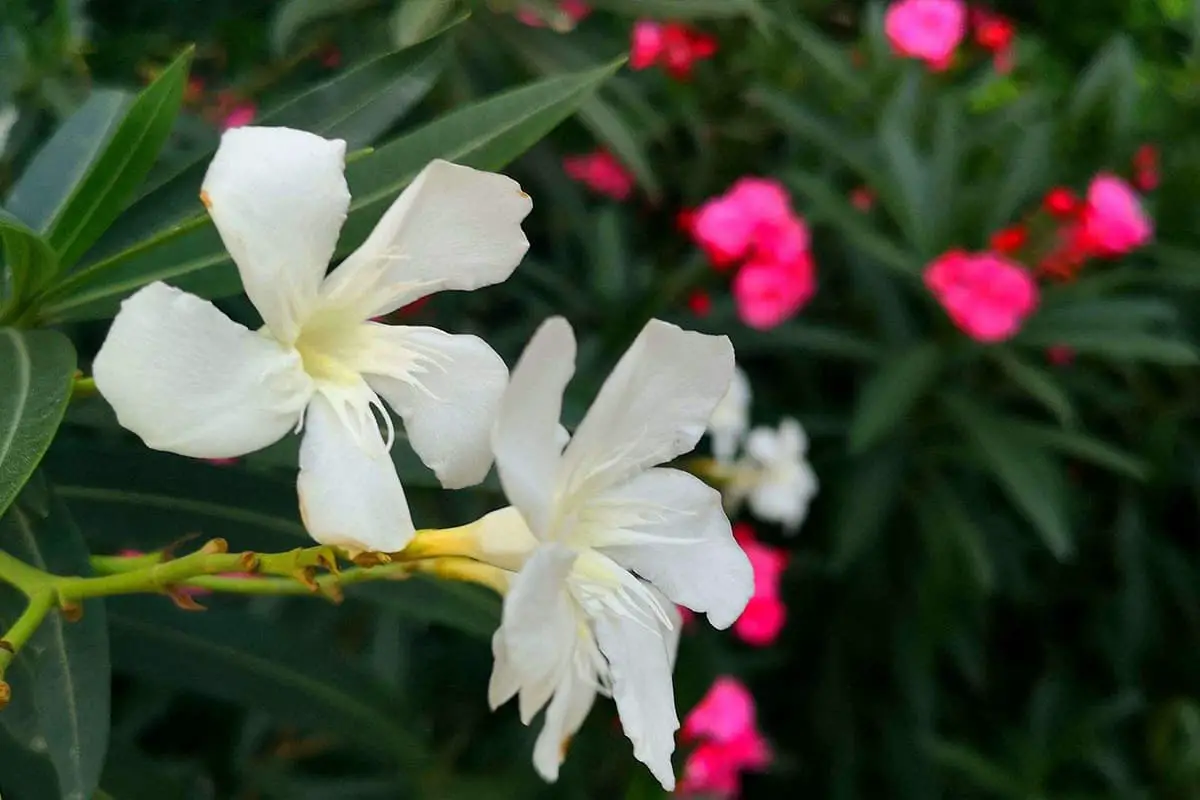
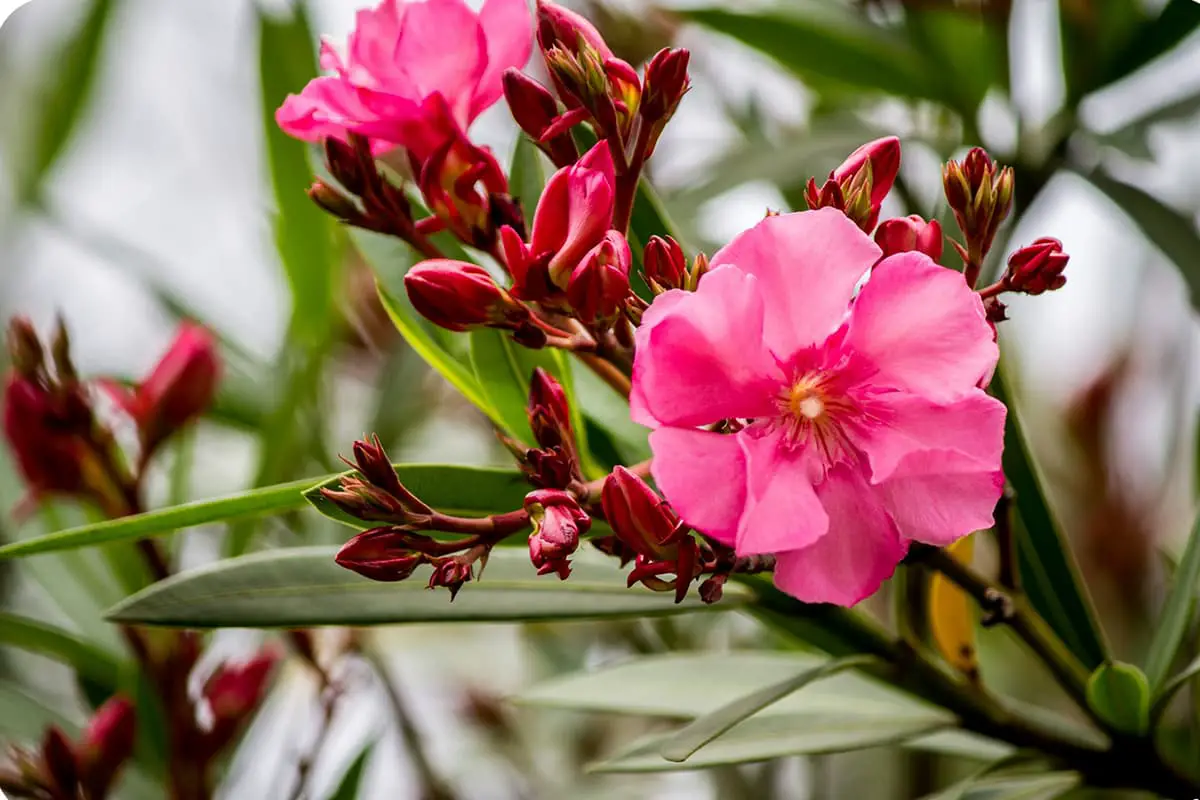
The flowers are funnel-shaped, most often pink, but also red. It is worth noting that oleander is inherently toxic. It is important to avoid accidental ingestion and contact with the sap inside the plant to prevent skin itching or even poisoning. The toxicity is extremely strong, and ingestion by humans or animals can be fatal.
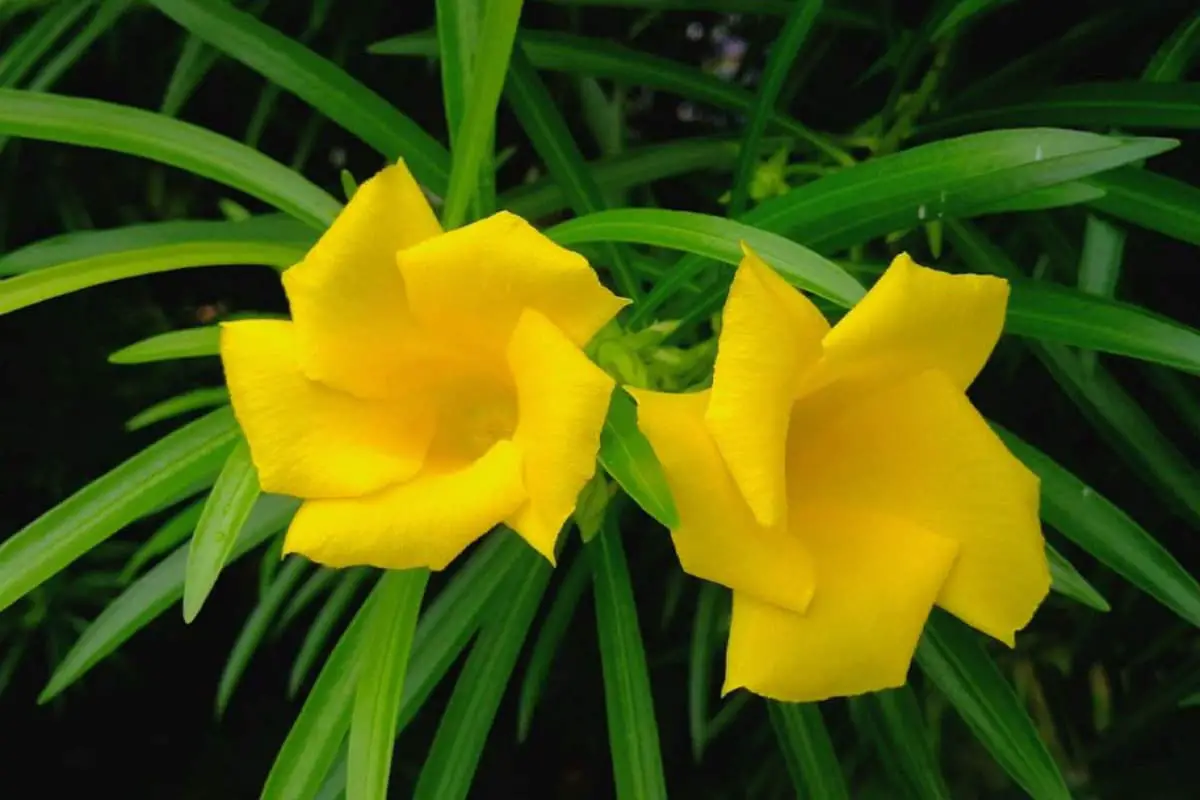
Oleander, belonging to the Oleander tribe, Oleander genus, is an evergreen, upright, large shrub that can reach up to 5 meters in height. The branches are gray-green, with young branches having ridges and being covered in fine hair, which falls off as the branches age. Leaves are whorled in 3-4 leaves, with dark green upper surfaces and light green undersides.
The midvein is recessed on the leaf surface, and the petiole is flat. The inflorescence is umbellate and terminal, with deep red or pink corolla. The corolla is a single layer and funnel-shaped when split into 5 sections. The seeds are oblong, and the flowering period is almost all year round, with the peak in summer and autumn.
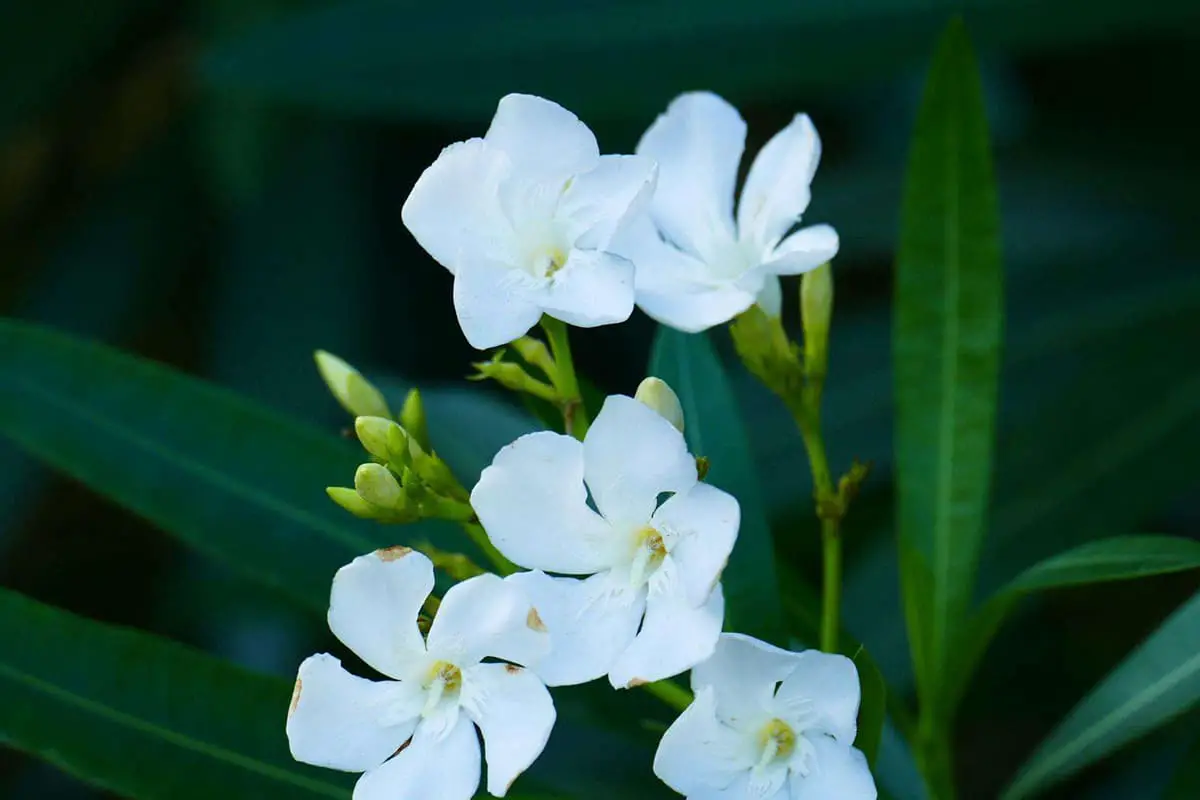
The fruiting period is generally in winter and spring, but the plant rarely bears fruit when cultivated. Oleander flowers are large, vibrant, and have a long flowering period, often used for viewing. It is easily propagated by cutting or layering and has a high survival rate. The stem bark fiber is an excellent blending material.
The seeds contain about 58.5% oil, which can be pressed for lubricating oil. Leaves, bark, roots, flowers, and seeds all contain various glycosides and are extremely toxic. Accidental ingestion by humans or animals can be fatal. Leaves and bark can be used to prepare cardiac stimulants, but they are toxic and must be used with caution.
Oleander is one of the most toxic plants, containing various toxins, some of which can be fatal. It has a very high toxicity, with reports of small amounts causing fatal or near-fatal incidents. Cardiac glycosides are natural plant or animal toxins that have either positive or toxic effects on the heart. These toxins can be found in all parts of the oleander, with the highest concentration in the sap, which can cause paralysis when contacting the skin.
The bark of the oleander contains rosagenin, which can have effects similar to strychnine. The entire plant, including its sap, is toxic, and other parts can also have adverse effects. The toxicity of oleander remains even when dried, and the smoke produced by burning oleander is also highly toxic.
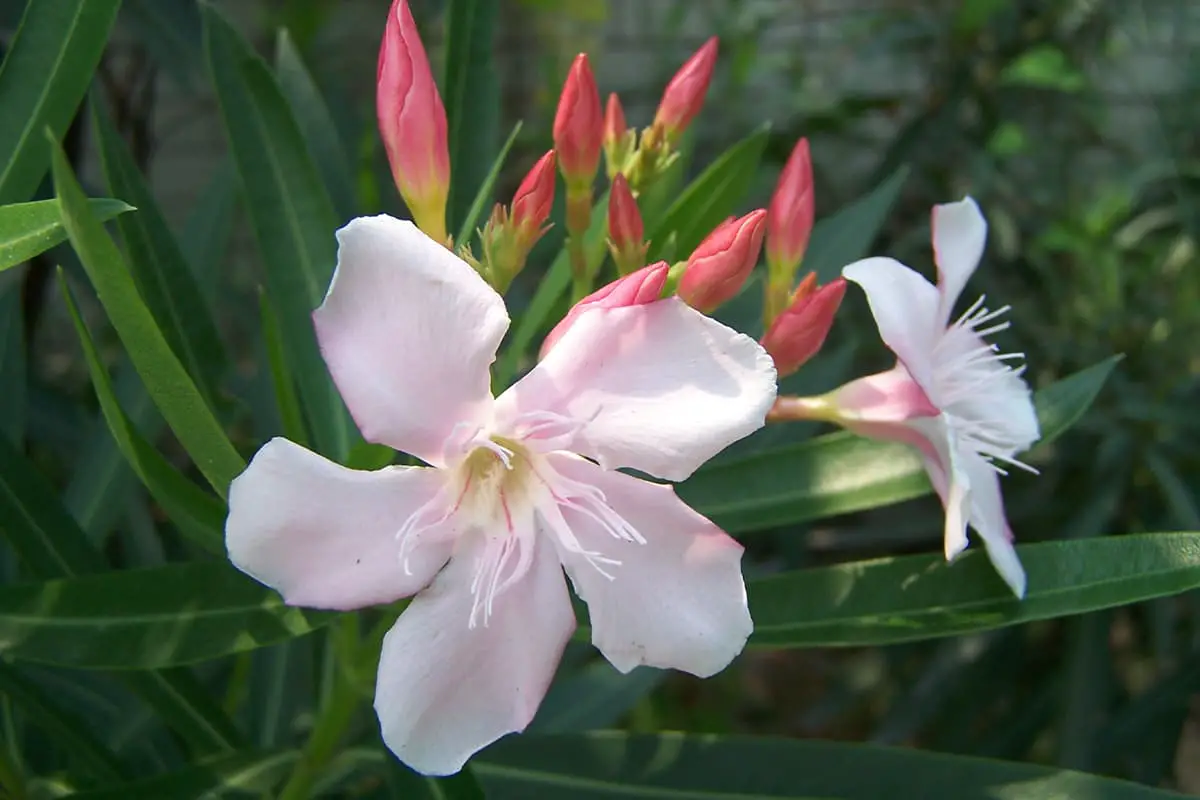
Oleander is native to India, Iran, and Nepal. It is cultivated in all provinces of China, especially in the south, and is often planted in parks, scenic areas, by roadsides, or around rivers and lakes. North of the Yangtze River, the plant needs to overwinter in greenhouses. It grows wild in Iran, India, and Nepal and is now widely planted in tropical regions worldwide.
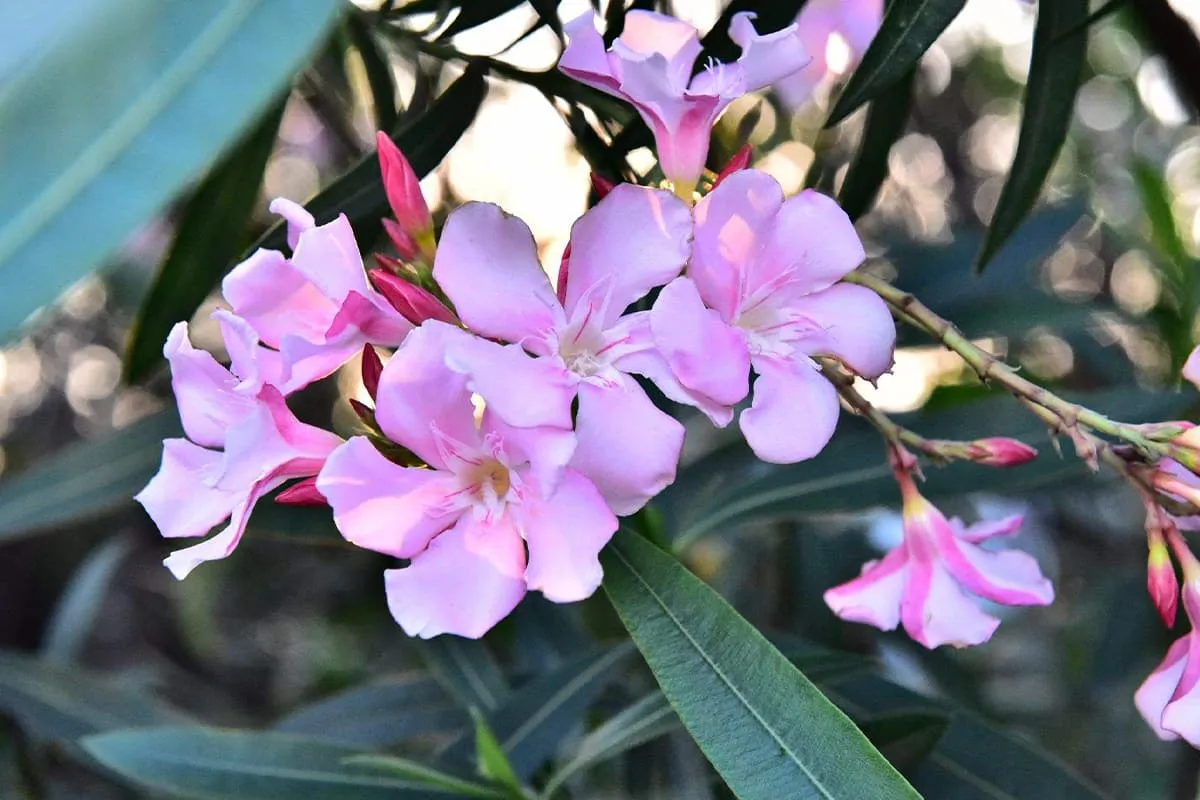
The Oleander (Nerium oleander) is an evergreen, upright, large shrub, with grey-green branches that contain a sap. Its tender branches are angled, covered in fine hair that sheds as it matures.
Leaves, grouped in threes or fours, are alternately arranged on the lower branches. They are narrow and lanceolate, with pointed tips, wedge-shaped bases, and rolled edges. The leaf surface is deep green and hairless, while the underside is light green, dotted with numerous depressions. It is thinly covered in fine hair when young, which gradually sheds as the leaf matures.
The midrib is sunken on the leaf surface but protrudes on the underside, with flattened lateral veins that are fine, densely packed, and parallel, reaching straight to the leaf edge. The leaf stalk is flat, slightly wider at the base, and also covered in fine hair that sheds as it ages; it has a glandular inner side.
The inflorescence is an umbel, born at the top with several flowers. The peduncle is about 3 cm long, covered in fine hair; the bracts are lanceolate. The flowers are fragrant, with a 5-parted, deeply divided calyx, red and lanceolate. The outer side is hairless, while the inner base has glands. The corolla can be deep red or pink, and through cultivation, white or yellow variants have been produced.
When the corolla is divided into five parts, it takes on a funnel shape. Its tube is cylindrical, widening at the top into a bell shape. The inside of the corolla tube is covered in long, soft hairs, with 5 wide, scale-like corona parts at the throat. Each corona part is torn at the top and extends beyond the throat of the corolla. The corolla lobes are ovate and round at the top.
There are two follicles, separate but parallel or joined, oval in shape, narrower at both ends, green, hairless, and with thin longitudinal stripes. The seeds are oval, narrower at the base and blunt at the top, brown in color.
The seed coat is covered in short rust-colored soft hairs and has flaxen, fibrous hairs at the top. The flowering period is almost all year round, peaking in summer and autumn; the fruiting period is generally in winter and spring, but it rarely bears fruit when cultivated.
Oleander enjoys a warm and humid climate and is not very cold-resistant. It can be planted in open ground south of the Yangtze River in China, but in Nanjing, the branches and leaves sometimes freeze and wilt, and the seedlings may even freeze to death. In the north, it can only be grown in pots for indoor viewing and wintering. The white variety is slightly more cold-resistant than the red.
Oleander does not tolerate waterlogging, so it should be planted in elevated and well-drained areas. It enjoys a sunny and fertile environment, but can also adapt to somewhat shady conditions, though plants in shaded areas tend to have fewer and paler flowers. Its strong sprouting ability allows it to recover easily from damage.
Oleander branches tend to split into three at the top, and can be pruned to shape according to needs. For a triple fork and nine top shape, cut a portion from the top of the three forks to produce nine tops.
To get eighteen branches from nine tops, keep six branches and cut from the top axil of the leaves to produce eighteen branches. Pruning should be done after each blooming period. In the north, the oleander blooms from April to October. Faded flowers should be removed promptly to concentrate the nutrients.
Pruning is generally done four times: first after the Grain Rain in spring; second in July or August; third in October; and finally a winter prune. If you want the oleander to bloom indoors, move it to a sunny spot indoors with a temperature of about 15℃.
Prune immediately after blooming, or else the flowers will be small and sparse, or may not bloom at all. Pruning allows for even branch distribution, larger and more vibrant flowers, and a beautiful shape.
Nerium oleander’s fine roots grow rapidly. A three-year-old oleander, planted in a 20 cm diameter pot, can fully root by July, forming a ball-like mass, which impedes the infiltration of water and fertilizer, affecting its growth. If root pruning is not done in time, wilting, leaf fall, and even death can occur. The best opportunity for root pruning is from early August to late September, when the roots are dormant.
Root pruning method: Use a quick shovel to cut off the surrounding fine roots; then use a three-pronged hook to comb through along the main roots. About half or a third of the fine roots should be removed before replanting in the pot.
After root pruning, water thoroughly and place it in the shade, keeping the pot soil moist. After about 14 days in the shade, move it to a sunny place. For oleanders planted in the ground, around mid-September, you should also trim the fine roots around the main stem. Water thoroughly after root trimming and apply a diluted liquid fertilizer.
Oleanders prefer fertile soil and thrive in neutral or slightly acidic soil. When applying fertilizer, ensure that it makes up about 20% of the potting soil. If using chicken manure, 15% is enough.
Fertilize once before Qingming festival and once after the autumn equinox. Method: Dig a circular trench around the pot edge, put in the fertilizer, and then cover with soil. After fertilizing before Qingming, apply bean cake water every ten days; after fertilizing post autumn equinox, apply bean cake or peanut cake water every ten days, or ten times diluted chicken manure liquid.
If the aforementioned fertilizers are not available, you can use human urine that has decomposed for more than seven days, diluted with water five to seven times, and watered along the pot edge, then watered thoroughly. For fertilizers with high nitrogen content, the principle is to be diluted, light, less, and frequent, strictly preventing burning roots.
In addition to requiring good drainage, potted oleanders also need sufficient nutrients. During the spring sprout, perform a reshaping pruning, trim the long shoots and weak branches from the base, and thin out overly dense inner branches.
At the same time, apply a wound-healing and antiseptic film to the pruning cuts to protect the wound and distribute the branches evenly, maintaining a lush shape. After 1-2 years, repotting should be done, preferably after pruning.
Summer is the time for vigorous growth and blooming for oleander; it needs a lot of water, watering once in the morning and once in the evening every day. If the potting soil is too dry, increase the watering and spray water to prevent the tender branches from wilting and affecting the flower’s lifespan.
After September, reduce watering to inhibit the plant’s continued growth, allowing the branches to mature, increasing nutrient accumulation for safe overwintering. The temperature during overwintering should be maintained at 8-10°C. Below 0°C, the oleander will shed its leaves. Oleander plants like plenty of nutrients; in addition to applying enough base fertilizer, you should apply fertilizer once a month during the growing season.
Once the seeds mature, they can be sown immediately. After sowing, they should be kept in a greenhouse for three months before sprouting. Seeds sown outdoors in autumn will gradually sprout by the following spring.
This method is employed during the rainy season. Wound branches close to the ground and press them into the soil. They usually root after approximately two months, after which they can be separated from the parent plant.
This can be done throughout the growing season. Cut branches that are 30-40 centimeters long, split the lower end with a small knife for about 4-6 cm, and insert into a water-filled glass container. They typically root within 2-3 weeks in the spring and autumn when the temperature is favorable. During summer, the water should be changed frequently to prevent it from spoiling and causing root rot.
Choose a seedbed location that is sheltered from the wind, receives plenty of sunlight, has good drainage, is free from diseases, pests, and weeds, has fertile soil, and is easy to manage. Typically, the seedbed should run from east to west.
No matter which method you choose, meticulous land preparation is required. The general plowing depth should be 25-30 centimeters, the bed width one meter, and the length as appropriate, with a 50-centimeter-wide walkway. When the soil is heavy, you can add some sand and pay attention to soil sterilization.
For cutting stock plants, choose those with excellent quality, robust growth, and free from pests and diseases. From the same plant, select cuttings preferably from the upper-middle, sun-facing branches of the current year’s growth, having shorter internodes, thicker stems and leaves, and plump buds. From the same branch, hardwood cuttings are usually chosen from the middle or lower branches.
Make the cut smooth, the upper end horizontal, and the lower end cut at an angle. When taking cuttings, choose robust branches with a diameter of 1 to 1.5 centimeters. The length of the cuttings should be 15-20 centimeters, and they should have two or three buds. The top cut should be about 1.5 centimeters from the bud, and the lower leaves should be removed. When pruning branches, separate red and white flowering varieties.
Separate cuttings by flower color, ensuring to promptly cut, section, and plant. To increase the survival rate of cuttings, bundle dozens of cuttings neatly and soak them in 100ppm of ABT Rooting Powder No.1 for 2-8 hours, and in 30-100ppm of Rooting Powder No.6 for 1-8 hours. Generally, 1 gram of rooting powder can treat 3000 cuttings.
Soil sterilization should be performed before cutting, and the cutting bed should be well irrigated. Treated cuttings should be planted with a spacing of 5×5 centimeters. Pay attention to the top and bottom ends of the cutting; it cannot be inverted. The cut of the cutting should be tightly joined with the soil, and care should be taken not to scratch the skin at the lower cut. For this, make a hole in the cutting bed with an iron rod before inserting the cutting, but the depth of the hole should be slightly shallower than the length of the cutting so that the cutting can be inserted into the soil. The depth of cutting should generally leave one or two buds above the ground, and make sure to mark and record after cutting.
The temperature required for most ornamental plants to root from cuttings is 20-25°C, with a relative humidity of 80-85%. They generally root 15-20 days after cutting. After cutting, it is important to spray enough water to ensure close contact between the soil and the cutting. To prevent the temperature from being too high at noon, it is best to shade. Spray water once in the morning and evening according to the soil moisture conditions, but don’t overwater, as it can affect the healing and rooting of the cuttings. To prevent the occurrence of bacteria, spray a fungicide every 10 days or so. Transplant in the spring of the second year.
Symptoms: Brown spot disease is a significant threat to Nerium oleander and is prevalent everywhere, causing severe damage. It mainly affects the leaves. Initially, purplish-red spots appear at the leaf tips or edges, which expand to form circular, semicircular, or irregular brown spots. Rings can be observed on these spots. The central part turns white later, with a broader reddish-brown margin. Under high humidity conditions, a greyish-brown mycelium layer can grow on both sides of the spots, representing the fungus’ conidiophores and conidia.
Control Methods
Agricultural control: Plant at a reasonable density, avoiding overcrowding; manage fertilizer and water scientifically to cultivate robust seedlings; collect and incinerate diseased leaves to reduce the source of the fungus.
Chemical control: At the onset of disease, spray with a 1000-fold solution of 50% Benomyl Wettable Powder, or a 600-fold solution of 25% Carbendazim Wettable Powder, or a 500-fold solution of 36% Thiram Suspension.
Symptoms: Spots occur on the edges or middle of the leaves, semi-circular or circular in shape. When several spots are connected, they form a wavy pattern and appear on both sides of the leaf. The spots are grey-white or grey-yellow and produce a black powdery layer in the later stage, usually on overwintering leaves.
Control Methods
Horticultural control: Enhance management and strengthen tree vigor.
Chemical control: When necessary, spray a 700-fold solution of 75% Chlorothalonil.
Ornamental
The leaves of Nerium oleander resemble those of willow and bamboo, while its vibrant red flowers can outshine even peach blossoms. The flower crowns range from pink to deep red or white and give off a unique fragrance. Its flowering period extends from June to October, making it a well-known ornamental plant.
Nerium oleander flowers are fragrant. They cluster at the end of branches, creating a display reminiscent of an open umbrella. The flowers are funnel-shaped, with overlapping petals in red, yellow, and white. The red variety is the plant’s natural color, while the “white” and “yellow” varieties are new cultivars developed through long-term artificial breeding.
Environmental Conservation
Nerium oleander has the capacity to resist smoke, dust, and toxins. It can also purify air and contribute to environmental protection. Its leaves, which are poisonous to humans, have a strong resistance to harmful gases such as sulfur dioxide, carbon dioxide, hydrogen fluoride, and chlorine. It has been found that potted Nerium oleander plants only suffer minor damage 40 meters away from a pollution source.
At 170 meters, they are essentially unharmed and can still flower normally. The sulfur content in their leaves is over seven times higher than that in unpolluted plants. Even when Nerium oleander is completely covered in dust, it can still grow vigorously. For this reason, people call it an “environmental guardian”.
Medicinal Use
Lisu medicine uses Nerium oleander leaves and bark to treat heart failure, asthma, cough, bruises, and menstrual disorders.
The bark of the root: Toxic. It can strengthen the heart and kill parasites. Used for heart failure, epilepsy; externally used for paronychia, spot baldness.
The leaves (Nerium oleander): Spicy, bitter, astringent, warm. Toxic. It can strengthen the heart and promote urination, expel phlegm and kill parasites. Used for heart failure, epilepsy; externally used for paronychia, spot baldness, and killing flies.
The whole plant: Toxic. It can strengthen the heart, promote urination, sweating, dispel phlegm, promote blood circulation, relieve pain, and cure rashes. Used for asthma, epilepsy, heart failure; killing flies, and mosquito larvae.
Flower Language of Nerium Oleander
The flower language of Nerium oleander includes “femme fatale,” “sincere friendship,” and “illusory beauty.” With its rich colors and elegantly beautiful shapes, the flowers of Nerium oleander have a high ornamental value. However, the seeds, flowers, and leaves of Nerium oleander contain toxins that can harm humans, symbolizing the unpredictable danger that exists beneath a beautiful exterior.
The yellow Nerium oleander symbolizes sincere friendship, and its bright and dazzling flower color can leave a deep impression. You can give yellow Nerium oleander to your close friends, hoping that the friendship between you will remain eternal and unchanging. When cultivating Nerium oleander, provide scattered light exposure to make the color of the flowers more vivid.
The pink Nerium oleander carries the meaning of illusory beauty. Its flower color gives a sense of delicate aesthetics and dreamy romance. However, the pink Nerium oleander can cause skin to itch and swell, symbolizing the deceptive beauty of illusion. You can place the pink Nerium oleander on your desk as a reminder to stay grounded.
Legends of Nerium Oleander

Peggie was once a high school mathematics teacher, but she set aside her chalkboard and textbooks to follow her lifelong passion for flowers. After years of dedication and learning, she not only established a thriving flower shop but also founded this blog, “Flowers Library”. If you have any questions or wish to learn more about flowers, feel free to contact Peggie.
 English
  العربية
  Bahasa Indonesia
  Deutsch
  Français
  Italiano
  Nederlands
  Português
  Русский
  日本語
日本語