600+ Types of Flowers A To Z (With Names and Pictures)
Types Of Flowers By Names (A-Z) Types Of Flowers By Color Types Of Flowers By Season Types Of Flowers By Blooming Time 600+ Types of Flowers No. Flower Name No.…

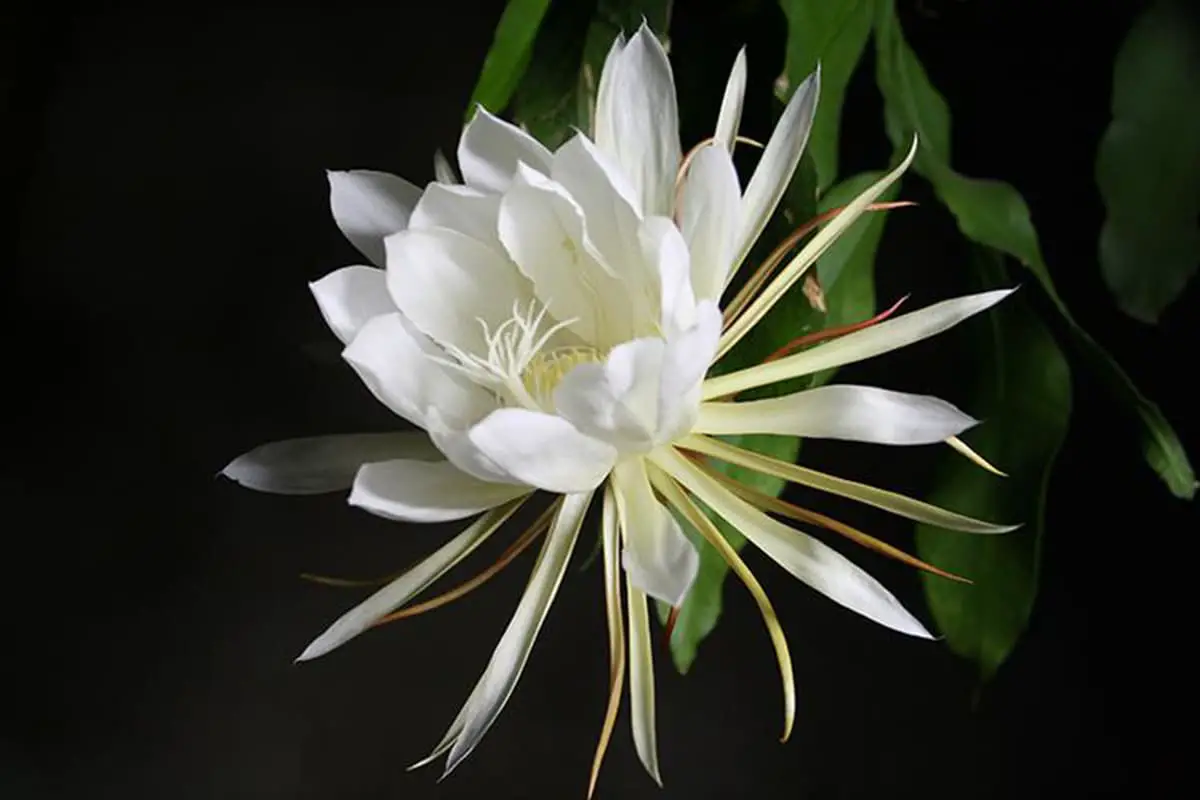
The Epiphyllum oxypetalum, also known as the Queen of the Night, Dutchman’s Pipe, and Wijaya Kusuma, is a parasitic shrub belonging to the cactus family. Known as the “beauty under the moon”, its fleeting blooming period led to the phrase “as fleeting as the Epiphyllum flower”.
The Epiphyllum typically blooms between June and October, usually opening between 9 PM and 4 AM for about four hours.
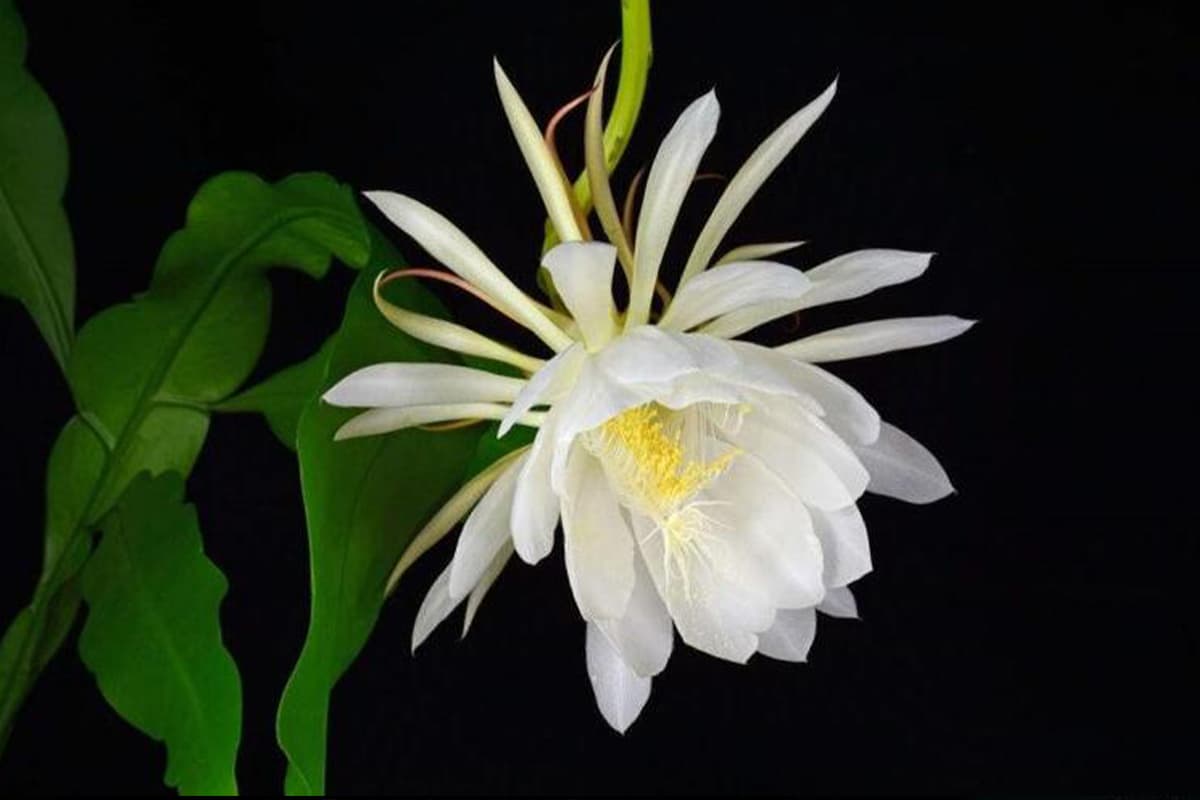
As it blooms, the floral tube gradually lifts, slowly unveiling its purplish coat. The large flower composed of over 20 snowy-white petals then blooms, only to close and wither after about three to four hours, truly embodying the phrase “as fleeting as the Epiphyllum flower”.
Basic Introduction
The Epiphyllum is a parasitic shrub growing from 2 to 6 meters in height with old stems that are cylindrical and woody. It has numerous branches, flat and lanceolate to oblong-lanceolate leaf-like stems with wavy or deeply serrated edges that are dark green, hairless, with a prominent midrib.
Older plants produce aerial roots. The flowers are solitary, funnel-shaped, fragrant, bloom at night, and are about 25-30 cm long with a diameter of 10-12 cm.
The floral tube is green with slight angles and short triangular scales; the petals are white, oblong-lanceolate to ovate, 7-10 cm long, and 3-4.5 cm wide with entire or erose edges. The fruit is elongated, ribbed, hairless, and purplish-red. The seeds are numerous, kidney-shaped, shiny black, wrinkled, and hairless.
The plant grows at altitudes of 1,000-1,200 meters and prefers a warm, humid, semi-shady environment. It is frost-sensitive and should avoid direct sunlight. Epiphyllum is celebrated as the “beauty under the moon”.
After gradually unfolding, the flower wilts within 1-2 hours, with the entire process lasting around 4 hours, thus coining the phrase “as fleeting as the Epiphyllum flower”.
Growth and Distribution
Growing Conditions
The Epiphyllum enjoys a warm, humid, semi-shady environment. It is not frost-tolerant and dislikes direct sunlight. Its optimum growing temperature is 15-25°C, with nighttime temperatures in spring and summer ideally between 16-18°C and daytime temperatures between 21-24°C.
It can tolerate low temperatures around 5°C in winter. The soil should not be too dry. It prefers rich, well-drained, loamy, and slightly acidic sandy soil, otherwise, it can easily suffer from root rot.
Distribution Range
Originally from Mexico, Guatemala, Honduras, Nicaragua, Suriname, and Costa Rica, the Epiphyllum is now widely cultivated worldwide.
Form and Features
Epiphyllum is a parasitic fleshy shrub that stands 2-6 meters tall. Its old stems are cylindrical and lignified. The plant has multiple branches and leaf-like, flat, lanceolate to oblong-lanceolate stems that measure 15-100 cm long and 5-12 cm wide. The leaf apex tapers sharply or rounds off, and the edge is wavy or deeply serrated.
The leaf base tapers sharply, gradually narrows into a stem-like shape, and is dark green, hairless, with a prominent midrib that’s 2-6 mm wide, raised on both surfaces. Older plants produce aerial roots. The small pits are arranged in the concave areas between the teeth, are small, spineless, initially have few hairs, and later become bare.
Flowers are solitary, funnel-shaped, open at night, fragrant, and measure 25-30 cm long with a diameter of 10-12 cm. The green floral tube has slight angles and short triangular scales. The floral tube is 13-18 cm long, with a base diameter of 4-9 mm, somewhat curved, with sparse 3-10 mm lanceolate scales, and the pit under the scales is usually hairless.
The sepal-like tepals are green-white, light amber, or flushed with red, linear to lanceolate, 8-10 cm long, 3-4 mm wide, with an acute apex, entire margins, and usually reflexed. The petal-like tepals are white, oblong-lanceolate to ovate, 7-10 cm long, 3-4.5 cm wide, with an acute to round apex, sometimes with an awn, and entire or erose edges.
The stamens are numerous and arranged in two rows. The white filaments are 2.5-5 cm long. The anthers are pale yellow, 3-3.5 mm long. The white style is 20-22 cm long, 3-4 mm in diameter, and the 15-20 stigmas are narrowly linear, 16-18 mm long, gradually narrowing towards the apex, spreading, and yellow-white.
The fruit is an elongated sphere, ribbed, hairless, and purplish-red. The seeds are numerous, ovate kidney-shaped, shiny black, wrinkled, and hairless.
How to Care for Epiphyllum
Cultivation Methods for Epiphyllum
Soil
Potted plants typically use well-drained, fertile leaf mold. The potting soil should not be too wet. High air humidity should be maintained in the summer. Avoid heavy rain to prevent root rot.
During the growing period, fertilize once every half month, and add phosphate fertilizer once in early summer during the budding and blooming period. Proper fertilization and watering can prolong the flowering period. Excessive watering and too much shade can lead to stem elongation and, conversely, affect flowering.
Light
Epiphyllum prefers a semi-shady, warm environment. In summer, it should be kept under a shade screen or cultivated in a place without direct sunlight. The suitable growing temperature in spring and summer is 21-24°C during the day and 16-18°C at night.
In winter, it should be brought into the greenhouse, placed in a sunny spot, and given plenty of sunlight. The wintering temperature should be maintained at 10-13°C.
Watering
During the summer, the soil should be kept moist, and water should not accumulate to avoid root rot. A shade should be used to avoid direct sunlight.
In summer, water the plant frequently and spray water once or twice in the morning and evening to increase the humidity and avoid heavy rain, which can lead to root rot. The amount of water should be reduced in spring and autumn, and water should be strictly controlled in winter, just keep the soil not too dry.
Fertilization
In the fall, you can apply additional well-rotted liquid fertilizer. If there is not enough nutrition, the plant will not flower or will produce fewer flowers. Remove the shading equipment in the fall to enhance the sunlight.
Nitrogen fertilizer should be applied once a month in spring and autumn, with suitable concentration. In winter, water the plants regularly, stop fertilizing, and place them in a place with light to control their growth.
When the room temperature is too high in winter, dense new buds often sprout from the base, which should be removed in time to avoid consuming nutrients and affecting blooming after spring; with the rise of temperature in spring, do not water and fertilize too much to avoid bud drop.
During the growing period, apply well-rotted cake fertilizer water every half a month, and you can also add ferrous sulfate at the same time. During the budding and flowering period, add bone meal or calcium superphosphate once.
Proper application of fertilizers and water can extend the flowering time. Too much fertilizer and over-shading can cause stem elongation, affecting flowering. On the other hand, exposure to sunlight or intense sunlight can cause abnormal stems to shrivel and yellow.
Shading
Potted Epiphyllum should be tied up or propped up in time due to their weak and abnormal stems. Epiphyllum is a shade-loving plant, so potted plants can be placed under tree shade or eaves in summer, but avoid raindrops to prevent the plants from exposing their roots and tilting, which affects growth. In winter, they need to be moved indoors to overwinter.
Flowering Period Control
To change the habit of Epiphyllum blooming at night, you can use the “day and night reversal” method to make Epiphyllum bloom during the day. When the buds of Epiphyllum enlarge, move the plant to a dark room during the day or cover it with a light-blocking black cover made of black plastic film without any light transmission.
From 8 pm to 6 am the next morning, illuminate it with light. After 7-8 days of treatment like this, Epiphyllum can bloom during the day according to people’s wishes.
Epiphyllum can be planted by cutting. This can be done from May to June in spring. It has a high survival rate and roots quickly.
Cut a robust and thick stem leaf from a healthy Epiphyllum plant that is over one year old to use as a cutting, cut the cutting into 3-5 branches, and keep the leaf buds on each branch. The substrate for cutting can be a mixture of garden soil, bran ash, and sandy soil, and water to keep it moist.
Dip the branches in rooting powder, insert the Epiphyllum into the soil, and insert it to a depth of one-third of the plant. Maintain good temperature and humidity, and it can sprout in about a month. After the Epiphyllum has rooted and sprouted, prepare loose soil rich in humus and transplant the Epiphyllum.
Epiphyllum can be pollinated with human assistance to encourage fruiting. After the fruit matures, pick it, take out the black seeds, and choose healthy and full seeds. Soak the seeds in clean water, then let them dry in a cool and ventilated place after soaking.
Prepare the flower pot and soil, spread the seeds evenly on the surface of the soil, cover it with a thin layer of soil, spray water appropriately to keep the soil moist, and maintain a good temperature. The seeds will germinate after about 2-3 weeks.
Grafting can be done from March to April. Cacti are used as rootstocks. Select well-growing Epiphyllum plants, cut 2-3 strong leaf-like stems as scions, and insert them into the rootstocks. They will heal in about 7-10 days.
The most important thing is to detect it early and control the source of infection. In hot weather, cool down and increase ventilation. Do not place it in a closed room, and the air should not be too humid. Appropriate water control is also necessary in summer. If diseased leaves are found, it is recommended to cut them all off.
If the root is not completely rotted, it can still be saved. If all the roots have rotted, but the leaves are still in good condition, you can also cut off the rotten part and propagate the cuttings to save the seedlings. If root rot is severe, cut off the rotten part, soak it in polyfungicide, let it dry in the shade, and then replant it.
(1) Pay attention to eradicating surrounding weeds to reduce the source of the virus.
(2) Spray with 100-150 times diluted flower preservative solution as soon as aphids are found to reduce the transmission of the virus.
(3) Spray with 800 times diluted solution of 7.5% validamycin or 600 times diluted solution of 20% moroxydine hydrochloride difenzoquat copper fungicide or 700 times diluted solution of 3.85% Virucide.
Efficacy One
Epiphyllum has a very good detoxifying effect, it can clear toxins in the body, and beautify the complexion. It has a good therapeutic effect for people who often suffer from constipation and frequently have pimples and freckles on their faces.
Epiphyllum can protect women’s health. People with a lot of body toxins can eat Epiphyllum for deep detoxification.
Efficacy Two
Epiphyllum is a flower that can clear heat and treat asthma. The main function of Epiphyllum is to clear heat, because Epiphyllum is a relatively cool flower, so its petals can have the effect of quality heat poison.
People with hot symptoms in the large intestine and who often have constipation and bloody stools can be treated by eating Epiphyllum.
People with abscesses and pneumonia can also eat Epiphyllum, which has a certain therapeutic effect. People who have blood in their sputum when coughing and have asthma can be treated with Epiphyllum.
Efficacy Three
Epiphyllum has a very good effect in strengthening physical ability. Epiphyllum can enhance the immunity and resistance of the human body and has a very good effect in repairing body functions.
Epiphyllum can lower the “three highs”, and it has a good therapeutic effect for people with high blood pressure and high fat. Epiphyllum can also regulate women’s endocrine and can eliminate blood stasis.
Efficacy Four
Epiphyllum has a certain anti-inflammatory and antibacterial effect, eating Epiphyllum can effectively prevent various inflammations and chronic diseases. Especially for women with gynecological diseases, eating Epiphyllum has a very good therapeutic effect.
Epiphyllum is a treasure all over its body, its petals can be eaten directly, or they can be soaked in water for drinking. Epiphyllum leaves can be boiled in water for drinking, which is a very good medicine for clearing heat and detoxifying.
In addition, Epiphyllum can be dried and drunk as flower tea, which has a very good effect on detoxifying and beautifying the skin. It has a good therapeutic effect for people with a damp-heat constitution.
This species is a famous ornamental flower, commonly known as “beauty under the moon”, or “Qionghua. It belongs to the Cactaceae family and the Epiphyllum genus. Every summer and autumn, when the stars fill the sky and the night is quiet, the Epiphyllum blooms, showing its beauty.
While people are still asleep, the pure and fragrant Epiphyllum suddenly closes and withers, hence the name “momentary bloom”. Its wonderful blooming habits often arouse the keen interest of flower enthusiasts.
Placing a few pots of green plants at home can not only let you absorb fresh air every day, beneficial for health and beautifying the environment.
The flower language of Epiphyllum: fleeting beauty, an eternal moment. “Epiphyllum blooms” is used as a metaphor to imply that good things don’t last long. Similar idioms include “in the blink of an eye”, “like a lightning spark”, “like a white horse passing a gap”, “gone in a flash”, etc.
Mythology
Epiphyllum was originally a flower goddess who bloomed every day and was brilliant in all seasons. She also fell in love with the young man who watered and weeded for her every day. When the Jade Emperor learned of this, he was furious and wanted to break up the couple.
The Jade Emperor captured the flower goddess and demoted her to the Epiphyllum, which can only bloom for a moment each year, preventing her from seeing her lover again. He also sent the young man to Lingjiu Mountain to become a monk, gave him the name Weituo, and made him forget his past and forget the flower goddess.
Many years have passed, and Weituo really forgot about the flower goddess. He devoted himself to Buddhism and made some achievements.
However, the flower goddess could never forget the young man who once took care of her. She knew that every late spring, Weituo would come down the mountain to collect morning dew for brewing tea for Buddha.
So, the Epiphyllum chose to bloom at that time. She gathered all her energy for a year and bloomed in that moment. She hoped that Weituo would look back at her and remember her.
However, thousands of years have passed, and Weituo came down the mountain year after year to collect morning dew. The Epiphyllum bloomed quietly year after year.
Weituo never remembered her. Until one day, a thin man walked past the Epiphyllum and saw the sad and lonely expression of the flower goddess. He stopped and asked the flower goddess, “Why are you sad?”. The flower goddess was surprised, as ordinary people cannot see the true form of the flower goddess.
If it was an immortal with golden light on his head, the one who just walked past her was obviously a mortal, how could he see her true form? The flower goddess hesitated for a moment and only answered, “You can’t help me”. She waited quietly for Weituo and didn’t answer the man anymore.
Forty years later, the thin man walked past the Epiphyllum again and asked the same question as he did forty years ago, “Why are you sad?”. The flower goddess hesitated for a moment and only answered, “You probably can’t help me.”
The thin man smiled and left. Another forty years later, a thin old man appeared in front of the flower goddess again, and the originally thin old man looked more dying. The man from back then had become an old man, but he still asked the same question as he did 80 years ago, “Why are you sad?”.
The Epiphyllum answered, “Thank you, mortal, you asked me three times in your life, but after all, you are a mortal, and you are dying, how can you help me, I am a flower goddess who was punished by heaven for love.” The old man smiled and said, “I am Yuming, I just came to end the fate that had no result 80 years ago.
Flower goddess, I give you a sentence: fate arises and ends, and eventually everything ends. Flowers bloom and fall, returning to dust.” After saying this, the old man closed his eyes and sat down.
As time passed, the last ray of sunset began to move from the old man’s hair to his eyes. The old man smiled and said, “Epiphyllum blooms for Weituo, what’s wrong with such a love? I will take the punishment from heaven and earth, if the heaven is blind, I will open my eyes.”
After saying that, the old man grabbed the flower goddess, at this time the sunset slid to the old man’s eyes, the old man passed away with serenity, holding the flower goddess and went to the Buddhist realm.
The flower goddess saw Weituo in the Buddhist realm. Weituo finally remembered the past life, and after the Buddha knew, he allowed Weituo to go down to the world to end the unresolved cause and effect.
Because the old man Yuming violated the rules of heaven, his soul wandered all his life. He could not travel west on a crane, nor could he enter the Pure Land of the Eastern Buddha, and he was forever punished by heaven without reincarnation.
The Epiphyllum blooms, only for Weituo. So Epiphyllum is also called Weituo Flower. Also because the Epiphyllum saw Weituo after the sunset, the Epiphyllum always blooms at night.

Peggie was once a high school mathematics teacher, but she set aside her chalkboard and textbooks to follow her lifelong passion for flowers. After years of dedication and learning, she not only established a thriving flower shop but also founded this blog, “Flowers Library”. If you have any questions or wish to learn more about flowers, feel free to contact Peggie.
 English
  العربية
  Bahasa Indonesia
  Deutsch
  Français
  Italiano
  Nederlands
  Português
  Русский
  日本語
日本語