600+ Types of Flowers A To Z (With Names and Pictures)
Types Of Flowers By Names (A-Z) Types Of Flowers By Color Types Of Flowers By Season Types Of Flowers By Blooming Time 600+ Types of Flowers No. Flower Name No.…

The ZZ plant, also known as the Money Tree or scientifically as Zamioculcas zamiifolia, is a perennial evergreen herb and a rare type of ornamental plant with underground tubers.
Originating from the less rain-prone tropical grassland climate zones of East Africa, the ZZ plant is often used as an indoor foliage plant for air purification.
The newly sprouted pinnate leaves usually come in pairs—one long and the other short, one thick and the other thin—which has led to its other nickname, the “Dragon and Phoenix Wood”, symbolizing wealth and prosperity.
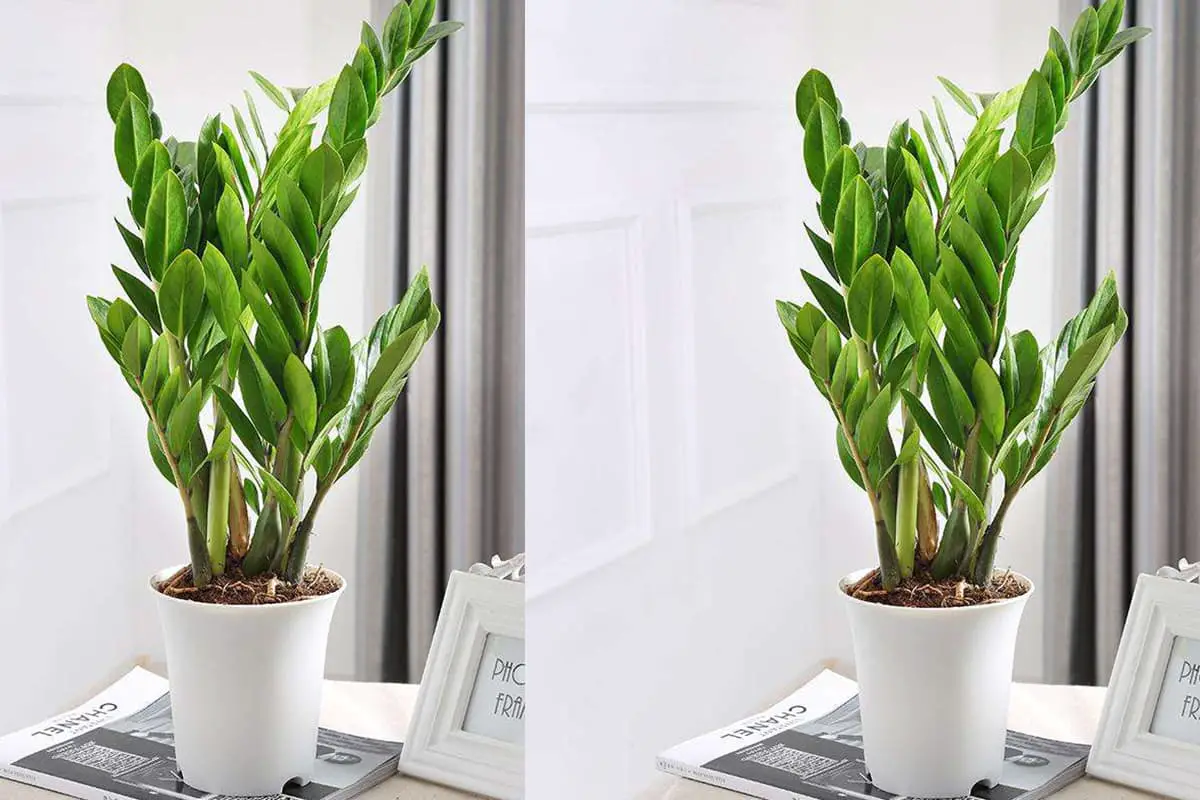
The ZZ plant is native to the less rainfall-prone tropical grassland climate zones of East Africa.
The above-ground part of the plant does not have a main stem and grows to a height of 50 to 80 centimeters. The plant has large tubers underground, with a diameter of 5 to 8 centimeters.
Adventitious buds sprout from the tubers, forming large compound leaves. The leaflets are fleshy with short petioles. The swollen base of the leaf stalk is woody.
Pinnate compound leaves sprout from the top of the tuber, with each leaf axis having 6 to 10 pairs of nearly opposite leaflets. The leaflets are ovate, thick and leathery, green, and have a metallic sheen. The spadix is green, boat-shaped, and the spadix is relatively short.
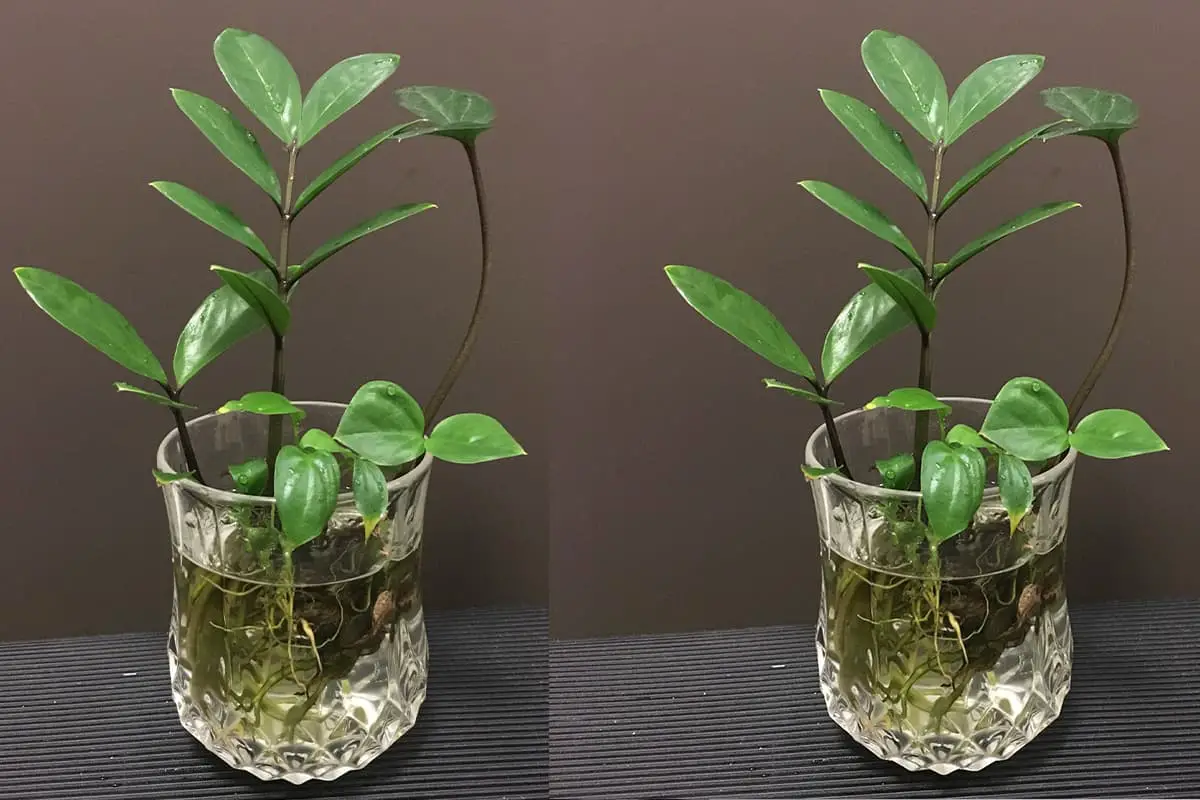
The ZZ plant prefers warm, slightly dry, semi-shady environments with little annual temperature fluctuation. It is suitable for growth in temperatures ranging from 20°C to 32°C.
During the growth period, watering should be done thoroughly only when the soil is dry. It is quite drought-tolerant but fears cold and strong sunlight. It dislikes heavy, waterlogged soil which can easily lead to tuber rot.
It requires loose, fertile soil with good drainage, rich in organic matter, and slightly acidic. The ZZ plant has strong sprouting power; after the large pinnate leaves are cut off, new leaves will quickly sprout from the top of the tuber.
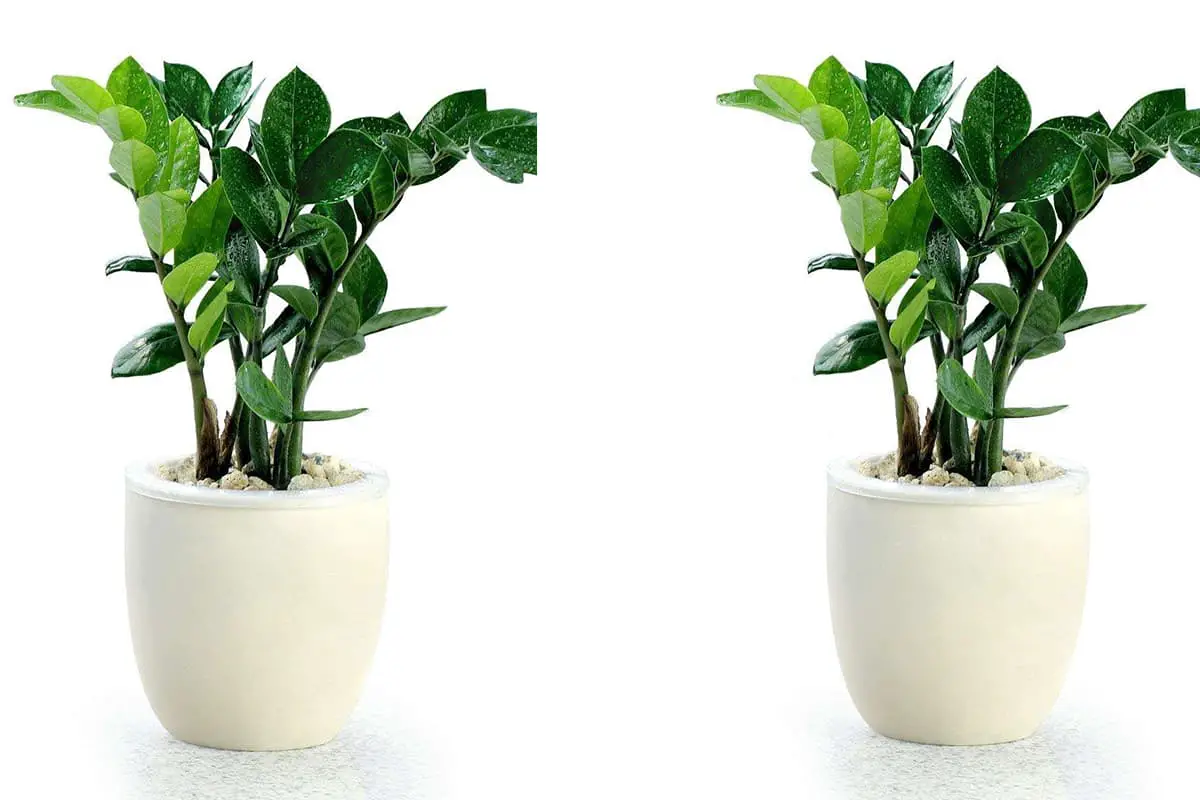
The ideal growth temperature is 20-32°C. Whether it’s planted in pots or fields, it requires a small annual average temperature variance. The most productive cultivation should be done in a controlled temperature greenhouse.
During the summer, when the temperature exceeds 35°C, plant growth is subpar. Measures such as adding a blackout net for shading and misting the surrounding environment are needed to lower the temperature, creating a space that is comfortable and relatively dry.
In winter, it’s best to maintain an interior temperature above 10°C. If the temperature falls below 5°C, it could harm the plant and severely endanger its survival.
In late autumn or early winter when the temperature drops below 8°C, the plant should be moved to a well-lit indoor area. Throughout the winter, the temperature should be maintained between 8°C-10°C for safety and reliability.
The plant enjoys light and has strong shade tolerance. It should be placed in a sunny yet slightly shaded environment.
It dislikes direct strong light, especially intense sun exposure after prolonged rain in late spring and early summer, and 5-6 hours of unobstructed sunlight around noon in summer, which can easily burn the young leaves.
From late spring to mid-autumn, the plant should be placed under a shade net that blocks 50-70% sunlight, but it should not be too dark, otherwise, the new leaves will be thin, yellow, and less vibrant, affecting the compact beauty of the plant.
For potted plants moved indoors in winter, supplementary light should be provided, and the pot soil should be kept slightly dry to keep the plant healthy. The newly sprouted leaves do not show obvious phototropism, and the plant has a good shape.
To maintain the plant, an environment that is both humid and slightly dry should be created. For plants in a greenhouse, when the temperature exceeds 33°C, water misting should be done daily.
This plant has a strong drought tolerance, so it is best to keep the pot soil slightly moist and dry. Even if occasionally overwatered, it won’t cause root rot. In winter, misting the leaves and surrounding environment to maintain a relative humidity of over 50% is essential.
After mid-autumn, watering should be reduced, or replaced with misting, to help the new leaves survive the winter. Additionally, the pot soil should not be overly moist in winter, being slightly dry is better. Otherwise, in low temperatures, overly moist soil can easily cause root rot, or even plant death.
Due to the plant’s origin and its particular climate conditions, the plant has strong drought resistance. Therefore, the basic requirement for the cultivation matrix is good permeability.
The cultivation matrix usually includes peat moss, coarse sand, or washed coal slag mixed with a small amount of garden soil, and the pH value should be adjusted to between 6-6.5, showing a mildly acidic condition.
As the plant has large tubers, developed root systems, and long leaves, it’s necessary to observe its growth during the growing season to decide whether to change the pot or soil.
The cultivation substrate should always be permeable to maintain a good root environment. During the rainy season, it’s important to check regularly and change the soil if there is water accumulation in the pot.
The plant enjoys fertilizer. In addition to adding a suitable amount of fermented cake fertilizer or slow-release compound fertilizer to the cultivation substrate, during the growing season, it can be watered 2-3 times a month with a mixture of 0.2% urea and 0.1% dipotassium phosphate, or a balanced fertilizer 20-10-20 (or 20-20-20) combined with calcium nitrate at a concentration of 200-250ppm.
After mid-autumn, to ensure it survives the winter, nitrogen fertilizer should be discontinued, and 2-3 rounds of 0.3% dipotassium phosphate should be applied to help harden and enrich the young leaves.
When the temperature drops below 15°C, all forms of fertilization should stop to avoid root damage from over-fertilization in low temperatures.
The cuttings for Snow Iron Yams can be a single leaflet, a section of the petiole with two leaves, or just a section of the petiole. Cuttings with leaves root quickly and have a high germination rate, making it easier to grow larger tubers.
To propagate by cutting, stick a single leaf into a mixture of river sand and vermiculite. After 10-14 days, small tubers with roots will form at the base of the leaf. After 2-3 months of cultivation, they can grow into small plants. However, the success rate is usually not high under general conditions.
If you propagate with a petiole or a petiole with leaves, you can use fine sand as the substrate, or you can use a mixture of peat, perlite, and river sand in a ratio of 3:1:1. The depth of planting should be 1/3-1/2 of the length of the cutting, leaving only the leaves above the substrate.
After spraying thoroughly with water, place it in the shade and maintain an environmental temperature of 25-27 degrees Celsius. Depending on the dryness of the substrate, spray the leaves 1-2 times a day to keep the substrate slightly moist. Avoid excessive humidity, as it will cause the cuttings to rot and fail.
To divide a larger Snow Iron Yam plant, remove it from the pot and shake off most of the old soil. Break it open at the weak junction of the tuber, and apply sulfur powder or wood ash on the wounds.
Then pot it separately. Be careful not to plant it too deep; the top of the tuber should be buried 1.5-2 centimeters below the soil.
Also, due to the dormant buds on the tuber, you can divide a large tuber into small pieces with 2-3 dormant buds. After the wounds have dried, plant them in slightly moist fine sand. Once the cut tubers grow into independent plants, pot them.
Snow Iron Yam has a large tuber, which sprouts many buds and forms lots of small tubers. The compound leaves have a lifespan of more than 2-3 years and are constantly replaced by new leaves.
Typically, the plant propagates by producing small plants with tiny tubers on the mother tuber. However, each large plant can only produce 2-5 plants per year, resulting in a low propagation rate and slow speed.
Leaf insertion in the substrate of Snow Iron Yam is easy to root and can be used for propagation. Each mature compound leaf has 15-25 leaflets. If used for propagation, it can significantly increase the propagation rate.
Cut small leaves of different maturity levels or double leaves with petioles or single leaves with petioles and insert them into clean river sand beds, or directly into substrates like peat.
After cutting, lay the leaves flat or erect, and keep the sand bed moist after cutting. After 50-60 days, the base of the petiole or the petiole will swell, and then thick new roots will grow out from the sides.
Ornamental
Each even pinnate leaf of the Dieffenbachia plant presents a robust state at the base of the leaf axis, resembling a protruding Buddha’s belly. The middle and upper parts of the leaf axis take on a cylindrical shape, adorned with irregular dark brown markings, as if cloaked in a layer of camouflage.
The elliptical or ovate leaflets on the compound leaf are thick and deep green, appearing as if they are coated with a glittering glaze in the sunlight.
When several plants are jointly planted in a delicate blue-and-white porcelain pot, it exudes a vibrant and lush vitality, boasting high ornamental value.
Purification
Dieffenbachia purifies the air by absorbing toxins and releasing oxygen through photosynthesis, thus refreshing the environment. During the day, it absorbs carbon dioxide from the room while releasing oxygen, increasing the concentration of negative ions in the indoor air, and it can even capture dust that is difficult for vacuum cleaners to reach.
More importantly, it absorbs harmful gases such as formaldehyde and benzene, and kills bacteria in the air. In doing this, it effectively purifies the air, increases the green ambiance of the space, and creates a refreshing and pleasing atmosphere.

Peggie was once a high school mathematics teacher, but she set aside her chalkboard and textbooks to follow her lifelong passion for flowers. After years of dedication and learning, she not only established a thriving flower shop but also founded this blog, “Flowers Library”. If you have any questions or wish to learn more about flowers, feel free to contact Peggie.
 English
  العربية
  Bahasa Indonesia
  Deutsch
  Français
  Italiano
  Nederlands
  Português
  Русский
  日本語
日本語