600+ Types of Flowers A To Z (With Names and Pictures)
Types Of Flowers By Names (A-Z) Types Of Flowers By Color Types Of Flowers By Season Types Of Flowers By Blooming Time 600+ Types of Flowers No. Flower Name No.…

“Da Sa Jin,” also known as “Yudiehukou,” is a variety of lotus flower belonging to the large, double-petal, multicolored types of Chinese lotus species. It was first discovered in the Puzhehei area of Wenshan, Yunnan.
This variety has round, peach-shaped buds that are green, with purple-red edges on the sepals. The flower is multicolored, primarily white, with a light green-yellow base on the petals, red patches along the edges, and green patches at the top of the inner petals.
It also features red, green, and yellow colors. The flower diameter ranges from 18-25cm, and it usually has a high number of petals, between 71-113. Some of the female pistils are petal-like, while others develop normally, allowing the flower to produce lotus seeds.
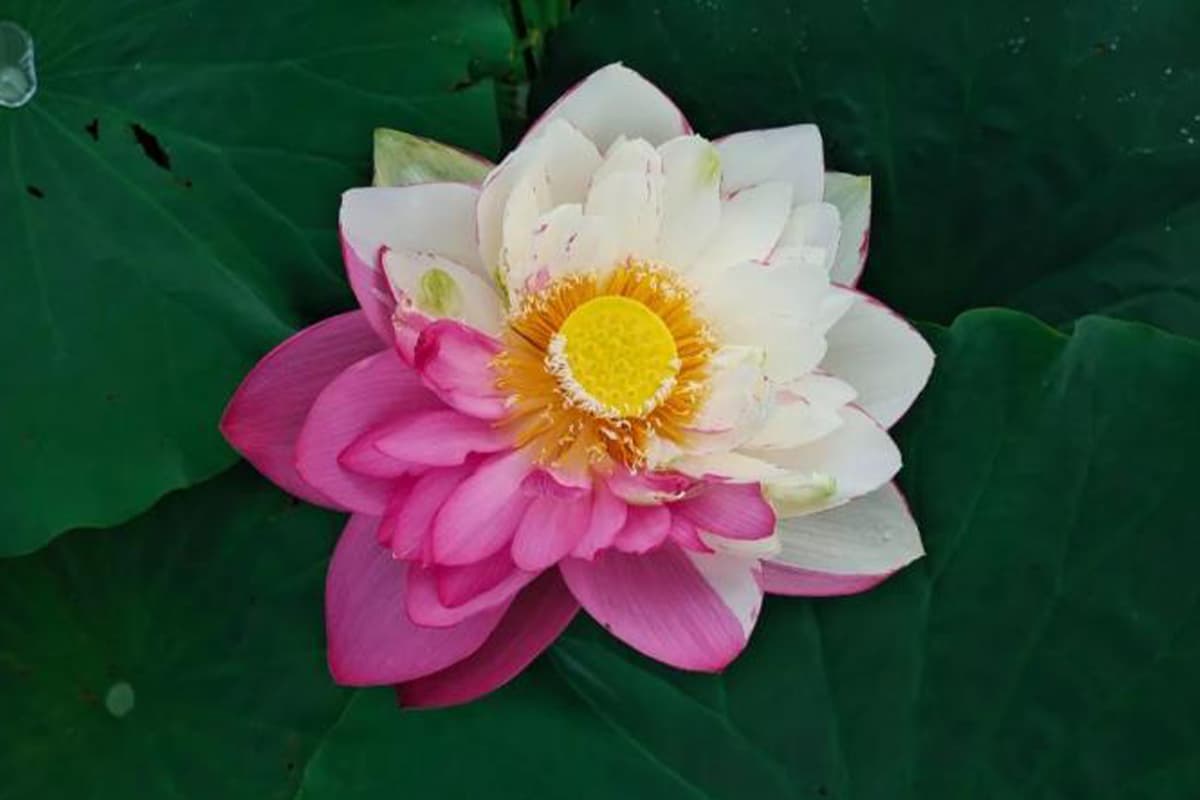
This flower is found in most parts of mainland China and abroad.
Size: Large. When planted in a number 2 pot, the standing leaves grow to a height of 54 (31-90) cm. The diameter of the leaves is 40 (29-44) cm x 30 (22-36) cm. The flower stem grows to a height of 53 (21-88) cm.
The flowering period starts early, around June 13, with the collective flowering period lasting for 64 days. Flower density is relatively high, with up to 8 flowers blooming in a single pot. The buds are round and peach-shaped, green with purple-red blush at the tips.
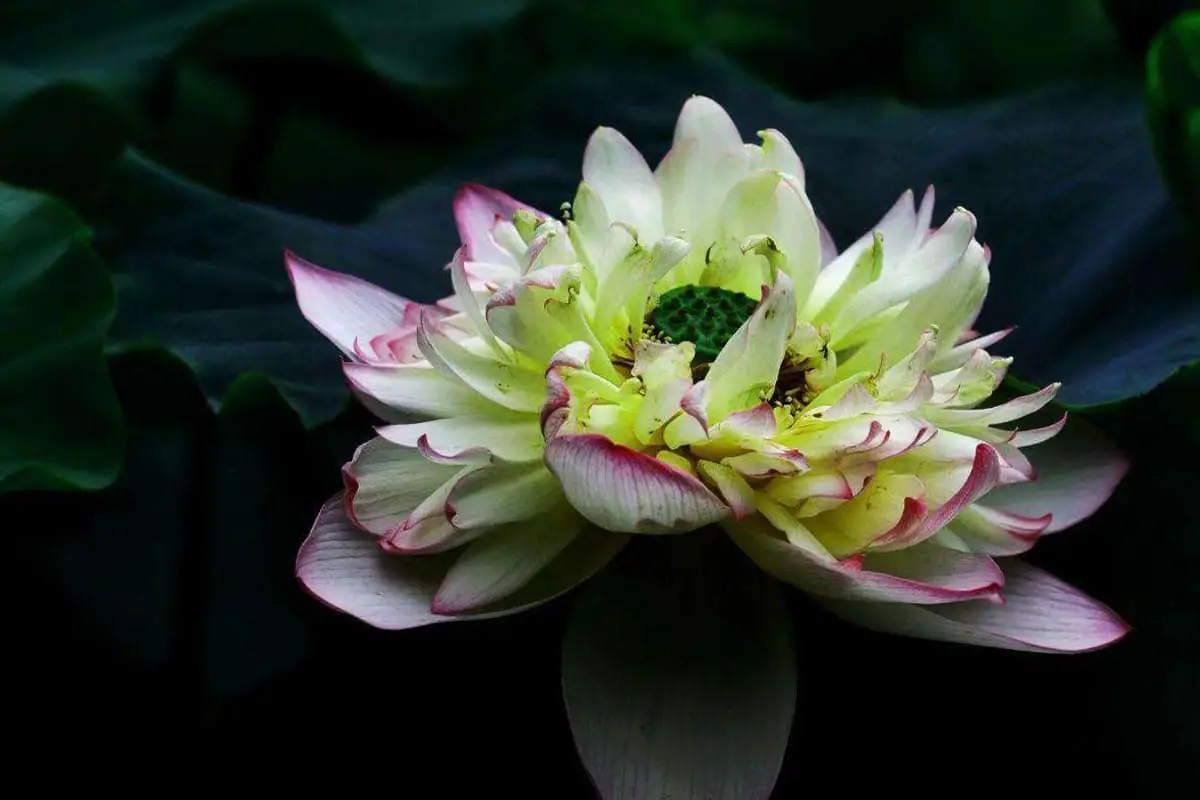
Petal count is 96 (71-113). Petals are 11.3cm long and 7.2cm wide. Flower diameter is 18 (15-22) cm. The flower shape is bowl-like. The flower is multicolored, primarily white, with a slightly light green-yellow base on the petals and blocky red and green patches at the tips.
Some of the stamens are petal-like. The pistils develop normally, are capable of fruiting, and have 19 carpels. The combination of red, green, yellow, and white colors makes it a unique variety among lotus flowers.
This large ornamental lotus flower is often used in landscape gardening and has extremely high aesthetic value.

Peggie was once a high school mathematics teacher, but she set aside her chalkboard and textbooks to follow her lifelong passion for flowers. After years of dedication and learning, she not only established a thriving flower shop but also founded this blog, “Flowers Library”. If you have any questions or wish to learn more about flowers, feel free to contact Peggie.
 English
  العربية
  Bahasa Indonesia
  Deutsch
  Français
  Italiano
  Nederlands
  Português
  Русский
  日本語
日本語