600+ Types of Flowers A To Z (With Names and Pictures)
Types Of Flowers By Names (A-Z) Types Of Flowers By Color Types Of Flowers By Season Types Of Flowers By Blooming Time 600+ Types of Flowers No. Flower Name No.…

Xanthoceras sorbifolia Bunge, a deciduous shrub or small tree from the soapberry family and Xanthoceras genus, can grow up to 5 meters in height. Its small branches are robust and reddish-brown.
The leaves, including the petiole, can reach up to 30 cm in length. The leaflets are opposite and slightly asymmetrical, with the tip gradually pointed and the base wedge-shaped. The leaf edges have sharp serrations.
The bisexual flowers bloom on the top, while the male flowers grow in the axils, upright with short peduncles. The petals are white, with a reddish-purple or yellow base. The angular appendages of the floral disc are orange-yellow, and the filaments are hairless.
The capsules can reach up to 6 cm in length, and the seeds are shiny black. It blossoms in spring and bears fruit in early autumn. Xanthoceras sorbifolia is drought-resistant, can tolerate barren environments, and withstands wind and sand.
It thrives in rocky mountainous areas, loess hills, limestone alluvial soils, and stabilized or semi-stabilized sandy areas. It is a unique edible oil tree species in China.
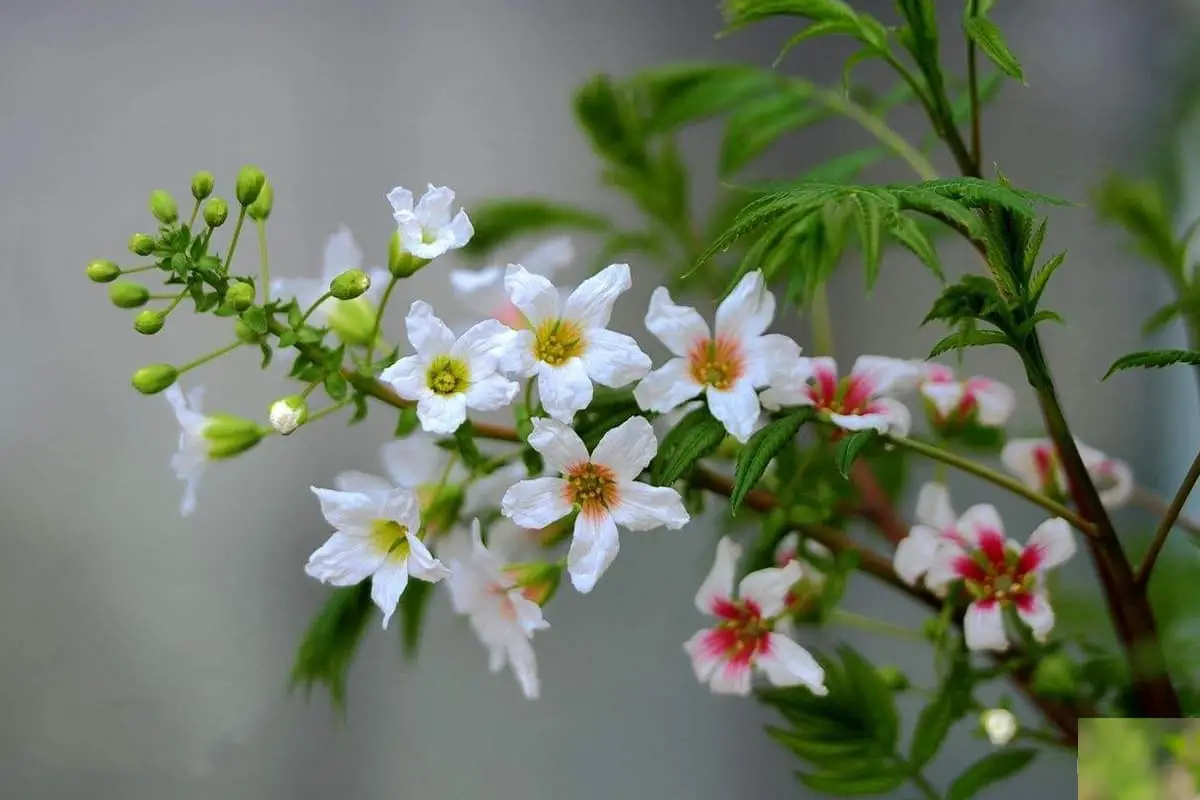
A deciduous shrub or small tree, it stands between 2-5 meters tall. The small branches are robust, reddish-brown, and hairless. The terminal buds and lateral buds have imbricate bud scales.
The leaves, including the petiole, are 15-30 cm long. The leaflets, 4-8 pairs, are membranous or papery, lanceolate or nearly ovate, slightly asymmetrical, 2.5-6 cm long, 1.2-2 cm wide, with the tip gradually pointed and the base wedge-shaped.
The leaf edges have sharp serrations, while the terminal leaflet usually has 3 deep cuts. The ventral surface is dark green, hairless or sparsely hairy on the midrib, and the dorsal surface is bright green, velvet and stellate hairy when young. The lateral veins are fine and slightly raised on both sides.
The inflorescence is extracted before the leaves or simultaneously with the leaves. The bisexual inflorescence blooms on the top, while the male inflorescence grows in the axils, standing 12-20 cm straight with short peduncles, often with residual bud scales at the base.
The pedicel is 1.2-2 cm long; the bracts are 0.5-1 cm long; the sepals are 6-7 mm long, covered with gray velvet on both sides. The petals are white, with a reddish-purple or yellow base, clear veins, about 2 cm long, and 7-10 mm wide, with villous on both sides of the claw.

The angular appendages of the floral disc are orange-yellow, 4-5 mm long; the stamens are about 1.5 cm long, and the filaments are hairless; the ovary is covered with gray velvet.
The capsules can reach up to 6 cm in length, and the seeds can reach up to 1.8 cm, shiny black. It flowers in spring and bears fruit in early autumn.
Xanthoceras sorbifolia thrives in grassy sandy lands, fallow lands, rocky mountains, loess hills, gullies, and even on cliffs, where it can normally grow and develop.
The Russian olive thrives in sunlight and can tolerate semi-shade. It has a strong adaptability to various soil conditions and can withstand poor, saline-alkaline soils. It has a strong cold resistance, able to safely overwinter at temperatures as low as -41.4°C.
The Russian olive is extremely drought-resistant and can survive in areas with annual rainfall as low as 150mm.
However, it does not tolerate waterlogging or wind, and is not suitable for planting in poorly drained low-lying areas, saline-alkaline soil, or unstable sandy lands.
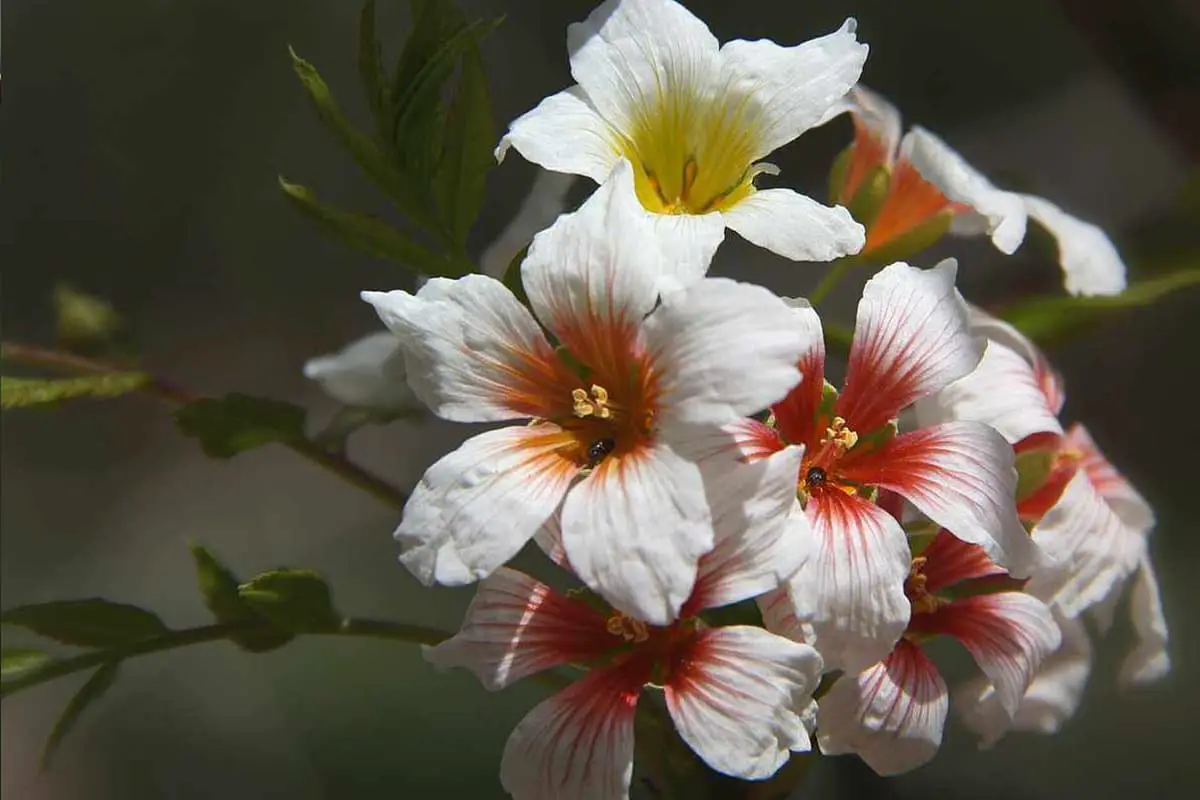
The primary method of propagation is by seed, but dividing, layering, and root cutting can also be effective. Generally, the seeds are harvested after the fruit ripens in the fall and are then immediately sown.
Alternatively, they can be stored in moist sand over winter and sown in early spring. Other cultivation techniques include grafting, root cutting, and dividing.
After the fruit ripens, seeds can be sown immediately and will sprout the following spring. If the seeds are stored in sand, they should be moved into a sloping pit 15 days before sowing in the spring.
The sloping side of the pit should face the sun and be covered with a plastic film to take advantage of the sunlight for high-temperature germination. When 20% of the seeds crack, they can be sown.
Alternatively, a week before sowing, the seeds can be soaked in 45°C water, naturally cooled for 2-3 days, then placed in a basket or bag and covered with a wet cloth. They can then be germinated in a greenhouse at temperatures between 20-50°C.
When two-thirds of the seeds crack, they can be sown, usually in mid to late April, either in rows or spot-sown. Seeds should be laid flat and covered with soil 2-15cm deep.
Various methods of grafting, such as large bud grafting with wooden parts, cleft grafting, insertion grafting, or soft bud grafting can be used, with large bud grafting with wooden parts proving most effective.
During the spring seedling period, leftover roots can be cut into 10-15cm sections and inserted into a seedbed at a row and plant spacing of 30cm × 10(-15)cm. The top should be 2-3cm below the soil surface, and water should be thoroughly irrigated.
Some shrub-like plants easily produce root suckers, which can be used for propagation through division.
Yellowing Disease: Strengthen seedling management, timely cultivation and soil loosening; remove diseased plants; implement crop rotation; turn over and air out the soil in the forest.
Wilt Disease: Use a 600x solution of 75% carbendazim wettable powder, or a 1500x solution of 5% Jinggangmycin aqueous solution, or a 1200x solution of 20% metalaxyl emulsion, for spraying.
Sooty Mould: (1) Strengthen management during the seedling period, and timely cultivation and weed control.
(2) Use an 800x solution of Captan, spraying 2 to 3 times continuously, with a 7 to 10 day interval between applications. Spray a 2000x solution of 50% Levo emulsion in early spring.
Woodlice: (1) Clear fallen leaves and weeds in the forest to eliminate overwintering adults. Spray a combination of 5x Pomarsol and 2.5% Bromopropylate emulsion 2500x solution or 25% Kungfu emulsion 2000x solution for prevention and control in early spring or at the start of the outbreak.
(2) Use a 15000x solution of 10% Imidacloprid water dispersible granules WG, a 2000x solution of 3% Dinotefuran emulsion EC, or a 3000x solution of 1.8% Abamectin emulsion EC, and spray on both sides of the leaves and the tree body.
Black Velvet Scarab: (1) Use insect lamps to trap and kill.
(2) Hand capture: Utilize the insects’ feign death behavior, shake the tree during their most active period from 7pm to 8pm, to capture manually.
(3) Pesticide control: Use a 50% Xintuoluo emulsion, 3.75kg/hm2, made into soil granules or toxic water, to poison the larvae; before overwintering adults emerge in early spring, spread toxic soil (40% Dizainong emulsion 9 kg/hm2) under the tree canopy to kill.
During the adult stage, spray 100x solution of 80% DDVP emulsion or 1000x solution of 50% Kill Borer Pine emulsion on leaves; when adults are in outbreak, spray the trees with a 2000x solution of 2.5% Cypermethrin, best applied at 6am to 8am and after 7pm.
Root Knot Nematode: Loosen the soil and sun the roots in winter, deeply digging up the soil around the root system under the tree disk of diseased plants, cutting off the roots affected by the root-knot nematode disease, and promptly removing the diseased roots from the orchard for centralized incineration.
Every 20 to 30 cm within the tree disk, dig a hole and inject or place 200g per plant of a 10% Dibromochloropropane granule, or a 3% Chlorpyrifos granule, or a 10% Thionazin granule, at a depth of 15 to 20 cm, cover the soil and water immediately after application; or evenly apply 75 kg/hm2 of 0.5% Abamectin granules to soil trenched with a spade, cover and pack down the soil, treat the soil with 5kg/hm2 of 99% Chloropicrin.
This plant is sweet and mildly bitter, with a neutral nature. It corresponds with the liver meridian in traditional Chinese medicine.
Primary Functions: It is used to dispel wind and dampness, reduce swelling, and relieve pain. It is primarily used for rheumatism and muscle or bone pain.
Usage and Dosage: For internal use, prepare a decoction with 3-9g, or use a concentrated paste at 3g per serving. For external use, apply an appropriate amount of the paste.
Its seeds contain 50%-70% oil. Historically, people collected the seeds to extract oil for lighting Buddhist lamps, which later transitioned to culinary use.
This species has large flower clusters that bloom densely in the spring, lasting for more than 20 days, making it a rare ornamental shrub. It is also a great source of nectar for bees.
With strong resistance, it is the preferred species for greening barren hills. The wood is hard and dense, with beautiful grain, making it great for furniture and tool manufacturing.
The seeds have high industrial and nutritional value, with a high content of oil in both the seeds and kernels. Research proves that the kernels contain up to 66.39% oil, with quality varieties reaching up to 72%, surpassing the average oil plant.
The basic composition of the oil includes stearic acid, oleic acid at 38.9% (a main component in most edible oils), linoleic acid at 40.2% (comparable to soybean and walnut oil, which are of the highest nutritional value), palmitic acid at 7.2%, and both linolenic and eicosadienoic acid at 0.3%.
The seeds have an oil yield of 30.4%-47%, and the kernel oil yield is as high as 66.39%. This clear yellow oil tastes delicious, and the linoleic acid it contains is a main component of the traditional Chinese medicine Yishouning, which has excellent blood pressure-lowering effects.
Consuming this oil can effectively prevent hypertension, hyperlipemia, arteriosclerosis, and other diseases. In addition to edible oil, the kernels can also be processed into high-quality lubricating oil, high-quality paint, plasticizers, cosmetics, and other industrial raw materials.
The biodiesel prepared from the seed oil has a high content of hydrocarbon components, with 18C hydrocarbons accounting for 93.4%, and it contains no sulfur or nitrogen pollutants, meeting the ideal biodiesel indicators.
Successful extraction of biodiesel from the seeds has led countries like Japan, Korea, and Canada to build plantations and processing factories.
The tree is beautiful with large flower clusters and dense flowers, which bloom for an extended period. It can be planted singly or in groups in parks, gardens, or green spaces.
The mature trees have well-developed root systems that are deep and widespread. The bark of the root accounts for 91%, much like a thick layer of sponge wrapped around the root, enabling it to fully absorb and store water.
It’s an excellent species for windbreaks, sand fixation, small watershed management, and desertification control.

Peggie was once a high school mathematics teacher, but she set aside her chalkboard and textbooks to follow her lifelong passion for flowers. After years of dedication and learning, she not only established a thriving flower shop but also founded this blog, “Flowers Library”. If you have any questions or wish to learn more about flowers, feel free to contact Peggie.
 English
  العربية
  Bahasa Indonesia
  Deutsch
  Français
  Italiano
  Nederlands
  Português
  Русский
  日本語
日本語