600+ Types of Flowers A To Z (With Names and Pictures)
Types Of Flowers By Names (A-Z) Types Of Flowers By Color Types Of Flowers By Season Types Of Flowers By Blooming Time 600+ Types of Flowers No. Flower Name No.…

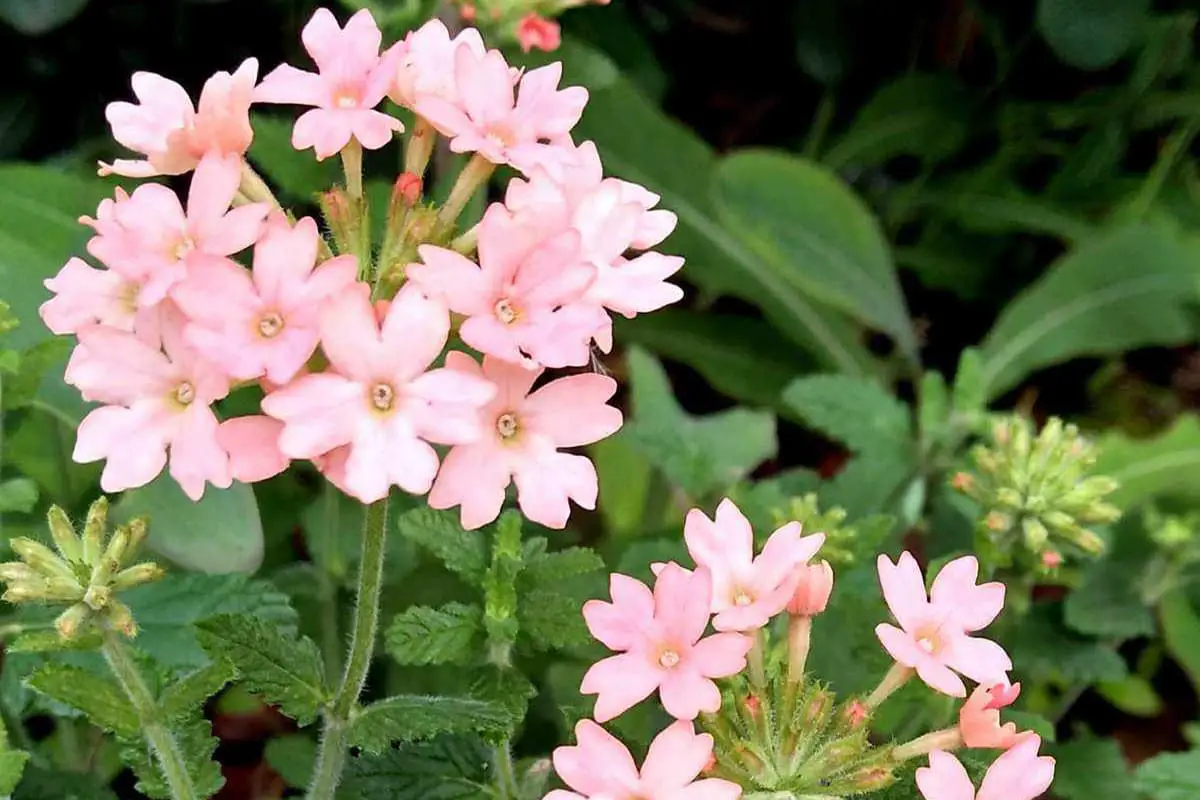
Verbena, commonly known as Beauty Sakura, is a perennial herbaceous plant from the Verbenaceae family. It thrives best in temperatures ranging from 5 to 25°C, and it’s originally native to South America.
The flowers come in various colors, including white, red, blue, light blue, and pink, and bloom from May to November. Because of its robust nature, it is greatly loved by flower enthusiasts.
Verbena is also known as Grass Pentecostal, Ground Cover Verbena, Ground Cover Brocade, Four Seasons Hydrangea, and Beauty Cherry.
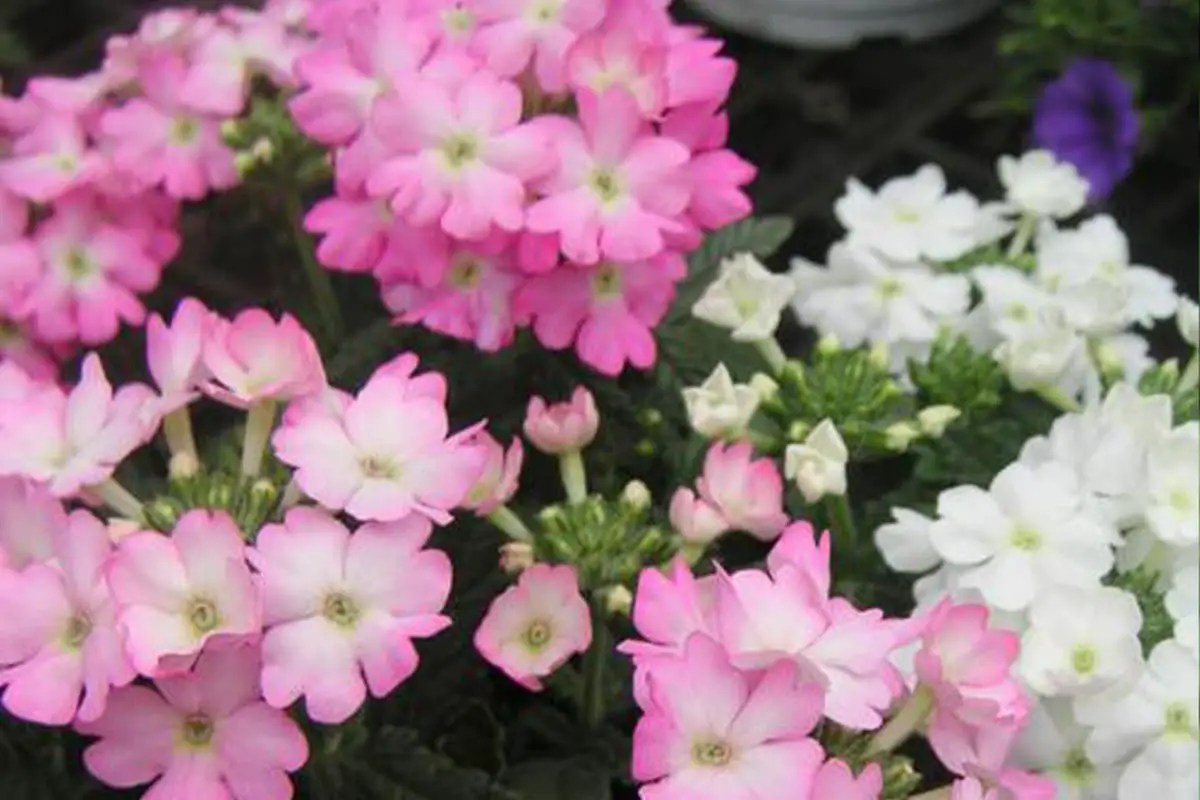
Verbena is covered with fine fuzz all over, and the plants grow in clusters, spreading across the ground. It stands about 10 to 50 centimeters tall, with quadrangular stems.
The leaves are a deep green, growing in pairs, and the densely-packed spike inflorescences bloom at the top of the plant. Its small and densely packed flowers come in white, pink, red, and multicolor, and they emit a fragrant scent.
The blooming section of Verbena forms an umbel-like shape, and the flowers come in various colors, including white, red, blue, light blue, and pink. The plant is incredibly robust and flowers from May to November. It’s often used as material for flower beds and borders.
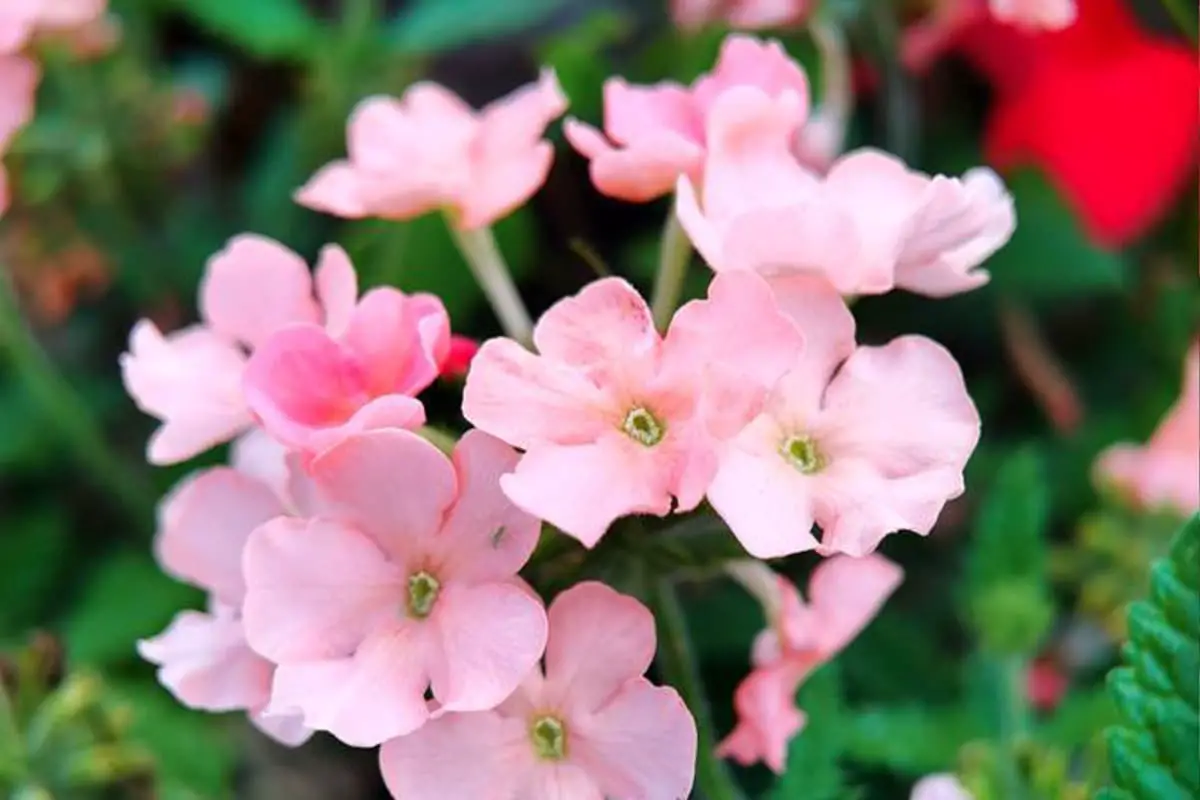
Verbena enjoys sunlight and is intolerant of shade. It can withstand cold and is drought-sensitive. In the north, it’s mostly grown as an annual plant and can bloom normally even in hot summers. It grows prolifically and blooms beautifully in sunny, loose, and fertile soils.
Verbena prefers a warm, humid climate, and full sun. It can’t withstand drought, and isn’t very demanding about the soil it grows in. However, it grows best and most vigorously in loose, fertile, and moist neutral soil. In warmer microclimates, like in Shanghai, it can survive winter outdoors.
Light is critical for the growth and development of Verbena. From seedling to blooming, Verbena requires ample sunlight for sturdy stem and leaf growth, dense flower branches, continuous blooming, and vibrant flower colors.
If it’s exposed to semi-shade conditions or insufficient light for a long period, the stem and leaves may grow excessively tall, the blooming may decrease, the flower size may shrink, and the color may fade.
The optimal soil for Verbena consists of a mixture of fertile, loose soil with good drainage, peat soil, and coarse sand. The soil pH should be between 6.0 and 6.5.
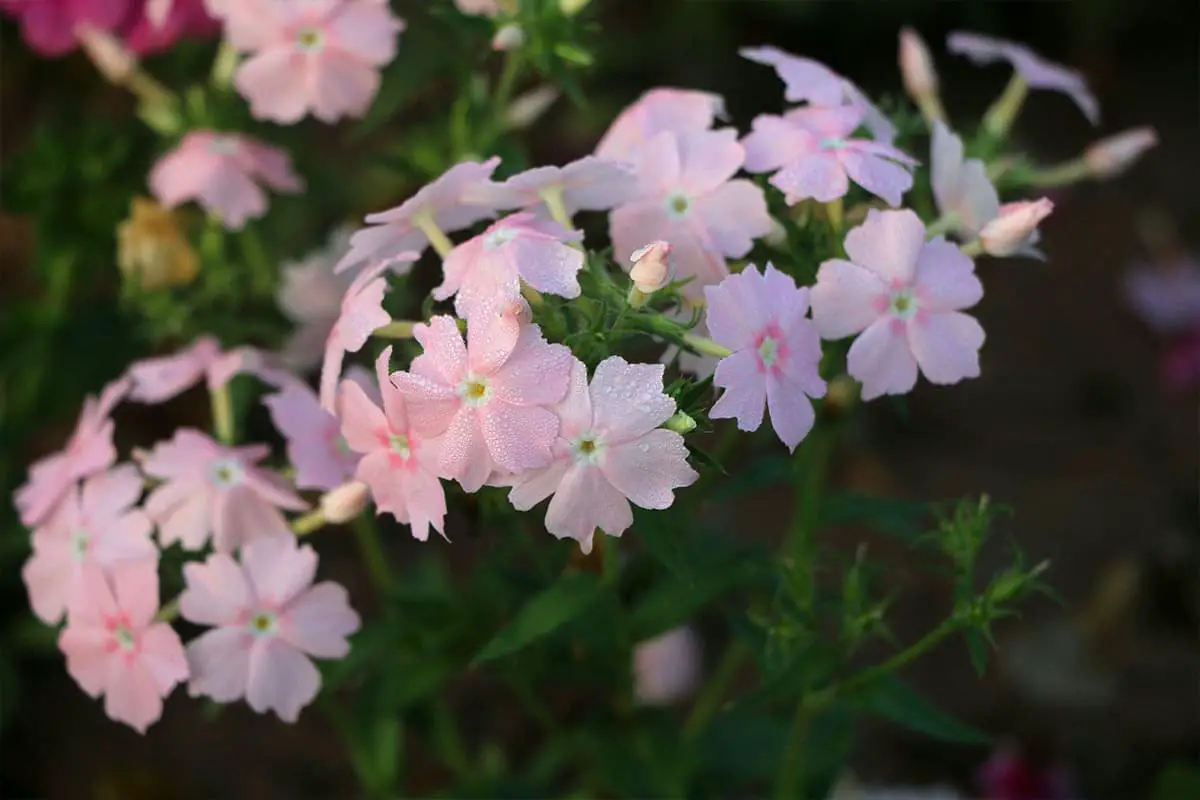
Verbena originates from Brazil, Peru, Uruguay, and other places. It is now widely cultivated worldwide, and has also been introduced and grown throughout China.
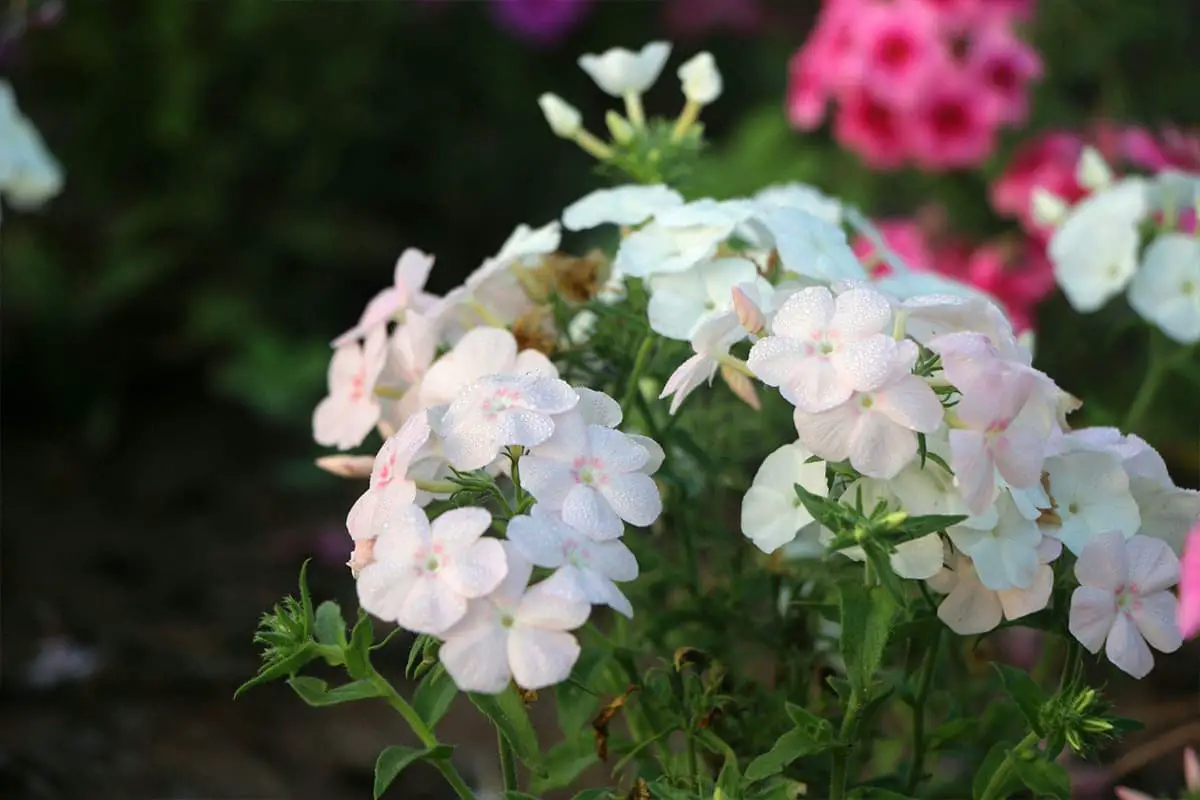
Verbena is commonly propagated through seeding and cutting.
Seeding
This can be done in both spring and autumn. In spring, it is mainly done in indoor pots. Each gram of seeds contains 350 to 390 particles, and the suitable germination temperature is 20 to 22°C.
After sowing, there is no need to cover the seeds. Sprinkle a shallow layer of vermiculite, which retains moisture and allows light to pass through, thus promoting seed germination. After 14 to 20 days, the seeds will germinate, and after 30 days, the seedlings can be transplanted. Maintain a room temperature of 10°C.
Cutting
This is suitable from May to July. Cut slightly mature branches about 8 to 10 centimeters long, and plant them in a sand bed. Keep the room temperature between 15 and 18°C, and provide a little shade.
After 14 to 21 days, the cuttings will root, and after 30 days, they can be transplanted to pots. Beauty Sakura’s stem nodes grow prostrate, and the nodes can easily root when wet. This makes layering an effective propagation method with a high survival rate.

Ornamental Value
Verbena has short and sturdy stems that spread out, making it excellent ground cover material. It can be used for city road green belts, roundabouts, slopes, flower beds, etc. It can be planted in mixed colors or single colors. Mixed color planting can display a colorful array, while single color planting can form color blocks.
For example, different color varieties planted every 30m along the green belt on both sides of the main road look like a ground color ribbon. Or, at the roundabout at a crossroad, planting in a ring-like manner from inside to outside with different colors resembles a ground rainbow, creating excellent visual effects.
Medicinal Value

Commonly cultivated species in the same genus, like the Canadian Beauty Cherry, Red Leaf Beauty Cherry, and Fine Leaf Beauty Cherry, can all be used medicinally. The entire plant has the effect of clearing heat and cooling blood.
The flower language of Beauty Sakura symbolizes loyalty and a harmonious family.

Peggie was once a high school mathematics teacher, but she set aside her chalkboard and textbooks to follow her lifelong passion for flowers. After years of dedication and learning, she not only established a thriving flower shop but also founded this blog, “Flowers Library”. If you have any questions or wish to learn more about flowers, feel free to contact Peggie.
 English
  العربية
  Bahasa Indonesia
  Deutsch
  Français
  Italiano
  Nederlands
  Português
  Русский
  日本語
日本語