The Vanda, comprised of approximately 60 to 80 species, is widespread across China, India, Malaysia, the Philippines, Hawaii in the United States, and extends to New Guinea and Australia.
The Vanda orchid exudes a tropical charm. A single spike can produce several large, majestic, and elegantly captivating flowers.
Commonly used as potted plants, hanging ornaments, or cut flowers for vase arrangements and other floral designs, they are an important element of interior decoration.
I. Botanical History
The origin of this plant is quite fascinating. In 1893, Miss Agnes Joaquim, an Armenian lady, planted a beautiful flower in her garden in Singapore without knowing its species.
She sought the expertise of Henry Ridley, the director of the Singapore Botanic Gardens and an orchid specialist. Ridley identified it as a naturally hybridized new variety and named it “Vanda Miss Joaquim” in honor of the discoverer.
On April 15, 1981, it was designated as Singapore’s national flower, officially known as the Agnes Joaquim Vanda.
It was chosen for its pristine and dignified appearance, superior form, and its subtle, unassuming presence, symbolizing the qualities of Singapore’s people and embodying the notion of “exceptional beauty, everlasting through generations.”
II. Morphological Characteristics
Vanda Also known as the “Striped Vanda,” this typical epiphytic orchid from the Vanda genus differs from the Cattleya and Dendrobium in that it does not have pseudobulbs but instead features a distinct, robust, and erect stem.
Plant sizes vary, with smaller ones around 30cm in height and larger specimens reaching over 2 meters. The stem bears numerous sturdy aerial roots, some extending over a meter long.
Leaves are arranged in two rows on either side of the stem, strap-shaped or cylindrical, leathery, and green, with a thick cuticle layer on the surface, offering strong drought resistance.
The racemose inflorescence emerges from the leaf axils, bearing 10 to 20 flowers that bloom sequentially from bottom to top, each flower lasting 2 to 3 weeks.
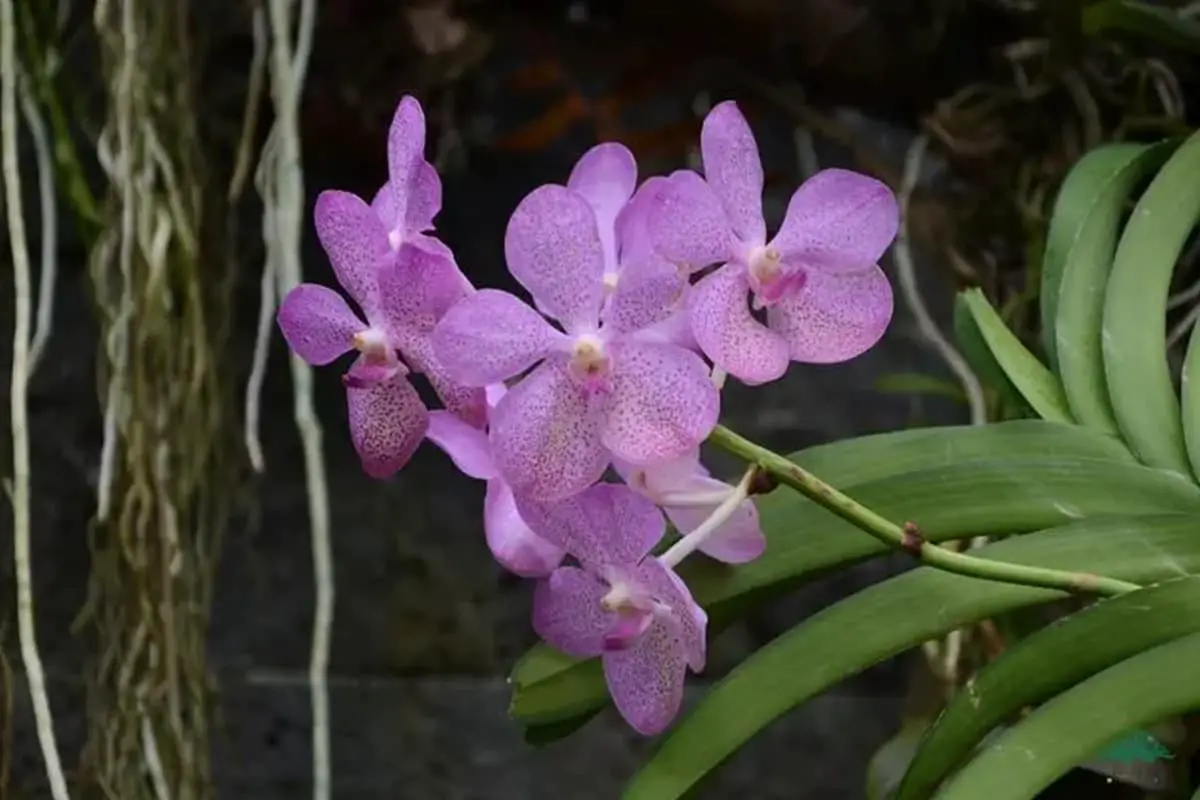
Vanda flowers are large, exuberant, and come in a rich palette of colors including white, yellow, pink, red, brown, and the exceedingly rare blue in orchids, often adorned with dark checkered patterns.
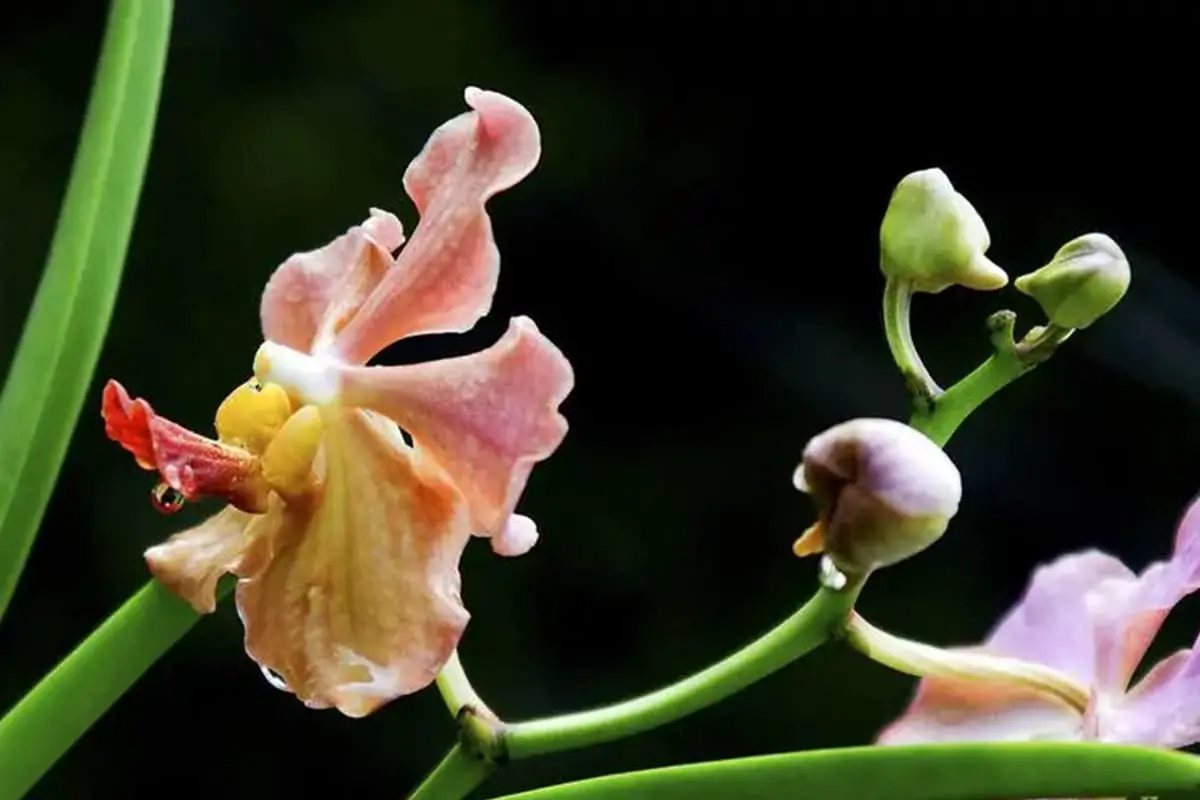
The sepals resemble the petals, sometimes slightly larger, while the lip is smaller, trifid, with the mid-lobe extending forward and the side lobes standing erect, fused at the base with the column.
Most varieties emit a fragrance during the day, predominantly flowering in autumn and winter, with a few blooming at the end of summer, boasting a long flowering period of 2 to 3 months.
The plant stands upright without pseudobulbs, and its leaves alternately arrange on either side of a single stem, resembling a ribcage.
Some tall varieties may branch or climb. The leaves present in a strap-like fashion, are fleshy and tough, with a central vein that dips forming a “V” shape, capable of withstanding strong light and drought without wilting.
Its aerial roots are thick and long, some resembling chopsticks, emerging from between the leaves on the stem. A vigorously growing plant has numerous white roots hanging down like Santa Claus’s beard. The more roots a plant has, the more prolific its blooming.
Vanda orchids in Thailand and Singapore are known to produce a flower spike from nearly every leaf axil, with each plant capable of producing 15 to 20 flower spikes. In contrast, Japanese Vanda typically yield only 3 to 4 spikes, likely influenced by climatic conditions.
The flowering season of the Vanda orchid is quite spectacular, with petals in shapes like round, elongated, and triangular. The lip fuses with the column, and its side and middle lobes express themselves expansively.
The flowers are robust, unrestrained, and lavishly colored, not only available in various solid hues but also in dual tones marked with spots or netted patterns.
Characteristics
The Vanda is a typical epiphytic orchid with aerial roots that continually sprout from the stem and hang exposed. These are usually contained within a basket or can be grown in hanging pots.
III. Growing Environment
Vanda orchids thrive in mountainous forests with year-round rainfall, from sea level up to an altitude of approximately 2000 meters.
They commonly grow on the branches and trunks of tall trees, where they benefit from ample sunlight, high humidity, and good air circulation.
Some species are also found in areas with seasonal drought. These orchids prefer bright light, with some varieties even capable of growing in full, direct sunlight.
They favor warm conditions, good air circulation, and high humidity, and are sensitive to sudden environmental changes that can cause leaf drop.
IV. Distribution Range
Native species of Vanda orchids are chiefly found in tropical Asia and extend to Oceania. In China and other tropical parts of Asia, nine species are native to the tropical regions of the south.
V. Propagation Methods
Division
Vanda orchids, which grow quickly, can be propagated by division when the planted clump has developed aerial roots. This is typically done in spring when temperatures rise and the plants start to grow.
Using a sharp knife, cut through the clump at the aerial roots with minimal root damage. After applying sphagnum moss or fungicide to the cut, plant in a moist and shaded environment. Flowers can be expected within the same year.
Cuttings
Propagation through stem cuttings is easy for Vanda orchids, given their tendency to continuously produce aerial roots along the stem.
This is usually done after the flowers have faded or during spring and autumn. Cut 2 to 3 segments of the stem with aerial roots from the mother plant (applying fungicide to the mother plant’s cut to prevent infection).
Wrap the cut roots in bark or sphagnum moss and place them in a pot, maintaining a room temperature of 25°C to 30°C and air humidity of 70% to 80%. When the rooted cuttings sprout new shoots, they can flower normally in the second year.
Aseptic Seeding
Pollination is most effective 10 days after flowering. When the fruit pod begins to lighten in color, seeds can be harvested and sown immediately. After a sterile water rinse, the seeds are sown evenly onto a culture medium.
Basics like VW, KC, MS, 1/2MS, 1/4MS mediums are used, with the addition of 3.0% sucrose, 0.55% agar powder, and 0.1% activated charcoal, at a pH of 5.5 to 5.8.
The culture conditions include a temperature of 25°C, a light intensity of 1000 to 1500 lx, and 12 hours of light per day. After 2 to 3 months, the protocorms formed are cut into pieces (about 2 to 3mm thick) under sterile conditions.
Each bottle contains 15 to 20 pieces, which are cultured on a VW+BA2.0 to 5.0mg/L+NAA0.1mg/L+10% coconut milk proliferation medium.
After 5 days, the protocorms swell and sprout white fuzz. After about 20 days, many small white protocorms appear, and after 20 to 30 days, they are subcultured.
A VW+BA0.05mg/L+NAA0.5mg/L+10% banana juice medium is most suitable for the differentiation of adventitious buds. A rooting and strengthening medium with added peptone is more appropriate, resulting in robust seedlings with well-developed roots.
When the seedlings’ roots are 2 to 4 cm long, and the height is 3 to 5 cm, they can be removed from the bottles. Before transfer, acclimatize the seedlings under diffused light, progressively increasing exposure over a week.
After a week, loosen the bottle cap without opening it fully, and after three days, remove the seedlings, wash off the remaining culture medium, and transplant them into a bark substrate.
Control humidity and temperature appropriately. After successful acclimatization, manage the plants carefully, and they can flower after two years.
Tissue Culture
In addition to aseptic seeding, robust mother plant root tips, stem apex tissues, axillary buds, and young inflorescences can be induced to produce meristem seedlings.
When using root tips, stem apex, or axillary buds as explants, liquid MS or VW mediums without added sucrose facilitate protocorm proliferation. An MS+6-BA2.5mg/L+NAA0.3mg/L+80g/L banana puree formula is the best for proliferation.
When using young inflorescences as explants, select ones about 1 cm long and culture them in a VW medium with 5% coconut milk and 2% sucrose. Protocorms can be induced within two months. The protocorms’ maturation medium can follow the aseptic seeding formula.
When the tissue-cultured seedlings in the bottles have 3 to 5 leaves, 3 to 5 roots, and a distinct monopodial stem, seal the bottle mouth with sterilized film paper and move them to a hardening room.
During hardening, arrange the bottle seedlings neatly, leaving about 5 cm of space between rows for light absorption while maintaining a clean and well-ventilated greenhouse environment to prevent contamination.
After 20 days of hardening, the seedlings can be removed from the bottles, their roots washed clean of the remaining medium, and planted in 1.5-inch white pots with bark as the primary substrate.
Plant the seedlings vertically in the center of the soft pot, with the roots and base of the stem buried in the substrate and the new growth just above the substrate surface.
Leave about 1 cm of rim on the pot and handle the transplant gently to avoid damaging the roots and leaves. After planting, spray once with a 1000-fold diluted solution of zinc dithane or a 2000-fold diluted solution of agricultural streptomycin to prevent disease invasion.
In the first week after planting, control the temperature between 20°C and 28°C, humidity between 70% and 90%, and light intensity under 10000 lx. If encountering hot weather and the substrate is dry, water in the morning and evening.
In the third week, as new roots emerge, water with a 2000 to 3000-fold diluted solution of quick-acting nitrogen fertilizer and spray every 10 days with zinc dithane or agricultural streptomycin as a preventive measure.
Delay fertilization or water only to a slight dampness if cold or rainy weather halts plant growth. During sunny summer days with strong sunlight and high temperatures, water more frequently.
In winter, avoid overwatering, as excess moisture can lead to root rot. After one year of growth, repot the seedlings, which can flower in the second year.
VI. Cultivation Techniques
Temperature
Vanda orchids thrive in warm environments, though most varieties adapt well to moderate temperatures and typically flower in spring and summer.
However, high-altitude large-flowered Vandas prefer cooler conditions and should be planted in low-temperature greenhouses.
Vandas don’t have a dormant period; year-round consistent care is crucial as fluctuations in environmental conditions may lead to the lower leaves falling off, leaving behind a poorly growing, root-deficient stem with a few shriveled leaves.
For older plants with bare, rootless, and leafless stems at the base, part of the plant can be removed and the healthy, leafy, rooted upper section replanted.
Vandas should be kept at temperatures between 68°F and 86°F throughout the year to facilitate easy flowering—higher cumulative temperatures increase the likelihood of blooming.
If the temperature cannot be maintained, and it drops below 59°F in winter, the plant may grow well but will struggle to flower due to insufficient heat accumulation. Tropical species may freeze and die if the room temperature falls below 41°F.
Compared to other orchids, Vandas require ample light to bloom. In the wild, they exhibit phototropic growth and can withstand temperatures above 86°F, strong sunlight, and humid conditions in summer.
During winter, they grow well without the need for shade. In the peak of summer, 30% to 40% shading is generally sufficient. Seedlings should be shaded by 40% to 50% and provided with ample ventilation.
During prolonged cloudy or rainy weather in winter, or when indoor lighting is inadequate, artificial lighting should be provided promptly; otherwise, the plants may suffer from poor nutrition and delayed flowering.
Cultivation Substrate
Vanda roots are thick and long, preferring exposure to air. Therefore, when potting, the substrate must be highly permeable, using materials such as charcoal, broken bricks, tree fern chunks, coconut husks, pumice, and bark pieces.
Sphagnum moss should be used sparingly and never soil or leaf mold. Large Vandas can be grown in hanging baskets or wooden slat baskets, while smaller ones do well in porous clay or plastic pots. Alternatively, they can be hung in the air without any substrate or container.
If high-quality, water-retentive sphagnum moss is used for potted plant production, it should be replaced every year, preferably in spring when outdoor temperatures exceed 68°F or after the flowers have faded.
After repotting, water should be controlled to keep the moss slightly moist, creating a cool and well-ventilated environment to encourage recovery and growth.
Humidity and Watering
Vanda orchids favor high humidity, with many of their roots often exposed. During cultivation, it is essential to ensure sufficient moisture and high air humidity, typically maintained at 70% to 80% or higher.
However, for potted production, the roots must be well-aerated and never waterlogged or poorly drained to prevent rot.
Regardless of whether the orchids are potted or bare-root, during high temperatures or dry weather, misting the foliage and ground more frequently is beneficial. When heating greenhouses at night in winter, it’s important to increase air humidity.
During spring and summer, water once in the morning and evening on sunny days, occasionally misting the plants to raise humidity.
In autumn, switch to watering in the morning, and in winter, water at noon on sunny days. If room temperatures are low, water should be controlled to prevent cold, damp conditions that can lead to rot.
Vanda leaves, often folded over one another, can easily retain water, especially in winter. When watering, care should be taken to avoid wetting the leaves, as prolonged moisture retention at night can lead to rot, causing some leaves to fall off or die.
Fertilizer
Vanda orchids require more nutrients than other orchids, so during their peak growth period, it is recommended to apply a diluted liquid fertilizer at a 1000 times concentration once a week.
Suitable fertilizers include monopotassium phosphate or the water-soluble “Flower Treasure” orchid-specific fertilizer. These can be applied either directly to the roots or as a foliar spray.
In the high temperatures of midsummer, it is sufficient to apply a diluted solution of 3000 to 5000 times concentration once a month.
After the blooming period, it’s important to prune the spent flower stems from the base to help the plant shift from reproductive to vegetative growth.
If fertilization is inadequate during the growth phase, the orchid’s vigor will visibly decrease, with stems and leaves becoming thin, weak, and prone to collapsing.
For potted plant production, the fertilizer ratio of nitrogen, phosphorus, and potassium for seedlings should be 2:2:1, for medium to large plants it should be 1:1:1, and for blooming plants, 1:3:2.
During winter, when temperatures are lower, stop fertilizing; however, if indoor temperatures are warm and the Vanda orchids continue to grow, fertilization should also continue.
Medium
Since Vanda orchid roots are aerial, they thrive in any well-draining medium, such as fir bark, broken bricks, charcoal, or coarse river sand, whether used alone or in combination.
When planting Vanda orchids, besides the medium, the choice of pot is also crucial. Among the various materials, wooden slat baskets and clay pots are preferred because they allow for good drainage and air circulation, especially when multiple holes are added.
Apart from wooden slat baskets and clay pots, Vanda orchids can also flourish mounted on tree fern panels or tree trunks. It is not advisable to repot Vanda orchids frequently; unless affected by pests or diseases, repotting should occur no more than once every three years.
VII. Disease and Pest Control
Diseases
① Black Spot Disease
This common affliction in Vanda orchids can cause leaves to turn yellow and fall off when severe, with spots merging into large black areas.
Besides improving ventilation and controlling humidity, treatments include spraying with solutions diluted at various concentrations, depending on the fungicide (specific chemical names and concentrations provided).
Treatments should be applied every 5 to 7 days, for 3 to 4 consecutive times.
② Soft Rot
This disease often occurs in seedlings under cool and damp conditions, beginning as water-soaked green spots on leaf tips and progressing to entire plant rot, which can lead to wilting and death.
Preventative measures include improving the growing environment with plenty of sunlight and regular preventive care. Spraying with a diluted solution of antibiotics can help during the disease-prone seasons.
If disease spots are spotted on the leaves, they should be promptly cut off and destroyed. If the growth point is affected, the entire plant, along with its pot, should be isolated.
Watering should be switched from spraying to watering directly onto the soil. After removing affected tissues, apply a fungicide to the cuts and replant using disinfected pots and medium.
Once the medium is dry, use a diluted solution of streptomycin sulfate for drenching the roots. For healthy plants, preventive treatments with various fungicides at specific intervals and concentrations can be applied.
③ Rust
This disease mainly affects leaves and stems in the cool, humid conditions of spring, causing growth to weaken but typically not death.
To prevent rust, avoid watering on rainy days, enhance ventilation, and remove infected leaves. Overcrowding of potted plants should be avoided to prevent friction between leaves.
For affected plants, severely infected ones require overall spraying for protection, and milder cases can be controlled by applying fungicides directly to the spots 2 to 3 times. Several fungicides can be used for treatment, sprayed at specific dilutions.
④ Leaf Spot Disease
Occurring during wet and humid seasons, this disease starts with semicircular, circular, or irregular brown, gray-brown to gray-white spots at the leaf edges or tips, later developing a gray mold on the spot surfaces.
Severe infections can cause complete leaf drop. To control this, the growing environment should be adjusted to lower humidity and increase ventilation and light penetration.
At the first sign of disease, spray with a fungicide at specified dilutions and intervals, repeating the treatment 2 to 3 times.
⑤ Anthracnose
This disease commonly occurs during hot and rainy seasons, initially presenting as pale yellow-green circular spots at the leaf tips.
These spots gradually enlarge and multiply, turning into dark brown lesions. In later stages, the lesions spread across the leaf surface, forming patterns of pale to dark brown mottled streaks.
To prevent and control anthracnose, enhance ventilation to reduce air humidity. Upon detection of infected leaves, promptly prune them.
For chemical control before the onset of the disease, apply a 25% anthracnose-fungicide WP at 1000 to 2000 times dilution, or a 50% mancozeb WP at 4000 to 6000 times dilution to prevent infection.
During an outbreak, apply a 53% carbendazim WP at 1000 to 1200 times dilution, a 62.5% cymoxanil WDG at 1500 to 2000 times dilution, a 10% cyazofamid WDG at 2000 to 3000 times dilution, or an 80% anthracnose-fungicide WP at 800 to 1000 times dilution, spraying every 10 to 15 days, for 2 to 3 consecutive applications.
⑥ Late Blight
Typically occurring in the high humidity and temperatures of summer, or in poorly ventilated greenhouses, this disease is particularly harmful to seedlings and can lead to stem and leaf base rot, resulting in the death of the entire plant.
For prevention and control, maintain greenhouse ventilation and prevent substrate in potted flowers from becoming excessively moist or waterlogged.
When affected plants are found, cut out the damaged parts or isolate the plant for individual care to prevent the spread of the disease.
For chemical control, use a 66.5% metalaxyl-M WP at 800 to 1000 times dilution, a 33.5% copper oxychloride WP at 1000 to 2000 times dilution, a 58% mancozeb and zinc WP at 700 to 1000 times dilution, a 40% oxathiapiprolin WP at 500 times dilution, or a 50% copper mancozeb WP at 800 to 1000 times dilution, spraying once every 7 days, for 3 consecutive applications.
Pest Control
① Scale Insects
These pests can cause damage throughout the year in greenhouses, primarily targeting leaves and causing them to yellow, wilt, and fall off.
For control, use pesticides with strong penetrating power that are specifically effective against scale insects, such as a 40.8% chlorpyrifos EC at 1000 to 2000 times dilution, a 40% thiacloprid WP at 1000 to 1500 times dilution, and other specified products at recommended dilutions, ensuring thorough coverage of both the front and back of leaves.
Additionally, thoroughly spray the pot walls, orchid racks, and cultivation areas. Improve environmental conditions by enhancing ventilation to prevent hot and humid conditions.
② Whiteflies
These pests thrive in poorly ventilated greenhouses and are prolific breeders, with a white waxy powder on their bodies that complicates control efforts.
Upon infestation, use a 20% imidacloprid WSP at 3000 to 6000 times dilution, a 0.3% matrine SL at 1000 to 2000 times dilution, or a 3% dinotefuran EC at 1500 to 2000 times dilution for spraying.
Fumigants like flumethrin smoke bombs or other specified products can also be used for fumigation, and yellow sticky traps can be hung in the greenhouse for trapping.
③ Aphids
These pests commonly emerge during the rainy season and mainly harm the tender new shoots of Phalaenopsis orchids, causing the shoots to deform and dry up.
To combat them, use a 10% imidacloprid WP at 1000 to 2000 times dilution, a 50% acetamiprid EC at 1000 times dilution, a 24% pymetrozine SL at 500 to 1000 times dilution, a 10% thiamethoxam WDG at 10000 to 20000 times dilution, or a 2.5% esfenvalerate EC at 2000 to 3000 times dilution for spraying.
④ Slugs
Slugs are nocturnal pests that chew on tender roots and shoots of Phalaenopsis orchids and tend to breed and thrive in damp, shaded places, especially during the summer and autumn seasons.
To manage them in cultivation, remove ground debris and fallen leaves, avoid standing water, and maintain a clean environment. In the rainy season, if slug activity is detected, apply a 6% metaldehyde GR or an 8% methiocarb GR as bait.
Surround the greenhouse with lime powder to prevent entry and spray the flower racks, roots, and the whole plant with a 90% diazinon crystal powder for prevention and control.
VIII. Main Value
Ornamental Value
The flowering season of Vanda orchids is quite a spectacle, with petals that come in shapes ranging from round to elongated and triangular. The lip of the Vanda, fused with the column, complements the prominent petals, creating a robust and exuberant floral display.
The colors are stunning, ranging from various solid hues to patterns of spots and reticulations. Vanda orchids are typically epiphytic, sprouting aerial roots from their stems that are often displayed in baskets or hanging pots.
Cultural Value
Vanda orchids represent a significant category within tropical orchids and are regarded as a powerhouse in the orchid family.
The genus name “Vanda” is derived from Sanskrit, meaning “orchid hanging from a tree” in some Indian regions. Regardless of its origins, the genus name suggests that Vanda orchids were first discovered in India.
IX. Classification of Varieties
Native to Malaysia, Florida, and the Hawaiian Islands in the United States, there are about seventy natural species of Vanda orchids and more than a thousand cultivated hybrids, making it an important family of aerial orchids.
Two native species have been discovered on Hainan Island, China: the pure-colored Vanda and the dense-leaved Vanda.
X. Plant Culture
Vanda orchids exhibit the following beautiful characteristics:
Their appearance is elegantly graceful and distinguished, exuding modesty and symbolizing the temperament of the Singaporean people.
With a beautiful lip and five distinguished petals, the lip unfurls in four directions, representing the equality of Singapore’s four major races and languages: Malay, English, Mandarin, and Tamil.
The column in the center of the flower, containing both male and female parts, symbolizes the source of happiness.
The flower is supported by opposite sepals, signifying harmony, shared joy, and common dignity.
Behind the lip of the flower is a spur with sweet nectar, signifying a place where wealth converges.
Lifting the pollen cap on the column reveals two pollinia, resembling “golden eyes,” symbolizing far-sightedness.
The stem climbs upwards, signifying prosperity and flourishing success. As one flower fades, another blooms, representing the enduring vitality of the Singaporean nation and people, filled with eternal confidence and hope.
Singaporeans’ preference for orchids, especially the Vanda ‘Miss Joaquim’, stems from its ability to flower beautifully even under the harshest conditions, embodying the spirit of perseverance and brave struggle of the nation.
Vanda orchids come in a variety of colors, from yellow, red, and purple to blue. Their sepals are prominent, especially the lateral ones, which are the most eye-catching part of the flower. The petals are smaller, and the lip is even more reduced.
Vanda flowers also come in diverse forms, some twisted and recurved, others round and flat. They have long-lasting blooms, with a single flower often remaining open for several weeks. With appropriate conditions, they can bloom all year round.
Many species also have fragrant flowers. On the inflorescence, a Vanda orchid has at least a dozen flowers blooming sequentially from bottom to top.
Besides the flowers, the leaves and roots of Vanda orchids are distinctive; the leaves are rod-shaped, succulent, and grow on either side of an upright stem, with beautiful flower spikes emerging from the axils.
Additionally, some have belt-like leaves. Vanda orchids are typical epiphytes, with thick cylindrical aerial roots continuously growing from the stem and requiring direct contact with air.
Compared to other orchids, Vanda orchids prefer more light. Mature plants can bloom two to three times a year with sufficient light. They also have a strong drought resistance and are relatively easy to cultivate in tropical regions.
Since the mid-20th century, Vanda orchids have become popular around the world. They can be found in any warm region.
Orchid enthusiasts globally have cultivated a vast array of Vanda varieties, including intergeneric hybrids with other orchid genera beyond the Vanda genus.
There are thousands of Vanda varieties, among which the most famous is Singapore’s national flower, the Vanda ‘Miss Joaquim’.
XI. Floral Language
The blossoms of Vanda orchids are beautiful, delicate, and elegant. When in full bloom, their beauty is indescribable.
Even without soil, they can attach themselves to other plants or rocks, quietly drawing nourishment from their surroundings and producing vibrant, captivating flowers.
Thus, their floral language signifies splendor, everlasting excellence, and individuality.


 English
  العربية
  Bahasa Indonesia
  Deutsch
  Français
  Italiano
  Nederlands
  Português
  Русский
  日本語
日本語