600+ Types of Flowers A To Z (With Names and Pictures)
Types Of Flowers By Names (A-Z) Types Of Flowers By Color Types Of Flowers By Season Types Of Flowers By Blooming Time 600+ Types of Flowers No. Flower Name No.…

The Cattleya hybrida, is one of the most famous orchids internationally. Originating from Brazil, it was first discovered being used as binding material, which attests to its strong resilience.
Its pseudobulb is rod-shaped or cylindrical, with 1 to 3 leaves at the top. The leaves are thick and hard, with a concave midrib. The large, beautiful flowers, singular or in clusters, grow at the top of the pseudobulb, offering bright and rich colors.
They are native to Central and South America, particularly in Colombia and Brazil, and often grow on the trunks of large trees in forests or on humid, rainy coastlines.
It also happens to be the national flower of Costa Rica. It flowers one to two times a year, with the flowering period generally lasting 3 to 4 weeks.
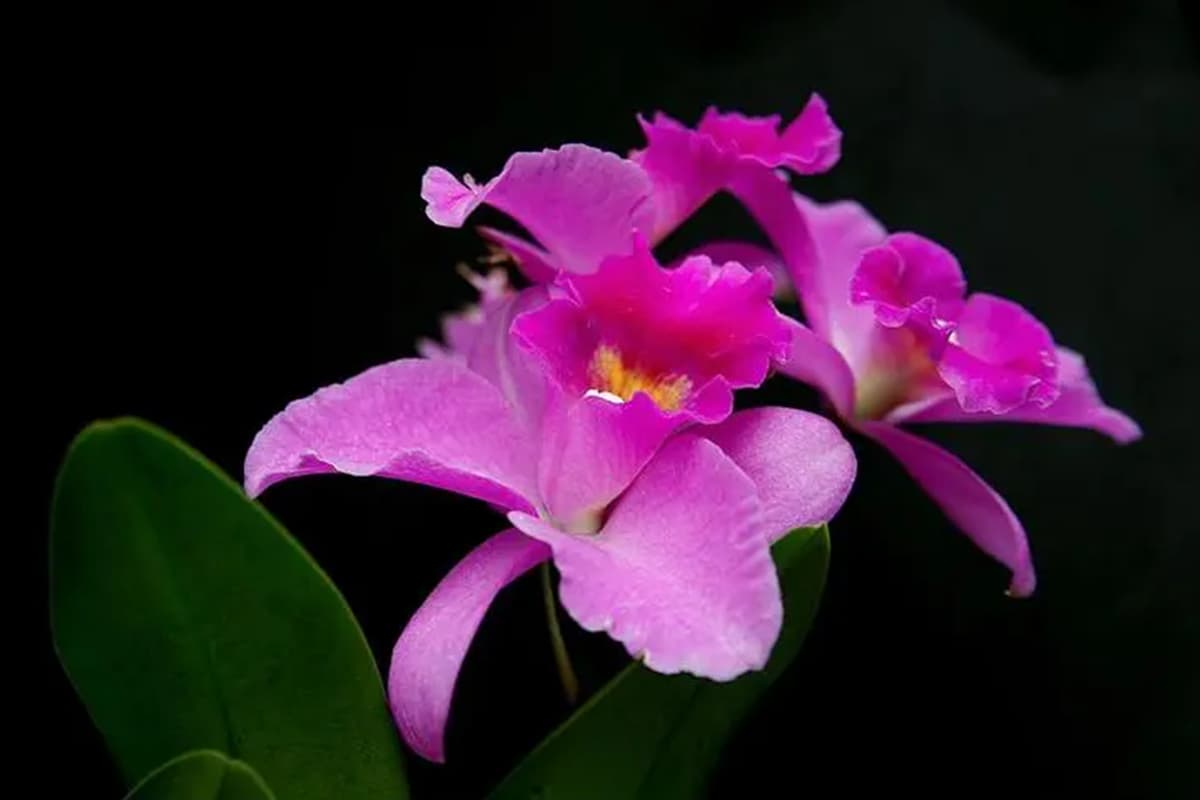
This species is evergreen, with pseudoscales that are rod-shaped or cylindrical. The pseudoscale stems are spindle-shaped, and the plant grows to a height of more than 25 centimeters. Each stem bears 2 to 3 leaves, which are thick and ovate in shape.
The plant usually flowers once in the fall, but some varieties can flower twice, and different varieties bloom all year round. The flower stalk is about 20 centimeters long and has 5 to 10 flowers, each about 10 centimeters in diameter.
Aside from black and blue, the flowers come in almost every color, and each can bloom for a long time. With its special fragrance and beautiful appearance, it’s no wonder it’s known as the “king of orchids”.
There are two types of Cattleya hybrids: those with a single leaf and those with two leaves.
The Cattleya’s pseudobulb is rod-shaped or cylindrical, with 1 to 3 leathery, thick leaves that store water and nutrients. The large, beautiful flowers, singular or in clusters, grow at the top of the pseudobulb, offering bright and rich colors.
The sepals and petals are similar in appearance, with a three-lobed lip surrounding the base of the stamens, the middle lobe prominent and extended.
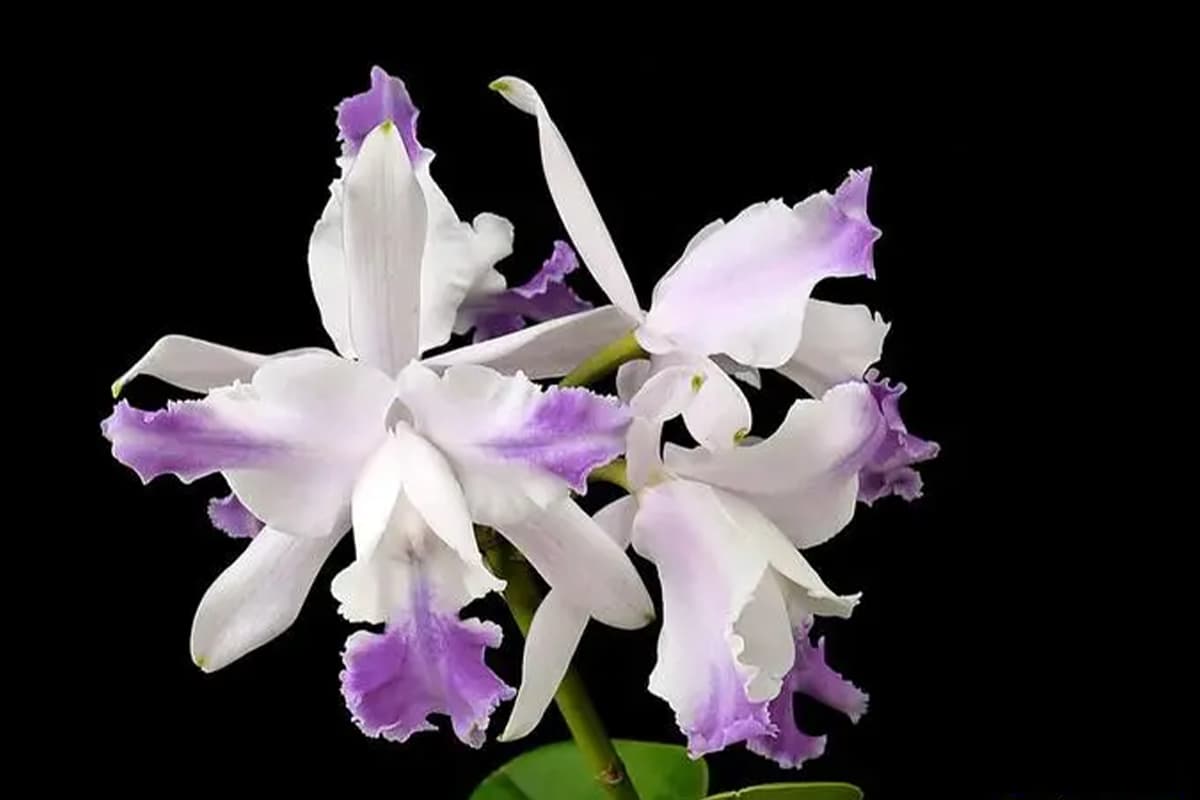
The flowers are large, elegant, and gorgeous, with vibrant, ever-changing colors and a fragrant aroma.
The three pointed sepals at the top, which extend vertically, are one of the most distinctive features of this flower. The Cattleya hybrid, one of the most famous orchids internationally, has a rod-shaped or cylindrical pseudobulb with 1 to 3 leaves at the top.
The leaves are thick and hard, and the large, beautiful flowers, singular or in clusters, grow at the top of the pseudobulb, offering bright and rich colors.
It is the national flower of countries like Brazil, Argentina, and Colombia. There are thousands of varieties, with colors ranging from white, yellow, green, to red-purple.
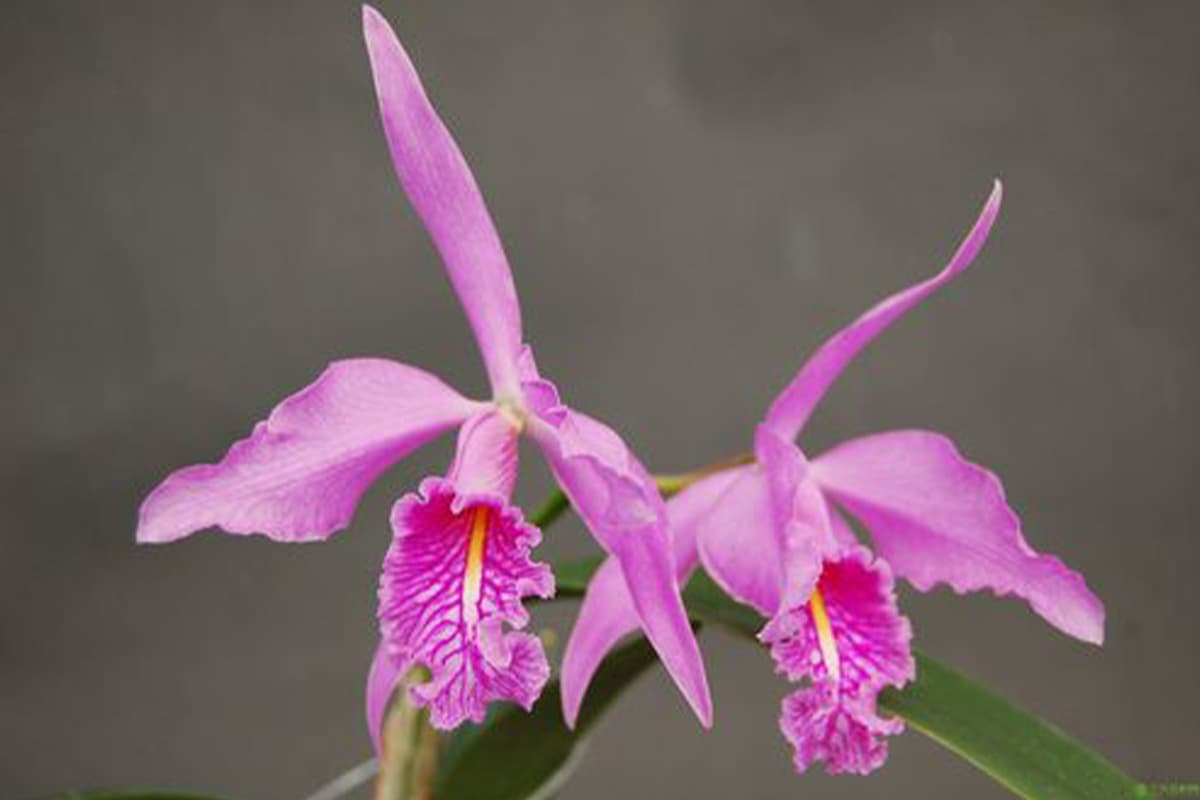
This perennial herbaceous epiphyte often grows on the trunk of a large tree. It thrives in warm and humid environments, with an ideal winter temperature of around 15°C at night and 20-25°C during the day.
A significant temperature difference between day and night is essential, and it should not be constant. It prefers semi-shaded environments, and during the spring, summer, and autumn, 50-60% of the light should be shielded.
Cattleya Orchids prefer warm and humid environments. In such conditions, their leaves and pseudobulbs are a deep, glossy green, full of vitality. The flower buds can grow smoothly, the flowers bloom beautifully, and the colors are vibrant.
The new roots and buds grow vigorously. If the temperature is around 11°C, the flowering period is delayed, and the flowers cannot fully bloom, also the flowering period is shorter.
If the temperature is around 5°C, the leaves turn yellow, looking lifeless, and the pseudobulbs develop vertical creases. The flower buds cannot grow and become tall, and the sheath turns brown, severely hindering growth.
If the temperature drops to 1-2°C, the leaves turn yellow or brown and fall off, and the buds die. Of course, if the nighttime temperature is above 20°C, the flowering period is often too short.
In the northern greenhouse cultivation, pay special attention to maintaining a significant temperature difference between day and night, with the daytime greenhouse temperature being 5-10°C higher than at night.
During the Cattleya Orchid growing season in spring and autumn, abundant water and high air humidity are essential. Over-drying can affect growth. During winter, the growth of Cattleya Orchids almost ceases.
In a poorly ventilated greenhouse, the Cattleya Orchid should be moved outdoors under a shade for a while, otherwise, its growth will be poor, and it can easily rot.
Excessive light can lead to severe sunburn or growth stagnation, and leaves turning yellow. In winter, in a greenhouse, you can use less or no shading. Cattleya Orchids belong to the light-loving species among orchids.
If the light is insufficient, there will be fewer flowers, no flowers, or poor flower quality. The leaves become thin and soft, the pseudobulbs slender, and the growth vigor is weakened.
For good flower growth, the light can be slightly stronger, and even if the leaves are slightly yellow, it will not affect the plant’s growth. Cultivators who aim to produce flowers often adopt this cultivation method, and the number of flowers produced significantly increases.
Cattleya Orchids prefer warmth, humidity, and plenty of light. They are usually potted with fern roots, moss, bark pieces, etc. During the growing period, it requires high air humidity, proper fertilization, and ventilation.
Cattleya Orchids have thick stems and leaves, vigorous air roots, and are resistant to drought. They can survive without watering for a month. They can be cultivated under the roof, balcony, eaves, and large trees, but they require fresh air flow and appropriate shading.
Use shading nets to block 50-60% of sunlight. The daytime temperature should be 25-30°C, and the night temperature 15-20°C. Seedlings should overwinter in the greenhouse in winter.
Regarding humidity, reduce watering during the flowering period to promote bud differentiation. After the formation of new buds or flower buds, water more, but avoid watering at night, especially during a cold wave, stop watering completely.
The usual air humidity should be controlled at 60-65%. Cattleya Orchids can be cultivated in plastic pots or ceramic pots. For mature plants, use 6 parts of crushed fern roots and 1 part of charcoal and gravel, etc.
Transplantation should be done after winter when Cattleya Orchids almost stop growing. During the vigorous growth of Cattleya Orchids in spring, summer, and autumn, pay attention to placing some fermented solid fertilizers in different parts of the pot surface, once every 1-2 months, or apply liquid fertilizer every 1-2 weeks.
Seedlings should be fertilized more frequently for faster growth. Cattleya Orchids prefer a semi-shaded environment. In the spring, summer, and autumn in North China, use shading nets and bamboo curtains for shading, which can block 50-60% of sunlight during this period.
The winter temperature should be 15-20°C.
Originally from the tropical Americas.
The Cattleya orchid, with its varied shapes and vibrant colors, often graces celebrations and banquets as a stunning centerpiece. When arranged with Oncidium, Solomon’s Seal, and lucky bamboo, it creates an elegant display with a strong rhythm.
If the Cattleya is the main flower, paired with anthurium, carnations, turtle-back bamboo, and bear grass, it appears light and lively.
Furthermore, its flowering period is long, with a single flower blooming for about a month; cut flowers can be enjoyed for 10-14 days when watered.
The Cattleya, along with Dendrobium, Phalaenopsis, and Vanda, is considered one of the four orchids with the highest ornamental value. It is a staple in bridal bouquets.
The Cattleya orchid, with its varied shapes and vibrant colors, often graces celebrations and banquets as a stunning centerpiece. When arranged with Oncidium, Solomon’s Seal, and lucky bamboo, it creates an elegant display with a strong rhythm.
If the Cattleya is the main flower, paired with anthurium, carnations, turtle-back bamboo, and bear grass, it appears light and lively. The Cattleya is one of the most loved epiphytic orchids.
With large, bright, and unique flowers that have a rich variety of colors, it is extraordinarily magnificent, earning it the title of “Queen of Orchids.”
Used as binding material.
Propagation is achieved through division, tissue culture, or sterile seeding.

Peggie was once a high school mathematics teacher, but she set aside her chalkboard and textbooks to follow her lifelong passion for flowers. After years of dedication and learning, she not only established a thriving flower shop but also founded this blog, “Flowers Library”. If you have any questions or wish to learn more about flowers, feel free to contact Peggie.
 English
  العربية
  Bahasa Indonesia
  Deutsch
  Français
  Italiano
  Nederlands
  Português
  Русский
  日本語
日本語