600+ Types of Flowers A To Z (With Names and Pictures)
Types Of Flowers By Names (A-Z) Types Of Flowers By Color Types Of Flowers By Season Types Of Flowers By Blooming Time 600+ Types of Flowers No. Flower Name No.…

Turnera ulmifolia, commonly known as Yellow Alder or Ramgoat Dashalong, is an evergreen shrub or semi-shrub belonging to the family Passifloraceae (previously Turneraceae). It typically grows to a height of 60-120cm, with alternate leaves that are ovate to lanceolate in shape and serrated at the margins, each leaf base featuring a pair of conspicuous extrafloral nectaries.
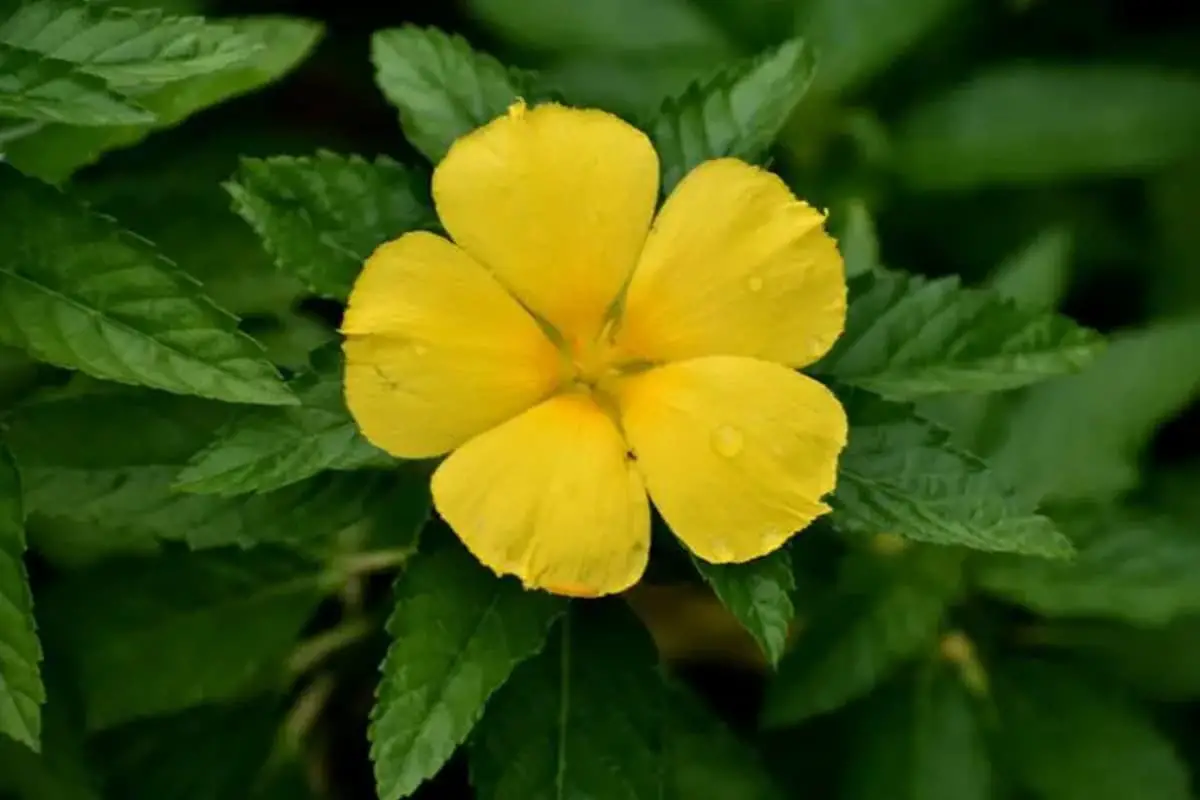
The flowers, with their golden-yellow, five-petaled corollas, bloom singly in the leaf axils near the ends of branches. Each flower measures 2.5-5 cm in diameter and has five stamens and three styles. The plant produces capsular fruits that split open at maturity along three sutures, containing numerous small, oblong seeds with a reticulate surface.

Yellow Alder flowers throughout the year in tropical climates, with peak blooming in spring and summer. The plant’s flowers exhibit nyctinastic movement, opening in the morning and closing in the evening in response to light changes, hence the colloquial name “Politician’s Flower” in some regions.
Native to tropical and subtropical Americas, including Brazil, the Caribbean, and parts of Central America, Yellow Alder has naturalized in many tropical regions worldwide, including parts of Asia such as Yunnan Province in China (Menghai, Mengla, Jinghong). It is commonly found along roadsides, in disturbed areas, grassy slopes, or in open woodlands at altitudes ranging from sea level to about 1,000 meters.
This species thrives in full sun to partial shade, warm and humid climates, and well-drained, moderately fertile soil. It is drought-tolerant once established but benefits from regular watering during dry spells. Propagation typically occurs through seeds or stem cuttings.
Yellow Alder has a slightly bitter taste and contains compounds with potential medicinal properties. While it has been used in traditional medicine, it’s important to note that scientific evidence supporting its efficacy is limited, and the plant should not be used without professional medical advice due to potential toxicity.
In Brazilian folk medicine, Yellow Alder has been used for its purported anti-inflammatory and analgesic properties. It has been traditionally prescribed for symptoms of influenza and gastrointestinal discomfort. However, more research is needed to confirm these effects and establish safe usage guidelines.
With its bright flowers and interesting diurnal flowering pattern, Yellow Alder is an excellent ornamental plant. It can be used effectively in landscaping, planted alone, in groups, or in clusters in parks and gardens. It’s particularly suited for flowerbeds, borders, and butterfly gardens. In cooler climates, it can be grown as an annual or as a potted plant that can be brought indoors during winter.
The genus Turnera was named after the English naturalist William Turner (1508-1568), often referred to as the “Father of English Botany.” The species epithet “ulmifolia” means “elm-leaved,” referring to the resemblance of its leaves to those of elm trees. The daily opening and closing of Yellow Alder flowers, a response to light known as nyctinasty, inspired various common names and made it a subject of interest in botanical studies of plant movements.
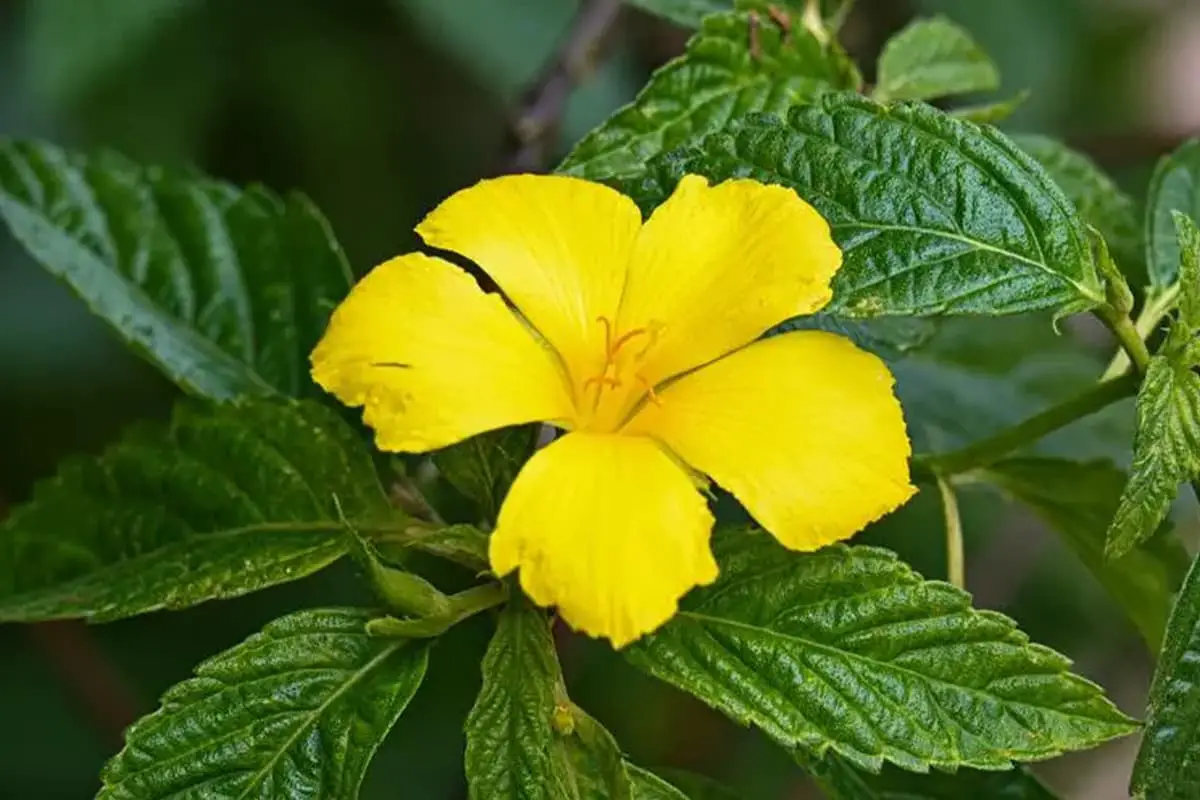
Yellow Alder is a perennial herb or sub-shrub, typically reaching heights of 60-120 centimeters, though it can occasionally grow taller in ideal conditions. The leaves are arranged alternately on the stem, ranging from ovate to broadly lanceolate, 3-10 cm long and 1-5 cm wide, with serrated edges and a pair of distinct extrafloral nectaries at the base of each leaf.
The solitary, axillary flowers are striking, with five golden-yellow petals, each 1.5-2.5 cm long. The flowers have a dark purple or brown center formed by the stamens and pistil. The plant exhibits heterostyly, with three distinct floral morphs (long-, mid-, and short-styled flowers) to promote outcrossing.
Yellow Alder produces ovoid capsular fruits, about 5-8 mm in diameter, that split open at maturity along three sutures. Each capsule contains numerous small (1-2 mm), oblong seeds with a reticulate surface pattern. The flowering season extends throughout the year in tropical climates, with peak blooming typically occurring in spring and summer.
The genus Turnera, to which Yellow Alder (Turnera ulmifolia) belongs, comprises approximately 130 species native to the tropical and subtropical regions of the Americas. Yellow Alder, also known as Ramgoat Dashalong or Politician’s Flower, thrives in diverse habitats including roadsides, grassy slopes, and jungle edges at elevations ranging from 120 to 800 meters above sea level.
This species exhibits a strong preference for full sunlight and flourishes in warm, humid climates. Its optimal growth temperature range lies between 20 to 30 degrees Celsius (68 to 86 degrees Fahrenheit). Yellow Alder demonstrates remarkable adaptability to various soil types but performs best in well-draining, fertile soils with a slightly acidic to neutral pH.
Yellow Alder can be propagated through two primary methods: seed sowing and stem cuttings. Both techniques are effective, with the choice depending on the desired outcome and available resources.
Seed propagation is an excellent method for generating numerous plants and maintaining genetic diversity.
Seed Collection and Storage: Yellow Alder seeds, which mature in late summer to early autumn, should be harvested when the seed capsules turn brown and begin to split. After collection, the seeds benefit from a short after-ripening period of approximately one month. Store them in a cool, dry place at slightly elevated temperatures (around 20-25°C or 68-77°F) to facilitate internal biochemical changes that enhance germination potential.
Sowing Time and Conditions: Optimal sowing time is typically mid-October when ambient temperatures range from 18 to 25°C (64 to 77°F), which is ideal for Yellow Alder seed germination. For year-round propagation, seeds can be sown in a controlled greenhouse environment during winter, with resulting seedlings ready for potting in spring and likely to flower within the same year.
Sowing Process:
Propagation by stem cuttings is an efficient method for producing clones of a parent plant, ensuring consistent traits and faster maturity.
Timing: While cuttings can be taken year-round in controlled environments, spring (March-April) and autumn (August-September) are ideal seasons for outdoor propagation. Spring cuttings coincide with the plant’s natural growth surge, while autumn cuttings benefit from the plant’s second growth phase and often favorable weather conditions.
Preparing the Rooting Medium:
Cutting Preparation and Planting:
Rooting typically occurs within 2-3 weeks. Once new growth is visible and roots are well-developed (usually after 4-6 weeks), transplant the cuttings into individual pots or their final growing location. Spring cuttings often flower in the same summer, while autumn cuttings generally bloom the following spring or summer.
Both propagation methods yield robust Yellow Alder plants, with the choice between them depending on the grower’s specific needs and resources.
Turnera ulmifolia, commonly known as Yellow Alder or Ramgoat Dashalong, is a perennial herbaceous plant that typically grows 30-100 centimeters tall. Its leaves are arranged alternately along the stem, featuring an ovate to lanceolate shape with serrated edges and a pair of distinctive nectary glands at the base of each leaf.
The flowers are solitary and axillary, appearing near the branch tips. They consist of five bright yellow petals that are broadly obovate, measuring about 2-3 cm long. The flowers exhibit a unique characteristic of opening in the morning and closing by early afternoon, hence its common name “Noon Flower” in some regions.
Flowering occurs primarily during spring and summer, though in tropical climates, it may bloom year-round. Fruiting follows in summer and autumn, producing small capsules containing numerous seeds. Native to the tropical and subtropical Americas, from southern United States to northern Argentina, this species has naturalized in many warm regions worldwide.
Maintaining consistent moisture in the substrate is crucial after sowing Yellow Alder seeds. Water should be applied when the soil surface begins to dry, but before it becomes excessively dry, as this can significantly impair germination rates.
Yellow Alder seeds are known for their rapid and uniform germination, typically emerging within 7-14 days under optimal conditions (temperatures between 20-25°C). Once seedlings develop their first pair of true leaves, a dilute fertilizer solution (such as a 0.05% potassium dihydrogen phosphate solution) can be applied every 10-15 days to promote healthy growth.
When seedlings have developed 4-5 true leaves, they are ready for transplanting or separating. With proper care, these young plants can be expected to flower and fruit in their first year of growth, particularly in warm climates.
Yellow Alder thrives in well-draining, fertile soil rich in organic matter, with a slightly acidic to neutral pH (ideally between 5.5-7.0). An optimal potting mix can be created by combining:
Enrich this mixture with a small amount of well-composted manure or slow-release organic fertilizer. After thoroughly mixing the components, allow the soil to rest for several days to stabilize. Before use, sieve the mixture to remove any large particles and consider sterilizing with boiling water or a dilute hydrogen peroxide solution to prevent soil-borne diseases.
For potting, select a container with adequate drainage holes, ideally terracotta or another porous material to allow soil aeration. Plant the Yellow Alder in the center of the pot, ensuring the crown is at soil level. Water thoroughly and place in a shaded, well-ventilated area for 5-7 days to acclimate before moving to its permanent location.
Yellow Alder’s rapid growth and prolific flowering necessitate regular fertilization, especially when grown in containers. Use a balanced, organic liquid fertilizer diluted to half-strength every 2-3 weeks during the growing season. Suitable options include:
During the peak flowering period, transition to a fertilizer higher in phosphorus and potassium to encourage blooming. A 5-10-5 or similar ratio is ideal. Apply a 0.1% potassium dihydrogen phosphate solution as a foliar spray every 2-3 weeks to promote robust flower development and overall plant health.
Monitor plant growth carefully; excessive nitrogen can lead to lush foliage at the expense of flowers and may reduce disease resistance. Adjust fertilization based on plant appearance and soil tests if available.
Yellow Alder prefers consistently moist but not waterlogged soil. Proper watering is crucial for nutrient uptake and overall plant health. Adjust watering frequency based on season, climate, and pot size:
Before the onset of flowering, slightly reduce watering to encourage the transition from vegetative to reproductive growth. During hot, dry periods, increase humidity by misting leaves or placing the pot on a tray filled with pebbles and water.
As autumn approaches, gradually decrease watering to prepare the plant for dormancy, which enhances cold tolerance. In winter, maintain relative humidity around 50-60% to prevent dessication.
Yellow Alder thrives in full sun to partial shade, requiring at least 6 hours of direct sunlight daily for optimal growth and flowering. However, in regions with intense summer heat, some afternoon shade is beneficial to prevent leaf scorch and flower wilt.
Insufficient light leads to elongated, weak stems, pale leaves, and reduced flowering. Conversely, appropriate lighting results in compact growth, vibrant foliage, and abundant blossoms.
In indoor settings, place Yellow Alder near a south or west-facing window. If natural light is limited, supplement with grow lights, providing 12-14 hours of bright, indirect light daily.
Rotate the plant regularly to ensure even growth and prevent leaning towards the light source. During winter in cooler climates, maximize light exposure to compensate for shorter days and maintain plant vigor.
Yellow Alder is adaptable to a wide temperature range but thrives in warm conditions. Optimal growth occurs between 20-30°C (68-86°F). While it can tolerate brief periods near freezing, prolonged exposure to temperatures below 10°C (50°F) can damage the plant.
For year-round cultivation in cooler climates:
In regions with mild winters, Yellow Alder can often overwinter outdoors with protection. Apply a thick layer of mulch around the base and consider covering with horticultural fleece during cold snaps.
For container plants in colder areas, move indoors before the first frost. Reduce watering and fertilization during winter months to match the plant’s slower growth rate.
Yellow Alder’s bright, cheerful flowers and attractive foliage make it a versatile ornamental plant. Its compact growth habit and long blooming period render it suitable for various landscape applications:
Its rapid growth and quick-to-bloom nature also make it an excellent choice for seasonal color in annual beds or as a temporary filler in developing perennial gardens.
In traditional medicine systems across its native range, various parts of Yellow Alder have been utilized for their potential therapeutic properties:
Recent pharmacological studies have shown promising results, indicating potential antioxidant, antimicrobial, and cytotoxic activities in Yellow Alder extracts. However, it’s crucial to note that more research is needed to fully understand its efficacy and safety profile. Always consult with a healthcare professional before using any plant for medicinal purposes.
Yellow Alder (Turnera ulmifolia) belongs to the Passifloraceae family, not the Morning Glory family as previously stated. This herbaceous perennial, native to the tropical and subtropical Americas, has naturalized in many warm regions globally. Several varieties exist within the species, with yellow-flowered forms being most common in cultivation, though white-flowered varieties are also known.
The remarkable timing of Yellow Alder’s flower opening and closing is indeed governed by its circadian rhythm, a genetically controlled internal clock that responds to environmental cues, primarily light and temperature. This phenomenon, known as nyctinasty, is common among many plants in the Passifloraceae family.
Recent studies have shed light on the molecular mechanisms behind Yellow Alder’s flowering patterns:
The optimal temperature range for Yellow Alder’s flower opening is indeed between 18-25°C (64-77°F), with flower closure typically occurring when temperatures exceed 28-30°C (82-86°F). However, these responses can vary based on factors such as plant age, overall health, and acclimatization to local conditions.
Environmental factors significantly influence flowering patterns:
Recent research has also explored the potential for manipulating Yellow Alder’s flowering patterns through controlled light and temperature conditions, which could have implications for both ornamental horticulture and scientific study of circadian rhythms in plants.

Peggie was once a high school mathematics teacher, but she set aside her chalkboard and textbooks to follow her lifelong passion for flowers. After years of dedication and learning, she not only established a thriving flower shop but also founded this blog, “Flowers Library”. If you have any questions or wish to learn more about flowers, feel free to contact Peggie.
 English
  العربية
  Bahasa Indonesia
  Deutsch
  Français
  Italiano
  Nederlands
  Português
  Русский
  日本語
日本語