600+ Types of Flowers A To Z (With Names and Pictures)
Types Of Flowers By Names (A-Z) Types Of Flowers By Color Types Of Flowers By Season Types Of Flowers By Blooming Time 600+ Types of Flowers No. Flower Name No.…

Spiraea × bumalda ‘Goldflame’ is a cultivated deciduous shrub known for its vibrant foliage and abundant blooms. This hybrid cultivar belongs to the Rosaceae family and is prized for its ornamental value in gardens and landscapes.
The shrub features small buds encased in 2 to 8 scales. Its leaves are arranged alternately with serrated margins, occasionally entire, and exhibit pinnate venation or 3 to 5 basal veins. The leaves have short petioles and lack stipules.
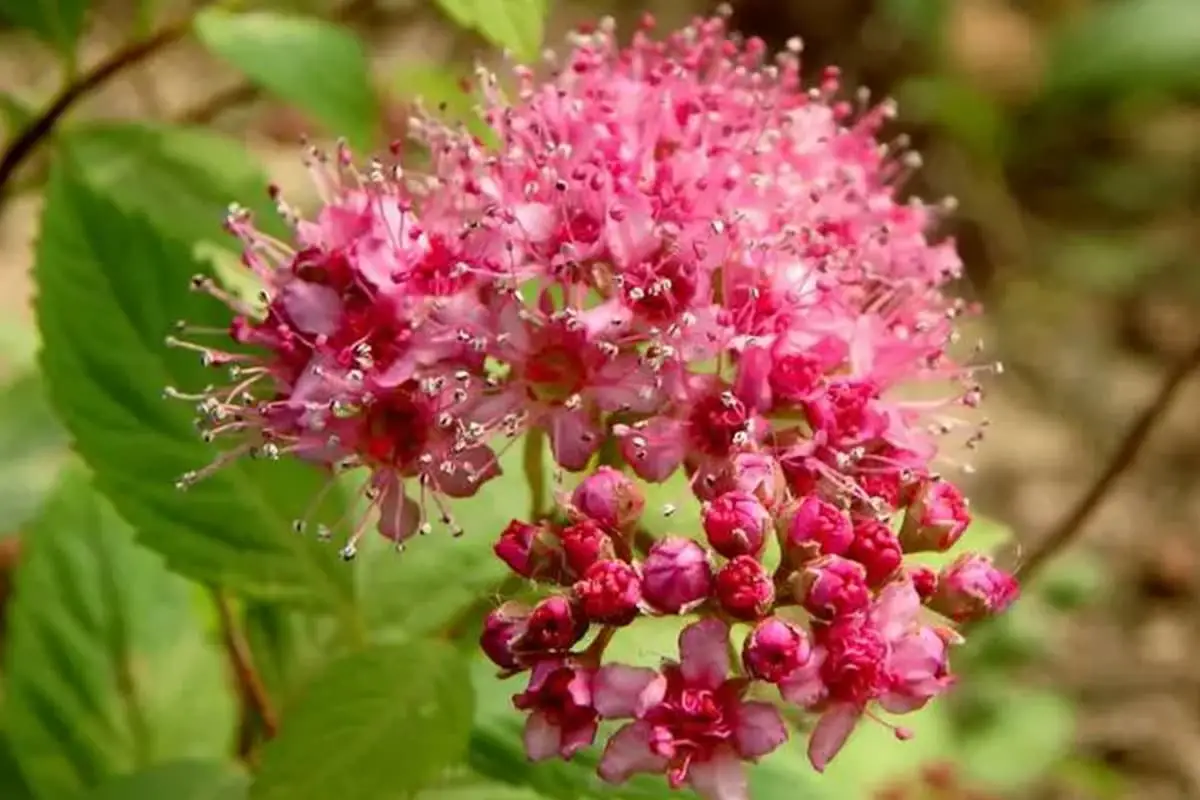
Goldflame Spirea produces bisexual flowers, arranged in corymb-like clusters. The calyx is bell-shaped with 5 sepals, and there are 5 round petals. The shrub has 15 to 60 stamens attached to the outer edge of the floral disk, and 5 (occasionally 3 to 8) free carpels. The fruit is a 5-valved follicle that splits along the ventral suture, containing several small seeds with little or no endosperm.
Goldflame Spirea is a compact deciduous shrub, typically reaching heights of 60 to 110 cm (2-3.5 ft) with a spread of 90 to 120 cm (3-4 ft). The mature branches are dark brown, while new growth is yellowish-brown with a zigzag pattern and soft texture.
The leaves are ovate to oblong, measuring 0.8 to 3.0 cm (0.3-1.2 in) in length and 0.5 to 1.6 cm (0.2-0.6 in) in width. They have sharply doubly serrated margins and pinnate venation. Petioles are short, measuring 0.2 to 0.4 cm (0.08-0.16 in).
One of the most striking features of Goldflame Spirea is its foliage color changes throughout the growing season:
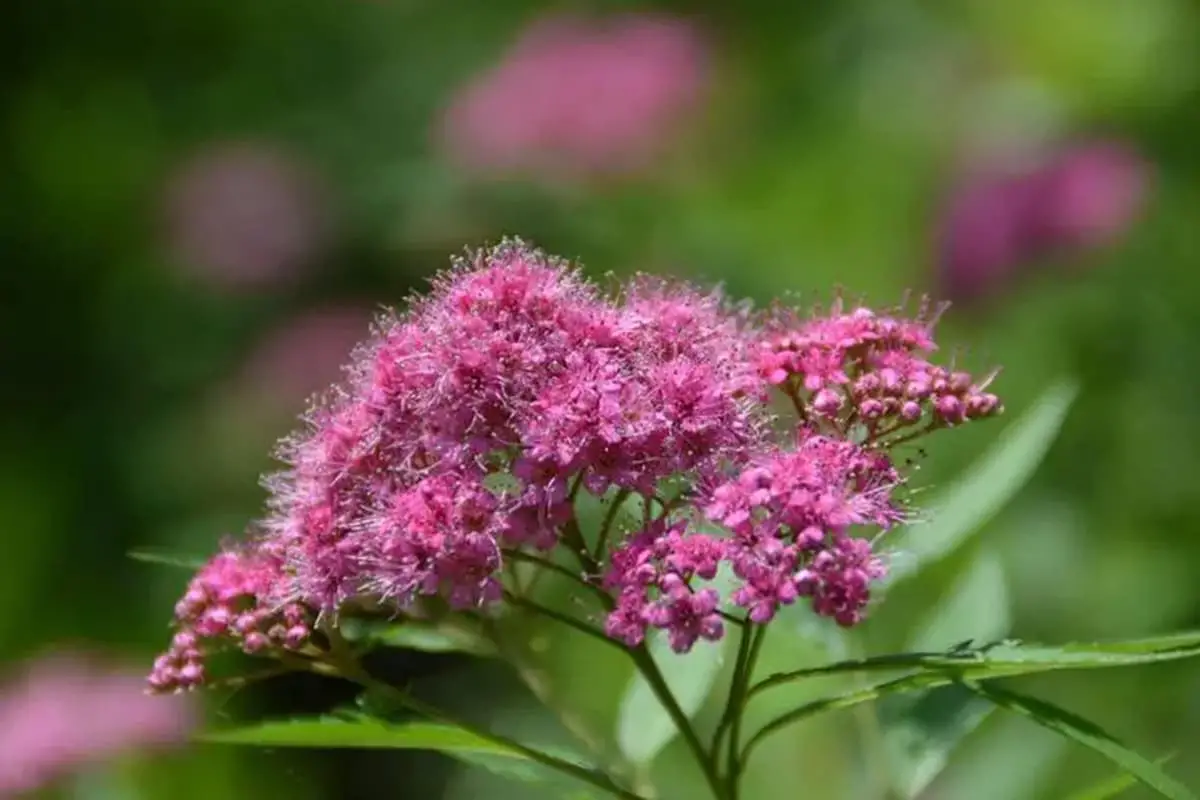
The flowers are rose-pink, forming large compound corymbs 10 to 20 cm (4-8 in) in diameter. Each corymb contains 10 to 35 individual blossoms, creating a profuse floral display.
Goldflame Spirea thrives in the following conditions:
Goldflame Spirea demonstrates excellent adaptability, including:
Originally developed in the United States, Goldflame Spirea was introduced to the Beijing Botanical Garden in April 1990 from Bailey Nurseries in Minnesota. After successful acclimatization, it has adapted well to various regions across China and is now widely cultivated throughout the country and many parts of the world.
In conclusion, Goldflame Spirea’s striking foliage, abundant blooms, and adaptability make it a valuable addition to various landscape designs. Its low maintenance requirements and ecological benefits further enhance its appeal as a versatile ornamental shrub with broad application potential in both private and public green spaces.

Peggie was once a high school mathematics teacher, but she set aside her chalkboard and textbooks to follow her lifelong passion for flowers. After years of dedication and learning, she not only established a thriving flower shop but also founded this blog, “Flowers Library”. If you have any questions or wish to learn more about flowers, feel free to contact Peggie.
 English
  العربية
  Bahasa Indonesia
  Deutsch
  Français
  Italiano
  Nederlands
  Português
  Русский
  日本語
日本語