When it comes to herbal teas, rose tea is often the first that comes to mind. Rose tea is sweet and slightly bitter with a pleasant aroma. It is popular among women as it is known for its beauty benefits.
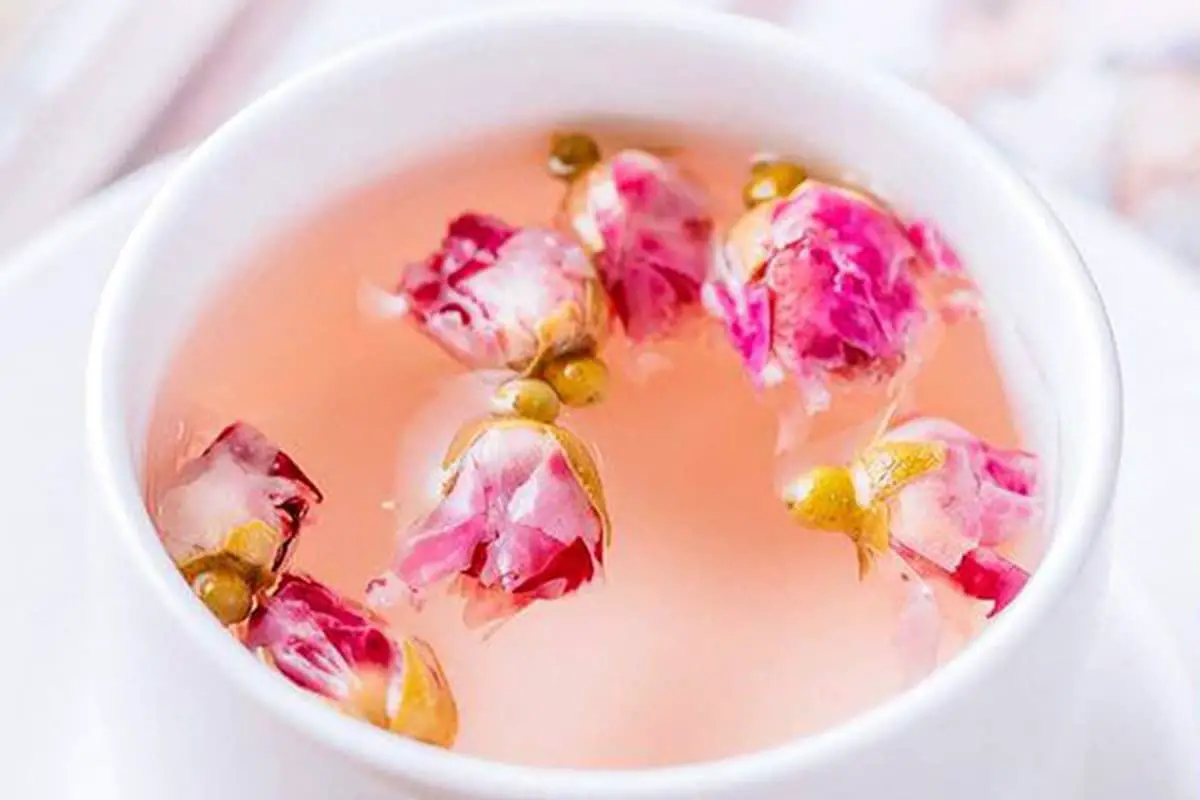
Drinking rose tea while watching the rose petals float in the cup is also a relaxing experience. But what other benefits does rose tea offer apart from its beauty effects?
How do you choose good rose tea? Let me provide some insights on how to best enjoy rose tea and how to select high-quality rose tea to help enhance your natural beauty.
How to enjoy rose tea?
Many are aware of the benefits of rose tea for women, but few know about its specific effects. Rose tea is known to regulate Qi, relieve depression, harmonize blood, and alleviate pain. It is used to treat stomach pain caused by liver Qi, poor appetite, nausea, irregular menstruation, and physical trauma. So, how should we drink rose tea to maximize its benefits? Let me explain in detail.
Longan Rose Tea
Prepare 5 grams of longan, 5 grams of goji berries, and 2 rose petals. Take the flesh of the longan, mix it with the goji berries and brew it in boiling water for 10 minutes, then add the rose petals. Regular consumption can nourish the blood, moisturize the skin, and regulate hormonal imbalance.
Red Dates Rose Tea
First, take 5 pink roses and 2 pitted red dates. Then, brew them in water at 80 degrees Celsius, being careful not to exceed this temperature as it can destroy Vitamin C and other nutrients. Just one month of regular consumption can result in visibly fairer and smoother skin. The Vitamin C content in roses and red dates is even higher than that in lemons. Vitamin C, being a water-soluble vitamin, is certainly beneficial. Drinking this tea after meals can also help reduce fat, achieving two benefits at once.
Goji Berry Rose Tea
Drinking dried rose petals and goji berries together can benefit kidney health, improve vision, and clear heat from the body. It can be brewed as a tea with no side effects. You can persistently drink 15 grams of rose tea every day. Those with Qi deficiency can add 3-5 dates or 9 grams of American ginseng, while those with kidney deficiency can add 15 grams of goji berries. You can also add honey to taste.
Milk Rose Tea
Take 6 rose petals, 6 goji berries, and 3 grams of raisins. Brew them in boiling water for 5 minutes, then take the tea, mix it with 100 milliliters of milk, and drink it as a tea substitute. It protects the liver, strengthens the stomach, moisturizes the skin, and increases skin elasticity. Long-term consumption can yield significant results.
Honeysuckle Rose Tea
Prepare 1 gram of honeysuckle, 3 rose petals, 2 grams of Ophiopogon japonicus, and 2 grams of hawthorn. Mix them together and brew in boiling water for 15 minutes. Regular consumption can regulate Qi, relieve depression, nourish the Yin, and clear heat. It is suitable for those with liver depression and upward-fire syndrome, dull complexion, and dry skin. Long-term consumption can yield significant results.
Tips for buying rose tea
Rose tea is a favorite beauty product for office ladies. But many people fall into a trap when faced with a dazzling array of packaging descriptions. Without a clear purchasing standard, many people are troubled.
Let me introduce some tips for choosing rose tea, and share how to distinguish the quality of rose tea from its weight, shape, and the color of the tea.
- Look at the shape
When choosing rose tea, the whole tea should be full, the color uniform, and the integrity good. If the chosen rose tea is full, the color uniform, and the integrity good, it can be preliminarily judged to be high-quality tea.
- Weigh it
Pick up the rose tea. High-quality rose tea is compact and heavy, while inferior tea is loose and light. Also, pay attention to whether there are stems, broken pieces, and loose petals in the tea. If there are, it indicates that it is not high-quality rose tea.
- Observe the color
When choosing rose tea, high-quality rose tea is dark red in color and looks a bit wilted, which may not be appealing. However, rose tea that is brightly colored, with very green calyx and pedicel, may have been treated with sulfur.
- Smell the aroma
The aroma of rose tea is a blend of tea and rose fragrances. The top layer of the aroma will gradually evaporate and become faint until it is odorless. But the fragrance inside the petals still exists. If the chosen rose tea has an unchanging fragrance, it may have been added with artificial essence.
- Look at the tea
Natural rose tea turns color quickly once in water, the higher the water temperature, the faster the color fades. The color of natural rose tea is pale yellow. Some rose teas that turn red or blue may have had colorants or other substances added.
Who Shouldn’t Drink Rose Tea?
Pregnant women should avoid frequent consumption
Research has found that if women consume large amounts of rose tea over a long period during pregnancy, the risk of miscarriage and complications during childbirth can increase. Therefore, for the health of both mother and child, I don’t recommend pregnant women consume rose tea.
Not suitable for those suffering from constipation
Rose has certain astringent properties, so it has a beneficial effect of stopping diarrhea. However, if consumed by those suffering from constipation, it will not alleviate the problem and could even exacerbate it.
Not recommended for individuals with poor physical constitution
If you often feel tired, have a weaker body and poor resistance, it’s best not to consume rose tea as it will not improve your physical condition, but may make it worse.
Not suitable for women with heavy menstrual flow
Although rose tea has a good therapeutic effect on various gynecological diseases, especially irregular menstruation or dysmenorrhea, it can also potentially cause gynecological diseases. If you usually have a heavy menstrual flow, it’s best not to consume rose tea during your period and even reduce consumption in general. If you consume rose tea during these times, it can increase menstrual flow and even cause severe bleeding.
Not suitable for those with a cold stomach and prone to diarrhea
This type of individual is not strictly prohibited from drinking rose tea, but the intervals between consumption should be long, and it should not be consumed frequently or over a long period.


 English
  العربية
  Bahasa Indonesia
  Deutsch
  Français
  Italiano
  Nederlands
  Português
  Русский
  日本語
日本語