600+ Types of Flowers A To Z (With Names and Pictures)
Types Of Flowers By Names (A-Z) Types Of Flowers By Color Types Of Flowers By Season Types Of Flowers By Blooming Time 600+ Types of Flowers No. Flower Name No.…

Ranunculus asiaticus belong to the Ranunculaceae family and are perennial herbaceous plants. They grow to a height of 20 to 50 centimeters with spindle-shaped tubers.
Each plant typically has a solitary stem, sometimes with a few branches; the basal leaves have long petioles and resemble celery leaves; the stem leaves are small and almost sessile.
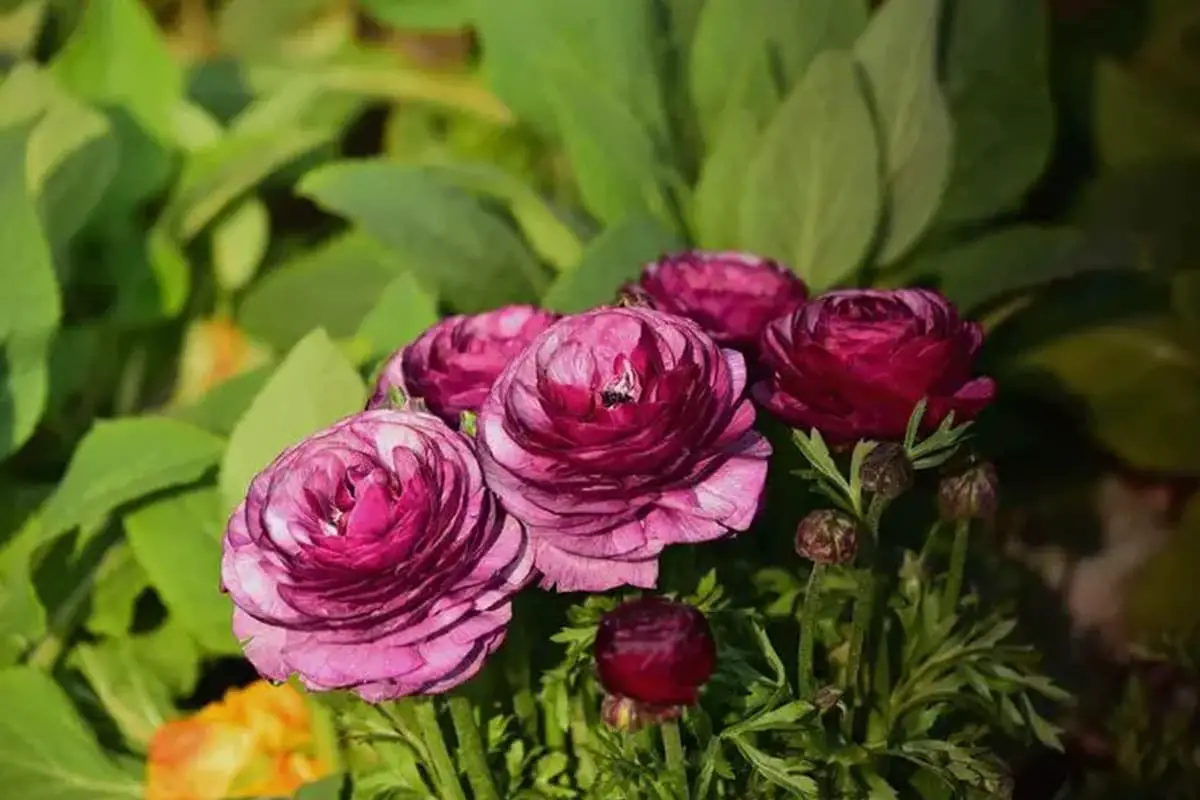
The flowers, borne singly or in small clusters at the top of the stem, come in a variety of colors, including red, white, orange, and purple, and can be either double or semi-double.
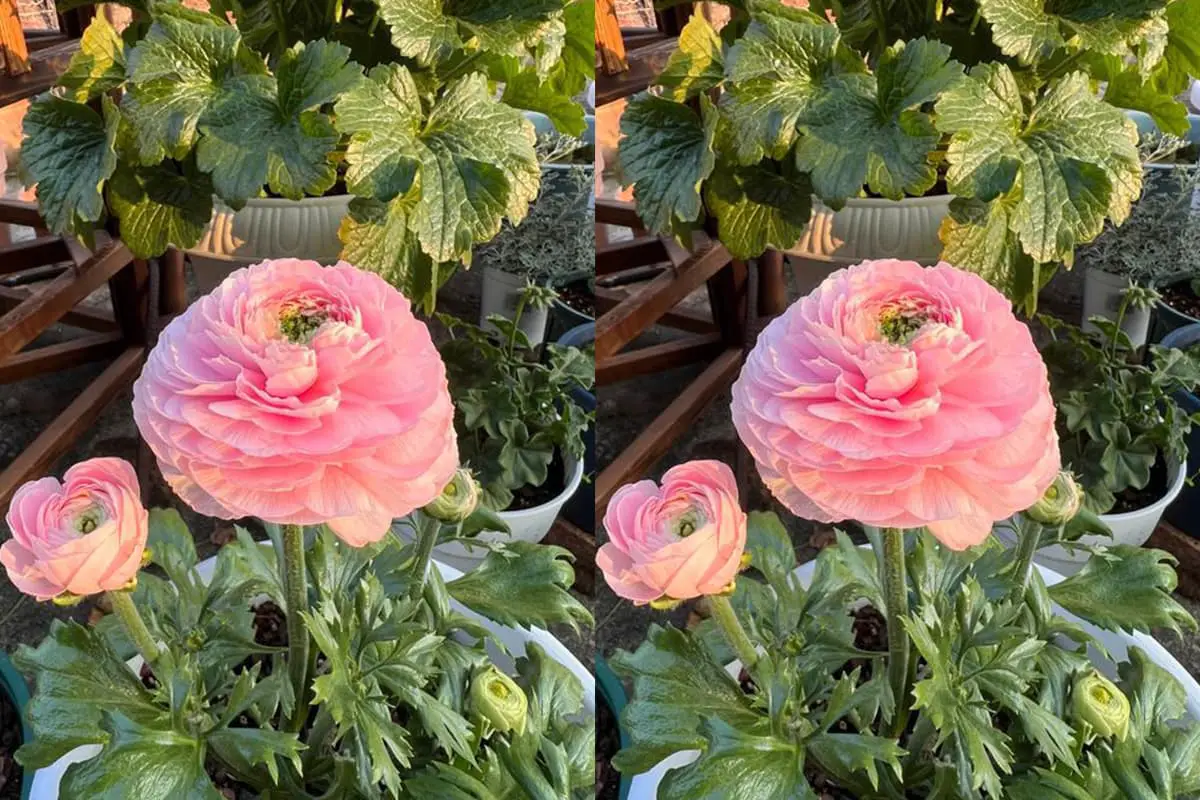
The blooming period is from April to May. The genus name Ranunculus is derived from Latin and refers to the plant’s preference for wet habitats.
Originating from a region centered around Turkey, spanning Southwest Asia and Southeast Europe. They thrive in cool environments, enjoy light, tolerate shade, dislike extreme heat, and prefer loose, fertile, well-drained sandy soil.
For pot cultivation, Ranunculus requires rich, loose, fertile, and well-draining sandy soil with plenty of humus. The plant’s propagation methods mainly include division of tubers, seed reproduction, and tissue culture.
Historically, Ranunculus has been used to treat a variety of ailments, including malaria, jaundice, migraines, stomachaches, rheumatic joint pain, gout, skin ulcers, toothaches, and inflamed eyes.
However, the plant is poisonous; contact can cause inflammation and blistering. It is not edible and can cause diarrhea and slow the pulse.
The genus name Ranunculus comes from Latin, named for the plant’s affinity for wetlands.
The Ranunculus plant is charmingly delicate and beautiful, with rich and vividly colored flowers, perennial in nature.
The plants grow from 20 to 40 centimeters tall with spindle-shaped tuberous roots often clustered at the base of the stem; they have a solitary stem or a few branches, covered with hair; the basal leaves are broad ovate with long petioles, while the stem leaves are sessile, compound with two to three leaflets; flowers are solitary or in small clusters at the top, each measuring 3 to 4 centimeters in diameter, blooming from April to May.
The underground tuberous roots are spindle-shaped, approximately 2 centimeters long and 1 centimeter in diameter.
The above-ground clumps reach about 30 centimeters in height, with stems that are slender and erect, branching sparsely and covered with stiff hairs.
The basal leaves have long petioles, are oval-shaped, typically trilobed, with blunt serrated margins. The stem leaves are nearly sessile, finely divided, with five to six leaflets and also have blunt serrated margins.
Flowers are borne on the tips of branches, or on long peduncles that emerge from the axils of the leaves, with full, round corollas and petals that are flat and arranged in overlapping layers, each flower measuring 3 to 4 centimeters in diameter or larger, often clustered at the base of the stem.
In spring, the above-ground stems emerge, growing solitary or with a few branches. Stem leaves lack petioles, while the basal leaves have long petioles and resemble celery leaves.
Each flower cluster has one to four flowers. Ranunculus plants are categorized as either potted or cut-flower varieties. With a wide range of flower colors, they come in white, yellow, red, pink, bright red, orange, purple, and brown.
Branches and Leaves
The tuberous roots of the ranunculus are spindle-shaped, with stems that either stand alone or have a few branches. The basal leaves are long-stemmed and resemble celery, while the stem leaves are small and nearly sessile.
Flowers and Fruits
Flowers are solitary or clustered at the top of the stem, available in a variety of colors including red, white, orange, and purple, with some being double or semi-double blooms.
Branches and Leaves
The anemone ranunculus can reach a height of 65 centimeters, with both stems and petioles covered in coarse spreading hairs.
The basal leaves are trifoliate with petiolate leaflets; the terminal leaflet is rhombic-ovate or broadly ovate and serrated, while the lateral leaflets are obliquely broadly ovate, asymmetrically bilobed or deeply lobed, and sparsely covered with coarse appressed hairs. The leaves on the stem are smaller.
Flowers and Fruits
The flower cluster is terminal, with the peduncle covered in coarse appressed hairs, sepals reflexed, narrow ovate, petals narrow elliptical or inversely ovate, and styles straight or slightly curved.
These plants favor cool environments, are tolerant of both light and shade, but do not withstand extreme heat. They thrive in loose, fertile, well-drained sandy soil, with an optimal growth temperature range of 10°C to 20°C.
After June, the tuberous roots enter a dormant period. The ranunculus is native to a region centered around Turkey, encompassing parts of Western Asia and Southeastern Europe.
It prefers mild climates with fresh, moist air and shaded growing conditions, is not cold-hardy, and especially dislikes scorching sun.
In most parts of China, it enters a dormant state during the summer. For potted plants, a cultivation soil rich in humus, loose, fertile, and with strong permeability is required.
The ranunculus is native to the southwestern part of Asia and southeastern Europe, centered around Turkey, including the Mediterranean coast. It has been widely cultivated in European countries such as France and Israel and is now grown worldwide.
The main methods of propagation for ranunculus include division of tuberous roots, seed propagation, and tissue culture.
This method is characterized by a short growth cycle, early flowering, large plant size, abundant blooms, and ease of cultivation.
However, it has a low propagation coefficient and slow rate, which does not meet the needs of large-scale production. Seed propagation offers a high multiplication rate and bright colors, but results in fewer flowers and a longer growing period.
Without early sowing under cooled conditions, flowering will not occur until March or April, and it requires a higher level of cultivation skill.
Tissue culture of ranunculus tubers, although having a high propagation coefficient and rapid rate, demands strict requirements for inoculation timing and explant selection, with challenging techniques and high costs, presenting difficulties in practical production.
Therefore, propagation by seeds is used to produce commercial tubers, which are then used to produce the final ranunculus flowers, thereby enhancing the cultivation efficiency of potted ranunculus.
Division should be conducted from September to October. Break apart the clump’s tuberous roots along with the rhizome for planting.
For potted Ranunculus, propagation is mainly done through division, typically in the autumn months of September and October.
The tuberous roots that have been dormant over the summer are dug up, the soil is shaken off, and the roots are naturally split apart by hand. Each separated section must have a part of the crown and 1 to 2 new buds, along with 3 to 4 small tuberous roots.
These sections are then soaked in a 1% potassium permanganate solution for 3 to 5 minutes for disinfection and sterilization before being air-dried and planted.
To prevent the tuberous roots from rotting and to ensure uniform sprouting post-disinfection, it is important to induce sprouting.
Choose a shaded, well-ventilated area away from rain, and spread a 5 cm thick layer of clean, moist river sand. Insert the tuberous roots upside down into the wet sand, burying only the sprouting part, leaving the rest exposed.
Regularly spray with cold water to keep the sand moist without waterlogging; also, apply a 50% wettable powder of carbendazim at an 800-fold dilution once a week to disinfect and prevent root rot.
After the tuberous roots slowly absorb water and swell in the low temperature, approximately 20 days later, when the buds are the size of rice grains and new roots have formed, it’s time to plant.
Planting should not be too deep; just covering the crown is sufficient. Planting too deeply is detrimental to leaf growth; too shallow affects root development.
Before the seedlings emerge, control the watering to keep the soil moist, then gradually increase the watering as the seedlings become uniform.
However, due to the short and dense nature of the tuberous roots, division can be difficult and the multiplication rate low, so seed propagation is often used in production.
Seedling Cultivation
Ranunculus flowers come in a variety of colors, and the planting ratios should be determined based on the market sales ratio of each color. The normal sowing period is from mid-October to mid-November.
Place Ranunculus seeds in water for 24 hours, remove and wrap in cheesecloth, then put in a constant temperature chamber to induce germination, with an ideal temperature around 15°C.
Rinse twice daily with clean water, then drain off excess moisture to keep the seeds moist. About 7 days after germination, when some seeds have sprouted, they should be sown immediately.
Once the sprouted seeds are suitably dry, mix them evenly with a moderate amount of yellow sand, then scatter evenly at a seeding rate of 2 to 3 grams per square meter.
Cover the seeds with a mix of peat and perlite in a 1:1 ratio, with an ideal thickness of 0.2 to 0.3 cm. Choose a seedbed with good drainage, usually in a protected area with good ventilation, light transmission, and relatively high humidity.
Mix domestic peat (from the northeast) with perlite in a 3:1 ratio, spread it out evenly, water it thoroughly, and then cover with a layer of substrate (imported peat: perlite = 1:1).
The substrate should have a pH of 6.0 to 7.5 and an EC value (salinity) of 0.5 to 0.7. The seedbed is vulnerable to meteorological disasters and pests, so it’s important to strengthen protection.
Use auxiliary materials like insect-proof nets, shade nets, and plastic film to enhance management, closely monitor the weather, and carry out preventative inspections to avoid unnecessary losses.
Seedlings should emerge 5 to 7 days after sowing—maintain the substrate’s moisture and water timely to ensure smooth emergence.
Transplanting
Transplant Ranunculus seedlings when they have 3 to 4 true leaves, which is usually from mid-December to mid-January.
Choose an appropriate planting location based on the production plan and rotation arrangement, following the principles of centralized seedling cultivation and proximity planting.
Ranunculus seedlings should not be transplanted with soil clumps. Remove any diseased or weak seedlings, as well as those with extremely short petioles, thicker leaves, longer petioles, and exceptionally small leaves.
The former results in stunted plants, while the latter leads to tall stems with small flowers, few tillers, and a low rate of double flowers. Ranunculus prefers a mildly acidic environment and thrives in loose, fertile sandy loam soil.
Commonly, garden soil, sand, and decomposed cake fertilizer (chicken manure) are mixed in a 5:3:1 ratio, or garden soil, leaf mold, and decomposed organic fertilizer are mixed in a 4:2:1 ratio for planting.
The spacing for planting should be about 10 cm, with a depth just enough to cover the crown without burying the heart of the plant.
Seed Selection and Harvesting
To collect superior seeds, it is essential to identify the parent plants as per the seed selection criteria, marking them and providing enhanced care.
During flowering, assist pollination by transferring pollen between flowers or plants manually. When the stamens release pollen, use a brush to apply it to the pistils of other flowers.
After the petals of the pollinated flowers fall off, forming green aggregate fruits tightly packed with seeds, remove the remaining flowers and buds. This concentrates nutrients for the growth and development of the seeds.
Strengthen the management of fertilization and irrigation, as well as pest and disease control, to ensure robust growth of the Ranunculus, directing more nutrients to the fruiting spikes to produce full, well-developed seeds.
By June, when the above-ground parts of the Ranunculus turn yellow and the aggregate fruits change from green to yellow, indicating seed maturity, harvest the aggregate fruits. Dry them and store them in paper bags in a well-ventilated, dry place until they are sown in the fall.
Cold Stratification for Germination
The optimal sowing period for Ranunculus is in the fall, preferably in October when temperatures drop below 20°C. However, germination times vary with the temperature fluctuations each year.
If the germination temperature can be controlled to remain between 10°C and 15°C, seeds will usually germinate within 20 days.
Early sowing at temperatures above 20°C will not induce germination until the temperature falls within the germination range, leading to an extended germination period.
Late sowing results in insufficient vegetative growth before winter and smaller flowers the following spring. If sowing is too late and temperatures are below 5°C, germination will not occur until the following February when temperatures rise.
To extend the vegetative growth period and cultivate high-quality Ranunculus, sowing can be advanced to mid to late August.
At this time, high temperatures are not conducive to seed germination, necessitating cold stratification treatment. Wrap the seeds in cheesecloth, soak in cold water for 24 hours, then place in a constant temperature box or refrigerator at 8°C to 10°C.
Rinse the seeds with cold water twice daily, shake off excess water, and keep them moist. Once the seeds sprout after about 10 days, sow them immediately. In suitable conditions, alpine nurseries can be used for cultivation.
Ranunculus does not tolerate strong light and prefers semi-shade environments. In winter, ensure full sunlight, but as temperatures and light intensity increase in spring, provide moderate shade and enhanced ventilation.
Ranunculus is a long-day plant, so long-day conditions can promote flower bud differentiation, advance the flowering period, and end vegetative growth sooner, initiating tuber formation earlier.
Under short-day conditions, flowering is delayed, but this promotes the growth of more lateral shoots, increases the plant’s crown size, and enhances the number of flowers, thereby improving the quality of the potted plants.
Producers should adjust the duration of daylight exposure according to actual needs to either advance or delay the flowering period.
Ranunculus prefers moist conditions but is prone to waterlogging and is relatively drought-tolerant. However, avoid excessive dryness, especially in the latter stages of growth, as it can force the plant into dormancy, negatively affecting tuber quality.
After planting, the first watering should be thorough. Subsequent waterings must be timely and balanced, avoiding both overly dry and overly wet conditions. Water to the point where the soil’s surface is dry but the leaves do not wilt.
Prior to planting Ranunculus, it is essential to select fully decomposed cake fertilizer or livestock manure as the base fertilizer, ensuring it is evenly spread.
Commence additional fertilization when significant growth or new leaves appear post transplantation, starting with a 0.1% concentration and gradually increasing to between 0.15% and 0.2%.
Alternating between 46% urea and 45% water-soluble compound fertilizers is recommended. Initially favor urea, shifting towards compound fertilizers later on, applying every 7 days.
In winter, opt for nitrate-containing compound fertilizers and avoid those with chlorine. After flowering, apply potassium-rich liquid fertilizer one or two times to encourage bulb growth.
Ranunculus thrives in cool environments, with optimal daytime growth temperatures between 59°F and 68°F, and nighttime temperatures around 44.6°F to 46.4°F.
Temperatures should neither be too high nor too low, and significant diurnal temperature variations must be avoided to prevent impacting the growth and quality of the flowers.
Inside plastic greenhouses, the maximum temperature should not exceed 71.6°F, and the minimum should stay above 32°F.
Typically, a single layer of covering is adequate for winter growth. Once the central leaves show noticeable growth, normal temperature management can be resumed.
During the blooming period, adjust the temperature inside the greenhouse to 59°F to extend the flowering phase. Promptly remove spent blooms and diseased plants. Watering should be balanced to avoid conditions that are too dry or too moist.
Pre-harvest Management
Ranunculus tubers begin to form around the time of flower bud differentiation, with significant growth occurring after flowering. If seeds are not being collected, remove spent blooms and buds.
Water timely and apply one or two phosphorus and potassium-based liquid fertilizers to ensure robust growth and nutrient delivery to the underground tubers, fostering their enlargement and development.
Apply preventive sprays to guard against the harm of leaf-mining flies.
Timely Harvesting
Once the Ranunculus foliage has completely yellowed and the nutrients have accumulated in the tubers, harvest promptly.
Harvesting too early can lead to insufficiently nourished tubers, weak disease resistance, and potential bacterial infection and rot during storage.
Conversely, harvesting too late, especially during hot, rainy summers with high air humidity and soil moisture content, can cause the tubers to rot in the soil.
Ideally, harvest during a continuous dry and sunny period lasting 2 to 3 days, carefully excavating each tuber to avoid damage.
Post-Harvest Processing
After harvesting, clean the tubers of soil and other debris, trim off the dead above-ground stems and leaves, and remove any diseased or damaged tubers.
Sort by size, then wash thoroughly and soak for 2 to 3 minutes in an 800x solution of 50% carbendazim wettable powder for disinfection.
Afterwards, spread them out to dry in a well-ventilated area with no direct sunlight. Ensure a thin layer for efficient heat dissipation and moisture evaporation to prevent heat buildup and potential damage or molding of the tubers.
Once the tubers are dry, store them promptly. Improper storage without protective measures can lead to damage from pests, diseases, or adverse conditions such as high temperature and humidity, resulting in mold and rot. Common storage methods include:
Ventilated Dry Storage
Place the tubers in containers such as bamboo baskets, perforated cardboard boxes, or wooden crates lined with waterproof paper or padding not exceeding 7.9 inches in thickness.
Store in a ventilated, dry, cool, and rain-protected area. Alternatively, store tubers in fabric bags, paper bags, or plastic woven bags hung in a ventilated, dry place at room temperature.
Layered Sand Storage
In a ventilated, dry indoor space, lay a 3.9-inch base layer of sterilized, fine, impurity-free sand. Place a layer of tubers on top, followed by a 2-inch layer of sand.
Repeat this layering process, stacking 3 to 5 layers to form a conical shape, ensuring the tubers are evenly buried in the sand.
Pot Soil Storage
For potted Ranunculus, retain the tubers in the original potting soil over the summer. Trim the dead above-ground stems and leaves, water once with a 0.3% potassium permanganate solution, then cease watering and fertilizing to keep the soil dry.
Place the pots in a ventilated, cool, rain-protected area until autumn when the tubers can be knocked out and replanted.
For storing Ranunculus tubers, ensure all tools and spaces are disinfected, and the storage environment is dry and cool. During rainy weather, enhance ventilation to facilitate moisture dispersion.
Regularly check the stored tubers, removing any that show signs of disease, mold, or rot. Adjacent contaminated tubers should also be removed, disinfected with fungicide, dried, and restored to prevent spread of infection.
Sclerotinia rot is caused by a fungal pathogen that primarily affects the stem base of the plant. In the initial stage of infection, watery, tan, irregular spots appear at the base of the stem.
These spots soon give way to white, silky mycelium that entwines into sclerotia resembling rapeseed. Initially white, the sclerotia turn from yellow-brown to brown.
In severe cases, the stem base rots and dies, severing the above-ground parts from the roots, preventing water uptake, leading to wilting branches and leaves, and ultimately, plant death.
The pathogen overwinters in the soil or on plant debris as sclerotia, which can survive for several years. Given the right conditions, sclerotia germinate into mycelium, spreading from infected to healthy plants through the soil.
Moreover, ascospores mature and are spread by wind and rain, infecting hosts upon contact. Temperatures around 20°C and relative humidity above 85% are conducive to the spread of the pathogen.
Disease severity is exacerbated by dense planting, poor ventilation and light conditions, monoculture, clayey soil, or poor drainage.
Control Methods
Blue Mold
Blue mold primarily occurs during the storage period of tubers, although it can also appear during the growth period. Infected tubers turn dark brown or black.
In severe cases, the surface of the stored tubers is covered with a large number of conidia from the blue mold, which can easily infect healthy tubers.
Tubers infected prior to planting rot more quickly in high humidity, and a significant amount of mycelium can develop on the soil surface where the tubers are planted, leading to rotting of the tuber tissue in the soil.
Blue mold is more likely to occur if the tubers are damaged during harvest, or if they are stored in poorly ventilated, highly humid areas, causing serious harm.
Control Methods
Viral Diseases
The causative agents are the Ranunculus mosaic virus or the Cucumber mosaic virus. Symptoms include leaf wrinkling and unevenness, variegation, chlorosis in patches, or leaves becoming stunted, smaller, and thicker.
Leaf edges may curl towards the upper or lower leaf surface, and petioles become shortened, resulting in a tufted appearance. Affected flowers are twisted, deformed, reduced in size, and fail to bloom.
In severe cases, the plant is noticeably stunted, withered, and dies. The virus often resides in tubers or seeds; thus, plants grown from infected seeds or tubers have a higher incidence of disease.
Additionally, viruses can be transmitted to Ranunculus during the growing period by aphids, thrips, or leafminers, triggering viral diseases. Overcrowding in seedbeds or pot plants can also lead to disease transmission among plants.
Control Methods
Root Rot
This disease occurs when plants are grown in heavy, alkaline soil, or under adverse conditions such as low temperatures, excessive and prolonged soil moisture.
Infected plants exhibit root rot, turning the roots dark brown or black, with the stems and leaves gradually wilting and yellowing, leading to plant death.
Additionally, root rot may occur when tubers are harvested from overly moist soil, compacted soil, mechanical damage during harvesting, surface moisture on stored tubers, excessive stacking, poor ventilation, or incomplete disinfection prior to planting.
The internal tissue of the affected area changes from white to gray, and the outer skin is covered with mycelium, leading to tuber rot.
Control Methods
Variegation Disease
Symptoms: Leaves develop chlorotic spots, and in severe cases, plant growth and development are stunted.
Control Methods
Leafminer Fly
Commonly occurring, especially between February and April, larvae feed within leaf tissue, creating serpentine white tunnels with their black frass outlining their paths. Adults lay eggs and feed, causing round damage spots.
This damages the plant’s chloroplasts, reducing photosynthesis, and provides an entry and breeding ground for pathogens. The activity of the flies also spreads various viral diseases, disastrously affecting the cultivation of Ranunculus.
Control Methods
Implement integrated control measures, focusing on prevention and comprehensive monitoring of pest outbreaks. Use sticky yellow traps and chemical treatments.
During the initial outbreak or about 20 days after peak emergence of adult flies, alternate the use of a 5000-fold dilution of 75% Cyromazine WP, a 1000-fold dilution of 4.5% Cypermethrin EC, a 2000-fold dilution of 50% Lufenuron, and a 1500-fold dilution of 25% Abamectin EC, spraying every 10 days for a total of three applications.
Aphids and Whiteflies
At the onset, treat with a 3500-fold dilution of 1.8% Abamectin EC, or a 2000-fold dilution of 50% Pirimicarb WP, 20% Esfenvalerate EC, or 10% Imidacloprid WP to control infestations.
These low-growing plants are celebrated for their vivid colors, sturdy flower stems, and uniquely beautiful blooms. The flowers are large and vibrant, with petals that are tightly packed and overlap in multiple layers.
They offer a rich palette of glossy, eye-catching hues. The flowering period lasts between 30 to 40 days, exhibiting a distinctive style and charm.
Ideal for springtime potted displays, outdoor flower beds, garden borders, lawn embellishments, and cut-flower production, these plants are excellent materials for beautification in shaded environments.
They thrive under trees or on the north side of buildings and are highly favored by consumers.
Known in places like Kunming as “foreign peonies” for their peony-like grandeur and diverse colors, they are perfect for forest underplanting, edge settings, alongside paths, or in courtyards.
Whether accentuating grassy areas, rockeries, or flowerbeds, they are an indispensable herbaceous element for any floral display.
As an emerging horticultural plant, it has shown significant economic benefits and rapid domestic development, yet the supply still falls short of market demand, indicating vast potential for future expansion.
This plant is used to treat malaria, jaundice, migraines, stomachaches, rheumatic joint pain, “crane’s knee” wind (a type of arthritis), carbuncles, toothaches, and inflamed eyes.
However, it is toxic; contact can cause inflammation and blisters. It is not edible and can lead to diarrhea and a slowed pulse.
Language of Flowers: Popular.
In the 13th century, Saint Anthony of Padua, a Franciscan friar, drew large crowds while preaching Christian doctrine and the Gospel, earning widespread acclaim.
The flower language of this species, “popular,” reflects the blessing of being well-liked. Those who are personable, sociable, and enjoy the admiration, affection, and support of others are often celebrated.
Yet, their extensive network can sometimes impede deep connections, even with friends of the opposite sex, so it’s essential to remember that while having many friends is good, having close confidants is even more important.

Peggie was once a high school mathematics teacher, but she set aside her chalkboard and textbooks to follow her lifelong passion for flowers. After years of dedication and learning, she not only established a thriving flower shop but also founded this blog, “Flowers Library”. If you have any questions or wish to learn more about flowers, feel free to contact Peggie.
 English
  العربية
  Bahasa Indonesia
  Deutsch
  Français
  Italiano
  Nederlands
  Português
  Русский
  日本語
日本語