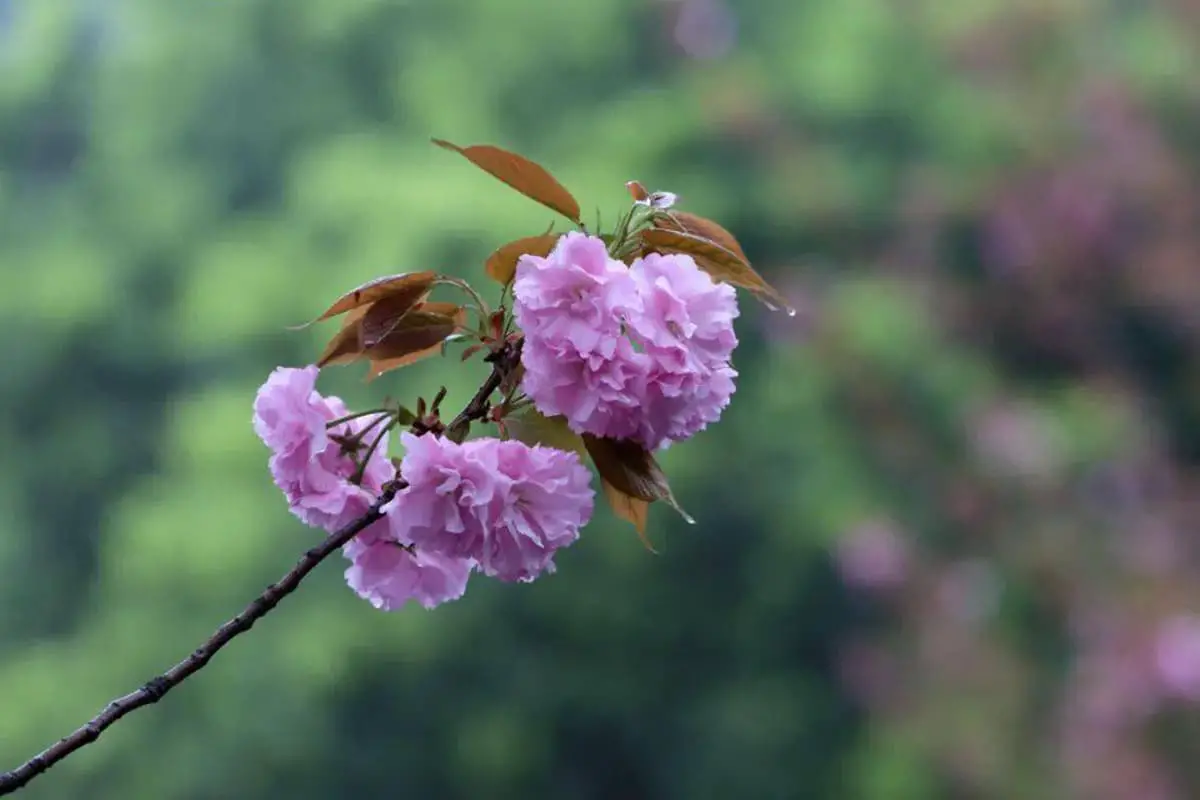
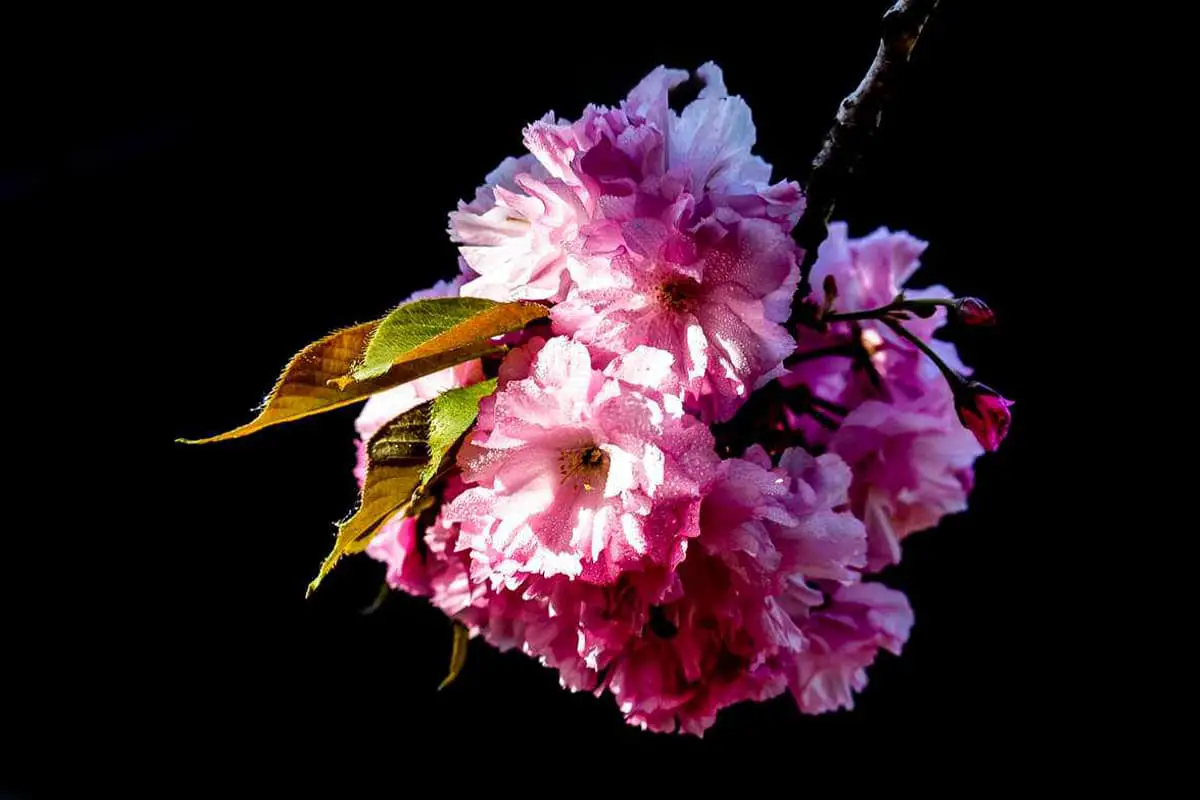
The Prunus serrulata ‘Alborosea’, commonly known as the Bodhisattva Cherry Blossom, is a prized ornamental cherry tree. Its buds are deep pink during the bud stage, with the outer edges of the petals turning a light pink when they bloom.
The center of the flowers is nearly white, and the two pistils curve outwards resembling ivory tusks, giving the tree its name, which alludes to the elephant ridden by the Bodhisattva Samantabhadra in Buddhist iconography. The leaves and flowers emerge simultaneously, with the young leaves displaying a reddish-brown hue.
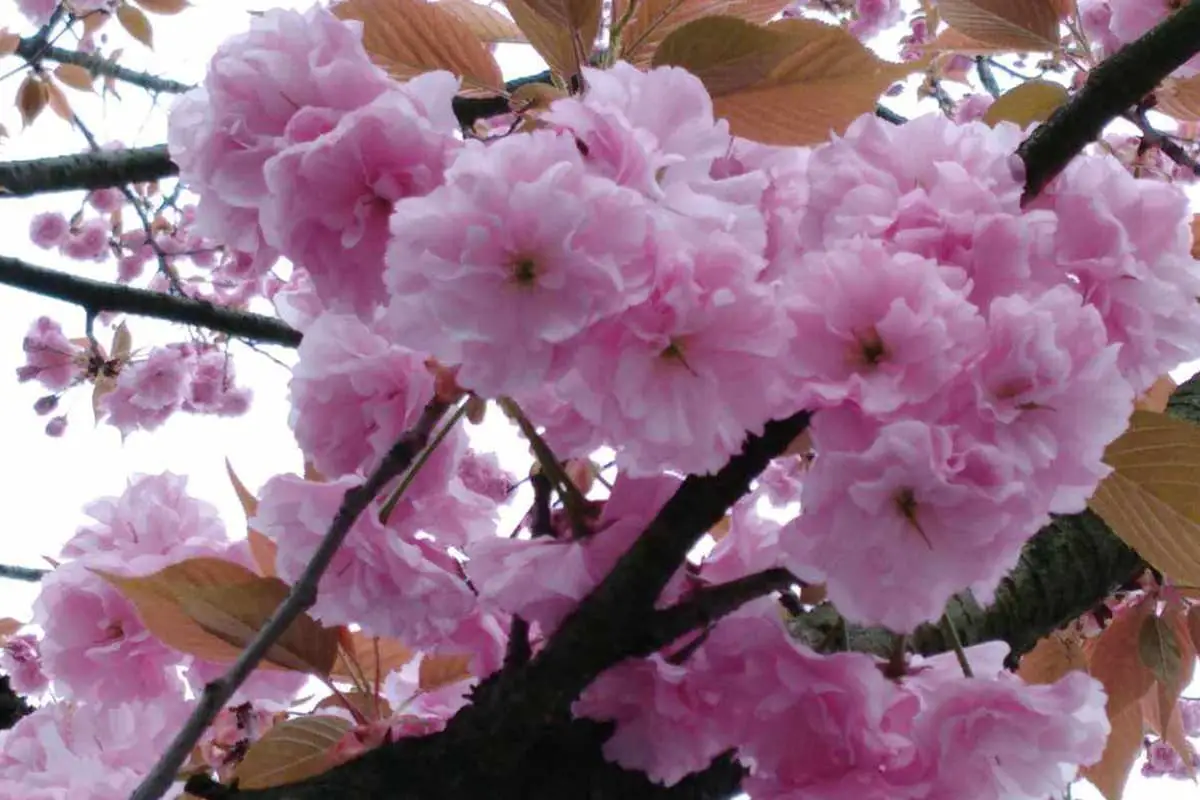
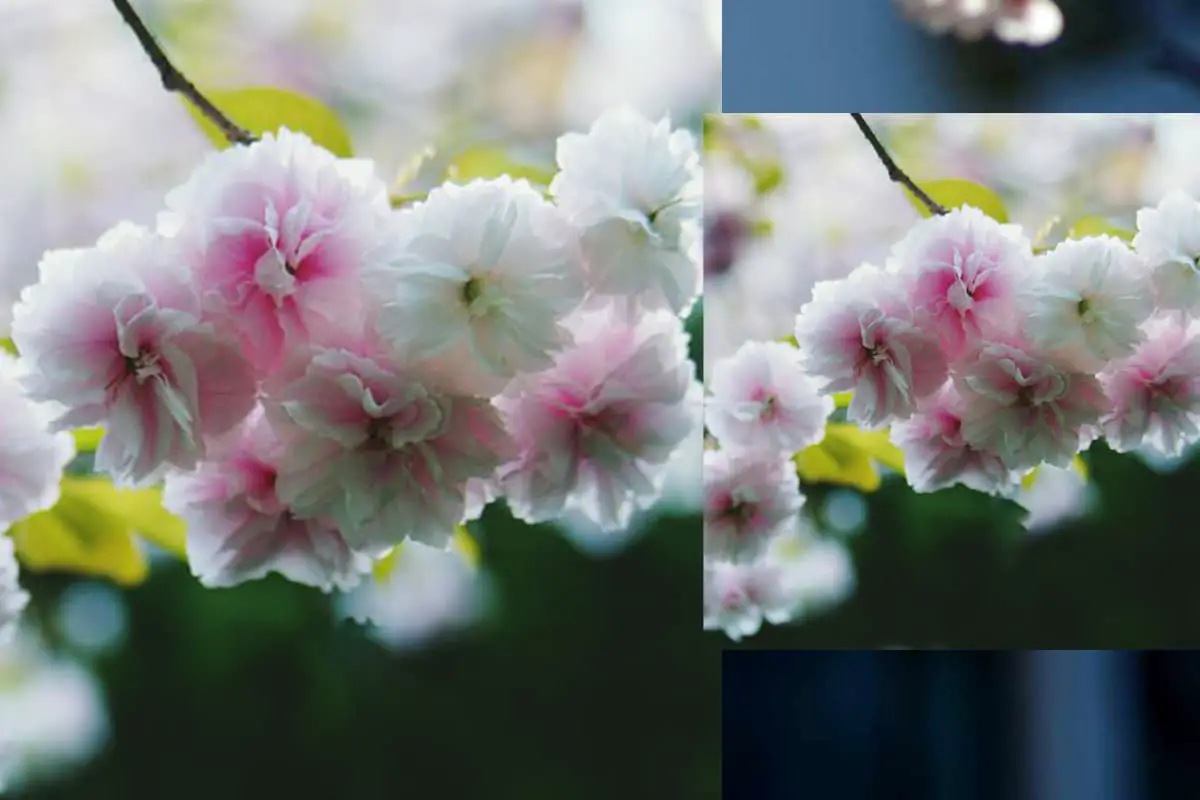
The flowers initially bloom a light pink, later fading to near white. Each blossom boasts between 21 and 50 petals, typically with two pistils, blooming in late March or early April.
I. Basic Information
The Bodhisattva Cherry Blossom (scientific name: Prunus serrulata ‘Alborosea’) is a tree with slightly pendulous branches. It is native to Japan and primarily cultivated there, but was introduced to China in 2009 and is now grown in both northern and southern regions of the country.
II. Characteristics
The Bodhisattva Cherry Blossom is characterized by deep pink buds which open into flowers with light pink edges and nearly white centers. The two pistils curve outwards, resembling elephant tusks.
The leaves and flowers emerge simultaneously, with young leaves exhibiting a reddish-brown color. The flowers start out light pink, gradually fading to near white. Each flower comprises between 21 and 50 petals, typically with two pistils. The flowering period occurs in mid-to-late April.
III. Habitat and Behavior
The Bodhisattva Cherry Blossom thrives in full sun and demonstrates considerable cold hardiness, capable of overwintering outdoors in temperate climates like Beijing. It is resilient to transplantation and can tolerate poor soil conditions, drought, wind, and urban pollution.
Its strong sprouting ability makes it highly suitable for urban greening projects and park landscaping, especially when planted en masse.
IV. Cultivation Methods
Transplantation Time
Transplanting is best done in spring or autumn. Grafted seedlings should be allowed to establish for a year before transplantation. One-year-old grafted seedlings can be transplanted bare-root, while two-year-old and older specimens should be moved with a soil ball.
For long-distance transportation, the roots of bare-root seedlings should be coated with a thin mud slurry and securely wrapped in a plastic bag to prevent desiccation.
Preparation Before Transplantation
Prior to planting, seedlings should be pruned to remove diseased branches, dead wood, split branches, inward-growing branches, and excessively long branches. The main root should also be trimmed.
When transplanting one-year-old grafted seedlings, the main branch should be preserved while the taproot is moderately pruned.
Transplantation Density
The planting density and row spacing should be determined based on the size of the seedlings and the intended cultivation period. Planting holes should be prepared according to the planned spacing before the seedlings are introduced.
Bare-root seedlings should be planted with their roots spread out, the soil around the roots firmly tamped down after planting, and sufficient water provided to encourage root establishment.
When transplanting balled and burlapped specimens, the planting hole should be 10-20cm wider in diameter than the root ball. Some slow-release fertilizer should be incorporated into the bottom of the hole and covered with 2-3cm of soil.
After planting, the surrounding soil should be firmly compacted and ample water provided to aid root establishment.
V. Disease and Pest Management
The Bodhisattva Cherry Blossom, like many ornamental cherry species, can be susceptible to various pests and diseases. These may include witches’ broom, shot hole disease, leaf blight, crown gall, scale insects, clearwing moths, beetles, aphids, and leaf rollers. Vigilant monitoring and timely intervention are crucial for maintaining tree health.
Preventative measures such as proper pruning, adequate spacing, and maintaining tree vigor through appropriate fertilization and watering practices can help reduce susceptibility to pests and diseases. When necessary, targeted treatments with appropriate fungicides or insecticides may be required, always following local regulations and best practices for ornamental tree care.


 English
  العربية
  Bahasa Indonesia
  Deutsch
  Français
  Italiano
  Nederlands
  Português
  Русский
  日本語
日本語