600+ Types of Flowers A To Z (With Names and Pictures)
Types Of Flowers By Names (A-Z) Types Of Flowers By Color Types Of Flowers By Season Types Of Flowers By Blooming Time 600+ Types of Flowers No. Flower Name No.…

Portulaca grandiflora, also known as Purslane, Thin Scutellaria, Toothbrush Grass, Field Grass, Water Scutellaria, and Narrow-leaved Hanxin Grass, is a perennial herbaceous plant of the Scutellaria family.
The Purslane can grow up to 55 cm high. It has small, brown, flattened spherical nutlets that are about 1 mm in diameter and feature small warty protrusions. Its flowering and fruiting period is from April to July.
The plant grows in dense clusters, producing numerous, strikingly colorful flowers over a long blooming period.
It is an excellent choice for decorating grassy areas, slopes, and roadsides, as well as being suitable for planting around the edges of flower beds and in flower gardens.
When potted, it looks delicate and exquisite, and can be displayed in various locations such as balconies, windowsills, corridors, entrances, pool sides, and courtyards for viewing.
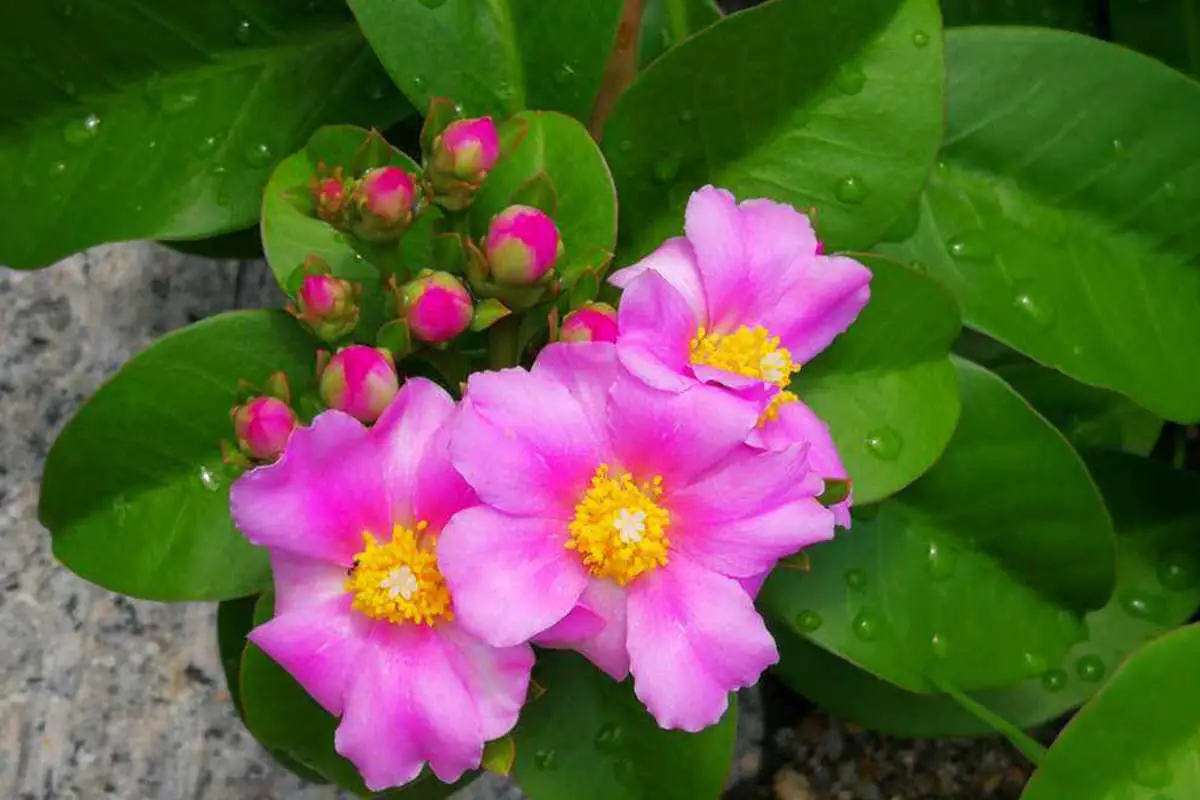
The Purslane is a perennial herb with a short, thick rootstock that produces tufted fibrous roots. The stem stands upright, measuring between 12 and 55 cm high, and is quadrangular in shape.
The base has a diameter of 1 to 2 mm and is either hairless or sparsely covered with appressed hairs on the upper part of the axis. The stem may be unbranched or have varying degrees of branching.
The leaves have short petioles or are almost sessile, with petioles 1 to 3 mm long, ventrally concave and dorsally convex, sparsely hairy.
The leaf blades are triangular-ovate or ovate-lanceolate, sometimes ovate, 1.3 to 3.2 cm long and 0.5 to 1 (1.4) cm wide, with acute apex, broadly cuneate or nearly truncate base, and sparse and blunt shallow serrations along the margins.
The upper surface is olive-green and the lower surface is pale green, sometimes with a purplish hue. Both surfaces are sparsely covered with appressed hairs along the veins or nearly hairless. The lateral veins are in 2 to 3 pairs, recessed above and raised below.
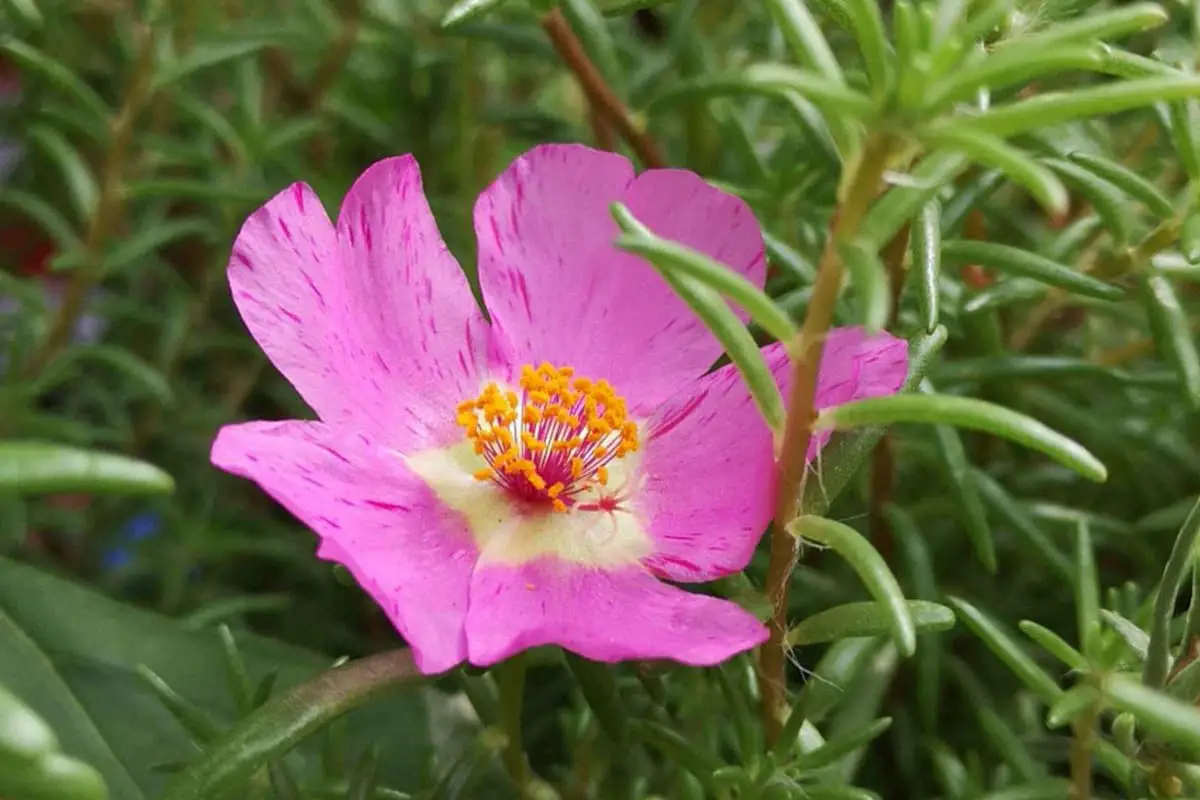
The flowers are solitary, borne in the axils of the leaves on the upper part of the stem or branches. The stalks with flowers are 4 to 11 cm long. The lower bracts resemble leaves, but are smaller, up to 8 mm long.
Upper bracts are even smaller, 2 to 4.5 mm long, elliptical to elongated-elliptical, entire, scattered with hairs above and sparsely hairy along the veins below.
The flower stalks are 1 to 2 mm long, covered with fine soft hairs, and in the middle there is a pair of needle-shaped small bracts about 0.5 mm long with fine hairs. The calyx is about 2 mm long when in bloom, with fine soft hairs along the veins outside and short marginal hairs, and a shield about 1 mm high.
When in fruit, the calyx is 4.5 mm long, and the shield is 2 mm high. The corolla is purple-blue, 9 to 13 mm long, covered with short soft hairs outside, and sparsely hairy inside the throat.
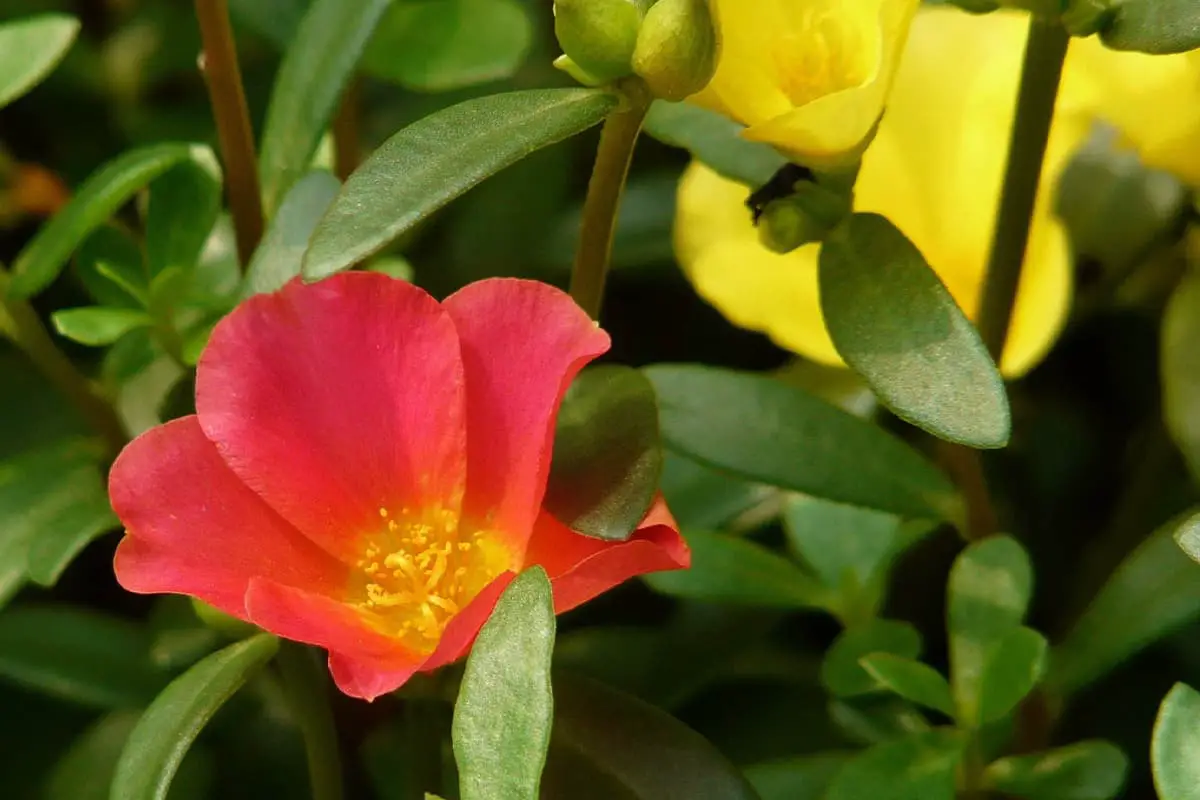
The base of the corolla tube is greatly sacculated, 1.5 mm wide, gradually widening upwards to a width of 3.5 mm at the throat. The corolla lip is 2-lipped, the upper lip helmet-shaped, semicircular, 1.5 mm long, with a rounded tip.
The lower lip has a trapezoidal middle lobe, entire, 2.5 mm long, 4 mm wide, and triangular-ovate side lobes, 1.5 mm wide, with acute tips.
The stamens are in 4s, the front pair slightly longer, barely protruding, with fertile half anthers, the reduced half anthers inconspicuous, the back pair shorter, enclosed, with full anthers, the anther chambers have ciliate openings.
The filaments are flattened, the front pair on the inner side and the back pair on both sides at the bottom are covered with sparse soft hairs. The pistil is slender, with a sharp tip, slightly split.
The disc is disc-shaped, raised at the front and extended into a short ovary stalk at the back. The ovary is divided into 4 equal parts.
The small, hard nutlets are brown, flattened spherical, about 1 mm in diameter, and have small warty protrusions. The flowering and fruiting period is from April to July.
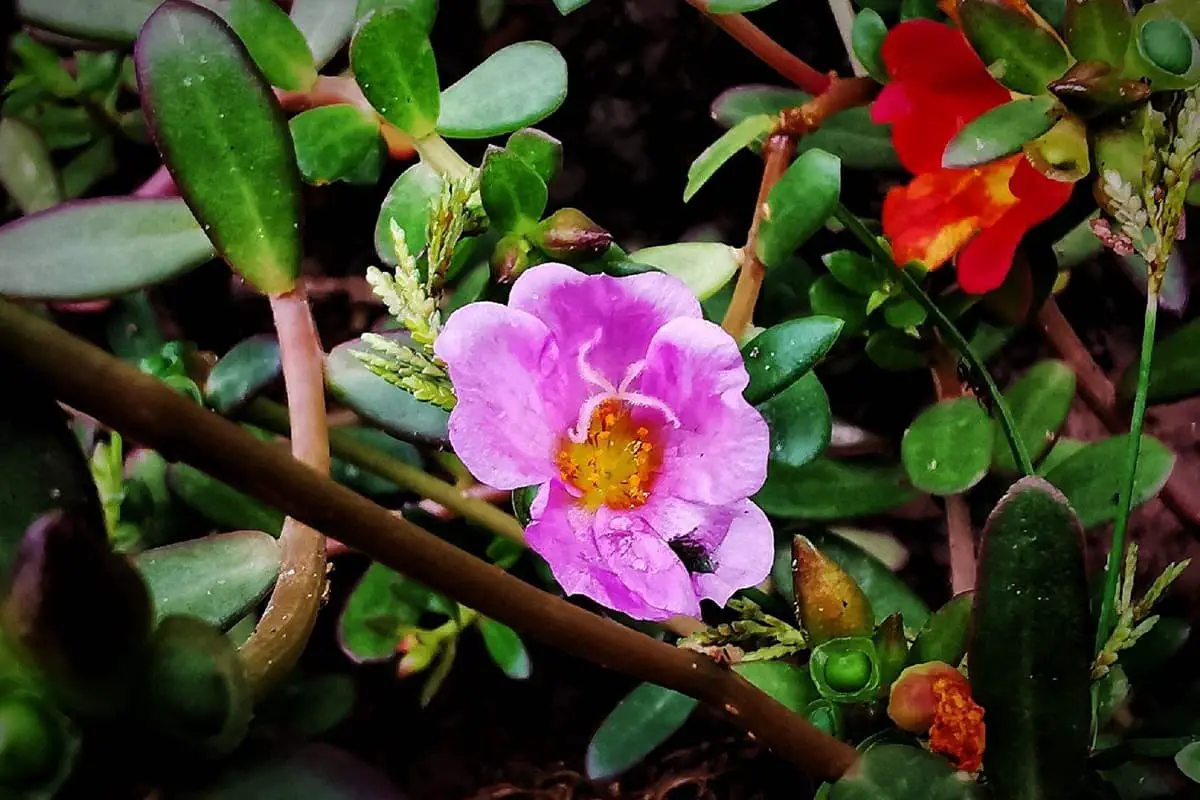
The plant thrives on the edges of paddy fields, streams, or in damp meadows below an altitude of 2000 meters. The species, known as ‘half-branch lotus’, prefers a warm, moist, and semi-shady environment.
It isn’t particularly demanding about soil conditions but grows best in deep, loose, fertile, well-drained sandy loam or humus soil. Heavy, waterlogged areas are not suitable for planting.
It is commonly found growing wild in hills and flat areas, by fields or streams. It prefers a relatively moist environment and does not grow well in overly dry areas.
This plant can be found in northeast India, Nepal, Myanmar, Laos, Thailand, Vietnam, and also in Japan and Korea. The model specimen was collected from Nepal.
Source: The product is derived from the dried whole plant of the Lamiaceae family plant, half-branch lotus. It is harvested, washed, and sun-dried during the summer and autumn when the stems and leaves are lush.
Characteristics: The half-branch lotus grows 15 to 55 centimeters tall and is either hairless or sparsely hairy on the flower axis. The roots are relatively slender, and the stems are quadrangular.
The surface is dark purple or brownish-green. The leaves are opposite, with short petioles. The leaf blades are often wrinkled, becoming triangular or lanceolate when flat, measuring 1.5 to 3 centimeters long and 0.5 to 1 centimeter wide.
The apex is blunt, the base is broadly cuneate, and the margin is entire or with few indistinct rounded teeth. The upper surface is dark green, and the lower surface is grayish-green.
Flowers are solitary in the upper leaf axils of the stem, with blunt or rounded calyx lobes. The corolla is bilabiate, brownish-yellow or light blue-purple, about 1.2 centimeters long, and hairy. The fruit is a flat sphere, light brown in color. The taste is slightly bitter.
Processing: Impurities are removed, the plant is washed and cut into sections.

Peggie was once a high school mathematics teacher, but she set aside her chalkboard and textbooks to follow her lifelong passion for flowers. After years of dedication and learning, she not only established a thriving flower shop but also founded this blog, “Flowers Library”. If you have any questions or wish to learn more about flowers, feel free to contact Peggie.
 English
  العربية
  Bahasa Indonesia
  Deutsch
  Français
  Italiano
  Nederlands
  Português
  Русский
  日本語
日本語