600+ Types of Flowers A To Z (With Names and Pictures)
Types Of Flowers By Names (A-Z) Types Of Flowers By Color Types Of Flowers By Season Types Of Flowers By Blooming Time 600+ Types of Flowers No. Flower Name No.…

Paederia scandens, is a traditional Chinese medicinal herb. It refers to the entire plant of the skunkvine, which is a member of the Rubiaceae family.
The whole plant is harvested during the summer and dried for use. Skunkvine has a sweet and slightly bitter taste with a neutral nature.
It is known for its ability to dispel wind and dampness, relieve pain and detoxify, aid digestion and resolve food stagnation, invigorate the blood and reduce swelling.
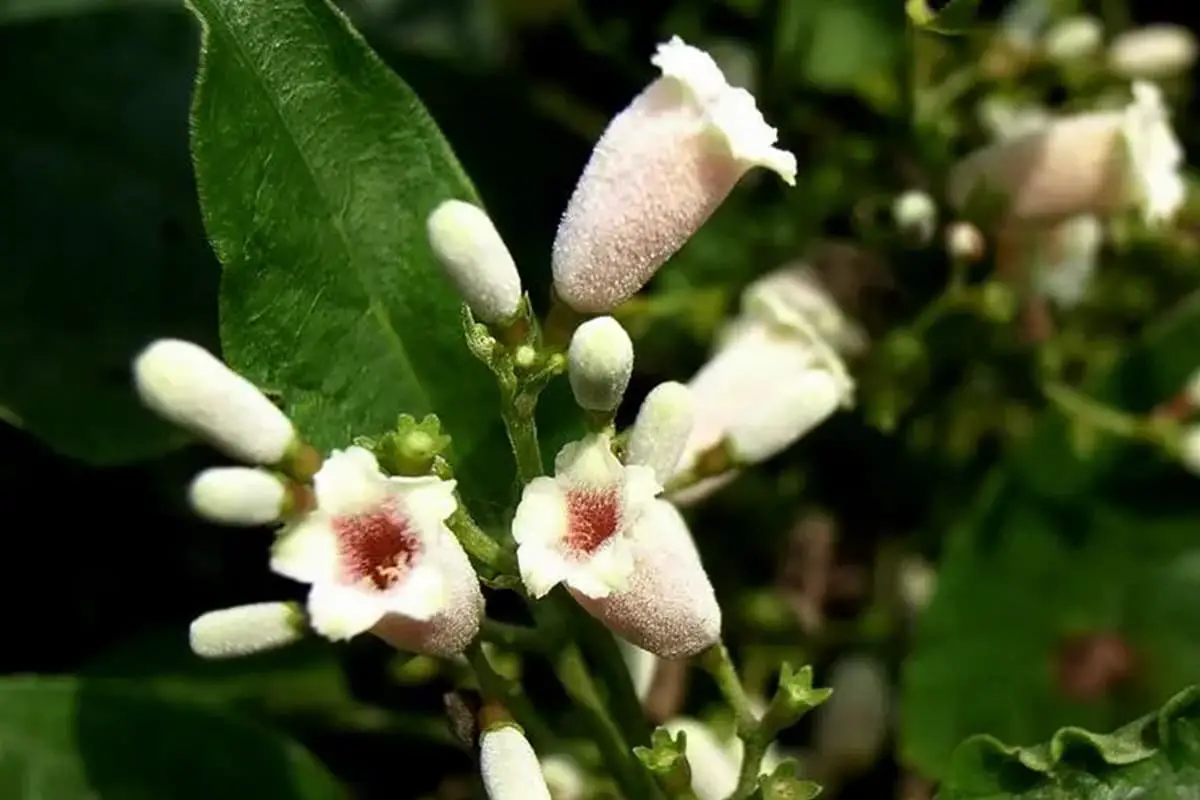
It is commonly used for rheumatic pain, injuries from falls, traumatic pain, pain associated with the liver, gallbladder, and gastrointestinal tract, diarrhea, dysentery, indigestion, pediatric digestive issues, bronchitis; it is also applied topically for dermatitis, eczema, and sores.
Skunkvine is used for rheumatic and muscular pain, injuries from falls, traumatic pain, diarrhea, dysentery, indigestion, childhood nutritional disorders, hemoptysis due to tuberculosis, colic related to the liver and gastrointestinal tract, jaundice-type hepatitis, bronchitis, leukopenia due to radiation, and pesticide poisoning.
Topically, it is applied for dermatitis, eczema, and swollen sores.

Paederia scandens is a perennial herbaceous vine. Its stems are flat cylindrical, slightly twisted, hairless or nearly so, with older stems gray-brown in color, measuring 3-12mm in diameter.
The bark often peels off, leaving longitudinal wrinkles and scars from the leaf stalks, and the stems break easily with a flat, gray-yellow cross-section.
Younger stems are black-brown, 1-3mm in diameter, tough and not easily broken, with a fibrous cross-section that is gray-white or light green.
The leaves are opposite, often crinkled or broken, with intact leaves appearing broadly ovate or lanceolate when flattened, measuring 5-15cm in length and 2-6cm in width, with pointed tips, wedge-shaped, rounded, or shallowly heart-shaped bases, entire margins, and green-brown in color.

They are hairless or nearly so on both surfaces. The leaf stalks are 1.5-7cm long, hairless or hairy. The cymes are terminal or axillary, with the former often leafy and the latter sparsely flowered.
The axes of the inflorescences and the flowers are sparsely covered with soft hair, and the flowers are light purple.
Skunkvine thrives in warm and humid environments, commonly found by streams, riversides, roadsides, woods, and shrublands, often climbing on other plants or rocks.

Peggie was once a high school mathematics teacher, but she set aside her chalkboard and textbooks to follow her lifelong passion for flowers. After years of dedication and learning, she not only established a thriving flower shop but also founded this blog, “Flowers Library”. If you have any questions or wish to learn more about flowers, feel free to contact Peggie.
 English
  العربية
  Bahasa Indonesia
  Deutsch
  Français
  Italiano
  Nederlands
  Português
  Русский
  日本語
日本語