The Oxalis triangularis, commonly known as the Purple Shamrock, is a perennial herbaceous plant in the Oxalidaceae family, originally from South America, specifically Brazil.
It has been introduced and cultivated in China. The plant can grow up to 30 centimeters high with continual bulbil production. Its leaves are clustered at the base, all being root leaves in a palmate compound leaf structure.
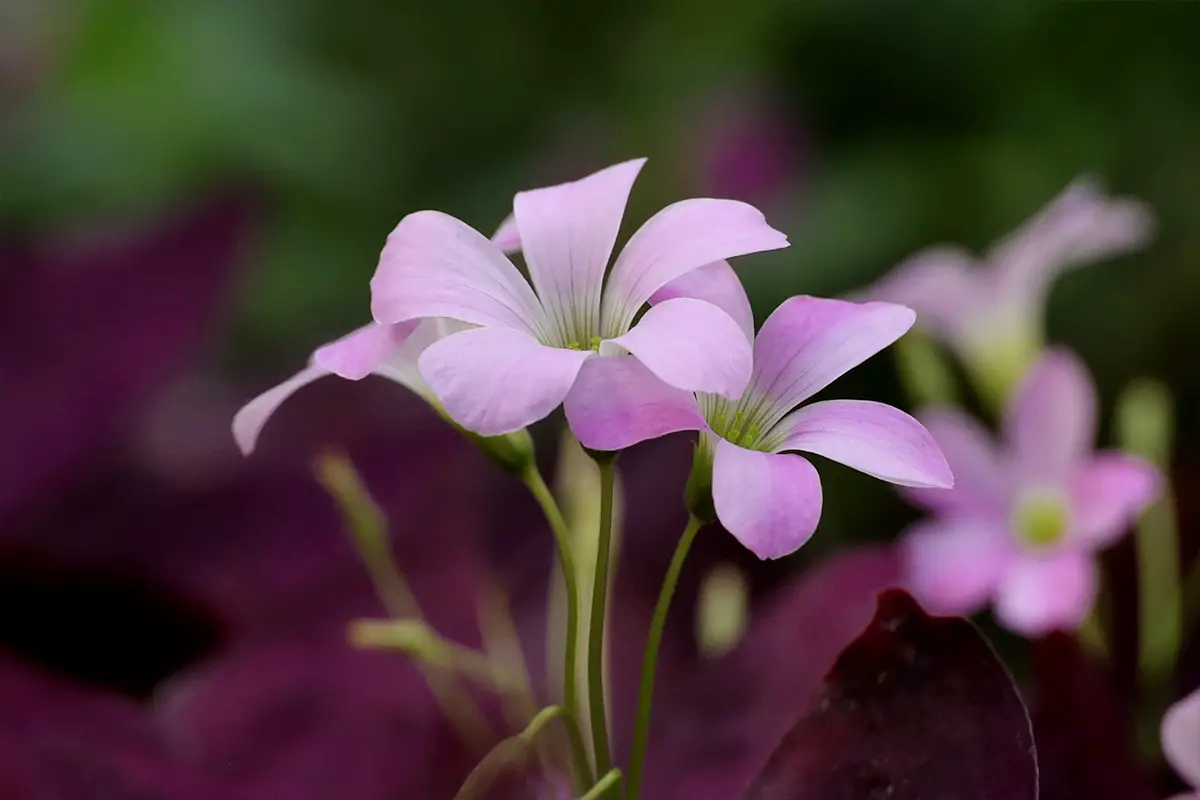
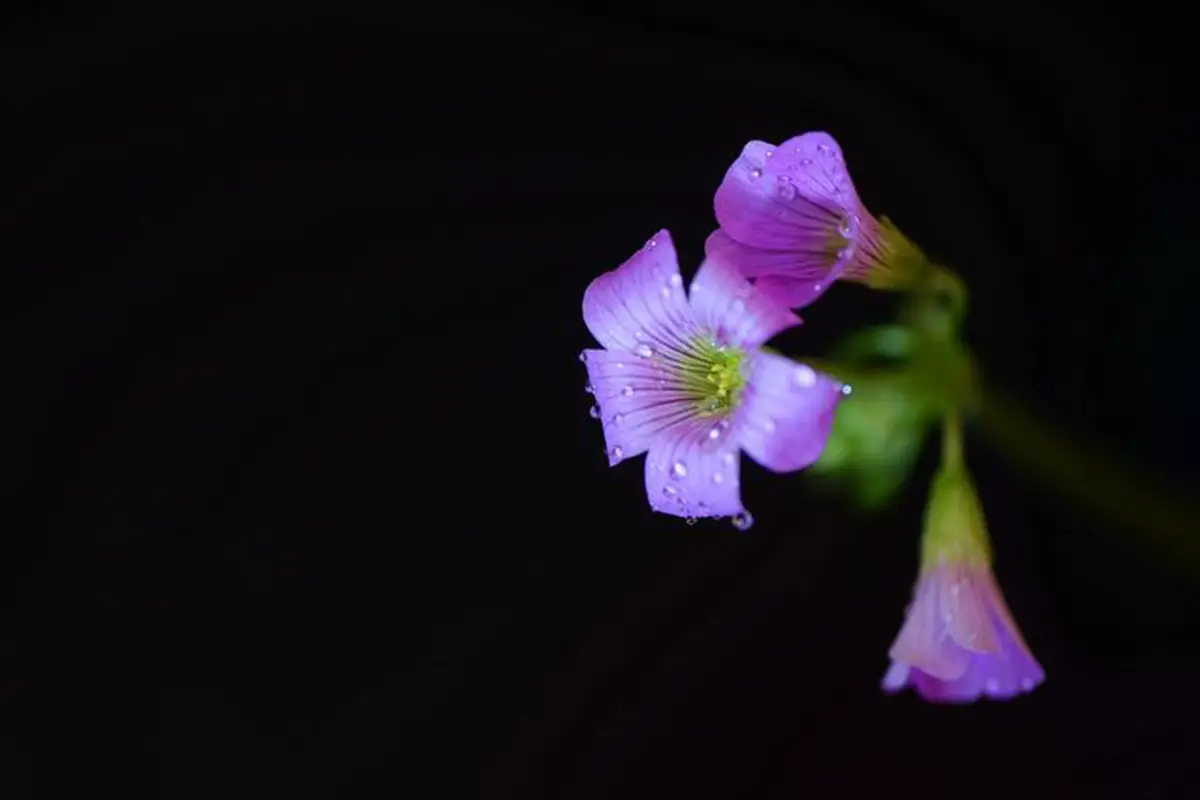
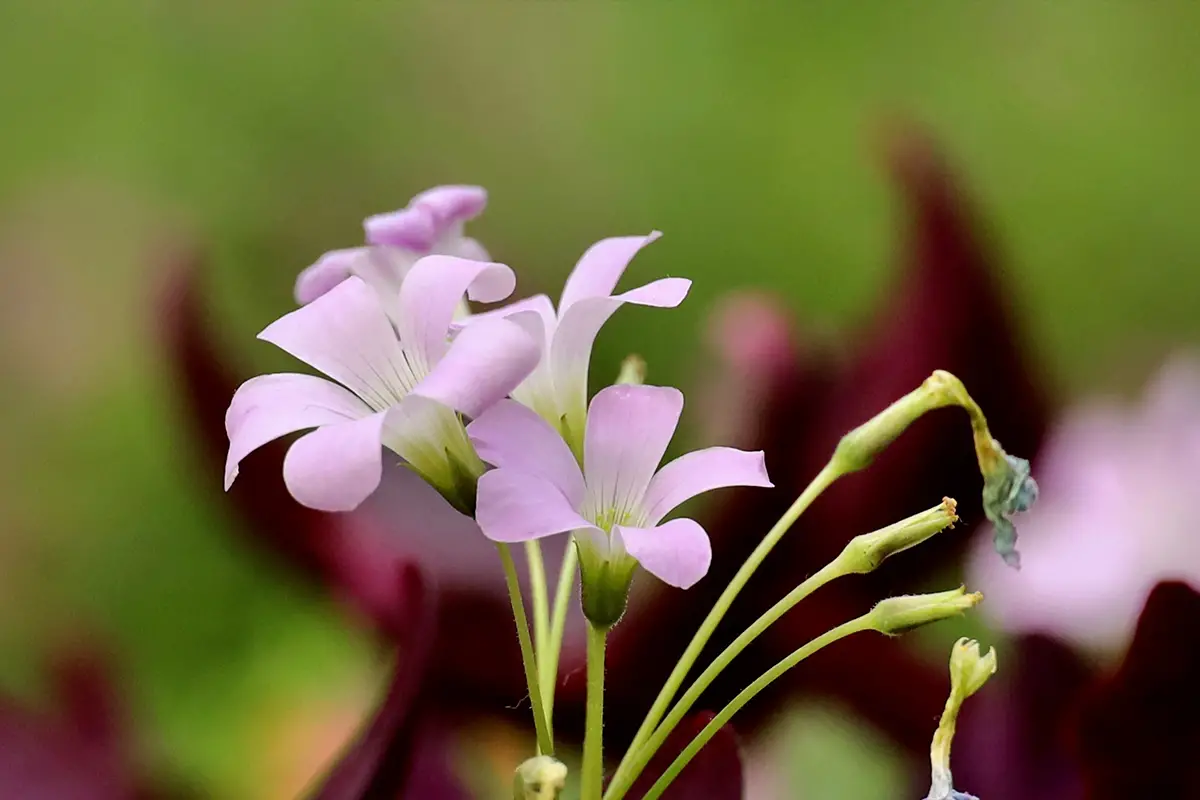
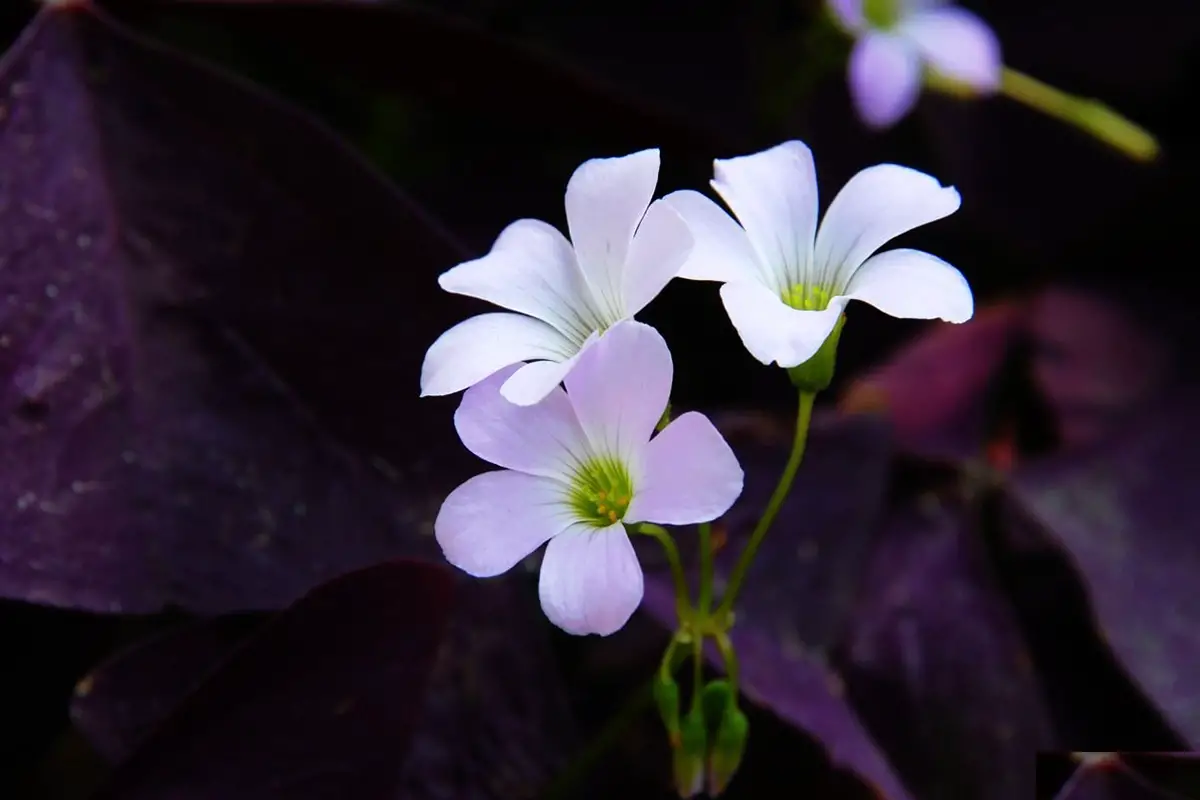
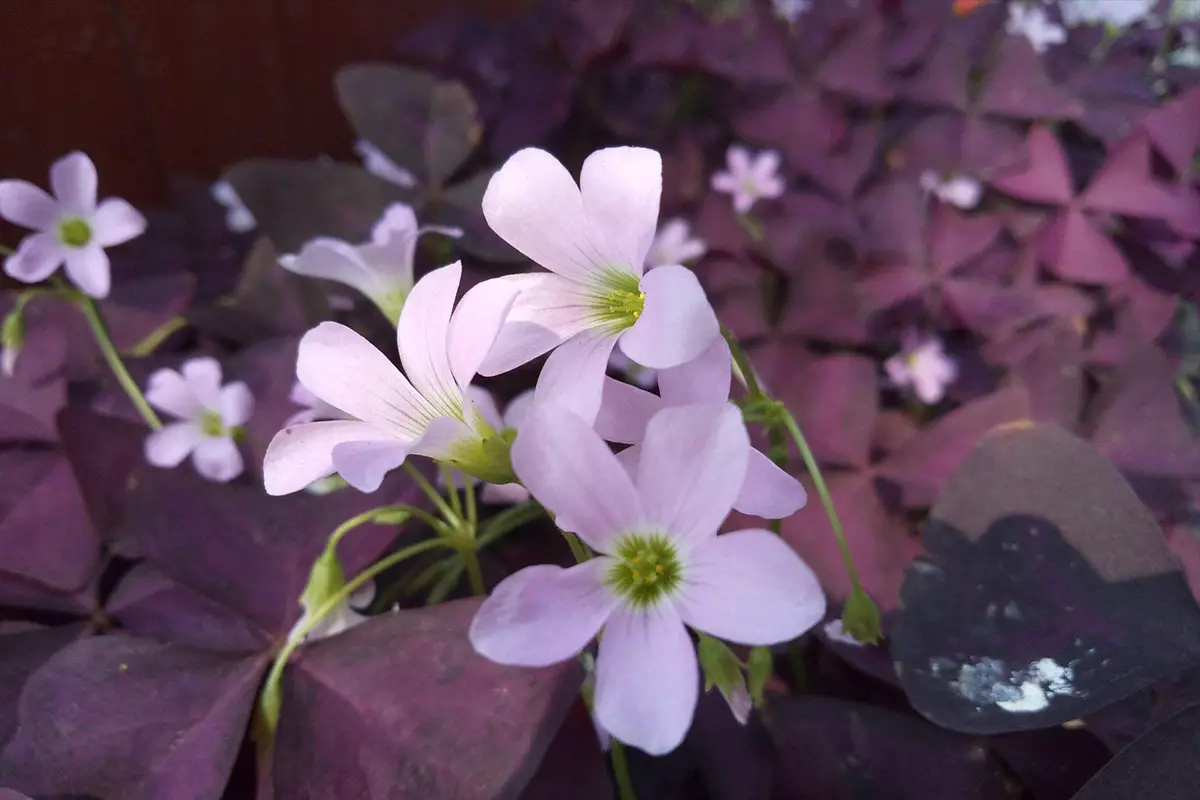
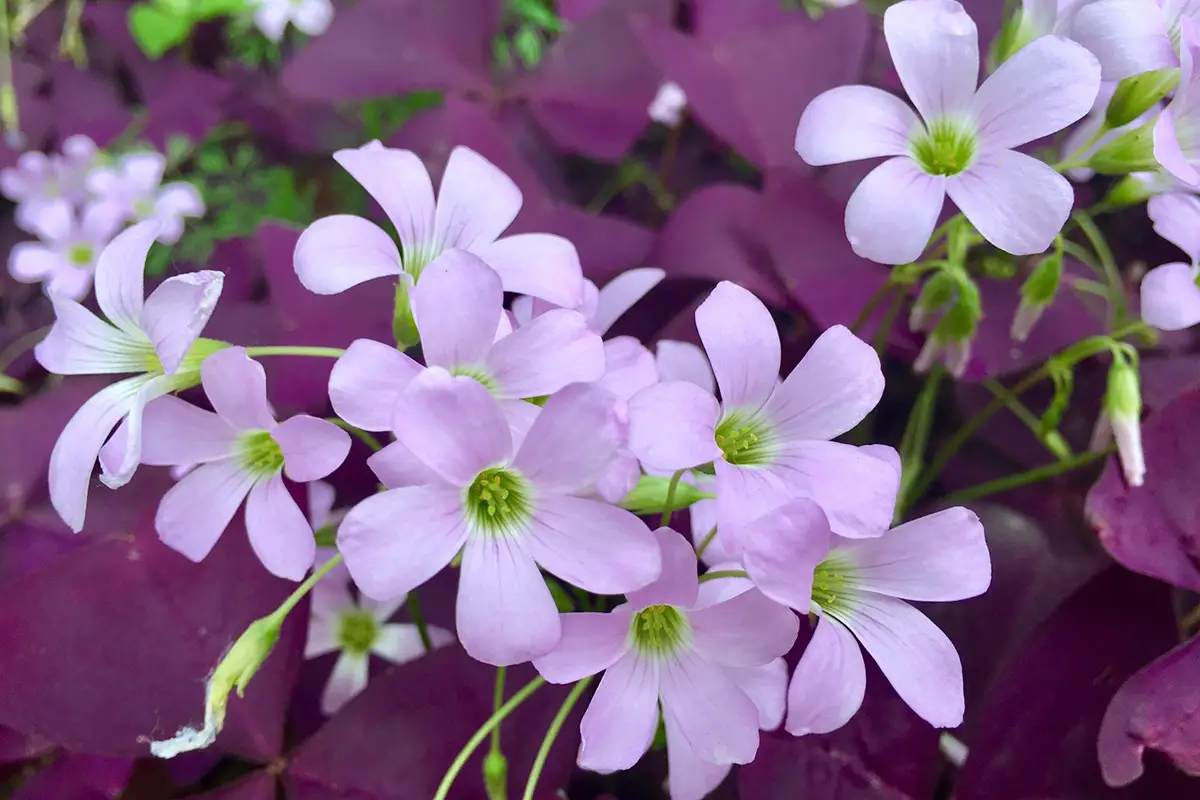
The leaf color is a striking purple-red, with some varieties featuring a butterfly-like deep purple patch on the inner side of the leaf. It boasts umbel-shaped inflorescences with pale purple or white corolla, with the ends exhibiting a light pink hue.
Its flowering period starts in May and can last for several months. The Purple Shamrock prefers warm and humid environments, is fairly drought-resistant, and is suitable for planting on flower bed edges.
I. Growth and Distribution
Native to Brazil in South America, the Purple Shamrock has been introduced and cultivated in China. It thrives in warm, humid environments and has a good tolerance to drought. The optimal growth temperature ranges from 16℃ to 22℃, with a need for ample sunlight.
II. Morphology and Characteristics
The Purple Shamrock is a perennial with a bulbous root system. The plant height ranges from 15 to 30 centimeters (plants are shorter when exposed to ample light). Underground, bulbils continually grow. Its leaves cluster at its base, all being root leaves.
The palmate compound leaves are composed of three leaflets, each of which is triangular in shape, wider than it is long, and soft. The leaf color is a vibrant purple-red, with some varieties featuring a deep purple, butterfly-like patch on the inner side of the leaf.
The inflorescences are umbel-shaped, with 12-14 flowers and a five-petaled corolla in pale purple or white, with the ends exhibiting a light pink hue. In overcast or rainy weather, the pink and pale white flowers remain in bud and do not bloom.
The Purple Shamrock exhibits a sleeping state, with the leaves automatically clustering and drooping at night, unfolding again in the morning. The fruit is an angular shape, furry, and the flowering period lasts from May to November.
III. Cultivation Method
Temperature: Purple shamrocks are not cold-tolerant. When the temperature drops below 10°C, their growth halts, and at 0°C, their leaves wilt.
However, as long as the underground rhizomes aren’t frozen, they can still sprout new leaves and grow normally in April of the following year. During winter, to ensure the leaves stay healthy, the temperature should be kept above 5°C.
The plant also doesn’t tolerate high temperatures. When the temperature exceeds 35°C, the leaves curl, growth slows down, and the plant enters a dormant period. It is necessary to timely spray water on the leaves, provide shade, and increase ventilation.
Light: In spring and autumn, the plant needs ample sunlight. Insufficient light causes the leaves to become dull, the petioles to weaken, and the plant to grow disorganized.
Avoid direct strong light, provide appropriate shade from May to September to prevent sunburn. Shamrocks have a strong phototropism, so when placing them on a balcony or windowsill, regularly rotate the plant to ensure it receives even light.
Water: During the growing period, keep the soil moist, adhering to the principle of “don’t water if not dry, but soak through when watering.” In the hot summer months, when the plant is in a dormant period, spraying water to keep the soil slightly moist is sufficient.
In winter, when temperatures drop below 10°C, water sparingly to prevent the bulbs from rotting. Raining is beneficial for growth, but ensure proper drainage as waterlogged soil can cause the leaves to rot, leading to large-scale plant death. In a dry environment, spray water around the plant to increase humidity.
Fertilizer: When potting, apply enough base fertilizer. During the growing season, to ensure robust growth and glossy leaves, apply a compound fertilizer containing nitrogen, phosphorus, and potassium once a month.
Be mindful of the concentration; too much can burn the bulbs and hamper growth. Stop fertilizing in July and August.
Avoid using a single type of fertilizer, especially nitrogen, as it can turn the leaves from purple back to green, reducing their aesthetic appeal. Be careful not to splash the liquid fertilizer onto the foliage, as it can cause leaf disease.
Pruning:When the plant grows too vigorously, timely removal of dense leaves is necessary to improve ventilation and light penetration, promoting growth.
During regular maintenance, promptly remove any yellow or dead leaves to reduce the occurrence of pests and diseases.
For aesthetic purposes, when the petioles are too long or the plant’s shape isn’t pleasing, you can prune the leaves to let new ones grow out.
IV. Propagation Methods
Seeding
Seeding and seedling cultivation is best done in spring. Given the small size of the seeds, it is advisable to use sieved potting soil for indoor seeding. Moisture should be maintained by covering with a thin film or glass, keeping a germination temperature of 15°C to 20°C.
Germination is expected to occur about two weeks after seeding. Adequate watering and nutrient management are necessary during the seedling stage.
During summer, provide shade, reducing the sunlight exposure by 50% to 60%. Seedlings can be transplanted or potted for viewing within the year.
Division
This plant has strong sprouting power and can be divided throughout the year, although spring and autumn are the best seasons. Uproot the plant or remove it from the flower pot, shake off most of the old soil, and gently separate the bulbs with your fingers.
Whether planting in pots or directly in the ground, it is best to plant 3 to 4 bulbs per pot. Some of the excess leaves can be removed, or the bulbs can be planted without leaves. Spring divisions should be placed in a cool, shady place for care.
Even a bulb without leaves can quickly sprout new ones. Additionally, the bulb is full of buds that can be cut into small pieces and buried in a sand bed. By maintaining a room temperature of 13°C to 18°C, roots and leaves will quickly develop, forming new plants.
In the autumn in Hefei, where I live, divided bulbs can be planted directly in the ground. However, they should be slightly covered with grass for winter frost protection, and only in April of the following year can they be dug up for leaf expansion.
The main method of propagation is division, but seeding or tissue culture propagation can also be used. Division propagation, i.e., dividing the bulbs, can be carried out throughout the year.
When dividing, first uproot the plant, separate the bulbs and plant them. The bulbs can also be cut into small pieces, each piece leaving 3 or more buds, and then cultured in a sand bed. After about 15 days, new plants will grow.
After the roots and leaves are developed, they can be transplanted. Seed propagation is carried out by pot seeding in spring, with a germination suitable temperature of 15-18°C.
V. Disease and Pest Control
Diseases
The main diseases are root rot and leaf spot disease, which can easily occur in purple leaf oxalis under conditions of poor ventilation, high temperature and high humidity.
Prevention and control methods: At the initial stage of the disease, 70% of methyl tobujin wettable powder 1000 times liquid, or 50% of carbendazim wettable powder 500 times liquid, or 75% of procymidone wettable powder 800 times liquid can be used to alternately spray the plants every 7-10 days, spraying 3-4 times consecutively, which has a good effect.
Pests
The main pests are aphids, red spiders, and snails. To control aphids, use 40% Le Guo emulsion 2000 times liquid or 6% imidacloprid emulsion 3000 times liquid for spraying, and pay attention to safety when spraying.
In high temperature and dry seasons, the leaves of purple leaf oxalis are prone to the harm of red spiders. At the initial stage of the outbreak, use 25% Pyridaben wettable powder 1500 times liquid for spraying.
In conditions of dampness, poor ventilation, and shade, the leaves of purple leaf oxalis are prone to snail damage. The feces they excrete can easily contaminate the leaves, leaving ugly gray-white crawling marks on the leaf surfaces where they have crawled.
Snail Enemy or furan dan can be applied to the surface of the pot soil and its vicinity, or tea seed cake powder can be sprinkled, which can effectively kill or drive away snails. Alternatively, applying tobacco residue to the leaf surface can also prevent and control snails.
VI. Value and Other Uses
As a potted plant, the purple leaf oxalis is petite and delicate, adding a touch of scenery to the courtyard, balcony, and home.
With its unique leaf shape, deep purple leaf color, and small white flowers, the color contrast is striking and very eye-catching, making it suitable for planting on the edge of flower beds.
It is very suitable as a ground cover plant in shady, damp places in the garden. If planted in a courtyard lawn or used extensively in residential areas, garden greening and green belts on both sides of roads and rivers, it can spread into a patch, forming beautiful purple color blocks.
If planted in combination with other green and colored plants, different color blocks with strong color contrast will be formed, resulting in a rich three-dimensional sense, clear layers, dignified and elegant special effects, showing its solemn and beautiful features, further enhancing the affinity between people and nature.
It is an excellent potted and ground cover plant. It can also be used for large-scale potted display.
Share
Facebook
Twitter
LinkedIn
Email
Share is Caring.
Peggie
Founder of FlowersLib
Peggie was once a high school mathematics teacher, but she set aside her chalkboard and textbooks to follow her lifelong passion for flowers. After years of dedication and learning, she not only established a thriving flower shop but also founded this blog, “Flowers Library”. If you have any questions or wish to learn more about flowers, feel free to contact Peggie.
Before you go
You May Also Like
We picked them just for you. Keep reading and learn more!
The Arctotis stoechadifolia, also known as the African Marigold or Large-flowered Blue-eyed Daisy, is a perennial herbaceous plant of the Aster family and genus. However, cultivated varieties are often grown…
Silene pendula, commonly known as drooping catchfly or nodding catchfly, is a charming herbaceous plant that typically grows to about 30 cm tall. This versatile plant is characterized by its…
Enkianthus quinqueflorus, also known as the Lantern flower or Hanging Bell Apple, is a perennial semi-shrub with upright stems. It grows to a height of 50-200 centimeters and has a…
The Neomarica gracilis, It is a perennial herbaceous plant of the Iris family, native to Mexico to Brazil. It is also known as butterfly flower or jade butterfly. Brazilian iris…
The Hibiscus syriacus ‘Double Pink’, a variant of the Hibiscus family within the Malvaceae family, is a perennial shrub that grows rapidly and can be planted once and harvested for…
Cryptostegia grandiflora, a plant belonging to the Cryptostegia genus and the Apocynaceae family, is a woody vine that produces a white latex. Its branches are climbing in nature. The leaves…
Wisteria floribunda, also known as Japanese Wisteria, is a species in the pea family’s wisteria genus. This deciduous vine is a large climber with reddish-brown bark. Its pinnate leaves are…
The Cardiocrinum cathayanum, is a perennial herbaceous plant of the lily family. It boasts a robust and upright stature, growing up to 150 cm tall. In spring, it develops large…
The Rhododendron simiarum belongs to the Rhododendron family and genus. Its elegant shape coupled with milky white or pink flowers set against green leaves make it particularly eye-catching whether grown…


 English
  العربية
  Bahasa Indonesia
  Deutsch
  Français
  Italiano
  Nederlands
  Português
  Русский
  日本語
日本語