The Oriental Pearl is a type of miniature lotus flower that is grown in pots or bowls. It is a cultivated variety of the bowl lotus, which is characterized by its medium to small stature. The leaves are round and shield-shaped, with sturdy petioles covered in short spines.
The flower features double petals, most of which are peach-shaped, and the petals themselves are red or pink and elliptical in shape.
Blooming from June to September, each flower measures 10-15 cm in diameter and is suitable for potted cultivation, making it a perfect addition to homes or offices.
I. Morphology and Characteristics
This perennial aquatic herb has horizontally growing rhizomes which are thick and swollen in between the nodes. Multiple vertical air channels can be found inside, and black scale leaves grow on top while fibrous adventitious roots grow below.
The leaves are round and shield-like, with diameters ranging from 25 to 90 cm, and a slightly wavy edge. The shiny upper surface is coated with a white powder, while the veins on the lower surface radiate from the center, branching once or twice.
The stout, cylindrical petiole is 1-2 m long and hollow, with small spines scattered on the surface. The flower stalk is as long as, or slightly longer than, the petiole and also has small spines.
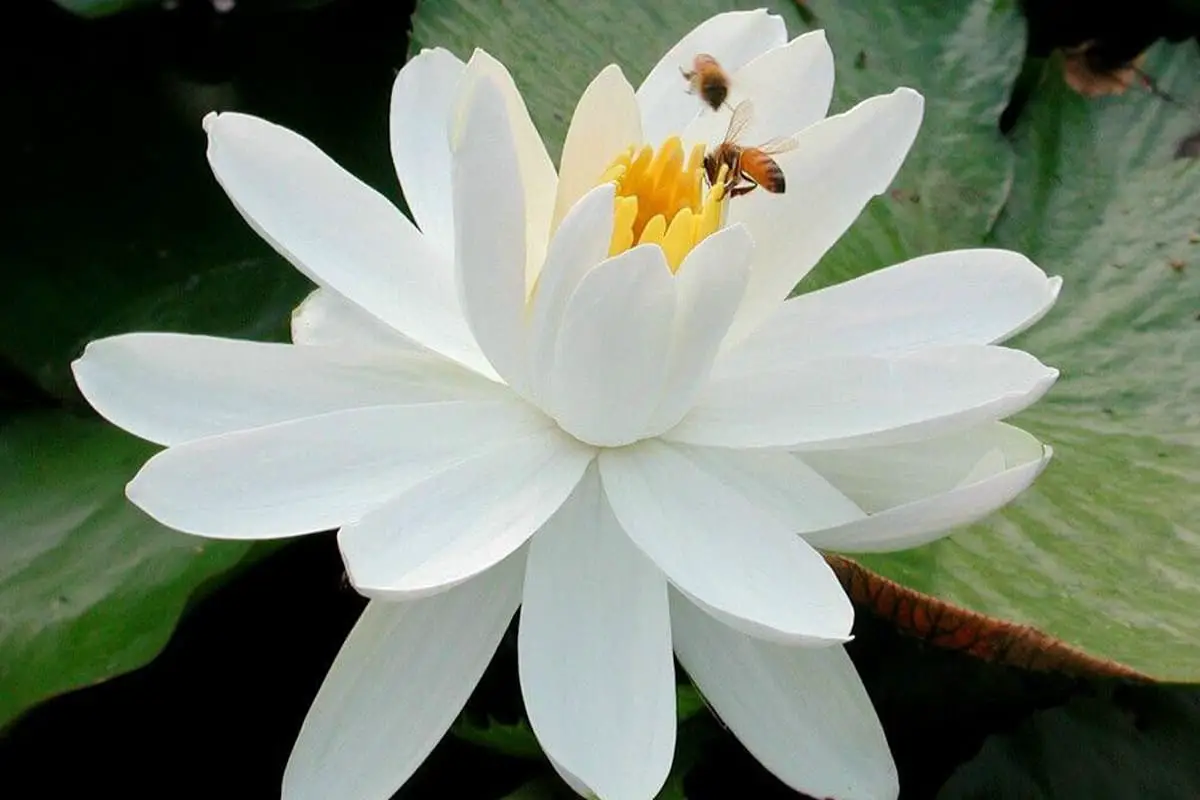
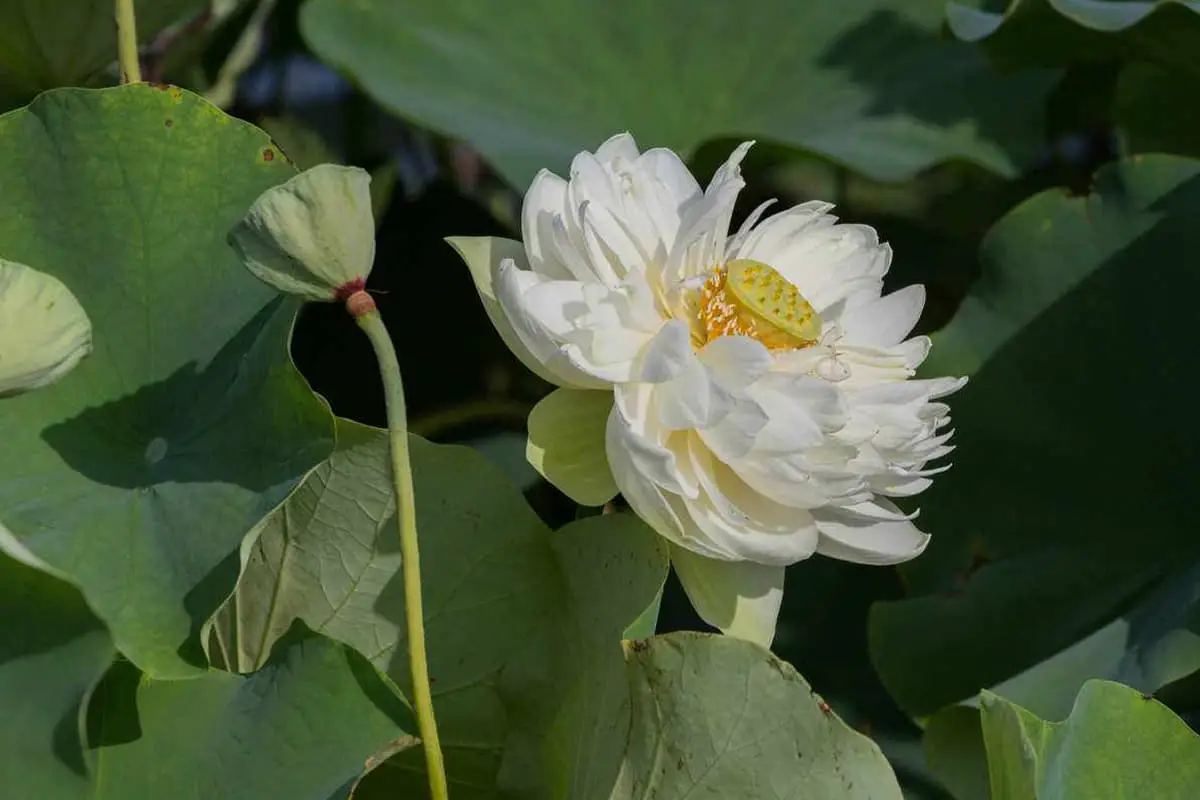
The flower is beautiful and fragrant, with a diameter of 10-20 cm. The petals are red, pink, or white, rectangular to ovate in shape, and gradually become smaller from outside to inside. Sometimes they turn into stamens with rounded or slightly pointed ends.
The anthers are strip-like, the filaments are slender and grow below the torus. The very short style has a terminal stigma. The torus (lotus pod) has a diameter of 5-10 cm.
The nut is elliptical or ovate, 1.8-2.5 cm in length, with a leathery, hard fruit skin that turns dark brown when ripe. The seed (lotus seed) is ovate or elliptical, 1.2-1.7 cm long, with a red or white seed coat.
The flowering period is from June to August, and the fruiting period is from August to October.
Bowl lotus is a kind of miniature lotus flower, a perennial rhizomatous aquatic plant. The underground stem is thick with nodes, known as lotus root, which grows horizontally in the mud. In between the nodes, roots grow and leaves sprout.
The leaves are entire, shield-shaped, dark green, rough, and covered with short blunt spines. Between the spines is a waxy white powder. There are dense rigid spines growing inversely on the petiole.
The leaves can be divided into “coin leaves” (the first leaves produced by the terminal bud), “floating leaves” (the first leaves that grow larger than coin leaves from the lotus root and float on the water surface), and “standing leaves” (the later leaves that sprout from the lotus root and stand above the water surface).
The flower is single, at the top of the flower stalk, peach-shaped or cylindrical, usually blooming but not fruiting. Propagation is through the underground stem (lotus root). The flowering period is from June to September.
This variety has peach-shaped buds in rose red. The flower is pink, with a diameter of 10-15 cm. It is a double-petal type with densely packed petals. Most of the stamens and pistils are transformed into petals, and it does not bear fruit.
II. Living Habits
Bowl lotuses thrive in abundant sunlight, unable to form flower buds if exposed to less than 4 hours of light daily. They need to be placed on a sun-facing balcony or window sill during their growth period, receiving full-day sunlight.
When the floating leaves cover the surface of the pot, they should be promptly pressed into the potting soil to prevent shading and maintain air circulation.
The bowl lotus is delicate, requiring appropriate shading around noon in summer and early autumn to avoid direct strong sunlight, which could cause the leaves and petals to scorch.
The bowl lotus flourishes in the heat of summer. It sprouts at 8℃-10℃, with the lotus whip beginning to elongate at 14℃, the growth and development temperature is 23℃-30℃, it blooms above 28℃, growth slows above 35℃, and it stops growing, even dying, at 40℃.
It dislikes exposure to sudden strong sunlight or strong winds after rain. It grows new lotus roots at 25℃. The bowl lotus prefers strong light, which benefits its development. It also likes water but fears flooding.
Deep water can cause the leaves to rot. The water should be shallow at first, deepening gradually. It loves fertilizer but is sensitive to it, with excessive fertilizer causing the stems to rot. Base fertilizer should be sufficient, and additional fertilizer should be minimal.
Its soil requirement is not strict; it prefers fertile, slightly acidic, clayey soil, but general fertile river mud or vegetable garden soil is also suitable. It takes about 60 days from planting to flowering.
III. Cultivation Method
Seed Treatment
The first step is to crack the seeds. The fruit skin of the lotus seed has a strong and thick special structure. After the seed is fully mature and dry, it is not easy for water and air to penetrate, the respiration action is very slow, and it is in a forced dormant state.
Hence, lotus seeds can be buried in the soil for hundreds or even thousands of years without sprouting or rotting. This is the reason for the longevity of lotus seeds.
To allow lotus seeds to absorb water and oxygen after sowing, break the forced dormant state, and enter the germination growth, it is necessary to crack the shell before the seed germinates.
The lotus is a reverse ovule, and the embryo bud is born at the top of the seed. When cracking the shell, the base of the seed should be broken, that is, the end where the seed is attached to the flower receptacle, which is the indented end of the lotus seed.
You can use scissors or pliers to break it. Before sowing, you generally just need to wear down the pericarp (i.e. the hard shell of the lotus seed) until you see the brown seed skin. When cracking the shell, just make a 2-3 mm crack at the base, don’t clamp too deep to avoid injuring the embryo.
After soaking the seeds for a day, when the embryos absorb water and inflate, and the pericarp softens when it absorbs water, you can peel off 1/3 of the pericarp along the cracked place by hand, exposing the embryo in order to facilitate the lengthening of the embryo bud.
It should be noted that the shell cannot be too large or too much. If you remove all the hard shell of the lotus seed, the embryo bud will lose its protection and it is very easy to rot and die.
The second step is to immerse the seeds to promote germination. Immerse the cracked seeds in warm water of about 50 degrees. The water for soaking must be clean, free of grease and dirt, and do not use water above 50 degrees, otherwise it will affect germination.
The water temperature naturally drops, and finally stays at around 30 degrees, not higher than 40 degrees or lower than 20 degrees.
If the water temperature is higher than 40 degrees, although the seeds germinate quickly on the first day, the subsequent growth is inhibited. When the water temperature is less than 20 degrees, the seed germination and growth are too slow.
When a small amount of seeds are soaked at home, they can be kept in a thermos to maintain the temperature. Under the condition of 30 degrees, generally soaking the seeds for three days can germinate, and the embryo bud extends from the cracked place.
During this period, the water needs to be changed 1-3 times a day, and seeds that cannot germinate should be removed in time. Under normal circumstances, seeds that do not germinate for 7 days will not germinate.
Seeds without germination ability often float on the water surface, the embryo bud turns yellow, the cotyledons rot and smell bad. (You can also directly use tap water for soaking, there is no need for warm water or heating, and seeds can germinate in about two days.)
Container Selection
Bowl lotus is often cultivated in refined bowls or basins with water, such as small colored pots, which look very beautiful.
Even if using a bowl, it must be about 25 cm in diameter and over 20 cm deep, as the growth of the bowl lotus can be limited if the container is too small, making it hard to bloom.
Soil and Fertilizer
After seeds sprout, they should be water-cultivated for 5-7 days at around 25°C. During water cultivation, the lotus seedlings have weak absorption from their roots and mainly rely on nutrients provided by the seed embryo, so they generally do not need fertilization.
During water cultivation, the water depth should be maintained at about 10 cm and there should be sufficient sunlight; water should not be frequently changed or stirred to avoid excessive elongation of leaves due to frequent changes in their growth direction; the leaf stalk should be kept in the water with the leaf freely spreading on the water surface.
Once the first leaf has unfolded and the second leaf is about to unfold, and white roots have grown, they can be firmly planted.
About 1% of base fertilizer should be applied to the soil in the bowl lotus container, and then pond mud should be added to fill up to 2/3 of the pot. As the soil of the bowl lotus is scarce and nutrients are insufficient, fertilization should be frequent but light.
After a year of cultivation, the fertility decreases and the underground rhizomes are dense, so it is advisable to change the pot and soil before budding every early spring.
Planting Management
Once the bud has grown to about 10 cm, it can be transplanted. According to the needs of bowl lotus cultivation, after choosing the soil and filling it into the flower pot, add clean water and mix the soil with the fertilizer evenly.
After the muddy water clarifies, the water-cultivated seedlings can be firmly planted in the center of the flower pot, with the seed fully buried in the mud, allowing the leaves to freely spread on the water surface.
During transplantation, care should be taken not to break the leaf stalk, as it may affect growth. After planting, maintain a water layer of 3-5 cm, but never submerge the leaves in water. Bowl lotus loves light, so the flower pot should be placed in a sunny spot.
Seedlings are delicate and may get scorched under the sun, but they generally sprout and survive. Don’t over-water, which can raise the water temperature and promote growth. After growing 7-13 floating leaves, erect leaves can appear.
Connect the seed lotus head to tail and plant it in the pot with the bud facing the center of the container.
After planting, add water to 2-3 cm, let it dry in the sun, then add water again, repeating this two or three times, which helps the seed lotus and soil bind together tightly and prevents it from floating. In summer, water must be added to the bowl lotus every day.
Pest and Disease Control
Bowl lotus is generally susceptible to aphids, which can be sprayed with a 3000 times dilution of chrysanthemum joy and grease.
IV. Propagation Methods
Division
Before and after Tomb-Sweeping Day, select robust rhizomes, cut every 2-3 nodes into a section, each section must have a top bud and a tail node, and plant them separately in pots.
At this time, special attention should be paid to prevent storms. If the leaves are blown and broken, the lotus will not develop well, affecting flowering in the second year.
Seeding
Before sowing, use a file to break the seed coat, then soak it in clean water, change the water once a day, and plant it after 2-3 leaves grow out. Maintain a water depth of about 2 cm in the early stage of planting, and keep it at 10 cm after the erect leaves grow out.
V. Value and Others
The flowering period of the bowl lotus is in the midsummer, which is the off-season of flowers, and it nicely fills the gap in the flowers. Raising a pot of bowl lotus on the book case shelf adds a unique charm and is a very fashionable ornamental flower.


 English
  العربية
  Bahasa Indonesia
  Deutsch
  Français
  Italiano
  Nederlands
  Português
  Русский
  日本語
日本語