600+ Types of Flowers A To Z (With Names and Pictures)
Types Of Flowers By Names (A-Z) Types Of Flowers By Color Types Of Flowers By Season Types Of Flowers By Blooming Time 600+ Types of Flowers No. Flower Name No.…

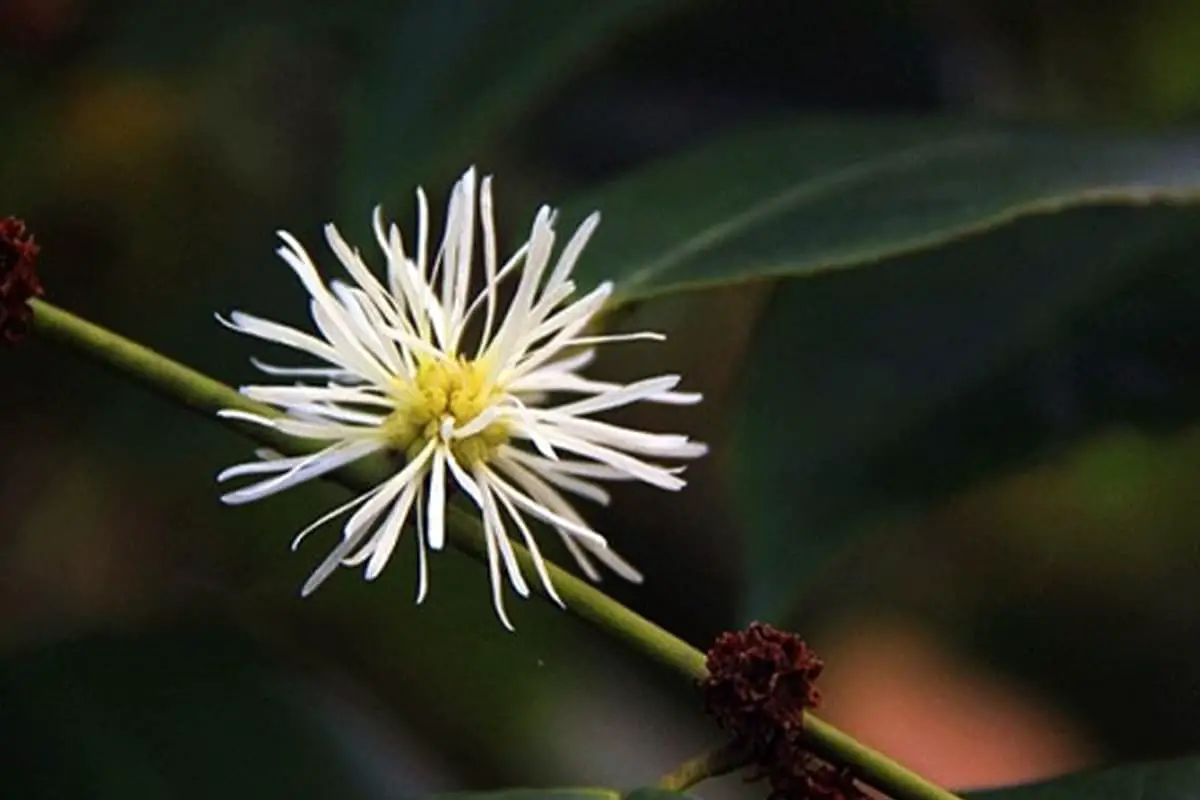
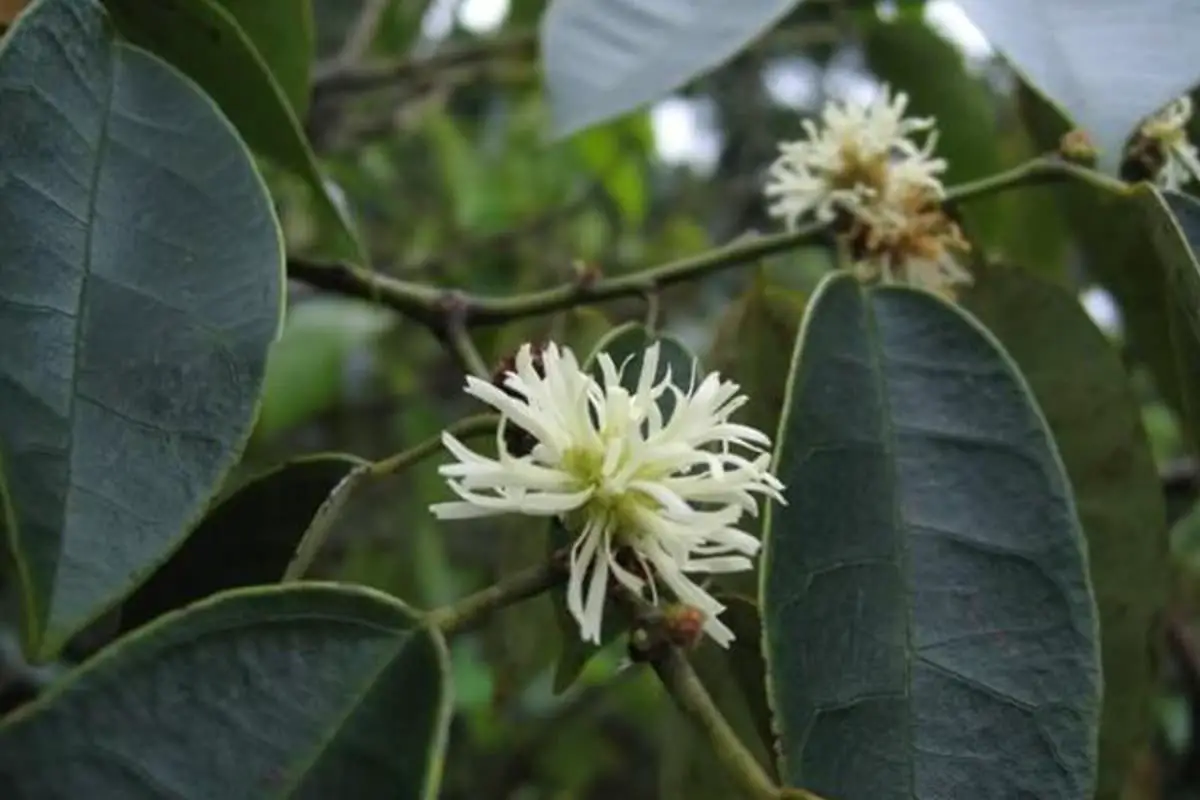
Loropetalum subcordatum, or Four-Medicine Flower, is a species of evergreen shrub or small tree in the witch hazel family, Hamamelidaceae. It can reach up to 12 meters in height. The Four-Medicine Flower is found in a narrow region around 22°N latitude in Hong Kong, Guangxi, Guangdong, and Guizhou in China, which falls within subtropical and tropical monsoon regions with optimal hydrothermal conditions.
The average annual temperature is 20-22℃, and the annual rainfall is 1350-2200 mm. It grows naturally in the evergreen broad-leaved forests on hills and stony mountains below 600 meters above sea level. The soil is fertile, red, acidic, rich in humus, and has a high water content.
The Four-Medicine Flower is distributed in a narrow region around 22°N latitude in Hong Kong, Guangxi, Guangdong, and Guizhou in China. This region is part of the subtropical and tropical monsoon areas with favorable hydrothermal conditions. The average annual temperature is 20-22℃, and the annual rainfall is 1350-2200 mm. The species naturally grows in the evergreen broad-leaved forests on hills and stony mountains below 600 meters above sea level.
In Zhongshan, Guangdong, the species grows in the secondary evergreen broad-leaved forest along the valley streams around 150 meters above sea level at Wuguishan. The soil is fertile, red, acidic, rich in humus, and high in water content.
The Four-Medicine Flower is an evergreen shrub or small tree that can grow up to 12 meters high. The twigs are hairless. The leaves are alternate, oval or elliptical, 8-12 cm long, and 3.5-5 cm wide. The leaf apex is short and pointed, the base is round or slightly heart-shaped, and the margin is either entire or slightly serrated in the upper half. The petiole is 1 cm long, and the stipules are lanceolate and covered with star-shaped hair.
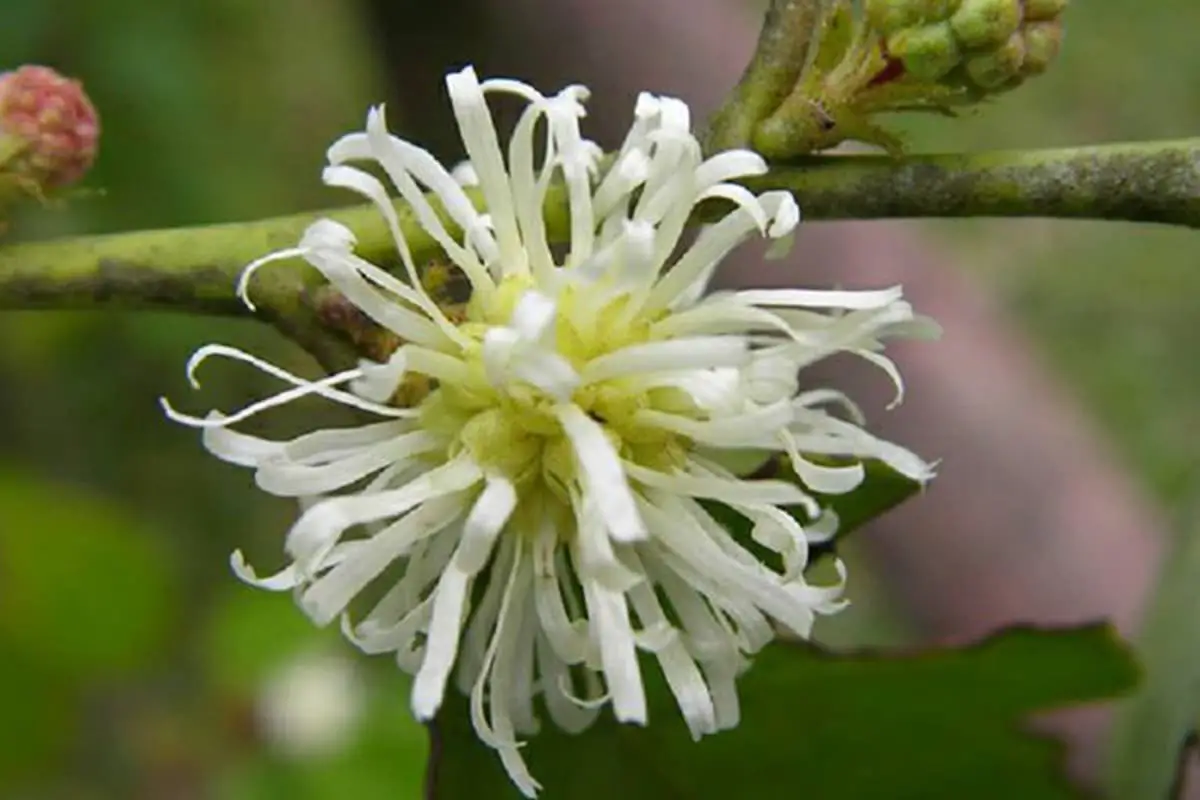
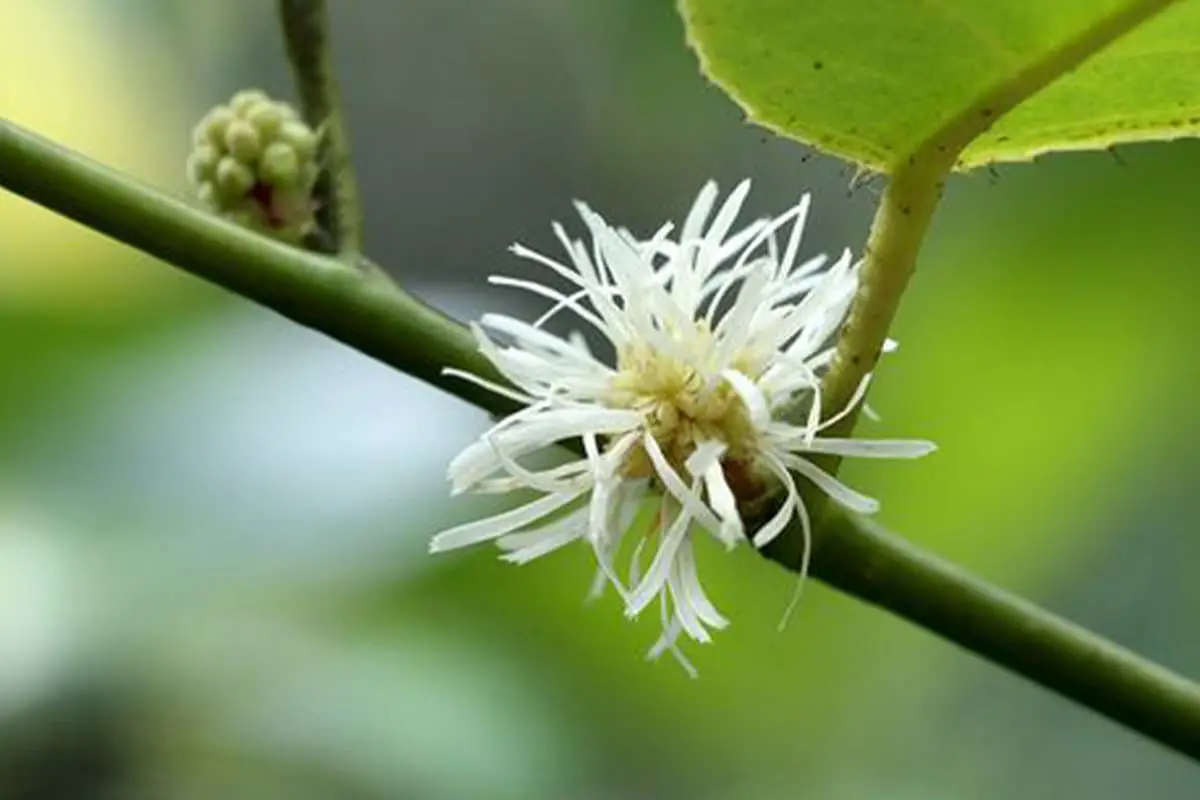
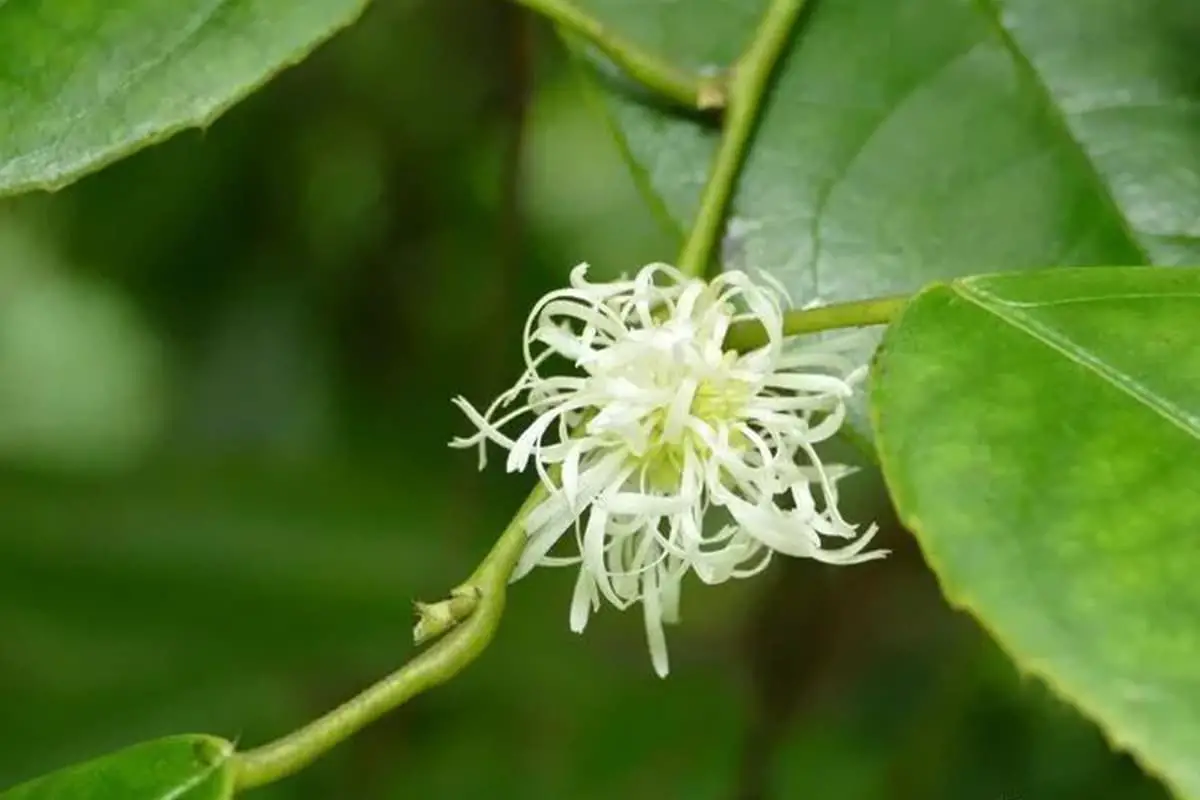
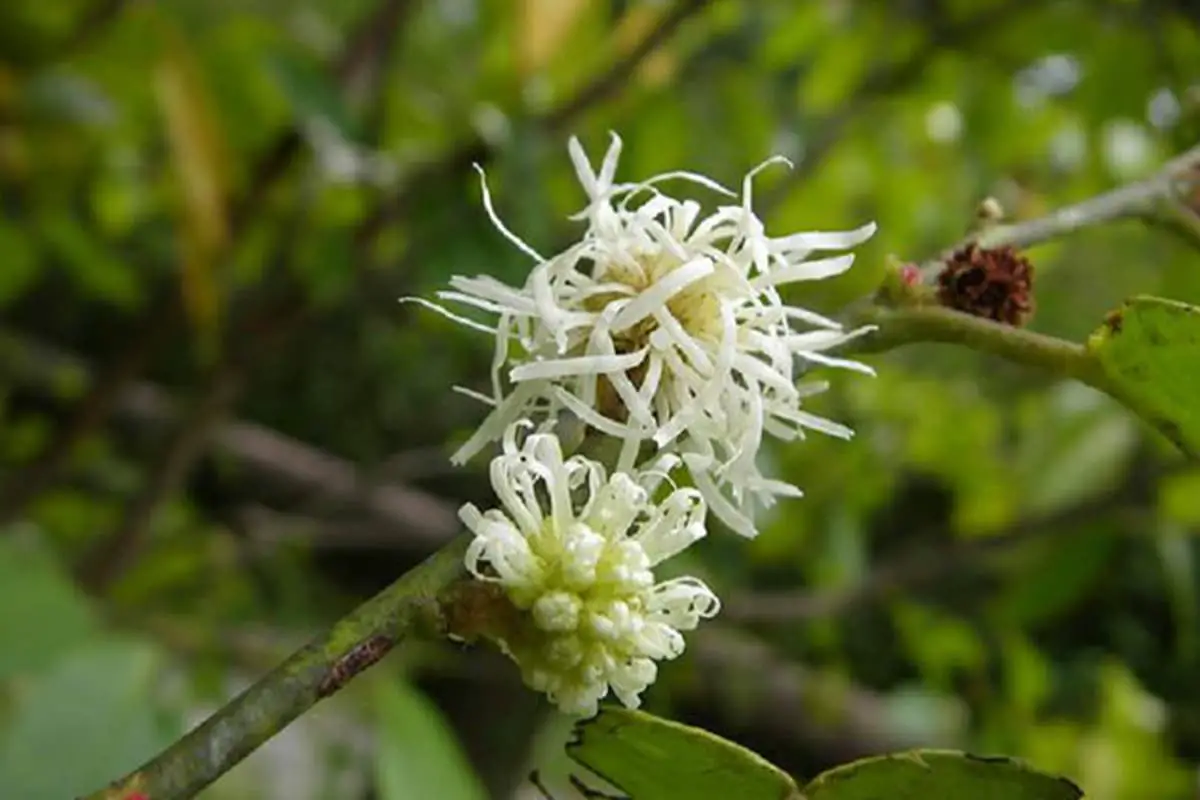
The flowers are arranged in a corymbiform inflorescence and are axillary with about 20 flowers. The peduncle is 4-5 cm long. The flowers are white, bisexual, and the calyx tube is 1.5 mm long and covered with star-shaped hairs. There are 5 sepals, 5 petals that are strap-like and 1.5 cm long.
The stamens are also 5 in number, with very short filaments and 4-chambered anthers that open up petaloid. The staminodes are forked. The ovary is semi-inferior, two-chambered, and covered with star-shaped hairs. The capsule is nearly spherical, 1-1.2 cm in diameter, covered with star-shaped soft hair, and has a persistent calyx tube at the base. The seeds are long oval, 7 mm long, black, with a white hilum.
Cuttings can be performed from early March to late October.
Choose semi-woody branches that sprouted in the current year as cuttings. The hard branches, semi-tender branches, and tender branches of the Four-Medicine Flower are clearly distinguishable and easy to select. Hard branches are densely covered with elongated and circular brown lenticels; semi-tender branches are smooth with a few brown dot-shaped lenticels; tender branches are smooth without lenticels, soft, and covered with white powder.
Cuttings from branches that are too tender or overly woody have a low survival rate. Collect cuttings in the morning, evening, or on cloudy days. After collecting the branches, move them to a cool place to cut the scions. The scions should contain 2-3 buds and be controlled at 10-15 cm long. The top cut is made flat 1 cm from the top bud, and the bottom cut is made a little slanting 0.5 cm from the bottom bud.
The cut should be smooth for easy healing. Leave 1 leaf at the top of the scion and cut off all the remaining leaves, leaving only 1/3 of the retained leaf. Bundle the cut scions and soak them in cold water for 4-5 hours, ensuring that the water covers all the branches.
Among the three substrates of perlite, river sand, and ordinary garden soil, the rooting rate of cuttings in perlite is the highest, followed by river sand, and the lowest in garden soil. Before cutting, spray the substrate with a 3000-times solution of 96% captan wettable powder for disinfection.
The rooting rate of cuttings without growth hormone treatment is very low, only about 40%. Smearing the basal 3-5 cm of the cuttings with ABT1 or 2 rooting powder, or soaking them in a solution of 100, 500 mg/L indole acetic acid (IAA) for 30 minutes, can increase the rooting rate to 83%.
The cutting bed can be arranged according to local conditions, and both pot and ground cuttings are possible. Before cutting, the substrate should be thoroughly watered. After soaking the cuttings in water, immerse them in an 800-times solution of 50% carbendazim wettable powder for 10 seconds to sterilize them. Finally, they can be cut after treatment with growth hormone.
When cutting, use a thin bamboo stick to poke a hole in the substrate and then insert the branch. The depth of the hole should be consistent with the depth of the cutting in the soil, about 1/3 of the length of the cutting.
After the cutting is inserted vertically, use your fingers to press the soil around the branch tightly, leaving no gaps. The distance between the cuttings should be such that the leaves of two cuttings just touch. After cutting, water with a sprinkler head. The water should not be excessive and should be evenly poured.
The Four-Medicine Flower likes warm, moist, and semi-shady environments. In Guangzhou, the main tasks are shading and watering. Outdoor cuttings require the construction of a shade net, with a shading degree preferably at 70%.
In the hot summer and dry autumn, water should be sprinkled 3-4 times a day to always keep the soil moist and the branches fresh. However, be careful that overly wet soil or water accumulation can cause branch rot. The cuttings will root in 25-30 days, and new leaves will sprout around 40 days.
At this time, the seedlings can absorb nutrients. Spray the leaves with a water solution made of 0.2% urea + 0.2% dipotassium phosphate, once every half a month. After 3 months of cultivation, the seedlings can be transplanted, and the survival rate can reach 95%. The maintenance management after transplantation is the same as for general greening tree species.
The Four-Medicine Door has significant scientific significance in systematic research.
Protection Level: The State Council approved the “National Key Protected Wild Plant List (First Batch)” Level II on August 4, 1999.
International Union for Conservation of Nature (IUCN): Vulnerable (VU)
Protection Measures
The plant is included in the protection list and effective measures are taken to ensure its preservation.

Peggie was once a high school mathematics teacher, but she set aside her chalkboard and textbooks to follow her lifelong passion for flowers. After years of dedication and learning, she not only established a thriving flower shop but also founded this blog, “Flowers Library”. If you have any questions or wish to learn more about flowers, feel free to contact Peggie.
 English
  العربية
  Bahasa Indonesia
  Deutsch
  Français
  Italiano
  Nederlands
  Português
  Русский
  日本語
日本語