600+ Types of Flowers A To Z (With Names and Pictures)
Types Of Flowers By Names (A-Z) Types Of Flowers By Color Types Of Flowers By Season Types Of Flowers By Blooming Time 600+ Types of Flowers No. Flower Name No.…

The Lilium distichum Nakai, also known as the Curled Lotus, Old Wa Taro, Wheel Leaf Lily, Umbrella Egg Flower, and Mountain Dan Flower, is a perennial bulbous flower from the lily family and genus.
The bulb is white and ovate with nodes. The bracts are leaf-like, and the flowers are pale orange-red with purple-red spots. The petals slightly curl back and the capsule is inverted ovate. It blooms from July to August and bears fruit in September, carrying significant ornamental value.
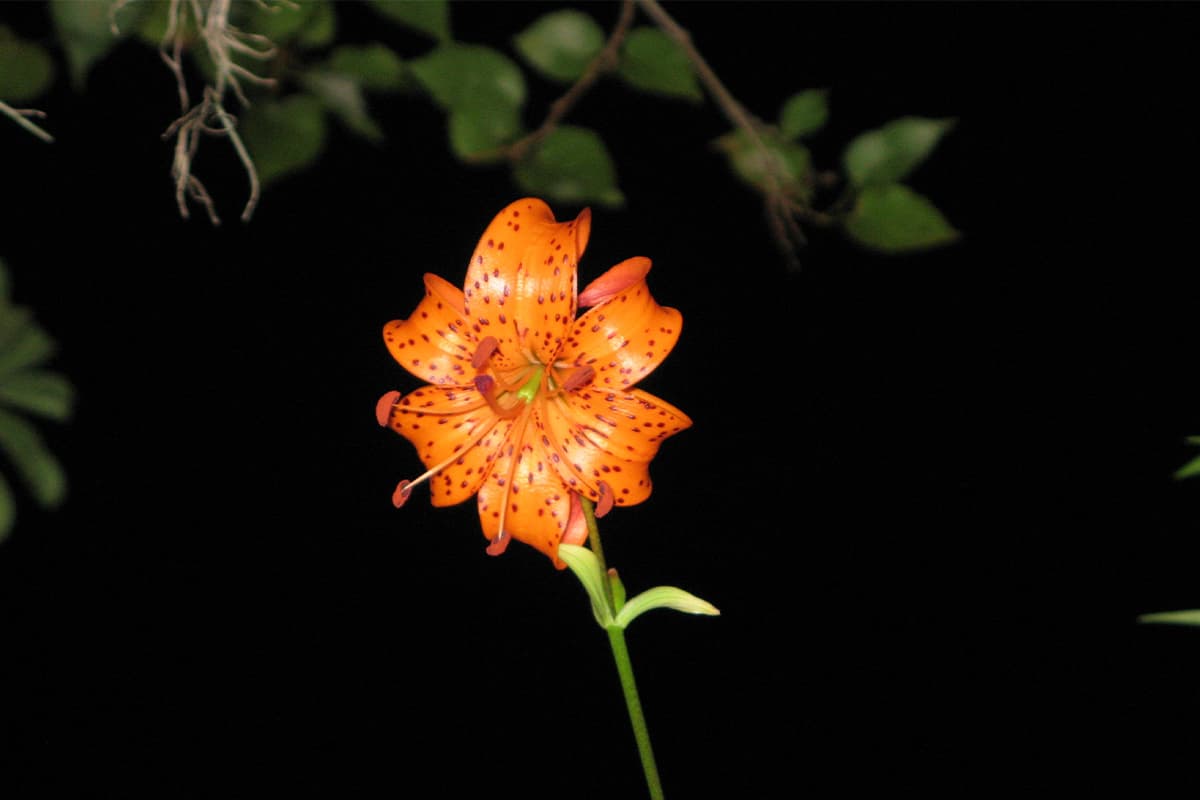
This perennial bulbous flower has an ovate bulb measuring 2.5-3 cm in height and 3.5-4 cm in diameter. The scales are lanceolate, 1.5-2 cm long, 4-6 mm wide, white, and notched. The stem is 60-120 cm tall with small papillary protrusions.
There are approximately 7-9 leaves on the stem, with a few scattered leaves. The leaves are inversely lanceolate to rectangular lanceolate, 8-15 cm long and 2-4 cm wide. The apex is acutely or gradually pointed, and the base narrows. The plant is hairless.

It bears 2-12 flowers arranged in corymbs. The bracts are leaf-like, 2-2.5 cm long, 3-6 mm wide. The pedicel is 6-8 cm long. The flowers are pale orange-red with purple-red spots. The petals slightly curl back, are 3.5-4.5 cm long and 6-1.3 mm wide.
The gland on both sides of the petal is not papillary. The stamens are shorter than the petals. The filaments are about 2-2.5 cm long, hairless, and the anthers are linear, reaching 1 cm in length. The ovary is cylindrical, 8-9mm long, 2-3mm wide.
The style is about twice the length of the ovary, and the stigma is spherical and three-lobed. The capsule is inverted ovate, 2 cm long and 1.5 cm wide.
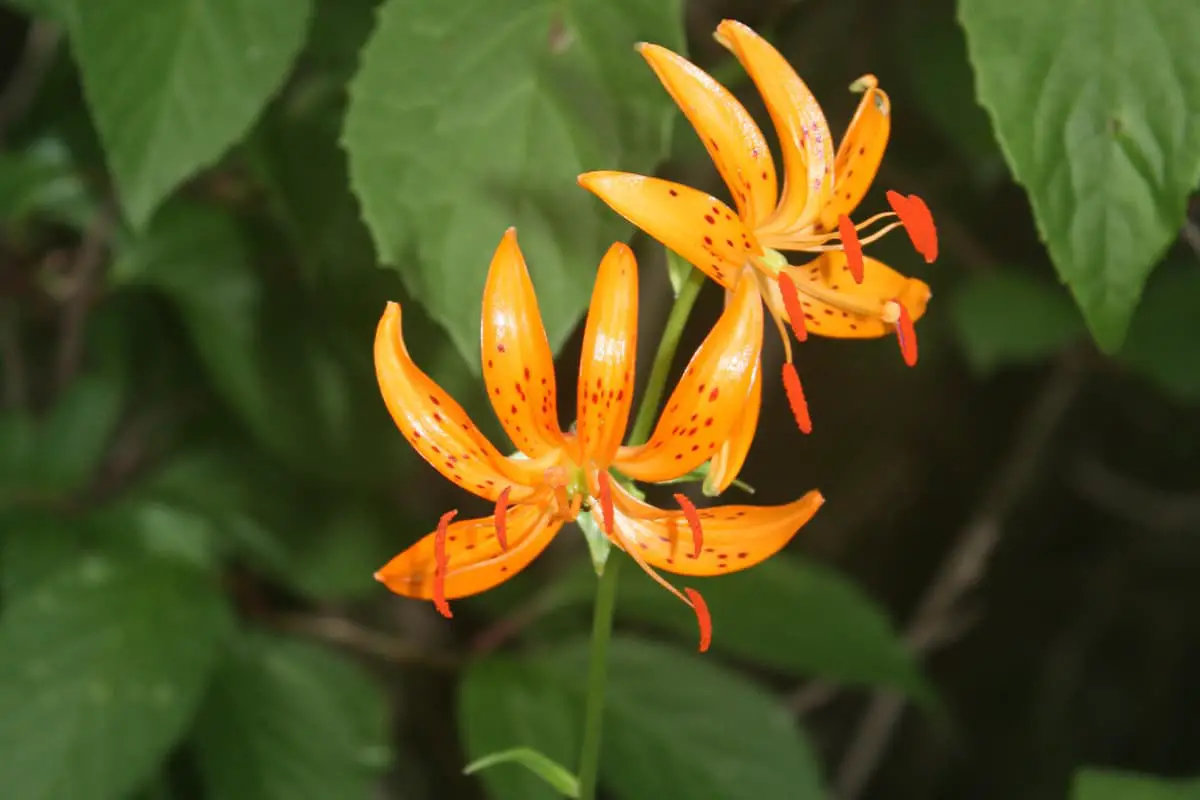
The Northeast Lily prefers higher ground with loose, fertile, well-drained humus-rich soil. It dislikes strong light, preferring scattered light. It likes dry air and slightly moist soil.
It is easy to manage in the early stage of growth, but is prone to disease during rainy seasons in the middle and later stages. It is one of the most difficult lilies to propagate in the Changbai Mountain area.
It is found under forest slopes, at forest edges, along roadsides, or beside streams, at altitudes of 200-1800 meters.
The Northeast Lily has a unique plant shape, upright and robust posture, large and elegant flowers. Its petals are orange-red, as beautiful as a colorful ball, and lifelike. It is an excellent choice for garden greening.
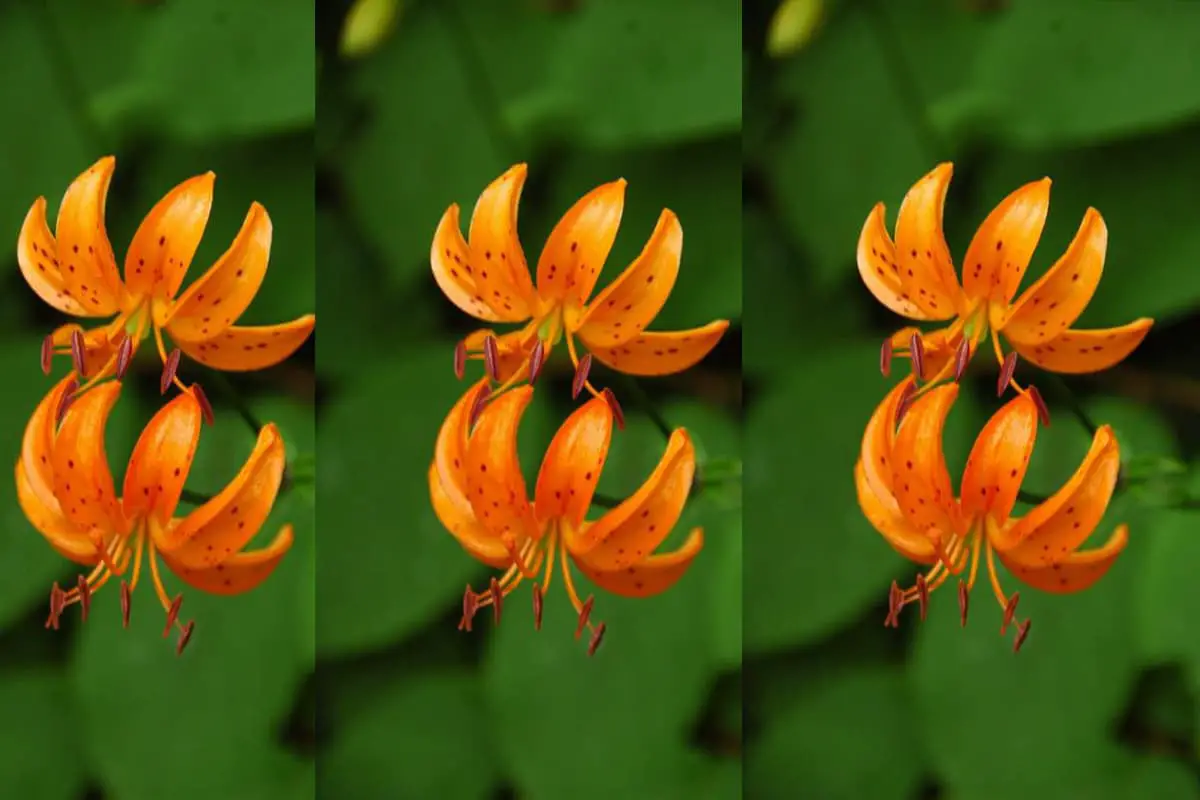
It can be planted under forests or in shrubbery, or dotted in the center of flower beds with multiple plants in one hole, creating a refined and elegant effect.
The bulb of the Northeast Lily is rich in starch, sugars, proteins, carotene, vitamin B1, and other nutrients. It is a superior nourishing food.
In traditional Chinese medicine, the bulb of the lily is known as “Lily”. It is sweet and neutral in properties. It is believed to moisturize the lungs, stop coughing, clear the heart, and calm the mind.
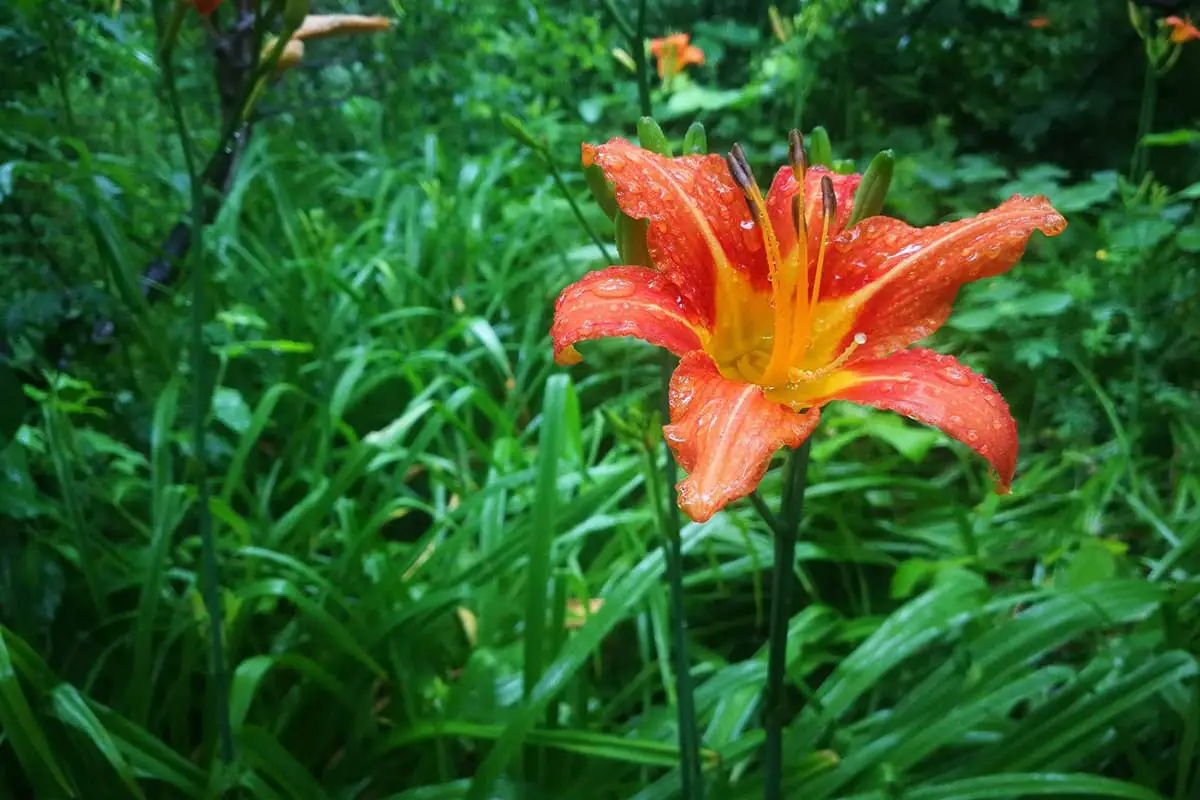
It is mainly used to treat long-term tuberculosis cough, coughing up blood, residual heat from febrile diseases, restlessness, palpitations, mental confusion, neurasthenia, insomnia, and other symptoms.

Peggie was once a high school mathematics teacher, but she set aside her chalkboard and textbooks to follow her lifelong passion for flowers. After years of dedication and learning, she not only established a thriving flower shop but also founded this blog, “Flowers Library”. If you have any questions or wish to learn more about flowers, feel free to contact Peggie.
 English
  العربية
  Bahasa Indonesia
  Deutsch
  Français
  Italiano
  Nederlands
  Português
  Русский
  日本語
日本語