600+ Types of Flowers A To Z (With Names and Pictures)
Types Of Flowers By Names (A-Z) Types Of Flowers By Color Types Of Flowers By Season Types Of Flowers By Blooming Time 600+ Types of Flowers No. Flower Name No.…

The Leptospermum scoparium, a small shrub in the Myrtaceae family, is characterized by its abundant branching with reddish-brown, slender twigs, often covered with downy hair on new shoots.
Its leaves are arranged alternately, linear or narrowly lanceolate in shape. The flowers, which can be either single or double-petaled, come in a variety of colors including red, pink, peach, and white.
The leathery capsules split open at the tip when mature. The flowering season lasts from late autumn to the end of spring. Named for its resemblance to plum blossoms from afar and the fine, pine-like leaves, it is known as “Manuka.”
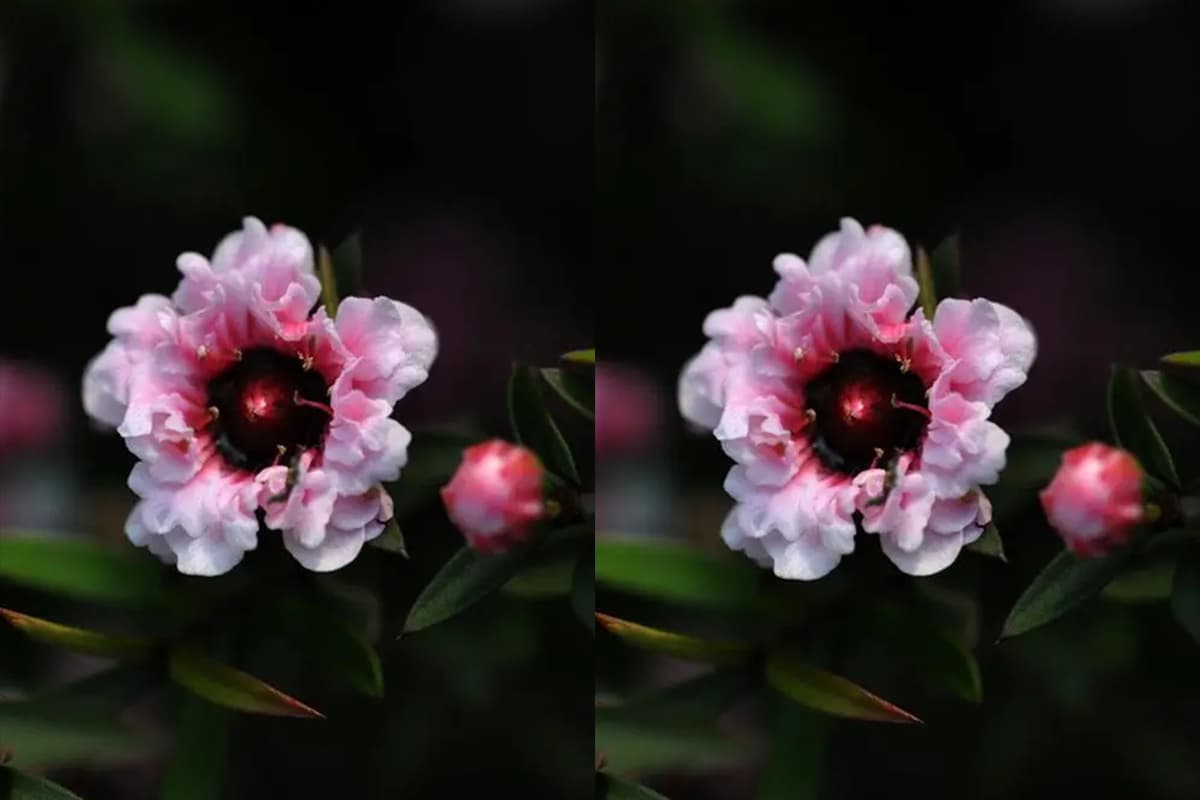
Originally from countries like New Zealand and Australia, Manuka now also grows in regions such as Malaysia and Indonesia. It thrives in warm, moist, and sunny conditions but has limited frost tolerance.
It is not too demanding in terms of soil conditions, but it grows best in acidic soil that is rich in organic matter, well-drained, and loose. The Manuka propagates through cuttings, layering, and seeding.
The Manuka plant has some medicinal value, and its extracted essential oil has potent antibacterial properties, effective against fungi and viruses, and is also used to treat various respiratory diseases.
The double-petaled Manuka flowers, resembling peonies, are also called “pine-leaf peonies.”
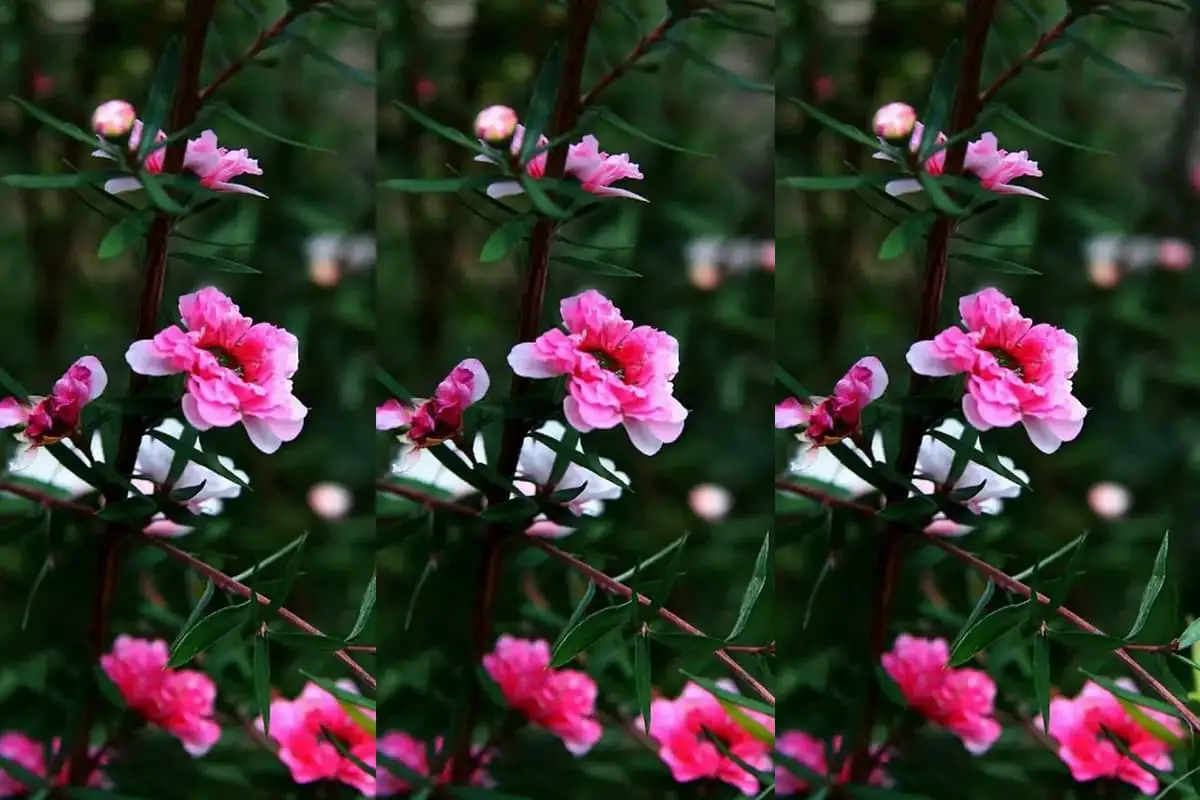
Small but vibrant and exquisitely shaped, they have high ornamental value and are suitable for planting in parks, residential areas, roadside, beside pavilions, in courtyards, by rocks, and alongside ponds in regions with mild southern climates.
The flower language of Manuka signifies victory, determination, and advancement.
Named “Manuka” for its full bloom resembling plum blossoms and fine, pine-like leaves.
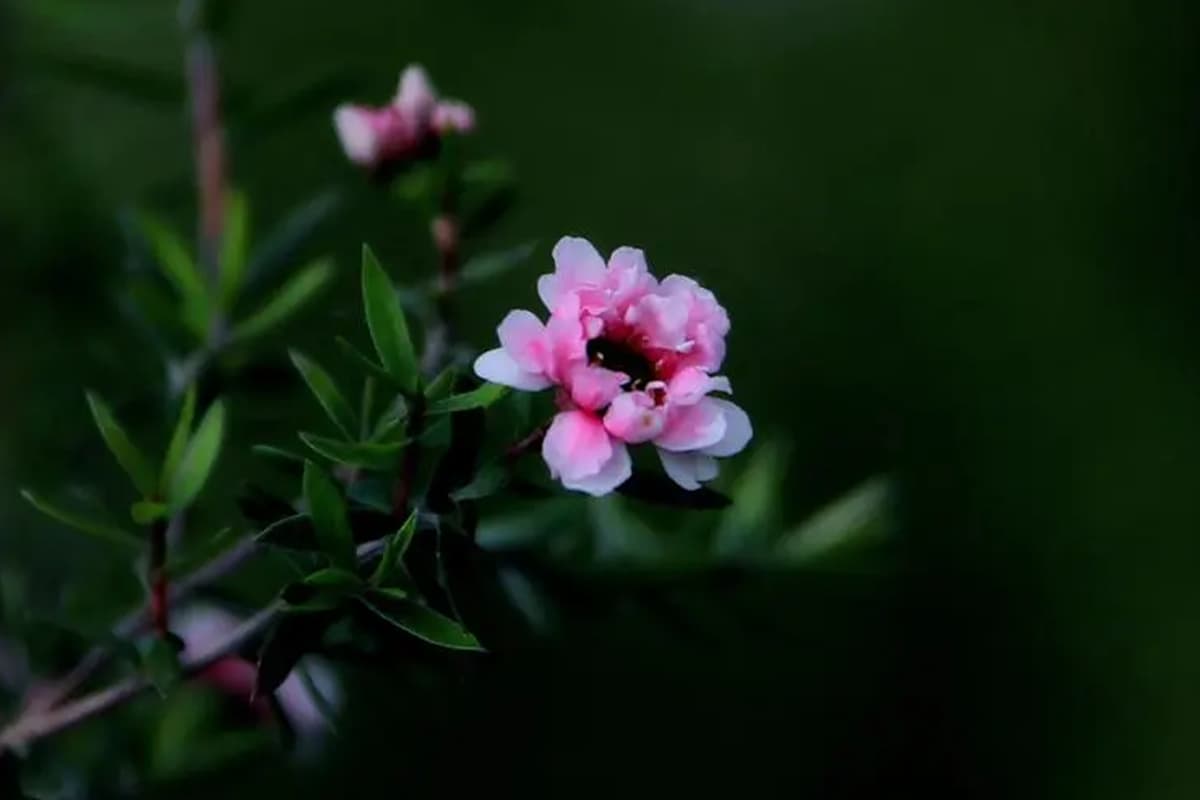
The plant reaches about 2 meters in height, with abundant branching and slender, reddish-brown twigs that are often downy on new growth.
The alternately arranged leaves are linear or narrowly lanceolate, measuring 0.7 to 2 centimeters in length and 0.2 to 0.6 centimeters in width.
The flowers, which can be single or double-petaled, range in colors from red, pink, peach to white, with a diameter of 0.5 to 2.5 centimeters. The natural blooming season is from late autumn to the end of spring. The capsules are leathery and split at the tip when they mature.
The Manuka prefers a warm, moist, and sunny environment and is not very cold-hardy. It is not strict about soil conditions but grows best in acidic soil that is rich in organic matter, well-drained, and loose.
The Manuka, native to countries like New Zealand and Australia, is now found in places such as Malaysia and Indonesia.
The Manuka has limited cold tolerance, requiring temperatures to remain above -1°C during winter. Therefore, in northern regions, it is only suitable for pot cultivation as an ornamental plant, whereas in the milder southern climates, it can be used for garden landscaping.
Propagation of the Manuka can be carried out through cuttings, air layering, or seeding in the spring or autumn. The optimal temperature for seed germination and rooting of cuttings is around 20°C, making it suitable for propagation in the cooler mountainous regions.
The survival rate in hot and humid areas, however, is significantly lower. When planting saplings, pruning the top can encourage branching and form a full canopy.
The Manuka prefers a cool, moist, and sunny environment, with an ideal growth temperature between 18°C and 25°C.
It requires temperatures to remain above -1°C in winter, as it is sensitive to high temperatures and direct sunlight exposure during summer. Adequate light should be provided in other seasons.
While drought tolerant, it flourishes in well-drained, loose, fertile soil rich in humus, with a slight acidity being optimal. It does not tolerate high humidity and poor drainage conditions, including prolonged waterlogging.
Protective measures are necessary in areas with hot summers and cold winters, such as placing the plants under shade structures, tree canopies, or other cool and ventilated areas during summer, along with water sprinkling to reduce heat.
In winter, mulching or positioning near the warmer microclimate of a building’s southern side can offer protection. The ideal site should have good drainage, such as elevated slopes, and avoid low-lying areas.
If the soil is too alkaline, it should be treated with a 5% ferrous sulfate solution to reach an optimal pH of 6.5 to 7.0. In northern regions, indoor pot cultivation is recommended during winter.
During the growing season, apply diluted, mature liquid fertilizer once every one to two months. Keep the soil moist, and ensure proper drainage during the rainy season to prevent waterlogging.
After flowering each year, perform careful pruning to dwarf the canopy and maintain an attractive shape. This also encourages the growth of new flowering branches.
Take care during pruning to remove only those branches that detract from the plant’s shape, leaving about half or two-thirds of the other branches intact.
Since mature, woody branches of the Manuka do not have viable buds, over-pruning can prevent the plant from recovering and growing again.
After pruning, apply a quick-acting inorganic fertilizer to promote growth and ensure flowering for the following year. Since the Manuka’s roots are close to the soil surface, avoid disturbing the soil to prevent root damage.
Leptospermum scoparium is relatively resistant to pests and diseases, though it occasionally suffers from localized yellowing.
To prevent this, maintain moist soil conditions; overly dry soil can lead to desiccation of the leaves.During the rainy season, ensure proper drainage to prevent waterlogging which can cause root rot.
Aside from summer, the plant should receive ample sunlight and should not be left for extended periods in overly shaded areas. In summer, it is vulnerable to high temperatures and direct sunlight which can cause scorching and localized dehydration.
Horticultural Significance: Manuka’s peak blooming season falls between New Year’s Day and the Spring Festival, making it an ideal indoor display to add festive cheer during these celebrations.
Beyond being potted, Manuka can also serve as a garden shrub or as cut flowers for arrangements.
Medicinal Value: Manuka can be distilled into an essential oil with potent antiviral and antifungal properties, making it suitable for treating various respiratory diseases.
Its pleasant fragrance has also made it popular in aromatherapy treatments abroad for a variety of ailments.
The floral emblem of Manuka represents victory, resolve, and ascension.

Peggie was once a high school mathematics teacher, but she set aside her chalkboard and textbooks to follow her lifelong passion for flowers. After years of dedication and learning, she not only established a thriving flower shop but also founded this blog, “Flowers Library”. If you have any questions or wish to learn more about flowers, feel free to contact Peggie.
 English
  العربية
  Bahasa Indonesia
  Deutsch
  Français
  Italiano
  Nederlands
  Português
  Русский
  日本語
日本語