600+ Types of Flowers A To Z (With Names and Pictures)
Types Of Flowers By Names (A-Z) Types Of Flowers By Color Types Of Flowers By Season Types Of Flowers By Blooming Time 600+ Types of Flowers No. Flower Name No.…

Jasminum sambac, commonly known as Arabian jasmine or Sambac jasmine, is a species of jasmine native to South and Southeast Asia. This evergreen shrub or vine-like plant typically grows to a height of 0.5 to 3 meters, depending on the cultivar and growing conditions. Its leaves and flowers are characteristically round, setting it apart from other jasmine species.
Renowned for its long blooming period and prolific flowering, Jasminum sambac produces buds that resemble pearls, which open into fragrant, white flowers reminiscent of small lotus blossoms. This species is highly valued for both its ornamental beauty and practical uses, particularly in the perfume industry and traditional medicine.
Among the various jasmine cultivars, Jasminum sambac is relatively easy to care for, making it a popular choice for both novice and experienced gardeners. Its extended flowering period typically spans from early summer to late autumn, providing months of fragrant blooms.
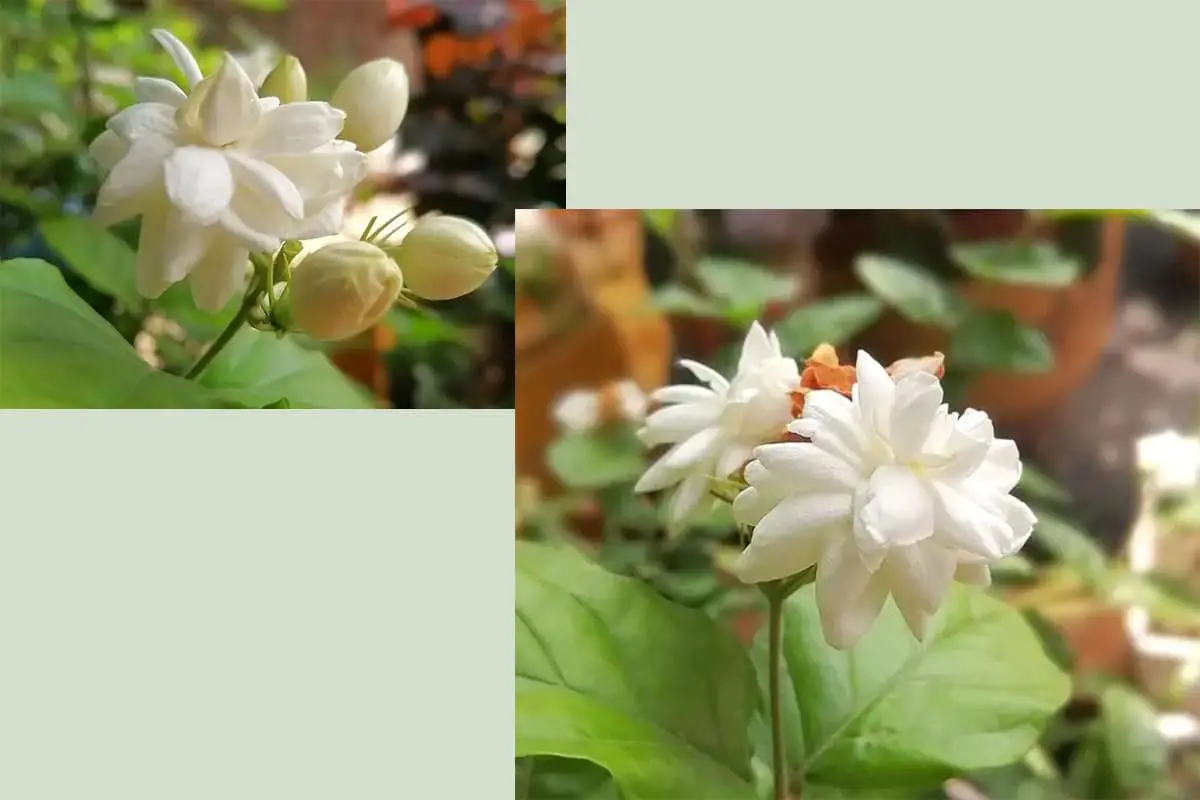
Jasminum sambac belongs to the olive family (Oleaceae) and is one of several jasmine species commonly cultivated. While often referred to as “Pearl Jasmine,” it’s important to note that this term can sometimes lead to confusion with other jasmine varieties. To clarify:
Jasminum sambac (Arabian Jasmine):
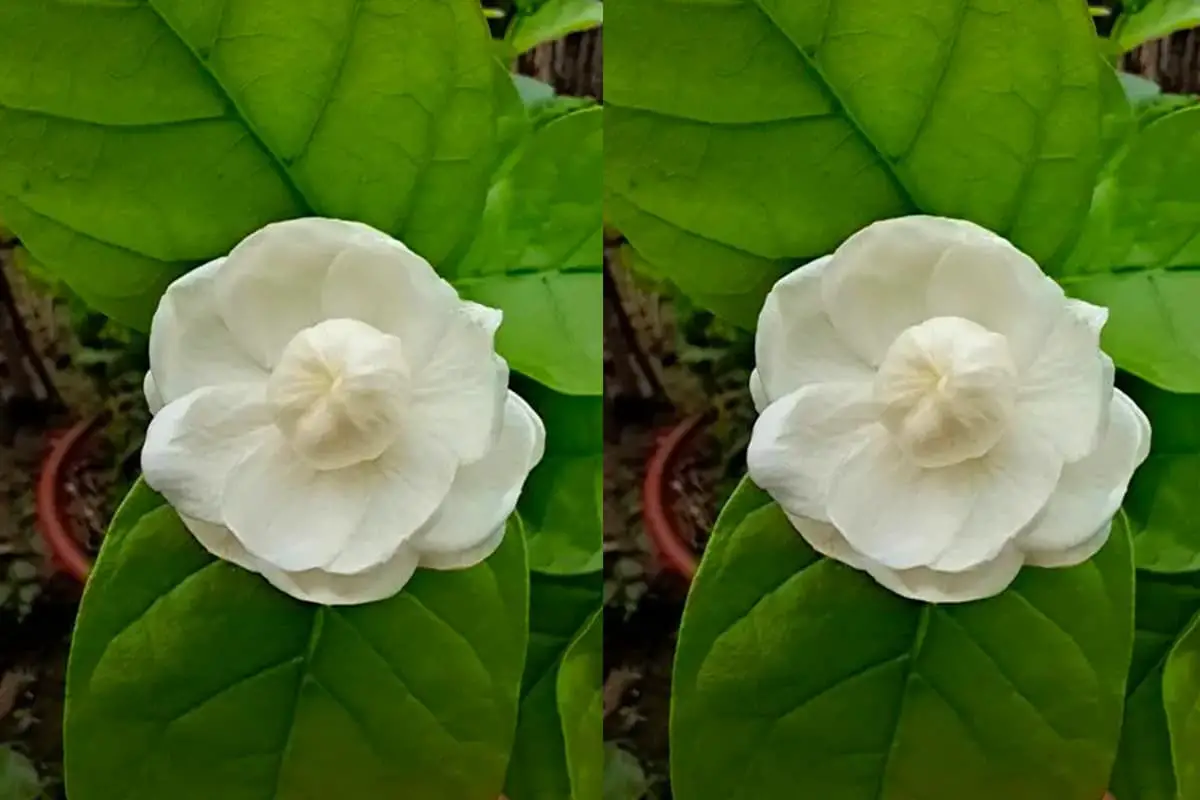
Jasminum multiflorum (Star Jasmine):
Jasminum grandiflorum (Spanish Jasmine):
It’s crucial to accurately identify the species, as care requirements can vary slightly between different jasmine types. Jasminum sambac is distinguished by its round leaves and flowers, which in double-flowered cultivars can resemble small cabbages or peonies.
The flowers of J. sambac do not typically show visible stamens in double-flowered varieties, and the branches tend to be more delicate compared to some other jasmine species. Its pearl-like buds open into intensely fragrant blossoms, making it highly prized in horticulture and the fragrance industry.
While care methods for J. sambac are similar to those for other jasmine species, understanding its specific needs will ensure optimal growth and flowering. In the following sections, we’ll delve into the detailed care and cultivation practices for this exquisite jasmine species.

Peggie was once a high school mathematics teacher, but she set aside her chalkboard and textbooks to follow her lifelong passion for flowers. After years of dedication and learning, she not only established a thriving flower shop but also founded this blog, “Flowers Library”. If you have any questions or wish to learn more about flowers, feel free to contact Peggie.
 English
  العربية
  Bahasa Indonesia
  Deutsch
  Français
  Italiano
  Nederlands
  Português
  Русский
  日本語
日本語