600+ Types of Flowers A To Z (With Names and Pictures)
Types Of Flowers By Names (A-Z) Types Of Flowers By Color Types Of Flowers By Season Types Of Flowers By Blooming Time 600+ Types of Flowers No. Flower Name No.…

The Ixora chinensis, also known as Jungle Geranium, Flame of The Woods, and Jungle Flame, is a plant from the Rubiaceae family and Ixora genus.
This low-growing plant has beautiful leaves and flowers and comes in a wide variety of colors, including red, orange, yellow, white, and dual-colored. With its attractive shape and densely packed blossoms, it makes an excellent potted plant and is the national flower of Myanmar.
The Ixora chinensis has a long flowering period, from March to December each year. It is native to Southern China and Malaysia and was introduced to the UK in the late 17th century before spreading to other European countries.
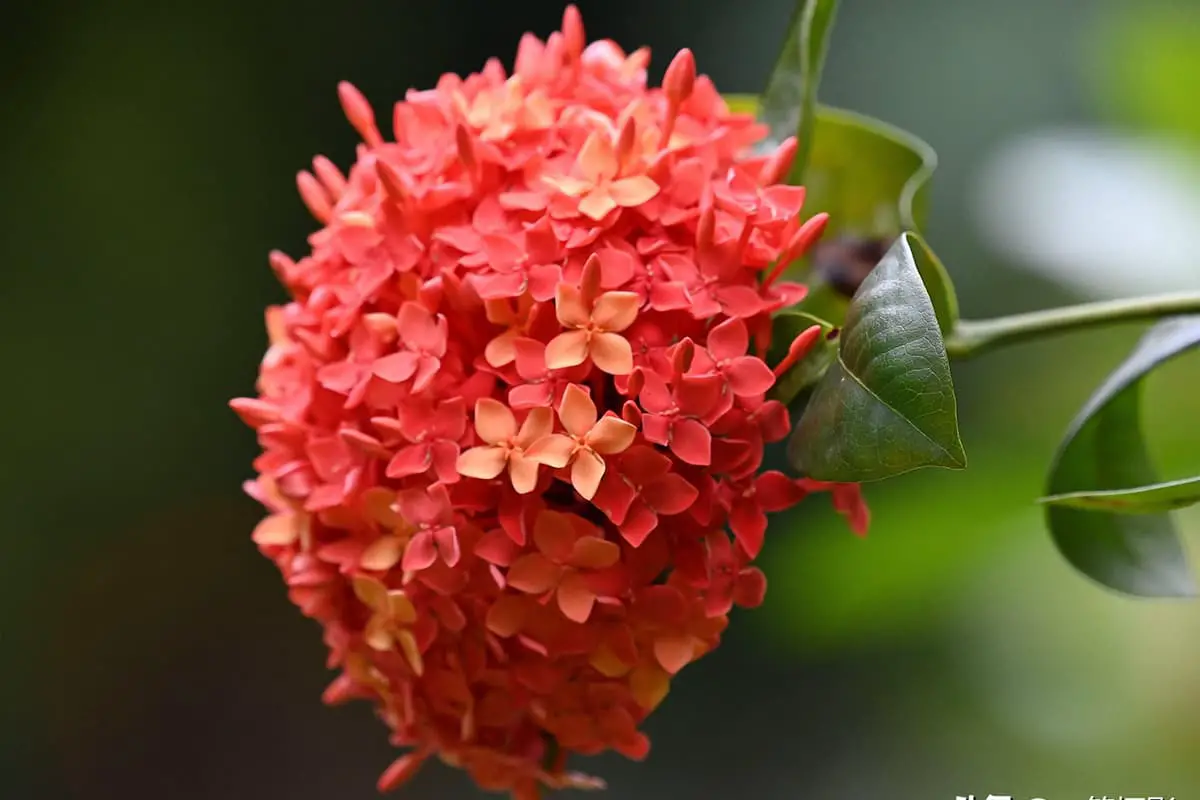
The shrub stands 0.8-2 meters tall and is hairless. Young branches are dark brown and glossy, turning gray and lined as they age. Its leaves are opposite, sometimes appearing to be whorled due to extremely short internodes.
They are lanceolate, oblong-lanceolate to oblong-obovate, 6-13 cm long, 3-4 cm wide, with blunt or rounded tips and short-pointed or rounded bases. The midrib is flat and slightly sunken on the upper surface and protrudes on the lower.
There are 7-8 fine, prominent lateral veins on each side that join near the leaf margin. The transverse veins are loose and obvious. The leaf stalk is very short and thick or absent. The stipules are 5-7 mm long, wide at the base and fused into a sheath, with a long tapering tip.

Temperature and Light: Dragon boat flowers are most suited to high temperatures and abundant sunlight. They thrive in moist, hot climates and are not tolerant of cold weather. The optimal growth temperature is between 23 to 32 degrees Celsius.
When the temperature drops below 20 degrees Celsius, the plant’s growth weakens and flower production significantly reduces. However, if there is adequate sunlight, a certain number of flower buds will still form.
When the temperature drops below 10 degrees Celsius, its physiological activity decreases and growth slows. If the temperature falls below freezing, it can suffer from frost damage.
Soil: Dragon boat flowers prefer acidic soil, with the ideal soil pH value between 5 to 5.5. With good drainage and fertility, the plant can grow well.
The best cultivation soil is sandy loam or humus soil rich in organic matter. If the soil is too alkaline, the dragon boat flower’s growth is hindered and development can be poor.

Dragon Boat flowers, native to China, Myanmar, and Malaysia, are also found in tropical regions such as Vietnam, Philippines, Malaysia, and Indonesia.
Dragon Boat flowers can reproduce through seeding, layering, and cutting, but cutting is commonly used.
Cutting is best done in June and July. Select semi-mature branches, about 10-15 cm long, and insert them into a sand bed. The optimal temperature is between 24-30°C. After 40-50 days, the cuttings will root. Soaking the cuttings in a 0.5% indolebutyric acid solution for 3-5 seconds can shorten the rooting period.
The optimal bed temperature for cuttings to root is 25-35°C, slightly lower than the air temperature of 23-35°C. Cutting is best done in late spring or summer. Natural light is generally sufficient for rooting, but during the high temperatures of tropical summers, it’s best to use a spray nursery as cuttings can easily wilt. Shading is also required for a few days after cutting, starting with a 50-60% shading rate and gradually reducing it to 40-50%. Once rooted, remove the shading.
The quality of cuttings not only affects the quality of the seedlings but also their subsequent growth. For good cuttings, tender branches are cut in spring and summer when the plant sprouts many tender branches. Cut when they are 8-12 cm long and before they flower. The best time to cut is in the evening of a clear day. Choose healthy branches with uniform size and no disease. The typical cutting weighs 3-5 grams, is 10-14 cm long, has a diameter of more than 3 mm, and is taken from a semi-lignified branch, usually a side branch or the main branch cut during heavy pruning.

The ease of rooting varies with different varieties of Dragon Boat flowers. Dwarf varieties with small leaves are generally easy to root and do not require treatment. However, tall varieties with large leaves are usually difficult to root. Applying growth hormones such as indolebutyric acid (IBA) or naphthylacetic acid (NAA) before cutting can significantly promote rooting. The treatment can involve long-term soaking in a low concentration rooting promoter or instant soaking in a high concentration solution.
The correct choice of soil for cutting greatly affects rooting rates and nursery survival rates. The soil should retain water, be permeable, and clean. Currently, substrates used for Dragon Boat flower cuttings include perlite, vermiculite, and river sand. These materials can be used alone or mixed. River sand is permeable but retains water poorly, so it is usually mixed with perlite. If used alone, it is suitable for intermittent spray cutting. Perlite alone is suitable in dry and strong sunlight conditions. In Hainan, it is best to use a mixture of river sand and perlite in a 1:1 ratio, or use river sand as a base and cover it with a 2-3 cm thick layer of perlite.
Seeds are collected in winter and sown in spring. The optimal germination temperature is 22-24°C. After 20-25 days of sowing, the seeds will germinate and can be transplanted into 8 cm pots once they have 3-4 pairs of true leaves.
In plants with many densely packed branches, ring bark about 20 cm from the top, wrap with peat and film, and it can heal and root in just over two months.
This disease is caused by the scythe fungus. The pathogen overwinters on diseased flowers or falls with diseased leaves into the soil and spreads the following year through wind, rain, or watering.
Control methods:
Horticultural control: Provide the dragon boat flower with its preferred conditions – light, warm, humid climate, and loose, fertile, acidic soil.
Chemical control: Begin spraying at the early stages of the disease. Options for pesticides include a solution of 50% methylthiophanate-methyl and sulfur suspension at an 800-fold dilution, or a 50% carbendazim wettable powder at a 500-fold dilution, or a 10% bactericide 401 acetate at a 1000-fold dilution.
This disease mainly damages the leaves. The pathogen overwinters on the diseased parts or diseased leaf remains and spreads under suitable conditions through wind and rain, entering through wounds and causing primary infection.
Control methods:
Horticultural control: Remove diseased leaves to reduce infection sources. Space pots or plants correctly to ensure good ventilation and light.
Chemical control: Spray before the onset of disease. Pesticides to consider include a 1:1:200-fold Bordeaux mixture, or a 50% carbendazim wettable powder plus a 75% chlorothalonil wettable powder at an 800-fold dilution, or a 25% thiram wettable powder at a 500-fold dilution. Spray these pesticides approximately every 10 days for continuous control 3-4 times.
Once scale insects occur, they can cause significant harm. The focus should be on prevention. If scale insects are found, timely control is necessary to avoid delays. Scale insects can not only stunt plant growth and trigger other diseases, but also affect their ornamental value.
Control methods:
Horticultural control: Prohibit the introduction or removal of insect-infested seedlings. Appropriate organic and compound fertilizers should be applied timely to enhance seedling vigor and improve pest resistance.
Chemical control: Apply systemic granules, such as 3% phoxim granules, to the roots. The dosage for pots with a diameter of 20 cm is 0.5-1 gram, with larger pots requiring a commensurate increase. The effective period can reach 40-60 days. Spray timely at the peak of egg hatching, with pesticide options including 40% parathion emulsion at a 1500-fold dilution plus 50% imidacloprid emulsion at a 1000-1500-fold dilution.
To control aphid infestations on tender stems and leaves, spray with a 1200-fold dilution of 2.5% rotenone emulsion.
Main Functions
Dispels stasis, stops bleeding, regulates menstruation, and lowers blood pressure.
Roots and Stems: Clears heat and cools the blood; activates circulation and relieves pain. Used for treating coughs, hemoptysis, rheumatalgia, stomachache, amenorrhea in women, painful sores and swellings, and trauma from falls or blows.
Flowers: Used for irregular menstruation, amenorrhea, and hypertension.
Note: Not suitable for pregnant women.
Chemical Components: The leaves contain phenols, amino acids, organic acids, and sugars.
Dosage: 25-50 grams of roots and stems, 15-25 grams of flowers.
The dragon boat flower has numerous uses in gardening. Some varieties can be used for cut flowers; many are suitable for pot planting and are used for hotel decorations, conference settings, windowsills, balconies, and various guest room arrangements.
In tropical areas, the dragon boat flower is particularly suitable for outdoor planting and can be used in courtyards, hotel communities, roadside and various scenic plant selection. Whether planted singly, in clusters, in rows, or in large patches, each has its own distinct character.
When the dragon boat flower is in full bloom, it resembles a large fiery red or orange tapestry floating above the leaves.
With a long blooming period and rich color range including red, yellow, orange, and white, it is often planted in large patches in gardens, along roadsides, or in the median strips of roads, creating a very striking and scenic view.
With the changing seasons and flower colors, it presents a colorful floral belt. The dwarf dragon boat flower series is suitable for creating such floral belts. In open and flat areas, planting in jumping large color blocks is a common technique in garden greening.
Row Planting as Floral Hedges
In the dragon boat flower varieties, those with dense plants and slow growth, which do not require frequent pruning, belong to low-maintenance shrubs. They are often row-planted and pruned into strips in gardens.
When in bloom, they form floral hedges; when not in bloom, they serve as green hedges. Combined with different flower colors, they are very graceful and rich in variation.
This type of greening is often seen on the sides of stairs, walls, along roads, and at the edges of grasslands. It not only beautifies the environment but also serves a guiding function, and can act as green hedges to prevent people from crossing and trampling on the turf.
Pruning to Form Patterns
In open lawns and street green spaces, to break the monotonous style of the lawn, many dwarf hedges are often planted on the lawn. Combined with pruning, they form various shapes and patterns.
The dwarf fine-leaved dragon boat flower is very suitable for creating shaped patterns. In many scenic green spaces, you can often see the use of dragon boat flowers to create beautiful patterns with streamlined and geometric shapes.
Single Planting, Cluster Planting, Group Planting
Varieties of dragon boat flowers that are taller and have relatively sparse branches, such as the large king dragon boat flower and white dragon boat flower, generally have large, stunning flowers.
Whether planted singly, in clusters, or in groups, they create a unique scene. Planted in groups of three or five, they are relatively independent, yet form a harmonious whole. They can also be planted with other flowers and trees to increase spatial variation and a sense of hierarchy.
Historical Origin
Introduced to the UK in the 17th century and later spread to various European countries. Widely used for potted ornamental plants. At present, they are more intensively cultivated in the Netherlands, the United States, and Japan.
Floral Language: Rushing to be the first.

Peggie was once a high school mathematics teacher, but she set aside her chalkboard and textbooks to follow her lifelong passion for flowers. After years of dedication and learning, she not only established a thriving flower shop but also founded this blog, “Flowers Library”. If you have any questions or wish to learn more about flowers, feel free to contact Peggie.
 English
  العربية
  Bahasa Indonesia
  Deutsch
  Français
  Italiano
  Nederlands
  Português
  Русский
  日本語
日本語