600+ Types of Flowers A To Z (With Names and Pictures)
Types Of Flowers By Names (A-Z) Types Of Flowers By Color Types Of Flowers By Season Types Of Flowers By Blooming Time 600+ Types of Flowers No. Flower Name No.…

The Hosta plantaginea, also known as Hosta, Jade Hairpin, Jade Spring Rod, White Crane Flower, and White Jade Hairpin, is a perennial herbaceous plant of the Lily family and Hosta genus.
The leaves of the Hosta are cluster-grown, ovate or heart-shaped. The flower stalk grows from the leaf cluster with a raceme of white or purple flowers that are fragrant and have a long thin calyx tube.
The flower ends in six segments, forming a funnel shape, and blooms from July to September. It should be noted that while the Hosta is toxic, its fragrance is not.
As long as direct consumption of the plant body is avoided, it poses no harm to humans. With this in mind, it is suitable for indoor cultivation.
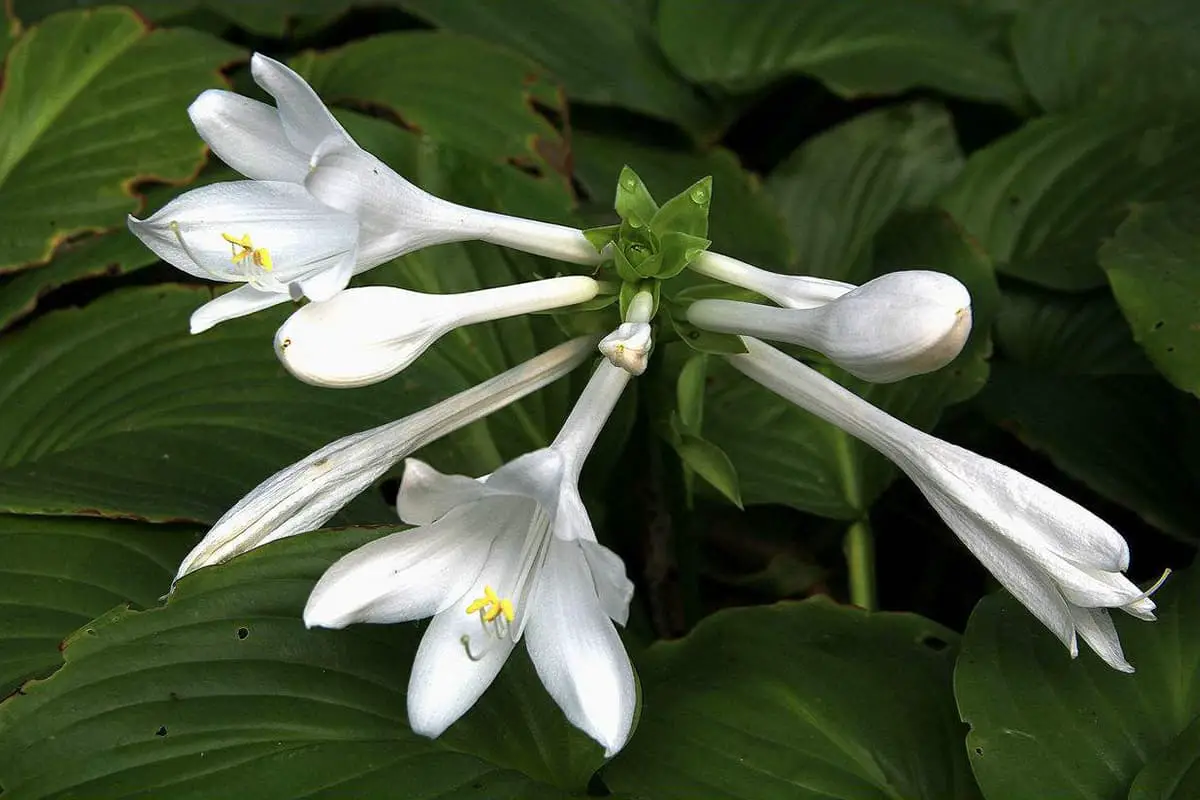
The Hosta plantaginea, also known as White Echeveria and White Crane Immortal, is a perennial herbaceous plant of the Lily family and Hosta genus.
The leaves are basal, clustered, ovate-heart-shaped, ovate or ovate-elliptic. The flower stems are 40-80cm tall, with several to a dozen flowers, each flower is 10-13cm long, white, and fragrant.
The fruit is a cylindrical capsule, with three edges. The flowering and fruiting period is from August to October.
Hosta plantaginea is cold-resistant, prefers a moist and shady environment, and does not tolerate strong sunlight. It is typically propagated by division but can also be sown.
Native to China and Japan, it can be used as a ground cover plant under trees, planted in rock gardens or on the north side of buildings, and also planted at the edge of forests, beside rocks, and by the water.
It has high ornamental value and is often used for greenery along wetlands and waterfronts.
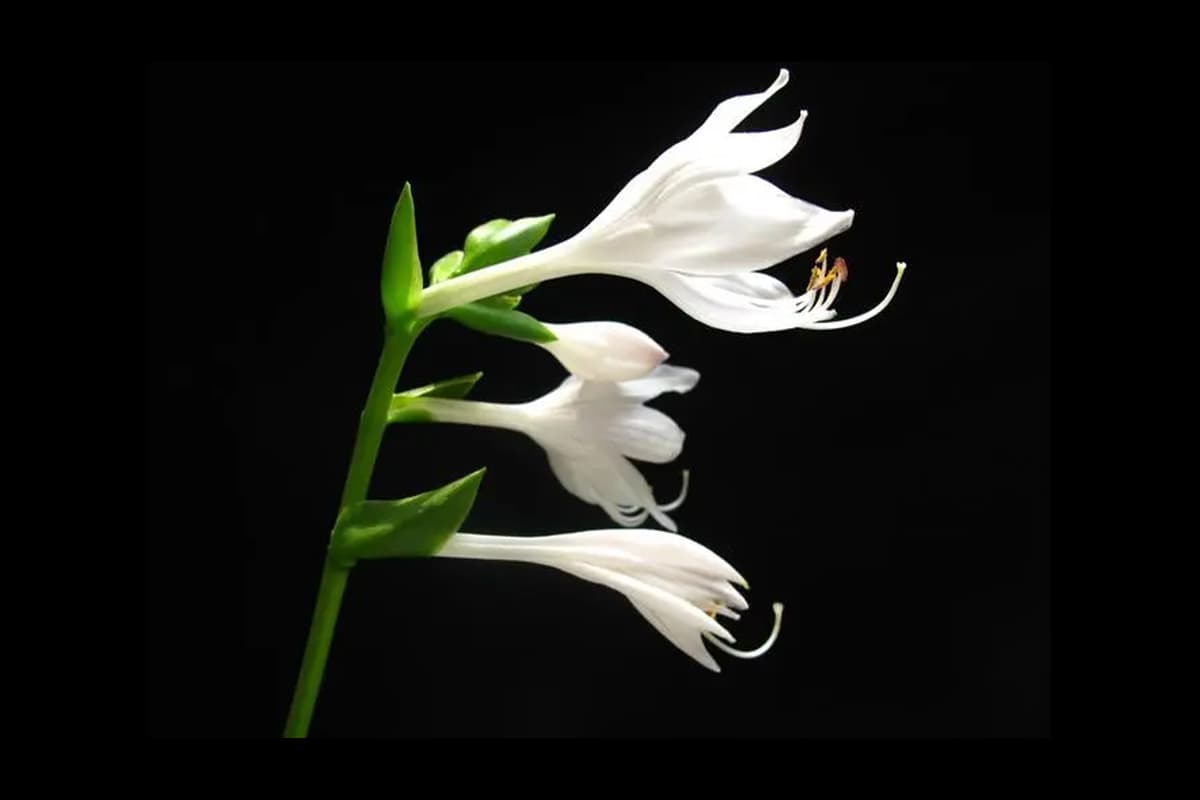
The common varieties of the Hosta plantaginea are as follows:
The Northeast Hosta is a small to medium-sized variety. The plant can grow to 10-15cm with more than 20 flowers. The flowers are purple and bloom from July to August. It can produce seeds, tolerate strong light, and has a strong adaptability to the environment.
The Wide-Edge Hosta is a medium-sized variety. Adult plants can grow to 30cm, bloom in June and July, and rebloom in mid-September. The flowers are funnel-shaped with flat petals. Avoid direct strong sunlight. For garden planting, it is advisable to plant in semi-shade or strong shade.
The Christmas Eve Hosta is a large variety. Adult plants reach 45cm tall. The leaves are thick with a faint white center. The flowers are funnel-shaped and large when fully open. It prefers shade but can tolerate strong light.
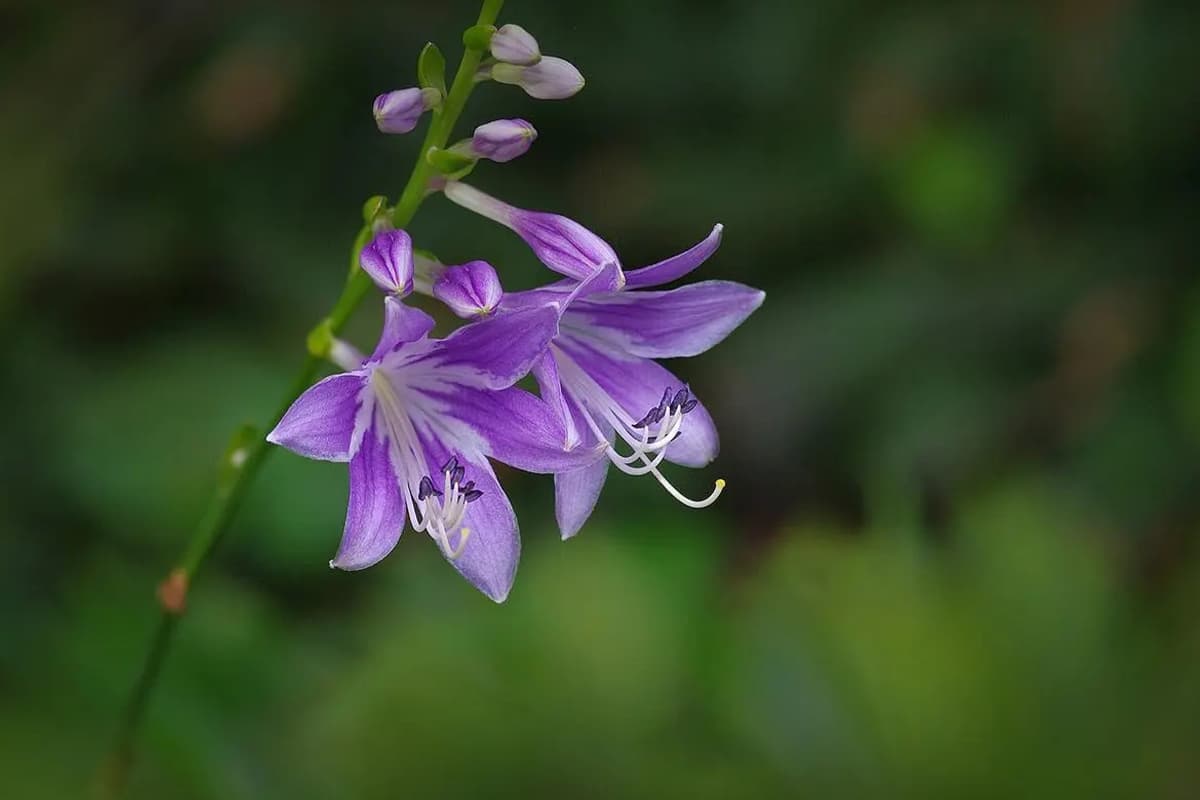
The French Hosta is a large variety that can grow up to 50cm. It grows robustly and rapidly, making it the best white-edged Hosta. It is currently rare in gardens.
The Big Daddy Hosta is 30cm tall with blue-green leaves that are rounder and larger than most Hostas. The flowers grow in clusters, making it an important feature in large-scale garden landscapes.
The Mixed White-Edge Hosta is a large variety, with adult plants reaching 40cm tall. The leaves are heart-shaped with a green-white border. It is one of the members of the high-growing white-edged Hosta. Its most prominent feature is the clear and stable white edge.
Hostas are typical shade-loving plants that thrive in damp environments. Strong sunlight can cause the leaves to turn yellow and hinder growth. They prefer fertile, moist sandy loam soil, and are extremely cold-hardy.
They can winter outdoors in most parts of China. Their above-ground parts wilt after frost, and they sprout new buds in the following spring. They should avoid direct sunlight.
The ideal temperature for their growth is 15-25℃, and it should not drop below 5℃ in winter. After winter, their above-ground parts wilt and the dormant buds winter outdoors.
Hostas are native to China and Japan, and they are also widely cultivated in Europe and America.
Hostas have thick rhizomes that are 1.5-3cm wide.
Their leaves are ovate and heart-shaped, oval or ovate-elliptic, 14-24cm long, 8-16cm wide, with the tip gradually tapering, and a heart-shaped base, with 6-10 pairs of lateral veins. The leaf stalk is 20-40cm long.
The flower stem is 40-80cm high, with several to a dozen flowers. The outer bracts of the flower are ovate or lanceolate, 2.5-7cm long, 1-1.5cm wide; the inner bracts are very small.
The flowers are solitary or clustered in 2-3s, 10-13cm long, white, and fragrant. The pedicel is about 1cm long. The stamens are nearly as long as or slightly shorter than the perianth, with the base about 15-20mm adhering to the perianth tube.
The fruit is cylindrical, tri-angled, about 6cm long and about 1cm in diameter. The flowering and fruiting period is from August to October.
Soil Selection
Although Hostas are not very strict with soil requirements, they prefer to grow in rich, loose, and well-drained soil. Suitable soil can enhance the growth of Hostas and increase their ornamental value.
If the Hostas are potted, the potting soil should mainly consist of peat, perlite, and clay pebbles, with a ratio of 1:1:0.5. Soil selection is the first step in cultivating Hostas and is very important, so pay close attention.
Lighting
Hostas prefer semi-shaded environments and do not like strong light. During maintenance, it is recommended to place the plants in areas with scattered light.
Do not put the plants in places with direct sunlight, which can cause the leaves to wither. They can be planted on the shady side of buildings or under large trees. However, do not put the plants in places that are too dark or without sunlight.
Watering
Hostas prefer a moist growing environment. During the maintenance period, water them every 3-4 days. Providing the plants with enough water can help them grow better.
However, in hot summer, increase the frequency of watering to every 2-3 days; in winter, reduce the watering frequency to once every 7-10 days.
Fertilizing
Hostas do not require a lot of fertilizer. During the growth period, adding fertilizer 1-2 times a month can meet their growth needs. Besides, before flowering, apply phosphate and potassium fertilizer a few times, which is very beneficial for flowering.
After a year of planting Hosta, usually 3-4 buds can sprout, which can be propagated by division. In northern China, division is often carried out before bud sprouting in March-April.
The old plant is dug out during division and can be dried for 1-2 days to avoid breaking easily due to excessive moisture. It is then cut with a sharp knife, and the cut is dusted with charcoal powder before planting.
Depending on the growth of the rhizome, it can be divided into 1 plant per bud or divided into clumps with 3-4 buds and more root system. Water thoroughly after division and avoid overwatering thereafter to prevent root rot.
The divided plants are planted separately and can generally bloom in the same year. The mother plant of Hosta needs to be divided every 2-3 years, otherwise the growth will not be vigorous.
Seeds can be sown in indoor pots in September. Under conditions of 20°C, seedlings can emerge in about 30 days. The seedlings can be transplanted outdoors in spring, and they can bloom after 2-3 years of cultivation.
Seeds can also be dried and stored in a cool, dry place, and then sown in March-April of the following year.
Symptoms: The leaf spot disease mainly affects the leaves, and often starts from the tip or edge of older leaves. Initially, it appears as small, fading green spots that gradually enlarge into semi-circular or irregular large spots, 5-20mm in size.
The edges are green-brown, the boundaries are not very clear, and the center is gray-white. In severe cases, the disease spots coalesce and cause the leaves to wither and yellow, affecting yield and quality.
The disease is most likely to occur under conditions of high temperature and high humidity. The optimal temperature for disease occurrence is 22-28°C, and relative humidity is over 85%.
However, the disease can also occur under conditions of high temperature and drought, and dew at night. In addition, lack of fertilizer, lack of water, or excessive watering, and poor growth can also lead to disease.
Prevention and Control Methods: Strengthen management, apply sufficient fertilizers, cultivate strong seedlings, prevent rain, shade, water timely after planting, and prevent excessive watering.
Enhance ventilation in the greenhouse to lower the temperature. Clean up diseased residues in time. In the early stage of the disease, remove diseased leaves in time, then immediately spray medicine for prevention and control.
Bordeaux mixture at a ratio of 1:0.5:200 plus 0.1% sulfur powder can be used, or 65% zinc dimethyldithiocarbamate wettable powder at 500 times, or 75% carbendazim wettable powder at 500-800 times, or 50% ammonium dimethyl dithiocarbamate at 800-1000 times. Spray once every 5-7 days, a total of 2-3 times.
Symptoms: Anthracnose mainly affects leaves, petioles, and flower stems. When diseased, plants often have round or nearly round gray-brown or gray-white spots.
Prevention and Control Methods: In winter, collect diseased flowers and fallen leaves after leaf drop. In the early stage of spring disease, you can use 50% carbendazim solution, 70% methyl tobujin solution, or 80% anthrax fumei wettable powder solution. Spray once every 7-10 days, 2-3 times in total.
Symptoms: White silk disease mainly affects rhizomes and petioles. When diseased, the whole plant wilts, the rhizome part shows brown water stains and rots, and the surface has white silk-like mycelium.
Prevention and Control Methods: Diseased plants are removed in time, and lime can be applied to adjust soil pH for prevention. For pesticide control, you can use 20% methamidophos emulsion, 90% dichlorvos wettable powder solution, or 50% carbendazim solution.
Medicinal Value
The flowers and roots of the Hosta plant are used medicinally. They taste slightly sweet and are cooling in nature. The flowers are used to clear heat, detoxify, soothe coughs, and ease sore throats.
They are primarily used to treat lung heat, swollen throats, chest heat, and toxic heat. The roots are used to reduce swelling, detoxify, stop bleeding, and to treat abscesses, boils, throat swelling, vomiting blood, bone fish, and burns.
Pharmacology (Toxicology)
Garden Use
Hosta leaves are delicate and shiny, and the flower buds resemble hairpins, white as jade, with a pleasant fragrance. It is one of the important flowers in Chinese classical courtyards.
In modern courtyards, it is often planted under trees, on lawns, in rock gardens, or behind buildings. It can also be grouped in clusters in flower beds, or potted and placed indoors or under corridors.
The Language of Hosta Flowers
The symbolic meaning of Hosta flowers is purity, elegance, and fidelity. The unblemished white Hosta flowers give a sense of pristine purity.
You can give Hosta flowers to your girlfriend to express her pure character, or to friends to symbolize their steadfastness and unwavering spirit in the face of difficulties.

Peggie was once a high school mathematics teacher, but she set aside her chalkboard and textbooks to follow her lifelong passion for flowers. After years of dedication and learning, she not only established a thriving flower shop but also founded this blog, “Flowers Library”. If you have any questions or wish to learn more about flowers, feel free to contact Peggie.
 English
  العربية
  Bahasa Indonesia
  Deutsch
  Français
  Italiano
  Nederlands
  Português
  Русский
  日本語
日本語