Faucaria tigrina, a succulent plant belonging to the Aizoaceae family and the genus Faucaria, thrives in warm conditions but does not fare well in extreme heat or cold.
During its dormant summer phase, it requires 50% shading, frequent misting, and controlled watering to prevent rot from excessive rain or irrigation.
In its active growth period during autumn and winter, it needs ample sunlight and proper watering and fertilization. The plant is visually appealing due to its leaf shape and color, adding ornamental value.
It makes for an excellent potted plant, suitable for placement near televisions and computers, as it can absorb radiation. It’s also effective for indoor planting to absorb substances like formaldehyde and purify the air.
I. Morphological Characteristics
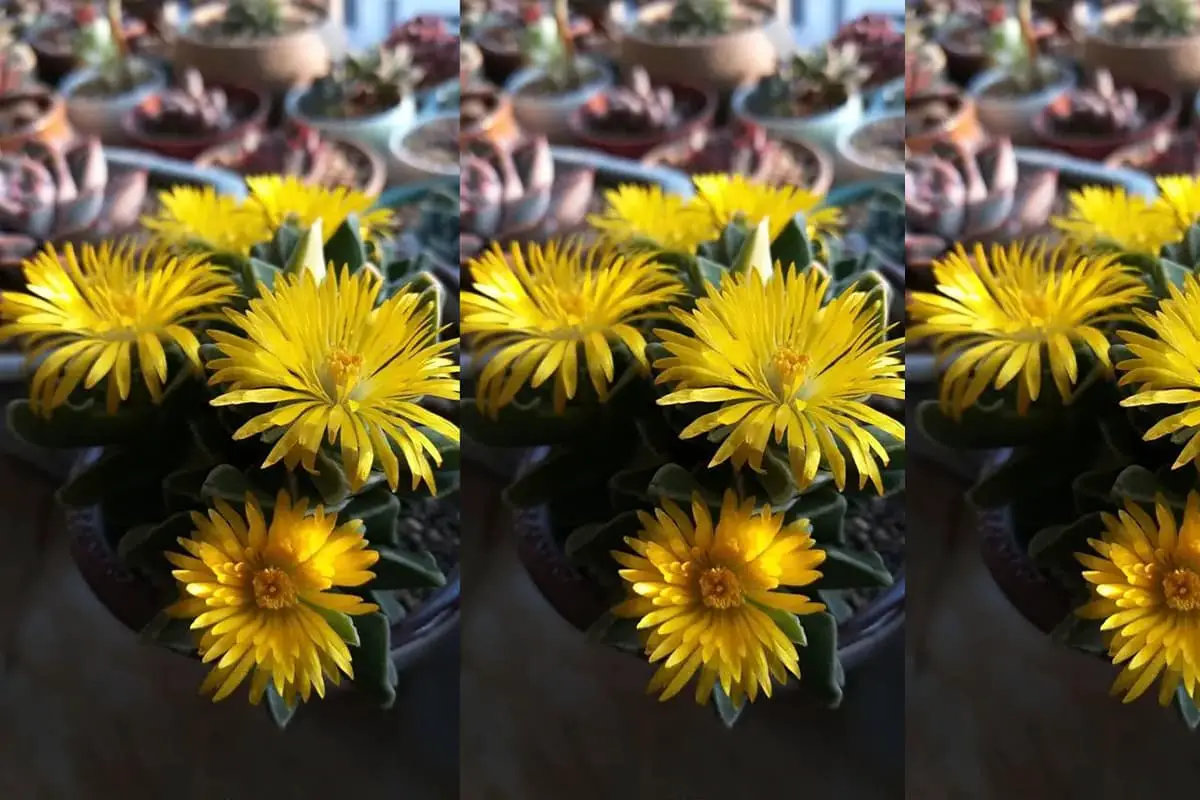
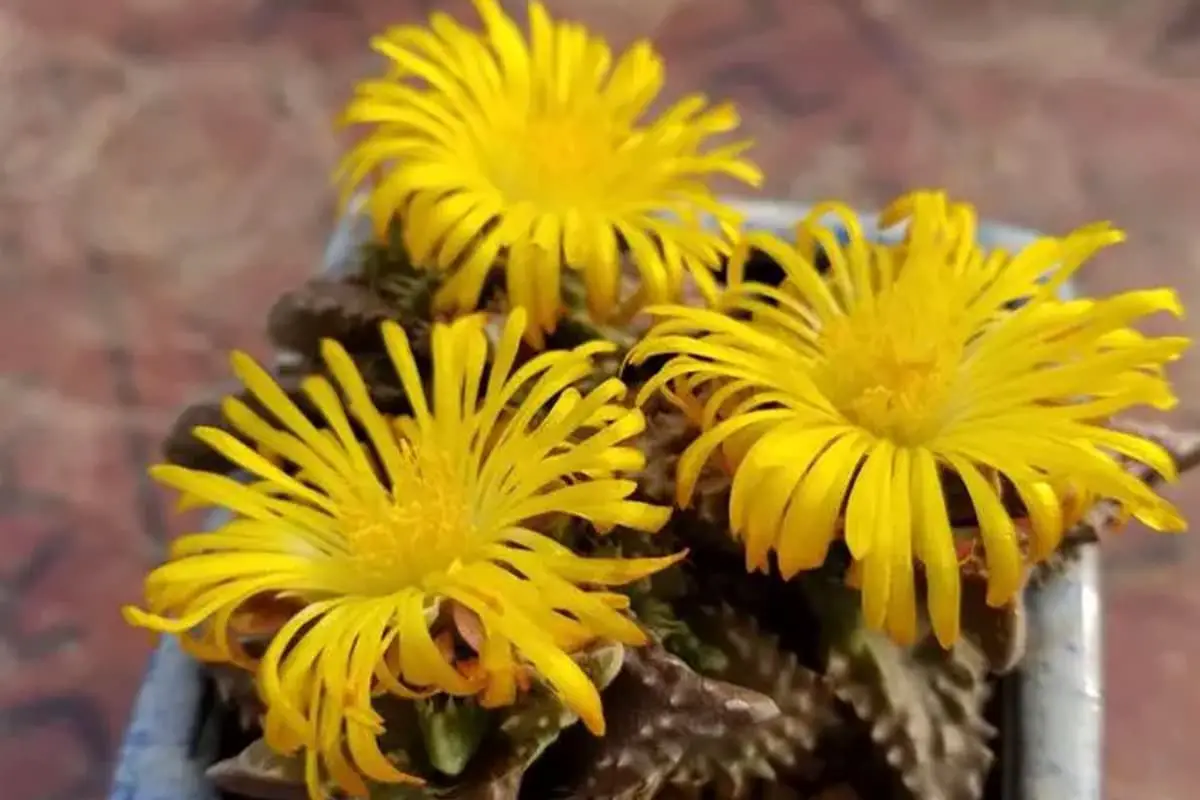
Faucaria tigrina is a succulent herbaceous plant that reaches a height of 9 centimeters. It flowers in autumn and grows in dense clusters with very fleshy leaves arranged in a cross pattern, triangular at the tips with margins and a keel-like back that is hardened.
The majority of the leaf surface is covered with fleshy teeth, and the leaf edges are green with five pairs of slightly backward-curved fleshy teeth.
The leaves have thick, fleshy hairs on their margins, and the large flowers are mostly yellow and stalkless, blooming during the plant’s dormant summer phase.
II. Growing Environment
The plant prefers warmth and dislikes extreme heat or cold. During its summer dormancy, it requires proper shading, frequent misting, and controlled watering to avoid rot.
In autumn and winter, it needs sufficient light and appropriate watering and feeding. Successful cultivation can be achieved by managing watering, ventilation, shading, and cessation of fertilization during the summer dormancy.
Light: Full sunlight exposure.
Watering: Frequent misting with controlled watering.
Fertilization: Appropriate feeding during the growing period in autumn and winter.
Propagation: Division.
Flowering: Autumn.
Pest and Disease Control: Generally disease-free.
III. Cultivation Techniques
Spring
- Propagation by division: Separate clumped plants at the base, each with some roots, and pot individually.
- Propagation by cuttings: Take stem segments with 2-3 pairs of leaves, let the cut end dry, then insert into the soil.
- Propagation by seeding: Sow small seeds and moisten the soil using the soaking method. The optimal germination temperature is 22-24°C, with germination occurring within 15-20 days.
- Prefers bright light and tolerates partial shade, but plants may grow weak if light is insufficient.
- Prefers dry conditions, is drought-resistant, and does not tolerate waterlogging. Water only when the soil is dry, allowing for a dry and wet cycle.
- The optimal growing temperature is 18-24°C. Spring is the ideal growing season; apply a light fertilizer once a month. Avoid splashing fertilizer on the leaves to prevent rot.
- Repot after flowering. Prefers nutrient-rich, well-drained, and aerated soil with lime content, using a mix of leaf mold, garden soil, coarse sand, or perlite, with a suitable amount of lime material. Pots should not be too large, with a diameter of 12-15 centimeters being optimal.
Summer
- Avoid extreme heat, as the plant enters a semi-dormant state and appears dehydrated with darkened leaves. Provide shade and enhance ventilation to lower temperatures and reduce watering.
- Mist to increase humidity during dry air conditions, which benefits plant growth. Cease fertilization in summer as it can lead to rot.
Autumn
- Also a suitable period for growth and cuttings propagation.
- Ensure adequate sunlight is provided.
- Watering should follow a “dry before watering” routine, with a cycle of dry and wet conditions, applying a light fertilizer once a month.
Winter
- Not cold-hardy, the overwintering temperature should not drop below 10°C, though it can tolerate down to 5°C if watering is controlled.
- Provide ample sunlight. Watering must be controlled at low temperatures, keeping the soil dry and ceasing fertilization.
IV. Main Value
Ideal for potting on windowsills, in bedrooms, on balconies, or as decorative accents on tables; also suitable for desert-themed gardens.
V. Tips
For successful cultivation of Faucaria tigrina, it is recommended to use a mixed soil of peat, perlite, and vermiculite.
During the plant’s growth period, avoid overwatering, which can lead to root rot. Properly manage watering, ventilation, shading, and fertilization during the summer dormancy for successful cultivation.


 English
  العربية
  Bahasa Indonesia
  Deutsch
  Français
  Italiano
  Nederlands
  Português
  Русский
  日本語
日本語