600+ Types of Flowers A To Z (With Names and Pictures)
Types Of Flowers By Names (A-Z) Types Of Flowers By Color Types Of Flowers By Season Types Of Flowers By Blooming Time 600+ Types of Flowers No. Flower Name No.…

Duranta erecta is a shrub in the Verbenaceae family. It grows to a height of about 1.5-3 meters and has thorny branches and hairy young shoots. The leaves are opposite or occasionally whorled, with ovate to lanceolate-shaped leaflets that are papery in texture.
The leaflets are short-pointed or blunt at the apex, and wedge-shaped at the base, with hairs on the surface. The inflorescence is terminal or axillary, often arranged in a cone shape.
The calyx is tubular, hairy, about 5 millimeters long, and 5-lobed with 5 ridges. The corolla is usually blue-purple, about 8 millimeters long, slightly irregular, 5-lobed with flat spreading lobes, and covered with fine hairs both inside and outside.
The fruit is spherical, smooth, glossy, about 5 millimeters in diameter, and turns red or yellow when ripe, surrounded by enlarged persistent calyx.
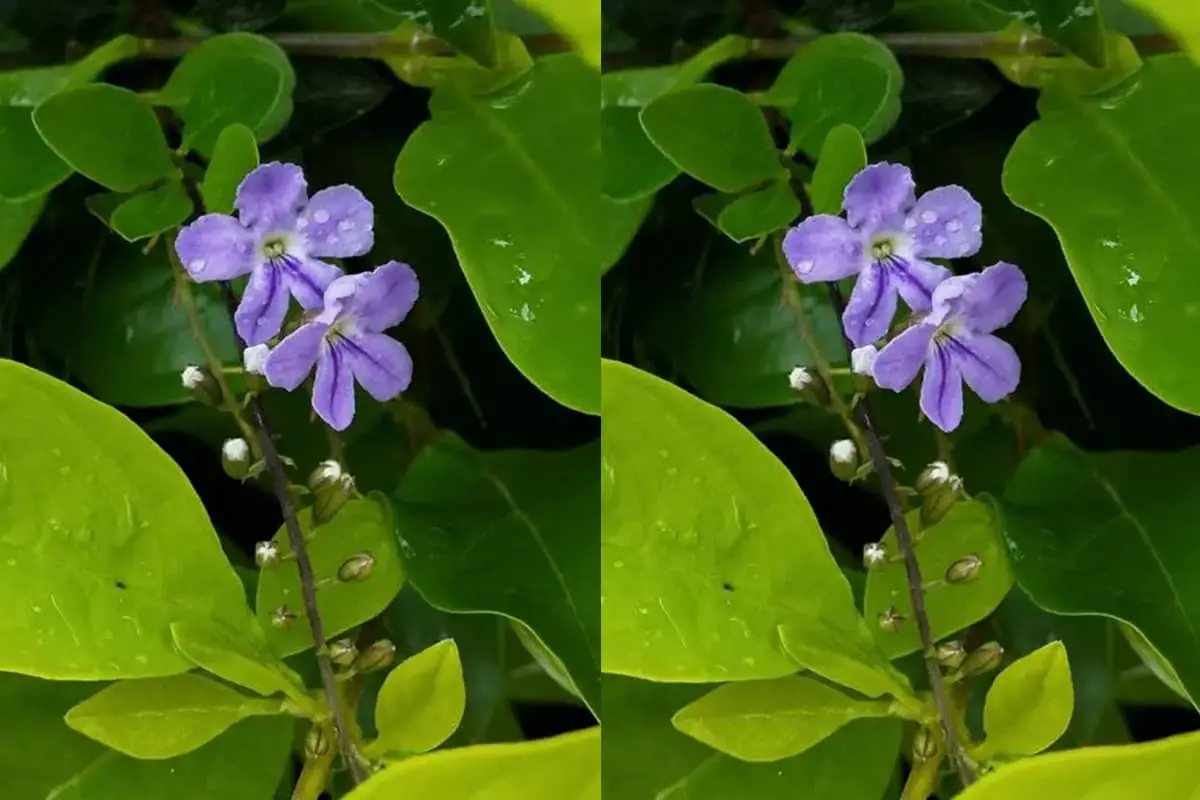
The flowering and fruiting period is from May to October, and can be year-round in the southern regions. It is native to tropical America and commonly cultivated in southern China, often escaping into the wild.
Golden dewdrop has a long flowering period and beautiful flowers, making it an excellent choice for hedging plants.
Golden dewdrop is a shrub that grows to a height of about 1.5-3 meters. It has thorny branches and hairy young shoots.
The leaves are opposite or occasionally whorled, with ovate to lanceolate-shaped leaflets that are 2-6.5 centimeters long and 1.5-3.5 centimeters wide.
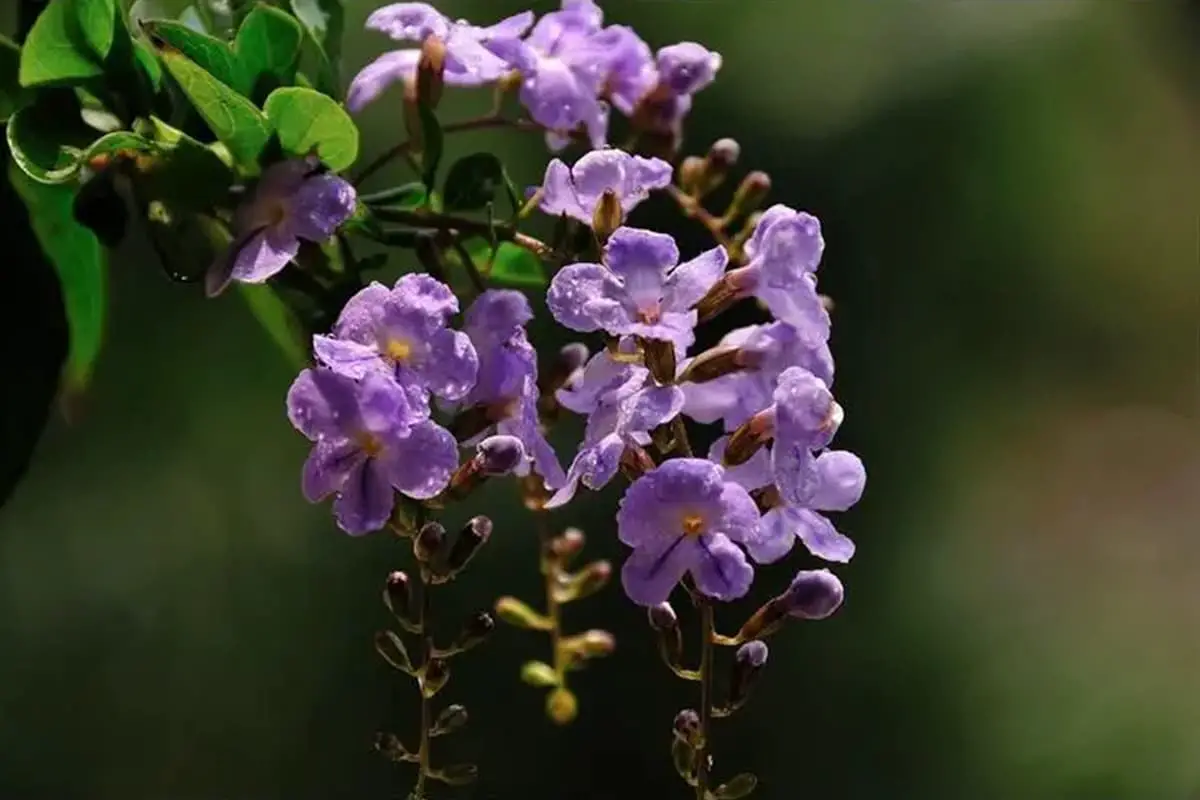
The leaf texture is papery, with short-pointed or blunt apex, wedge-shaped base, entire or serrated margins above the middle, and hairs on the surface. The leaf stalk is about 1 centimeter long and hairy.
The inflorescence is terminal or axillary, often arranged in a cone shape. The calyx is tubular, hairy, about 5 millimeters long, 5-lobed, and has 5 ridges.
The corolla is usually blue-purple, about 8 millimeters long, slightly irregular, 5-lobed with flat spreading lobes, and covered with fine hairs both inside and outside. The style is shorter than the corolla tube, and the ovary is hairless.
The fruit is spherical, smooth, glossy, about 5 millimeters in diameter, and turns red or yellow when ripe, surrounded by enlarged persistent calyx. The flowering and fruiting period is from May to October, and can be year-round in the southern regions.
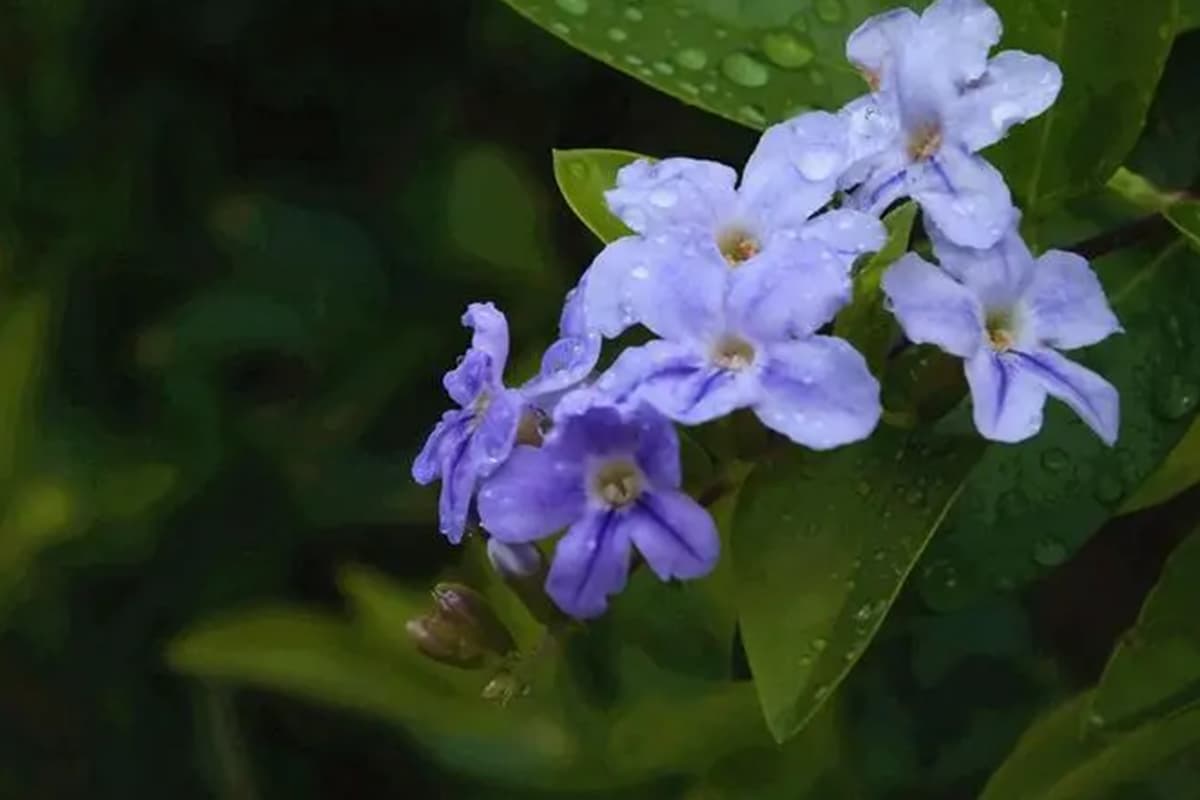
Golden dewdrop is native to tropical America.
Golden dewdrop prefers warm, sunny, and well-ventilated environments. It can tolerate partial shade but is not tolerant of cold temperatures, requiring a minimum winter temperature of above 5°C.
It can grow well in various types of soil, including sandy, clayey, acidic, or calcareous soils. It prefers fertile soil and does not grow well in poor soil. It can tolerate wet conditions but is not drought-tolerant.
Seeds can be collected throughout the year. After harvesting, they should be soaked in water for about 1 week until the fruit skin turns black and becomes rotten.
Then, the seeds can be rubbed and washed in water, and the floating seeds can be separated. The seed viability is about 16%, and the weight of 1000 seeds is about 7.5 grams. After slight drying, the seeds can be used for sowing.
They should be protected from drying out and should not be exposed to sunlight or stored uncovered for a long time. The seeds have no dormancy period and can be sown immediately after harvesting.
The germination temperature should be above 20°C, and germination usually occurs around 10 days after sowing with a germination rate of about 50%. Seedlings generally need to be cultivated for 2 years before they can be potted or transplanted into the field.
Cuttings can be taken in late spring or early summer. Select 1-2-year-old tender branches and cut them into 15-centimeter-long segments. Insert the cuttings into a moist sand bed, and they will root in about 1 month.
After about 1.5 months, they can be transplanted into pots or field beds. They can be potted or transplanted out of the field in the following year or the third year. For shaping purposes, it is recommended to start shaping the young seedlings in their second year.
Golden dewdrop has many drooping branches that can be bent and buried in the soil in spring from March to April. The buried section should be scratched with a knife and covered with fine soil.
The injured section will develop roots and become seedlings. In winter or early spring of the second year, the rooted seedlings can be separated from the parent plant and transplanted to the field.
When sowing, choose a sunny site with fertile soil, deep soil, loose texture, and good drainage, such as sandy loam or loam. In autumn, plow and turn the soil to a depth of 20-25 centimeters.
Apply basal fertilizer, with 2000-2500 kilograms of organic fertilizer per acre, and then level the soil with a rake.
For direct sowing, plant rows should be spaced at 130 centimeters by 200 centimeters, with planting holes 30-40 centimeters deep and wide. For seedling cultivation, prepare a flat bed with a width of 1 meter, the length depending on the terrain.
For cutting propagation, choose sandy soil that is easy to irrigate and has good permeability. For planting, choose a gently sloping, wind-sheltered, and sunny site.
For seedling cultivation, select vigorous plants with short and thick internodes, dense flower and fruit growth, and no diseases or pests. From September to October, harvest mature fruits, dry them, and thresh the seeds.
Dig a storage pit about 1.2 meters deep and 0.8 meters wide (depending on the amount of seeds), mix the duranta seeds with moist sand in a ratio of 1:3, with the sand moisture level such that it can be squeezed into a loose clump that doesn’t drip water.
Then, bury a layer of seeds in the pit, slightly higher than ground level. In the southern regions, sow in mid-March, while in the northern regions, sow in early April. The seeding rate is about 150 kilograms per hectare.
Dig shallow furrows with a depth of 4-5 centimeters and a spacing of 25 centimeters. Evenly scatter the seeds in the furrows and cover with 2 centimeters of soil. Slightly press down the soil and the seeds should germinate in about 20 days.
After the seedlings emerge, loosen the soil, remove weeds, and apply fertilizer in a timely manner. When the seedlings reach a height of 5-6 centimeters, thin them out.
For the second thinning, when the seedlings reach a height of 10-15 centimeters, regularly loosen the soil, remove weeds, and water the plants to keep the soil moist.
However, duranta is also sensitive to waterlogging, so drainage ditches should be opened during the rainy season to prevent waterlogging and root rot.
During the seedling stage, apply thin and frequent fertilization, with each application of 30-75 kilograms per hectare of urea or 75-100 kilograms per hectare of ammonium sulfate, to promote stem, leaf, and plant growth.
Generally, after 2 years of cultivation, when the seedlings reach a height of over 60 centimeters, they can be transplanted into the field.
Cutting propagation can be done in early summer. Select 1-2-year-old tender branches from excellent mother plants, cut them into 20-25 centimeter-long cuttings with 3 nodes.
Soak the lower 1/3 of the cuttings in a solution of 500×10E-6 rooting powder (ABT) or indolebutyric acid (IBA) for 1 minute, then remove and let them air dry.
In prepared beds, make holes with an iron rod or small wooden stick at a spacing of 5 centimeters by 20 centimeters. Insert 2/3 of the cuttings into the holes, firm the soil around them, and water.
Roots and shoots should emerge in about a month, and by the end of the year, the cuttings will grow into plants about 50 centimeters tall. In the following spring, they can be transplanted into the field.
When the seedlings reach a height of 30-40 centimeters, apply diluted manure and urine water once to promote growth. When the main stem reaches a height of 70-80 centimeters, prune the top and encourage the growth of lateral branches.
Select 3-4 strong branches on the main stem to become secondary main branches, and allow lateral branches to grow.
Through shaping and pruning, encourage the formation of a low trunk, short crown, open and round shape, good ventilation and light penetration, sparse and clear small branches, and early fruiting.
Remove weak branches, excessive growth branches, and diseased or pest-infested branches as necessary. During the fruiting period, apply organic fertilizer, phosphorus, and potassium fertilizer to promote early fruiting and ripening.
Duranta is rarely affected by diseases, but attention should be paid to the control of two types of pests.
(1) Stem-boring insects: The larvae bore into the woody part of the stem, causing damage to the pith. Severe infestations can prevent flowering and fruiting, and even lead to the death of the entire plant. Control methods include clearing away dead branches, fallen leaves, and weeds in winter to eliminate overwintering eggs. Prune and burn affected branches. Use a 500-fold dilution of 40% dimethoate emulsion or pure diazinon to plug the holes and kill the borers.
(2) Snails: They mainly damage flowers and young fruits. Control methods include sprinkling lime powder around the plants in the early morning and manually killing the snails.
The leaves and fruits of Duranta have a sweet and slightly pungent taste. They are warm in nature and have a mild toxicity.
They are used to dispel heat, remove evil qi, promote blood circulation, eliminate stasis, relieve pain, kill worms, reduce swelling, and detoxify. They are used for treating malaria, initial stages of abscesses, and deep-seated foot ulcers.
Duranta has an elegant tree form and vigorous growth. It blooms early in spring, with a long flowering period and abundant flowers.
The branches are covered with golden-yellow blossoms, emitting a delightful fragrance, which plays an important role in the changing landscape of early spring.
It can be planted as hedges, garden clusters, mirrors, or flower beds near homes, pavilions, corners of walls, under fences, or along roadsides, streams, and ponds.
It is widely used in urban greening, beautification, and fragrance enhancement, making it a valuable tree species for sightseeing agriculture and modern gardens.
The pendulous inflorescences of Duranta, in orange-red or golden-yellow color, are glossy and resemble clusters of golden beads.
They are long-lasting and extremely beautiful, making Duranta an important ornamental fruiting plant. It is suitable for planting as green hedges, green walls, flower corridors, climbing on trellises, or hanging on stone walls.
The flexible branches are tolerant of pruning and can be shaped into various forms, making them suitable for bonsai cultivation or as focal points. The effect is particularly outstanding.
Duranta has a well-developed root system, with a dense network of main roots, lateral roots, and fine roots in the soil. It has strong absorption and water retention capabilities. The thick and long lateral roots can anchor the soil and prevent soil erosion.
Duranta has strong sprouting ability and quickly increases its canopy cover, effectively preventing raindrops from splashing on the ground and reducing erosion.
It has excellent water and soil conservation properties and is recommended by the Chinese government as an excellent ecological tree species for returning farmland to forests and for preventing soil erosion in the Loess Plateau.

Peggie was once a high school mathematics teacher, but she set aside her chalkboard and textbooks to follow her lifelong passion for flowers. After years of dedication and learning, she not only established a thriving flower shop but also founded this blog, “Flowers Library”. If you have any questions or wish to learn more about flowers, feel free to contact Peggie.
 English
  العربية
  Bahasa Indonesia
  Deutsch
  Français
  Italiano
  Nederlands
  Português
  Русский
  日本語
日本語