600+ Types of Flowers A To Z (With Names and Pictures)
Types Of Flowers By Names (A-Z) Types Of Flowers By Color Types Of Flowers By Season Types Of Flowers By Blooming Time 600+ Types of Flowers No. Flower Name No.…

Cymbidium eburneum is a type of epiphytic herbaceous plant belonging to the orchid family. Here’s a detailed description based on the information you provided:
Cymbidium eburneum is an epiphytic herbaceous plant characterized by pseudobulbs that are close to fusiform or ovoid in shape. The flower stalk emerges from the axil of the leaves at the base of the pseudobulb, either upright or nearly so.
The flowers are relatively large, semi-open, and possess a mild fragrance. Both the sepals and petals are white, sometimes with a hint of pink.
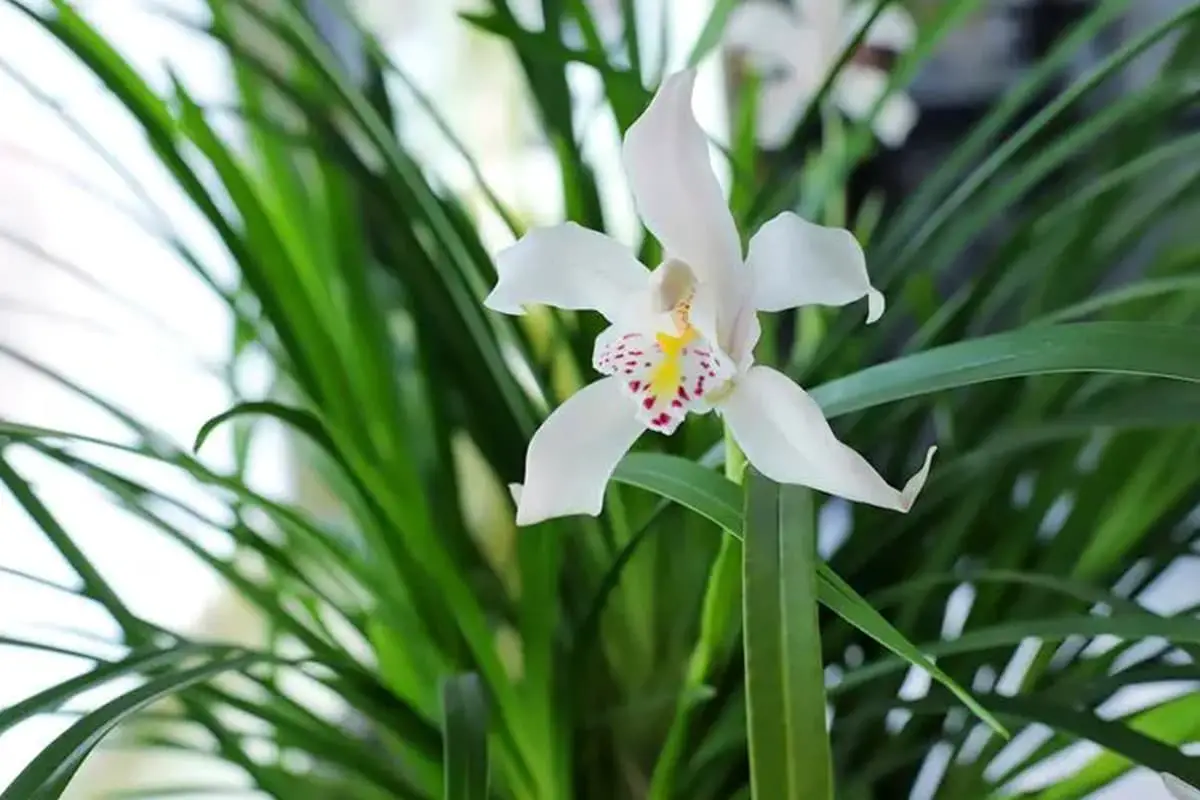
The lip is also white, featuring a yellow patch in the middle extending to the base, connecting to the end of a yellow ruffled area, occasionally dotted with light purple-pink.
The column is either white or slightly tinged with pale pink, occasionally with a yellow spot at its base. This plant typically flowers from February to May.
Cymbidium eburneum is native to Tengchong in Yunnan, China. It often thrives on rocks at elevations between 1,000 to 2,000 meters. This orchid prefers a slightly intense light environment and grows best in temperatures ranging from 18℃ to 28℃.
The flowers of Cymbidium eburneum are white and have a scent reminiscent of cloves, though the fragrance is mild. Due to its stunning flower form and vibrant colors, it’s highly sought after and is considered a very precious ornamental plant.
It’s one of the renowned ornamental orchids in China, boasting great aesthetic value. This orchid has historically been used as a parent in hybridizing large-flower ornamental orchids. Symbolically, its flowers represent vigor, nobility, and harmony.
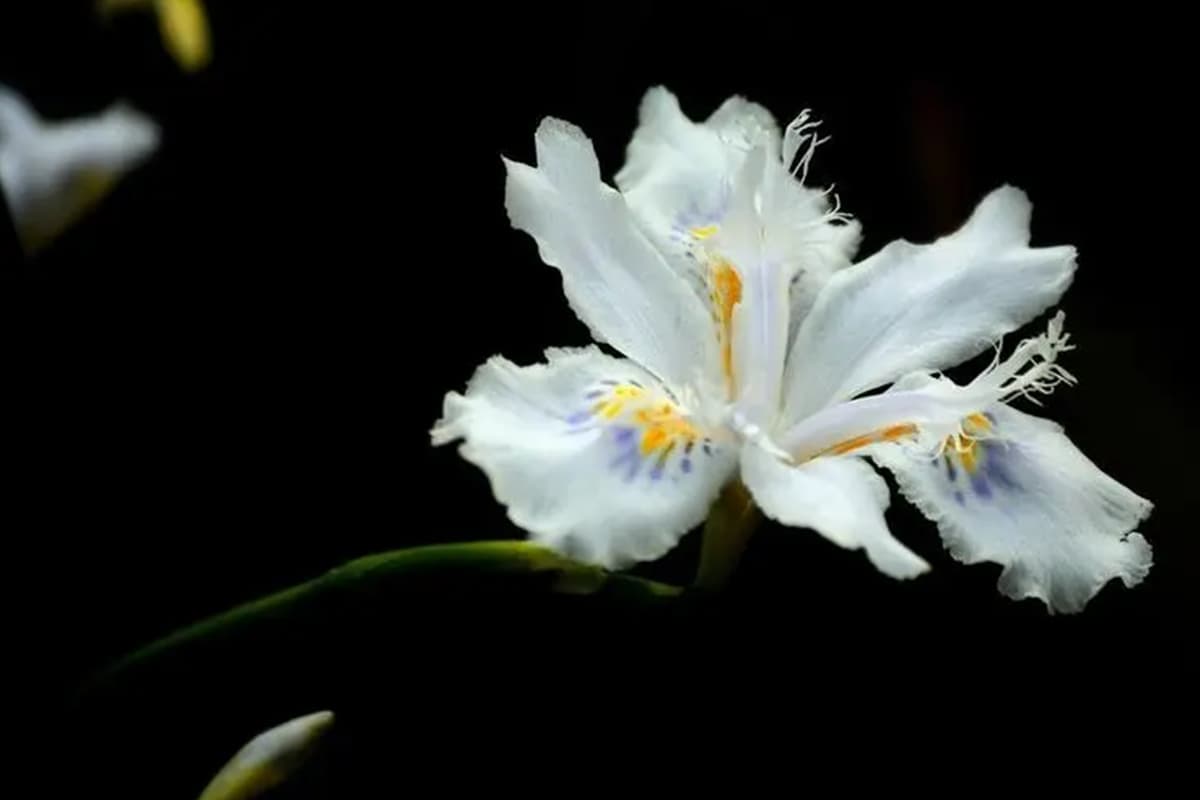
The “flower arrow” of Cymbidium eburneum is typically upright or slightly tilted. Often, a single flower arrow bears two orchid flowers, one in front of the other, resembling two swallows flying together.
The flower arrow stands about 30 cm tall, and the flowers are large, with a diameter of approximately 10 cm. The sepals and petals are long and strap-shaped, each side measuring around 6 cm in length and 2 cm in width, making them large flowers. The flowers are usually white with a pale yellow midrib and have a faint clove scent.
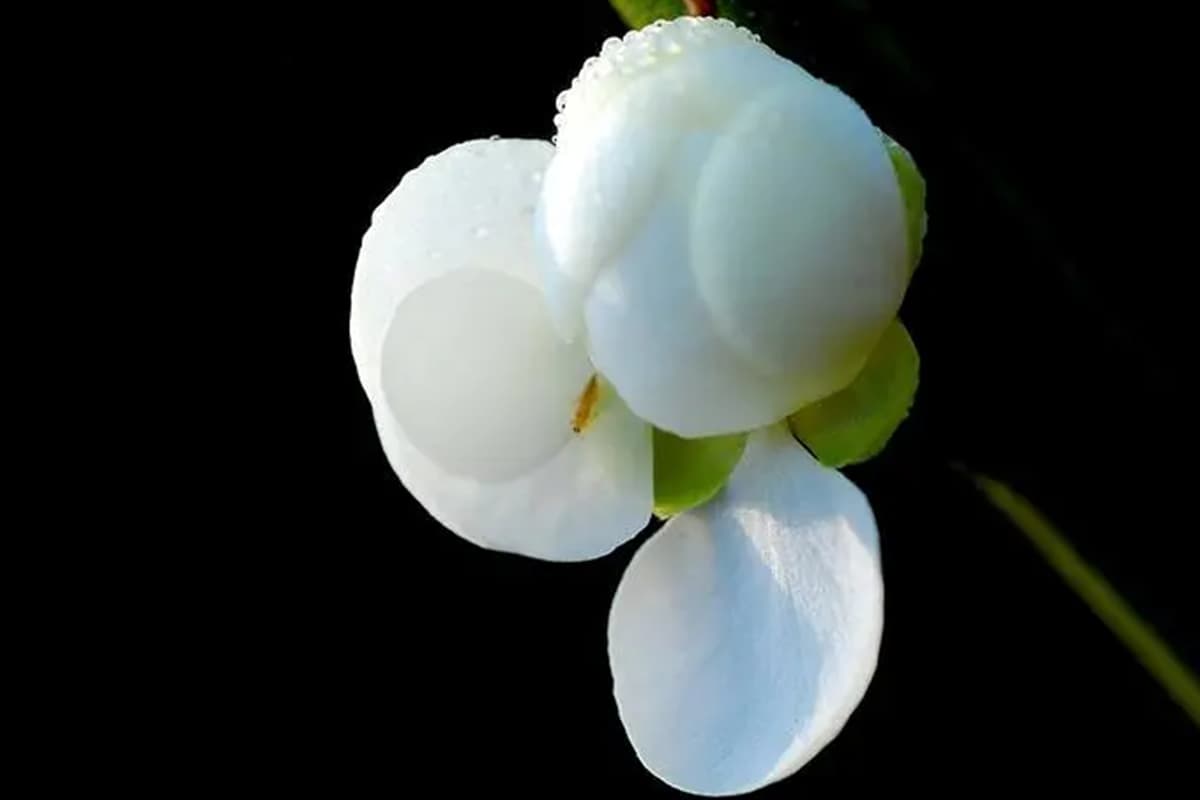
Cymbidium eburneum, commonly referred to as “独占春” in Chinese, primarily grows on the rocks beside valleys at elevations ranging from 1,000 to 2,000 meters.
This orchid is native to Hainan (Yazhou, Changjiang), southern Guangxi (Shiwandashan), and southwestern Yunnan (Tengchong) in China. It is also found in countries like Nepal, India, and Myanmar. The type specimen was collected from northeastern India.
Cymbidium eburneum prefers slightly strong light conditions and thrives in temperatures between 18-28°C.
Typically, these orchids grow on inclined slopes or rock crevices in deep mountains and secluded valleys, where there’s good water retention and drainage. They are often found beside sparse mountain grass or under secondary mixed forests.
They favor places with shade, short sunlight exposure, or only scattered light. It thrives in areas with high air humidity where the air circulates well, and sometimes they grow on cliffs next to mountain streams.
Orchids should be planted in an environment with good air circulation. They prefer shade and are sensitive to direct sunlight. They love moisture and dislike dryness. They grow best at temperatures ranging from 15°C to 30°C.
Growth is inhibited at temperatures above 35°C. Temperatures below 5°C can weaken their vitality, causing the plant to enter a dormant state.
Extreme sun exposure combined with high temperatures can cause the leaves to get scorched within a day or two. If temperatures are too low and the plant isn’t moved indoors promptly, it can suffer from frost damage.
Orchids have fleshy roots and thrive in sandy soil rich in humus. It’s essential for the soil to have good drainage. Leaf mold or mountain soil with a high humus content is ideal. Slightly acidic, loose soil, or soil rich in iron with a pH value between 5.5 and 6.5 is suitable.
The orchid greenhouse or shelter should face east-west, with the east being open and the west backed by a high wall or large trees. This allows the orchids to catch the morning sun and avoid the intense afternoon sun.
Choose an area with clean air and some humidity. Ensure ventilation, avoid direct sun exposure, and keep it smoke-free. If building on a rooftop or balcony, aside from shading above, hang curtains on the northwest to prevent sunburn from the late afternoon sun.
It’s best to have muddy ground or a pond below the greenhouse to maintain humidity. Cleanliness is essential to prevent disease and pests. When the outdoor temperature drops to around 0°C, move the orchids indoors to prevent frost damage.
The best time for repotting or changing pots is usually between March-April in the spring or October-November in the fall.
Choose pots that are deep with small mouths and large drainage holes. Newly collected wild orchids should be initially planted in clay pots, as they dry out faster and are more breathable. After 2-3 years, they can be transferred to purple clay or porcelain pots.
When repotting renowned orchid varieties, their roots must be cleaned: soak the roots in clean water and gently brush them with an old toothbrush.
Trim any damaged, yellow, or rotting roots, and then let the plant dry in a cool, ventilated place. Once the roots turn white and show tiny wrinkles, they’re ready to be potted.
During the orchid’s peak growth period, especially in summer, lack of water can hinder their growth. Orchids prefer to be mostly dry, adhering to the principle “water when dry, stop when wet.” Always water thoroughly.
The frequency of watering depends on the potting material used. For example, porous materials like volcanic rocks might need daily watering, while more absorbent ones like pond mud might require watering every 2-3 days.
Watering is best done in the early morning or evening. Use clean, slightly acidic water (pH 5.5-6.5). Root rot and leaf spots are often caused by improper watering.
Farmyard manure is an excellent organic fertilizer but must be composted for over a year before use. Dilute this fertilizer with water 10-20 times, applying it around the pot’s edge, avoiding contact with roots or leaves.
When using chemical fertilizers, maintain a balance of nitrogen, phosphorus, and potassium. For specific orchids, control chlorophyll synthesis by limiting nitrogen and avoid fertilizers containing manganese and magnesium, as they can accelerate chlorophyll synthesis.
For orchids grown for their large petals, you might consider increasing the amount of nitrogen.
This often occurs during the moldy rainy season. In the early stages, the base of the leaves is covered with white mycelium, leading to root rot. Preventative measures: Remove the infected potting soil and sprinkle with either chloronitrobenzene or lime. Fundamental treatment: Ensure good ventilation and light, and use well-draining potting soil. Severely infected plants should be destroyed.
This can occur throughout the year, but it is more rampant during the hot and rainy seasons, especially in Cymbidiums.
The disease starts as brown spots at the leaf tips and spreads to the roots. These spots gradually increase in number and size, turning into numerous dry black dots. In severe cases, the entire plant may die.
Preventative measures: Besides improving the environmental conditions, you can spray with a 50% methyloxycarbamate fungicide diluted 800-1500 times every 7-10 days. This can be supplemented with a 1% Bordeaux mixture spray once every two weeks, continuing for 3-5 times.
Commonly referred to as “orchid lice.” They reproduce rapidly in warm, humid conditions with poor air circulation. During their hatching period, a 1% parathion or a 50% malathion diluted 1500 times can be used. For a small number of pots, manual removal is also an option.
The orchid, with its white spring blooms reminiscent of lilacs, boasts vibrant colors and shapes. It is extremely popular and treasured for its ornamental value.
This particular orchid is one of the renowned ornamental national orchids and has been used as a parent in hybridizing large-flowered ornamental orchids. Its floral symbolism represents vitality, nobility, and harmony.
Monopolizing Spring is listed in the IUCN (International Union for Conservation of Nature) Red List with a conservation status of “Endangered (EN).”
Orchids are among the most ancient flowers in China. Renowned for their elegance, delicate beauty, and subtle fragrance, their beautiful leaves and distant floral scents have made them symbols of all things beautiful since ancient times, anthropomorphized extensively among the populace.
Orchids have had a profound influence on society and the arts. Parents name their children after orchids, painters depict them for their symbolic meaning, and poets use them as subjects for their verses.
Orchids have deeply touched people’s hearts, influencing them subtly over time.
Ancient operas featured “orchid steps” and “orchid gestures” as graceful movements, outstanding literary and calligraphic works were termed “orchid chapters,” sincere friendships were known as “orchid bonds,” and individuals of purity and wisdom were metaphorically described as having “orchid hearts and holly qualities.”
The death of outstanding individuals was poetically described as “orchids breaking, jade tearing apart.” In the eyes of the Chinese, orchids have become a symbol and representation of all that is beautiful.

Peggie was once a high school mathematics teacher, but she set aside her chalkboard and textbooks to follow her lifelong passion for flowers. After years of dedication and learning, she not only established a thriving flower shop but also founded this blog, “Flowers Library”. If you have any questions or wish to learn more about flowers, feel free to contact Peggie.
 English
  العربية
  Bahasa Indonesia
  Deutsch
  Français
  Italiano
  Nederlands
  Português
  Русский
  日本語
日本語