600+ Types of Flowers A To Z (With Names and Pictures)
Types Of Flowers By Names (A-Z) Types Of Flowers By Color Types Of Flowers By Season Types Of Flowers By Blooming Time 600+ Types of Flowers No. Flower Name No.…

Coelogyne prolifera, commonly known as the Yellow-Green Coelogyne, is an orchid species with the following characteristics:
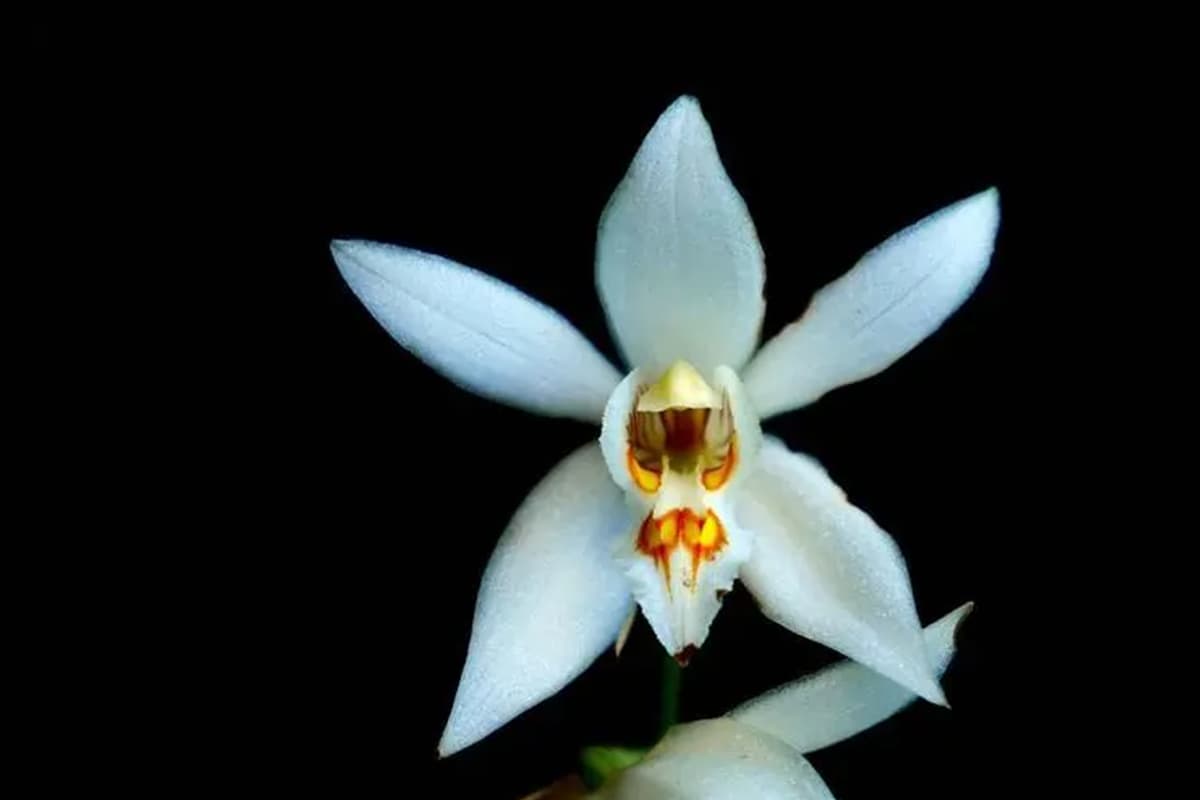
This orchid grows on trees or rocks in forests, at elevations between 1,200-2,000 meters. It is native to the western to southern parts of Yunnan, China.
Additionally, it can be found in Nepal, Sikkim, northeastern India, Myanmar, Laos, and Thailand. The type specimen was collected from northeastern India.
Orchids generally grow on the slopes and cliffs of secluded mountain valleys, in places with good water permeability and retention, beside sparse grass, under the shade of secondary mixed forests. They prefer locations with shade, minimal direct sunlight, and scattered light exposure.
They thrive in areas with high humidity and good air circulation, and sometimes grow on steep cliffs beside mountain streams. Orchids should be planted in well-ventilated areas. They prefer shade, are averse to direct sunlight, love moisture, and dislike dryness.
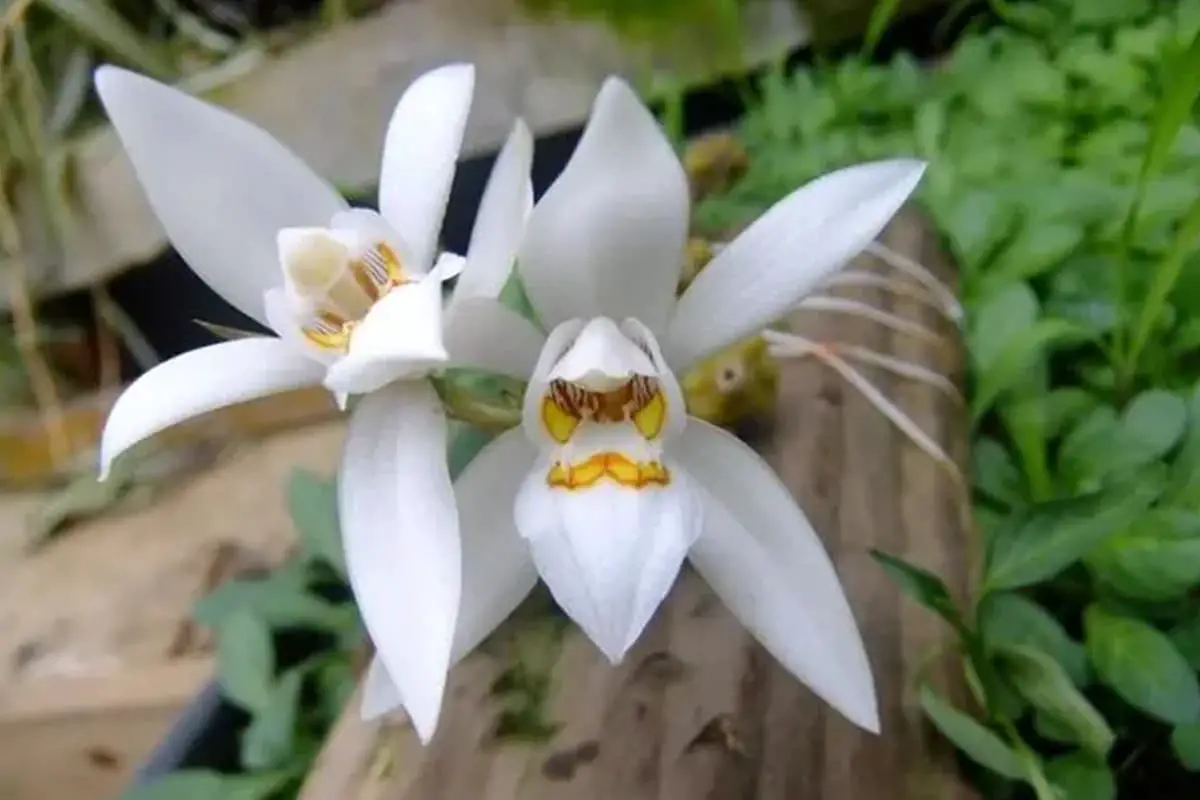
The ideal temperature for growth is between 15°C and 30°C. Growth deteriorates at temperatures above 35°C. Temperatures below 5°C can affect their vitality, often putting the orchids in a dormant state.
If exposed to very high temperatures and sunlight, the leaves can get scorched within a day or two. If not moved indoors during extreme cold, they might suffer from frostbite.
Orchids have fleshy roots and should be planted in sandy loam soil rich in humus, with excellent drainage. Leaf mold or soil rich in organic matter is ideal. Slightly acidic pine soil or iron-rich soil with a pH of 5.5-6.5 is suitable.
The Yellow-Green Coelogyne, due to its aesthetic appeal, is cultivated and holds significant horticultural value.
Propagation can be done during both spring and autumn, typically every three years. Plants with healthy growth and dense pseudobulbs can be divided. When dividing, at least five connected pseudobulbs should be retained in each cluster.
Before dividing, it’s recommended to reduce watering to make the soil drier. After dividing and potting, first cover the bottom hole of the pot with broken tile pieces, followed by coarse stones, filling 1/5 to 1/4 of the pot’s depth.
Then, add coarse and fine soil, followed by sandy soil rich in humus. The planting depth should be just enough to bury the pseudobulbs. Leave about 2 cm from the pot’s edge and top it with green moss or fine stones.
Water thoroughly and place in a shady spot for 10-15 days. Keep the soil moist, gradually reduce watering, and continue with normal care.

Peggie was once a high school mathematics teacher, but she set aside her chalkboard and textbooks to follow her lifelong passion for flowers. After years of dedication and learning, she not only established a thriving flower shop but also founded this blog, “Flowers Library”. If you have any questions or wish to learn more about flowers, feel free to contact Peggie.
 English
  العربية
  Bahasa Indonesia
  Deutsch
  Français
  Italiano
  Nederlands
  Português
  Русский
  日本語
日本語