600+ Types of Flowers A To Z (With Names and Pictures)
Types Of Flowers By Names (A-Z) Types Of Flowers By Color Types Of Flowers By Season Types Of Flowers By Blooming Time 600+ Types of Flowers No. Flower Name No.…

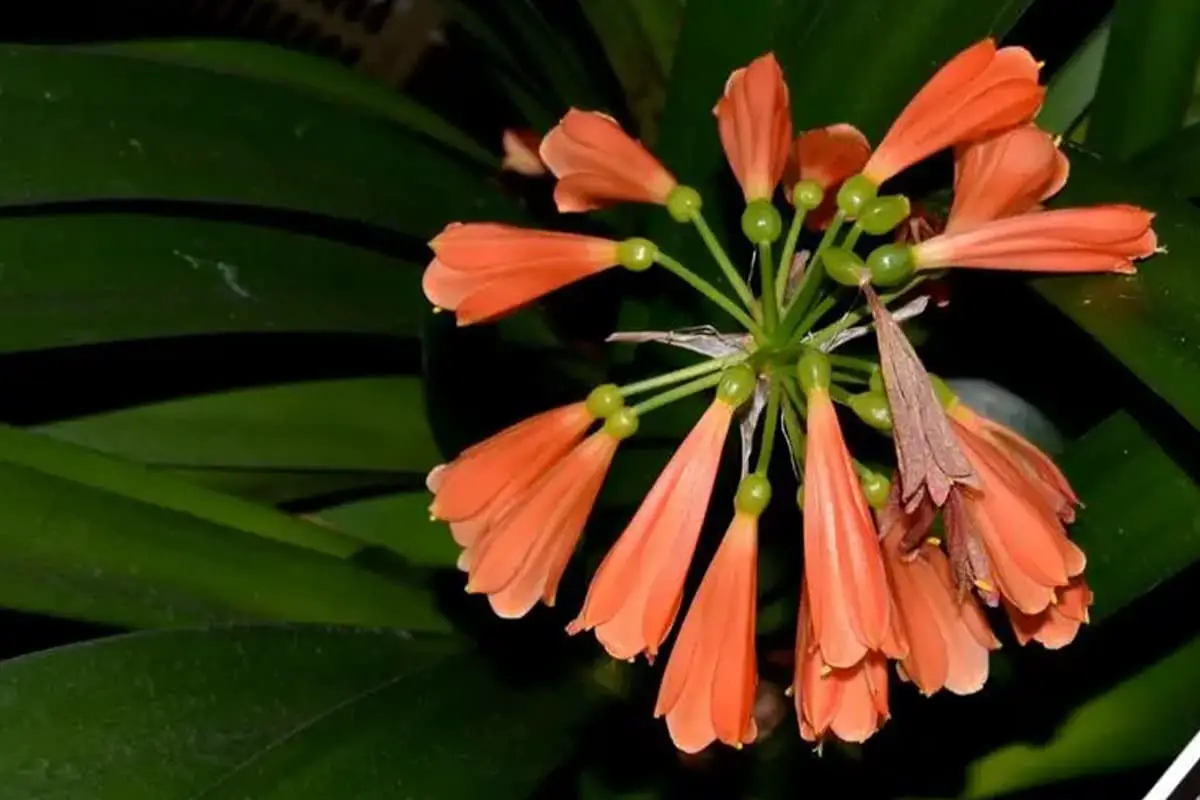
The Clivia nobilis, commonly known as the Natal lily or bush lily, is a species in the Amaryllidaceae family native to southern Africa. This elegant perennial herb stands approximately 38-60 centimeters tall, featuring drooping flowers in shades of orange-yellow to orange-red, often with a subtle green tinge at the base.
The plant’s long, strap-like leaves form a striking rosette, with the flower stalk emerging slightly shorter than the foliage. Its overall appearance is characterized by vibrant green coloration and a stately, refined demeanor.
Clivia nobilis possesses a robust root system comprising thick, fleshy, greyish-white roots. The stem base is distinctly bulbous, formed by the persistent leaf bases, which contribute to the plant’s drought tolerance.
The foliage consists of 8-16 basal leaves that are thick, deep green, and glossy. These band-shaped leaves typically measure 25-60 centimeters in length and 3-5 centimeters in width, with slightly rough margins. The leaves are evergreen, providing year-round interest.
The inflorescence emerges from the center of the leaf cluster on a sturdy scape that is usually shorter than the leaves. Each umbellate inflorescence bears 10-30 tubular flowers, each composed of six tepals (often referred to as petals), six stamens, and one pistil.
The flowers exhibit a range of warm hues, from orange-yellow to orange-red and occasionally deep red. When in full bloom, the flowers form a slightly pendulous cluster. The perianth is narrowly funnel-shaped, with the inner tepals generally lighter in color than the outer ones, creating a subtle two-tone effect.
The stamens are nearly as long as the perianth, while the pistil slightly protrudes beyond the flower’s mouth. This arrangement facilitates cross-pollination by birds, particularly sunbirds in their native habitat.
Clivia nobilis has an extended flowering period, typically blooming from late autumn (December) through to late spring (May), with each flowering cycle lasting 30-50 days. This prolonged display makes it a valuable ornamental plant.
Following successful pollination, the plant produces berries that are initially green, gradually ripening over 8-9 months. These berries eventually turn red and contain 1-3 large, fleshy seeds.
Clivia nobilis is endemic to the eastern coastal regions of South Africa, particularly in the Eastern Cape and KwaZulu-Natal provinces. It naturally occurs in the understory of coastal forests and rocky outcrops. Due to its ornamental value, it is now cultivated worldwide, including in China, where it is prized for its beauty and ease of care.

This species is well-adapted to the dappled light conditions of its native forest habitat. In cultivation, it prefers bright, indirect light or partial shade. During winter, it benefits from increased light exposure, while in summer, some protection from intense midday sun is advisable to prevent leaf scorching.
Clivia nobilis thrives in temperatures between 10°C and 25°C. Growth slows significantly when temperatures drop below 5°C, and the plant may suffer damage if exposed to frost. Conversely, temperatures consistently above 30°C can lead to stress, resulting in shorter flowering periods and paler bloom colors.
The plant performs best in a humid environment, ideally with relative air humidity between 70%-80%. However, it is relatively tolerant of lower humidity levels when provided with adequate soil moisture.
Regarding soil preferences, Clivia nobilis requires a well-draining, organic-rich medium. A mixture of peat, loam, and sand in equal parts, supplemented with leaf mold or well-rotted compost, provides an ideal growing medium. The soil should be kept consistently moist but never waterlogged, as excessive moisture can lead to root rot. Aim for a soil moisture content of 20%-30%.
Clivia nobilis is relatively slow-growing and can thrive in the same container for several years before requiring repotting. It responds well to annual feeding with a balanced, slow-release fertilizer applied in spring.
This species is known for its longevity and ability to form impressive clumps over time, making it a rewarding choice for both indoor and outdoor cultivation in suitable climates.
Clivia miniata, commonly known as the Kaffir Lily or Natal Lily, can be propagated through division and seed. Division is the preferred method and is typically performed in spring after flowering. Carefully remove offsets from the parent plant, ensuring each division has some roots attached.
If the offset lacks substantial roots, it can be temporarily planted in sand to encourage root development before potting in regular soil. Seed propagation is less common but can be done in winter indoors. Maintain a temperature above 20°C (68°F) to prevent seed rot. Germination usually occurs within 20-25 days, but it takes 4-5 years for seedlings to reach flowering maturity.
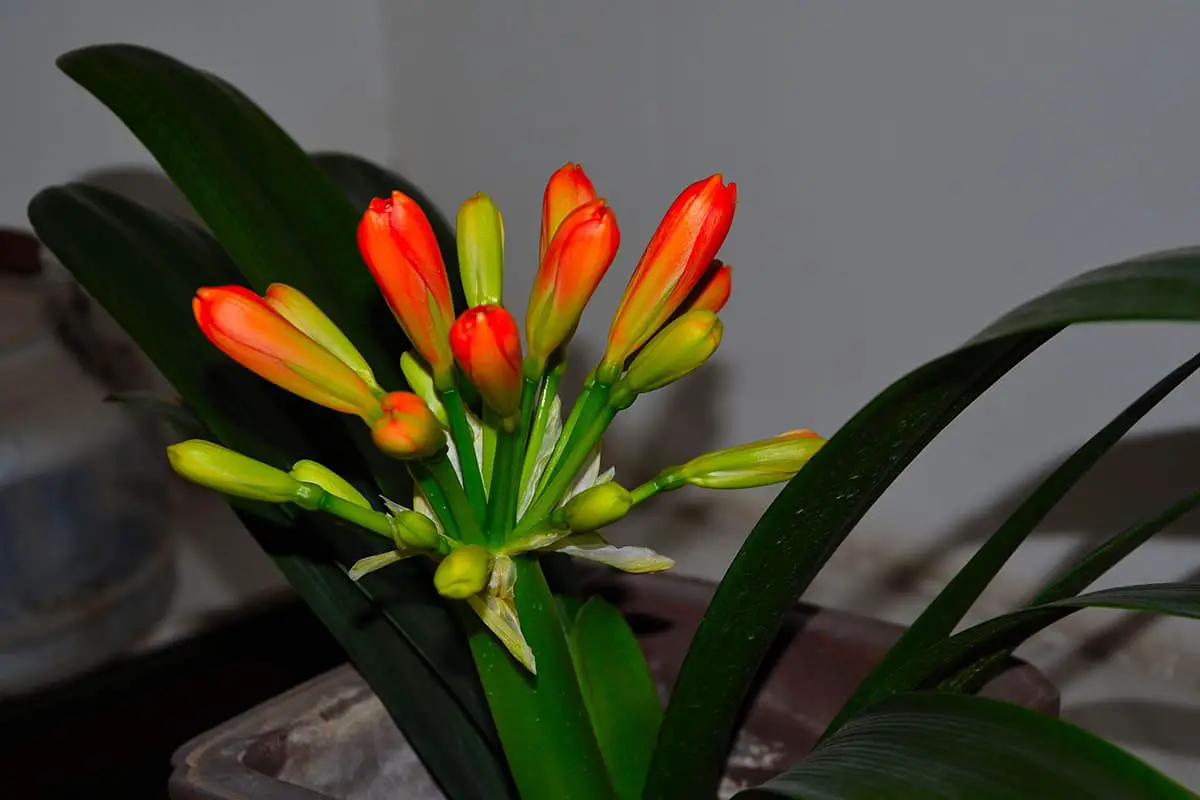
Clivia miniata thrives in humus-rich, fertile soil with excellent drainage and aeration. The ideal pH is slightly acidic, around 6.5. A good potting mix can be created by combining high-quality potting soil with about 20% coarse sand or perlite to improve drainage and promote healthy root growth.
As the plant grows, gradually increase pot size. For year-old seedlings, a 3-inch (7.5 cm) pot is suitable. In the second year, upgrade to a 5-inch (12.5 cm) pot. Thereafter, repot every 1-2 years into a slightly larger container. Repotting is best done in spring or autumn when the plant is not actively flowering.
The optimal planting time for Clivia miniata is early spring, typically from February to May. When planting divided offsets, use a pot with nutrient-rich, well-draining soil. Generally, a single mature plant requires a pot about 25 cm (10 inches) in diameter.
For offsets without well-developed bulbs, it’s best to first establish them in sandy soil to encourage root development before transferring to a regular potting mix. This two-step process promotes stronger root systems compared to direct planting in regular soil.
When sowing seeds, soak them in warm water (around 40°C or 104°F) for about 24 hours before planting. Plant seeds 0.5-1 cm (0.2-0.4 inches) deep, with the seed hole facing down and the rounded back facing up.
After watering, cover the container with plastic wrap or glass to increase humidity and soil temperature, which aids germination. At around 20°C (68°F), seeds typically germinate in about 60 days, though it can take 3-5 years for these seedlings to reach flowering maturity.
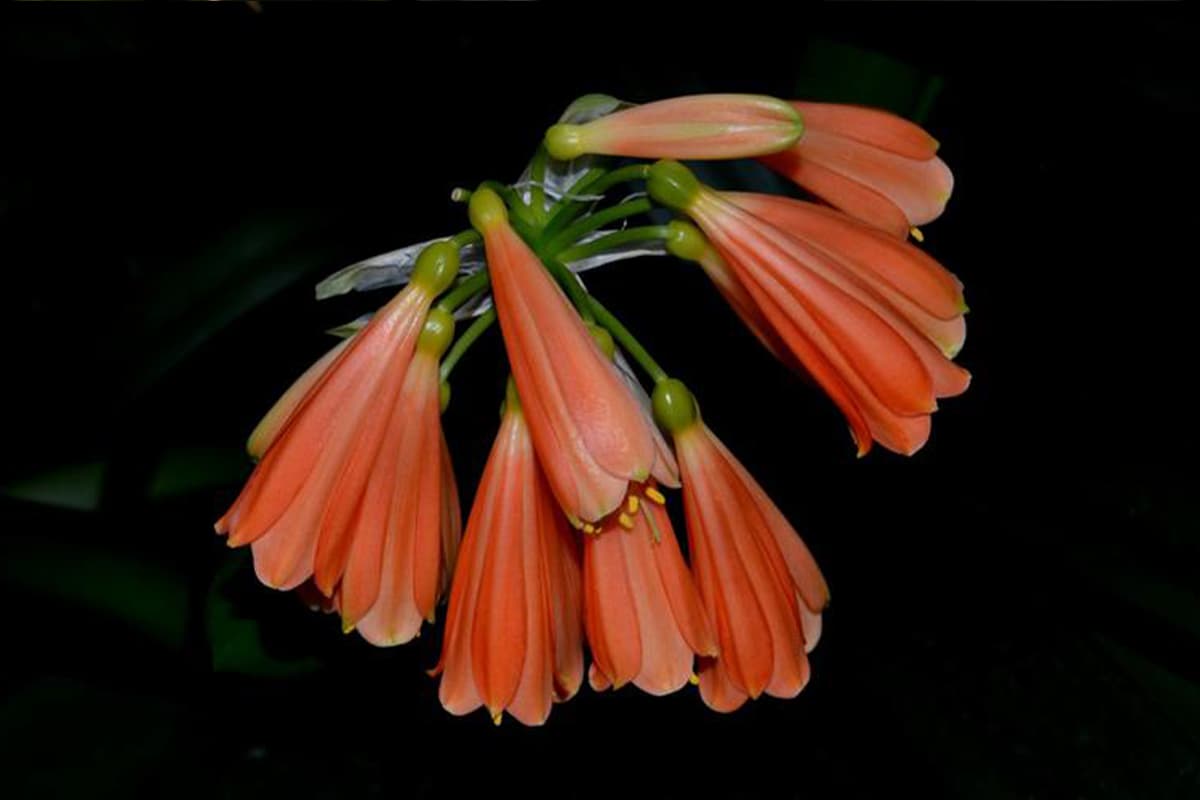
Clivia miniata benefits from regular fertilization, but over-fertilizing can lead to root rot. Use a balanced approach with both base fertilizer and supplemental feeding. Apply a slow-release base fertilizer when repotting. During the active growing seasons of spring and autumn, supplement with monthly applications of well-rotted organic matter and weekly doses of liquid fertilizer.
When applying solid fertilizer, gently work it into the top layer of soil, about 2 cm (0.8 inches) deep, taking care to avoid direct contact with roots. For liquid fertilizers, dilute to a ratio of 1:40 (fertilizer to water) for seedlings and 1:20 for mature plants. Apply fertilizer in the early morning and water thoroughly afterward to help distribute nutrients and prevent root burn.
Adjust fertilizer types seasonally. In winter and spring, focus on phosphorus and potassium-rich fertilizers like bone meal to promote flower development. In autumn, use nitrogen-rich fertilizers such as diluted soybean meal tea to encourage leaf growth. During summer, foliar feeding with a 0.1% solution of potassium dihydrogen phosphate or superphosphate can be beneficial. Foliar feeding can be done year-round but is especially useful during active growth periods.
Clivia miniata prefers bright, indirect light. Avoid exposing the plant to direct sunlight, which can scorch leaves and inhibit flowering. Aim for about four hours of filtered sunlight daily. In their natural habitat, these plants grow under the canopy of trees, so replicating this dappled light condition is ideal.
During summer, protect Clivia from intense heat and direct sun by moving it to a shaded area with good air circulation and high humidity. In winter, bring the plant indoors to a well-lit location. While Clivia can tolerate temperatures as low as 5°C (41°F) for short periods, maintaining a stable environment between 15-25°C (59-77°F) is optimal for year-round growth and health.
The ideal temperature range for Clivia miniata is 15-20°C (59-68°F). When temperatures exceed 25°C (77°F), plant growth may suffer, resulting in elongated leaves and poor flower bud formation. Ensure good ventilation and consider using shade cloth or moving the plant to a cooler location during hot periods.
Growth slows when temperatures drop below 10°C (50°F), and freezing temperatures can be fatal. To encourage flower bud differentiation, Clivia benefits from a period of cooler temperatures in late autumn or early winter, ideally around 10-15°C (50-59°F) for about 4-6 weeks.
A day-night temperature difference of 6-10°C (11-18°F) can be beneficial for Clivia’s growth and flowering cycle. This temperature fluctuation mimics their natural habitat and can help trigger blooming.
To maintain the plant’s attractive fan-shaped growth habit, rotate the pot 180 degrees weekly. This ensures even light exposure and promotes symmetrical leaf arrangement. When viewed from the front, a well-maintained Clivia should resemble an open fan, and from the side, a neat vertical line.
Proper watering is crucial for Clivia miniata. While they prefer consistently moist soil, overwatering must be avoided to prevent root rot. Allow the top inch of soil to dry out between waterings. During the active growing season (spring and summer), water more frequently, reducing frequency in autumn and winter.
In regions with heavy summer rainfall, protect potted Clivia from excessive rain to prevent waterlogging and associated root and leaf diseases. During hot, dry periods, increase humidity by misting the leaves or placing the pot on a tray filled with pebbles and water, ensuring the pot bottom doesn’t sit in water.
In winter, water sparingly, keeping the soil just barely moist. This slight water stress, combined with cooler temperatures, helps stimulate flower bud formation. Resume regular watering as new growth appears in late winter or early spring.
Always use room temperature water and water at the base of the plant to avoid wetting the leaves and crown, which can lead to fungal issues. Ensure pots have adequate drainage holes to prevent water accumulation.
The Kaffir Lily (Clivia miniata) is susceptible to several diseases and pests, primarily including soft rot, anthracnose, leaf spot, white silk disease, and scale insects. Proper identification and timely management are crucial for maintaining plant health.
Leaf Spot Disease: This foliar pathogen manifests as light reddish-brown, elliptical lesions on leaves, with clear margins between healthy and infected tissue. Surrounding areas may turn yellow. Management strategies include:
Soft Rot (Root Rot): This bacterial disease affects the root system and can be devastating if left unchecked. Prevention and control measures include:
Scale Insects: These sap-sucking pests can weaken plants and secrete honeydew, leading to sooty mold growth. Control methods include:
Preventive Measures:
The Kaffir Lily (Clivia miniata) is a highly prized ornamental plant, valued for its aesthetic appeal and versatility in various settings. Its distinguishing features include:
The Kaffir Lily’s combination of attractive foliage, vibrant blooms, and adaptability to various environments makes it a valuable addition to both indoor and outdoor plant collections, enhancing the aesthetic appeal of homes, offices, and public spaces alike.

Peggie was once a high school mathematics teacher, but she set aside her chalkboard and textbooks to follow her lifelong passion for flowers. After years of dedication and learning, she not only established a thriving flower shop but also founded this blog, “Flowers Library”. If you have any questions or wish to learn more about flowers, feel free to contact Peggie.
 English
  العربية
  Bahasa Indonesia
  Deutsch
  Français
  Italiano
  Nederlands
  Português
  Русский
  日本語
日本語