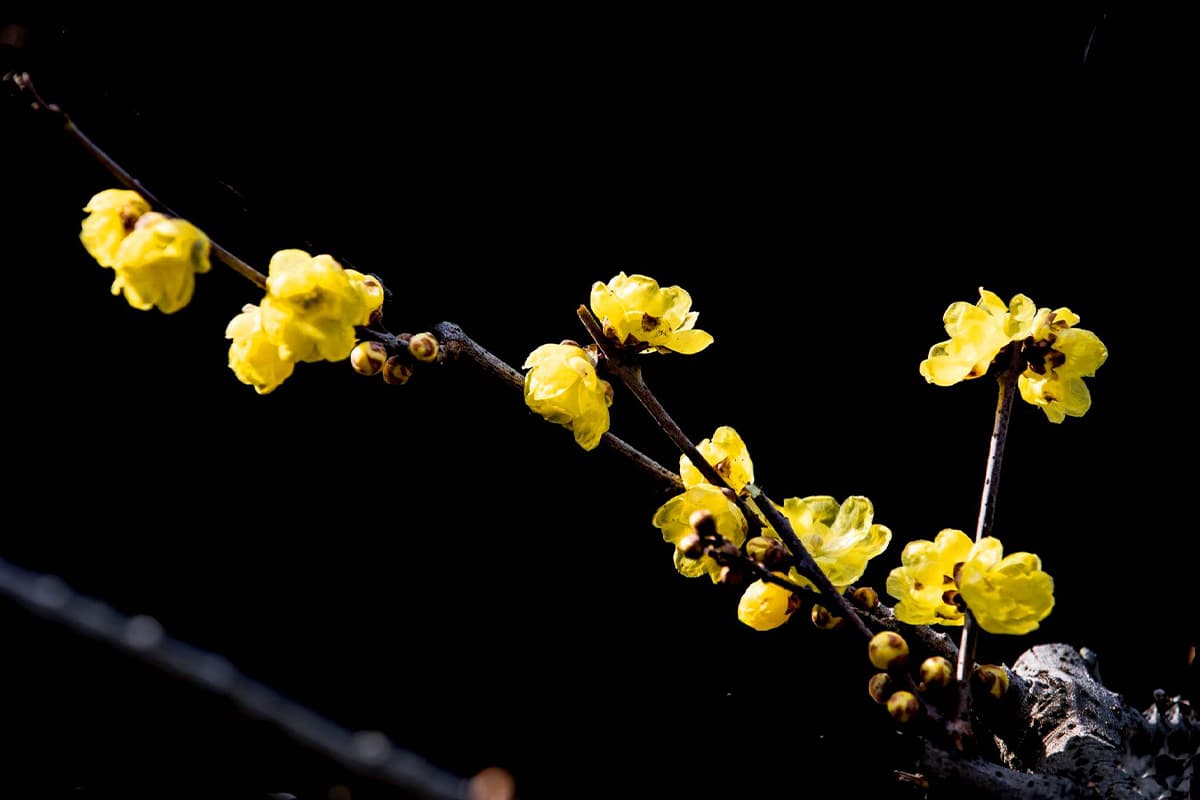
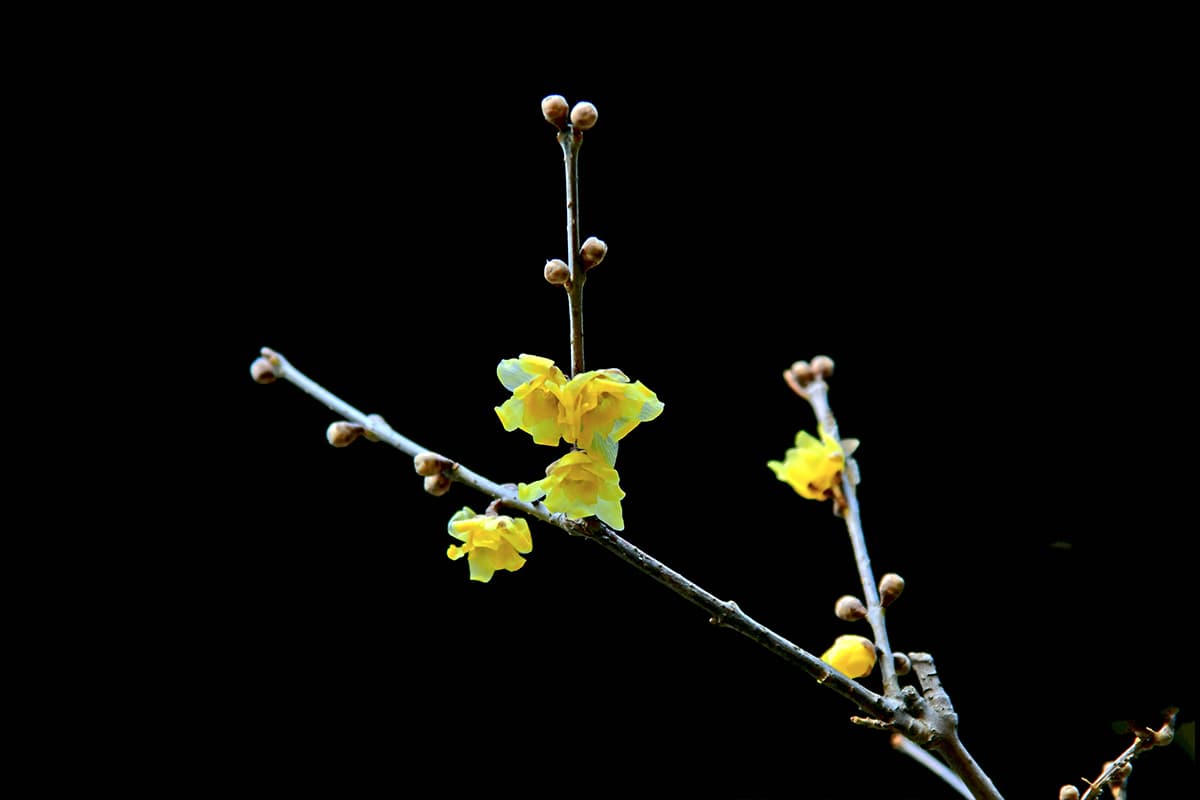
Chimonanthus praecox, commonly known as Wintersweet, is a remarkable flowering shrub that showcases its resilience by blooming in the depths of winter. This plant not only embodies the perseverance of Chinese culture in the face of adversity but also offers both spiritual and aesthetic value to those who cultivate it.
I. Physical Features
Chimonanthus praecox is a deciduous shrub that can reach heights of up to 4 meters. Its growth pattern is characterized by:
Young branches: Quadrangular in shape
Mature branches: Nearly cylindrical, grey-brown in color, with sparse or no hair, featuring lenticels
Leaves: Varying from papery to semi-leathery in texture, oval to elliptical or wide-elliptical to ovate-elliptical in shape, occasionally oblong-lanceolate, measuring 5-25 cm in length and 2-8 cm in width
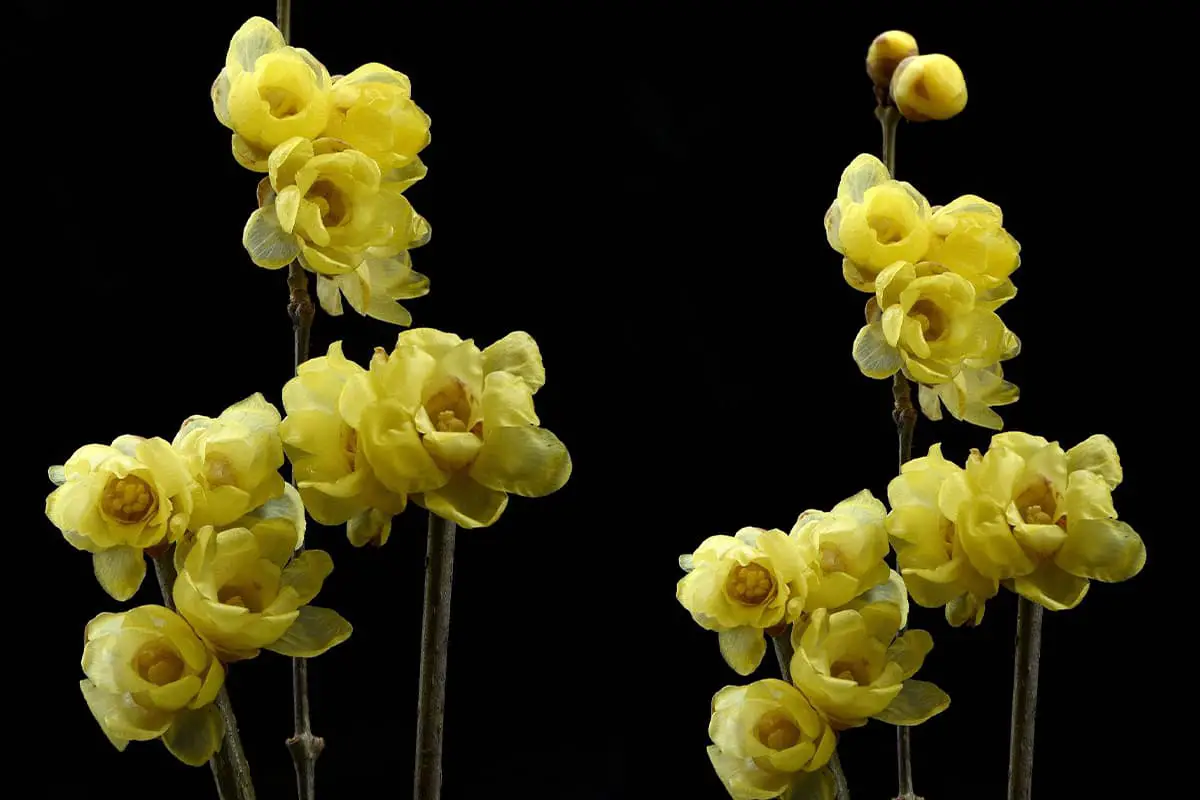
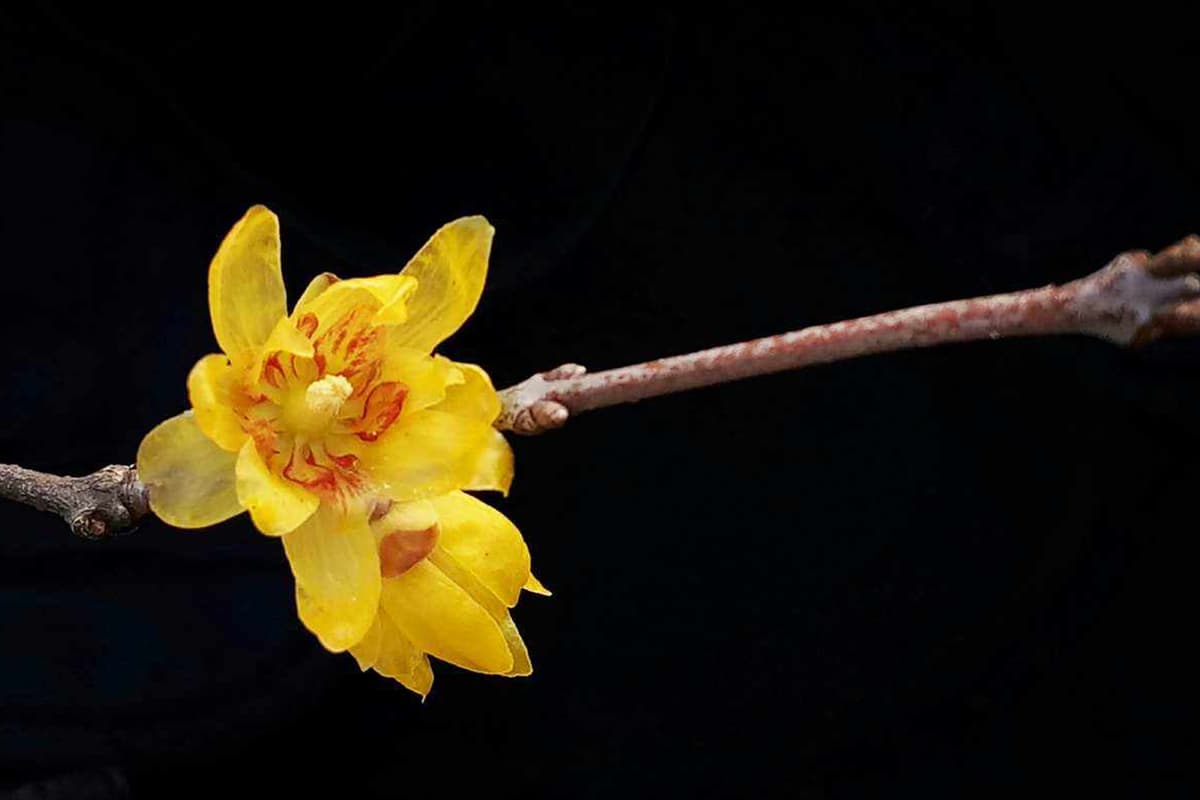
Flowers: Highly fragrant, 2-4 cm in diameter, blooming on leaf axils of second-year branches before leaf emergence
Petals: Diverse in shape, glabrous, with inner petals shorter than outer ones and featuring a claw at the base
Stamens: 4 mm long with inward-curling, hairless anthers
Pistils: Three times the length of the ovary, hairy at the base
Fruit: Woody, urn-shaped or inverted ovate-elliptical, 2-5 cm long and 1-2.5 cm in diameter, with a constricted mouth and diamond-lanceolate hairy attachment
The flowering period extends from November to March, with fruiting occurring from April to November.
II. Growing Environment
Chimonanthus praecox thrives in specific environmental conditions:
Light: Prefers full sun but tolerates partial shade
Temperature: Cold-hardy, can withstand temperatures down to -15°C, though flowers may suffer damage below -10°C
Water: Drought-tolerant but intolerant of waterlogging
Wind: Sensitive to strong winds
Pruning: Tolerates and responds well to shaping
The plant’s vigorous growth and prolific branching, combined with its ability to bloom in harsh winter conditions, make it an excellent choice for winter gardens in temperate climates.
III. Distribution Range
While native to China, Chimonanthus praecox has been successfully cultivated in various parts of the world, including:
East Asia: Japan and Korea
Europe
North America
Its adaptability to different climates has contributed to its widespread popularity in horticulture.
IV.Primary Value
Garden Use
Chimonanthus praecox is highly valued in landscape design for its unique winter-blooming characteristic. Its versatility allows for various applications:
Wintersweet forests: Large-scale plantings create immersive environments for relaxation and exercise.
Focal point landscaping: Used as a centerpiece in entrance areas or central flower beds, often complemented by evergreens like Nandina.
Mixed plantings: Combined with diverse species such as Japanese maple, boxwood, roses, peonies, or Forsythia to create multi-layered, long-blooming garden designs.
Window-framing: Particularly popular in Jiangnan garden architecture, creating picturesque views when planted near windows.
Rockery integration: Effectively incorporated into rock garden designs for added winter interest.
Flowers: Rich in aromatic compounds including linalool, camphor, eucalyptol, pinene, and sesquiterpene alcohols. Used to treat heatstroke, thirst, whooping cough, liver and stomach pain, and burns.
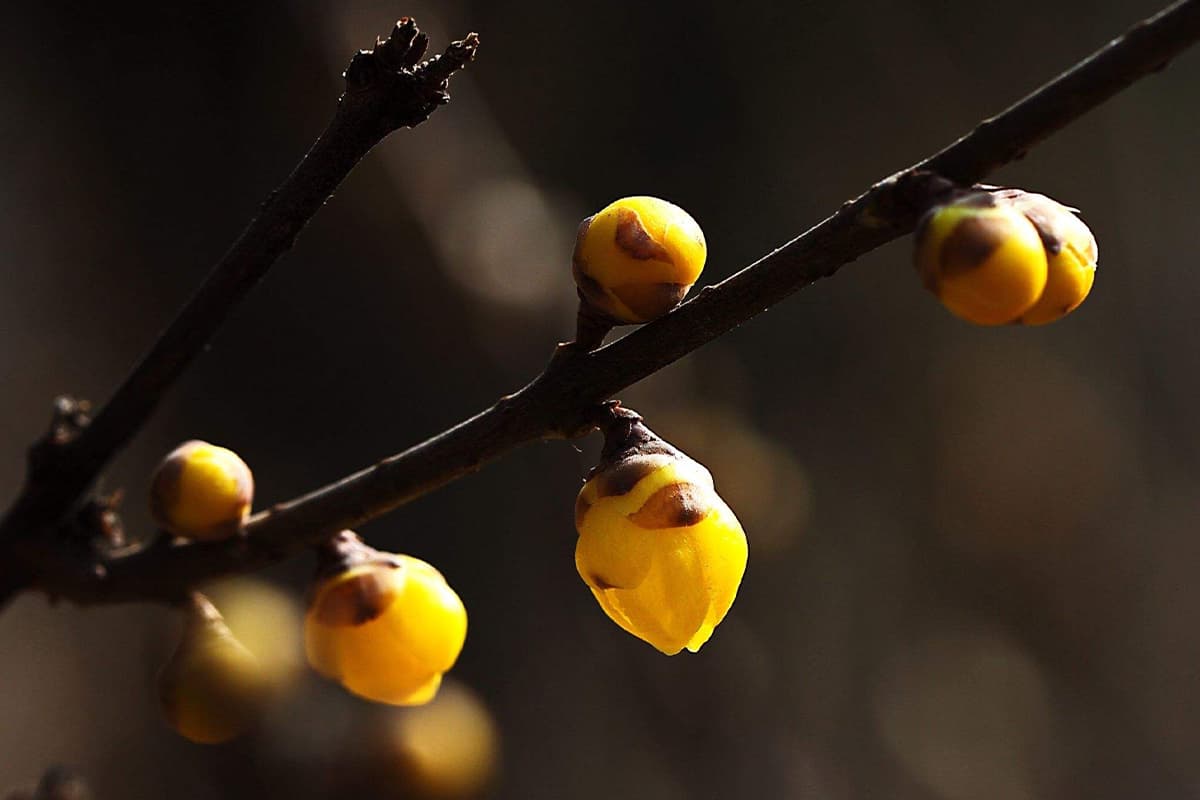
Flower buds: Employed for various ailments including heatstroke, dizziness, vomiting, qi depression, stomach discomfort, measles, and whooping cough. Externally applied for burns and ear infections.
Roots: Utilized for treating wind-cold common colds, lumbar muscle strain, and rheumatic arthritis.
Root bark: Applied externally for knife injuries and to stop bleeding.
The plant’s aromatic compounds are highly valued in the fragrance industry, with extracts commanding premium prices in international markets.
V. Cultural Significance
Chimonanthus praecox holds a special place in Chinese culture:
Symbolism: Its winter-blooming nature symbolizes resilience and perseverance in adversity.
Artistic inspiration: Frequently featured in traditional Chinese art, poetry, and literature.
Horticultural artistry: Widely used in bonsai cultivation and floral arrangements, showcasing its aesthetic versatility.
The plant’s ability to thrive and bloom in harsh winter conditions has made it a metaphor for inner strength and the beauty that can emerge from challenging circumstances. This cultural significance, combined with its practical uses in landscaping and medicine, cements Chimonanthus praecox as a truly multifaceted and valuable species in both horticultural and cultural contexts.
Share
Facebook
Twitter
LinkedIn
Email
Share is Caring.
Peggie
Founder of FlowersLib
Peggie was once a high school mathematics teacher, but she set aside her chalkboard and textbooks to follow her lifelong passion for flowers. After years of dedication and learning, she not only established a thriving flower shop but also founded this blog, “Flowers Library”. If you have any questions or wish to learn more about flowers, feel free to contact Peggie.
Before you go
You May Also Like
We picked them just for you. Keep reading and learn more!
Types Of Flowers By Names (A-Z) Types Of Flowers By Color Types Of Flowers By Season Types Of Flowers By Blooming Time 600+ Types of Flowers No. Flower Name No.…

Lonicera maackii, commonly known as Amur honeysuckle, is a deciduous shrub that often grows in clusters. Its fragrant flowers provide an excellent nectar source for pollinators, while its fruit serves…
Liriodendron chinense, also known as the Chinese tulip tree, is a magnificent deciduous tree belonging to the Magnoliaceae family and the genus Liriodendron. This impressive species can reach heights of…
Viola variegata, commonly known as the Variegated Viola, is a perennial herb belonging to the Violaceae family and Viola genus. I. Physical Features: This diminutive plant typically grows between 3-12…
The Lily, also known as Lilium, is a perennial herbaceous bulbous plant belonging to the Liliaceae family. It is primarily distributed in the temperate regions of the Northern Hemisphere, with…
The Lilium tsingtauense, also known as the Qingdao Lily or Laoshan Lily, is a rare and beautiful species of lily. This perennial monocotyledonous herb is characterized by its striking orange-red…
Viola cornuta, commonly known as Horned Pansy or Horned Violet, is a perennial herbaceous plant belonging to the Violaceae family. Native to the Pyrenees mountains of Spain and France, this…
Callistemon viminalis, commonly known as Weeping Bottlebrush, is a distinctive evergreen tree belonging to the Myrtaceae family, native to Australia. Its lanceolate leaves range from grayish-green to dark green, and…
Lavandula lanata, commonly known as Woolly Lavender, is a distinctive and captivating lavender species native to the mountainous regions of southern Spain. This semi-hardy, aromatic plant is characterized by its…