600+ Types of Flowers A To Z (With Names and Pictures)
Types Of Flowers By Names (A-Z) Types Of Flowers By Color Types Of Flowers By Season Types Of Flowers By Blooming Time 600+ Types of Flowers No. Flower Name No.…

The Chaenomeles cathayensis, also known as Chinese Quince, is a deciduous shrub or small tree that grows between 2 to 6 meters tall. It can be found on slopes, at the edge of forests, along roads, and it can be cultivated or grow wild.
Its fruit is medicinal and can be used as a substitute for papaya, making it suitable for elevations of 900 to 2,500 meters. With over a hundred varieties, some are valued for their fruit while others are appreciated for their flowers.
There are over a hundred varieties of the Chinese Quince, some appreciated for their fruit, others for their flowers. The Japanese Quince is a variety of Chinese Quince that is primarily admired for its flowers.
It has many varieties, bearing many dense flowers on both old and new branches.
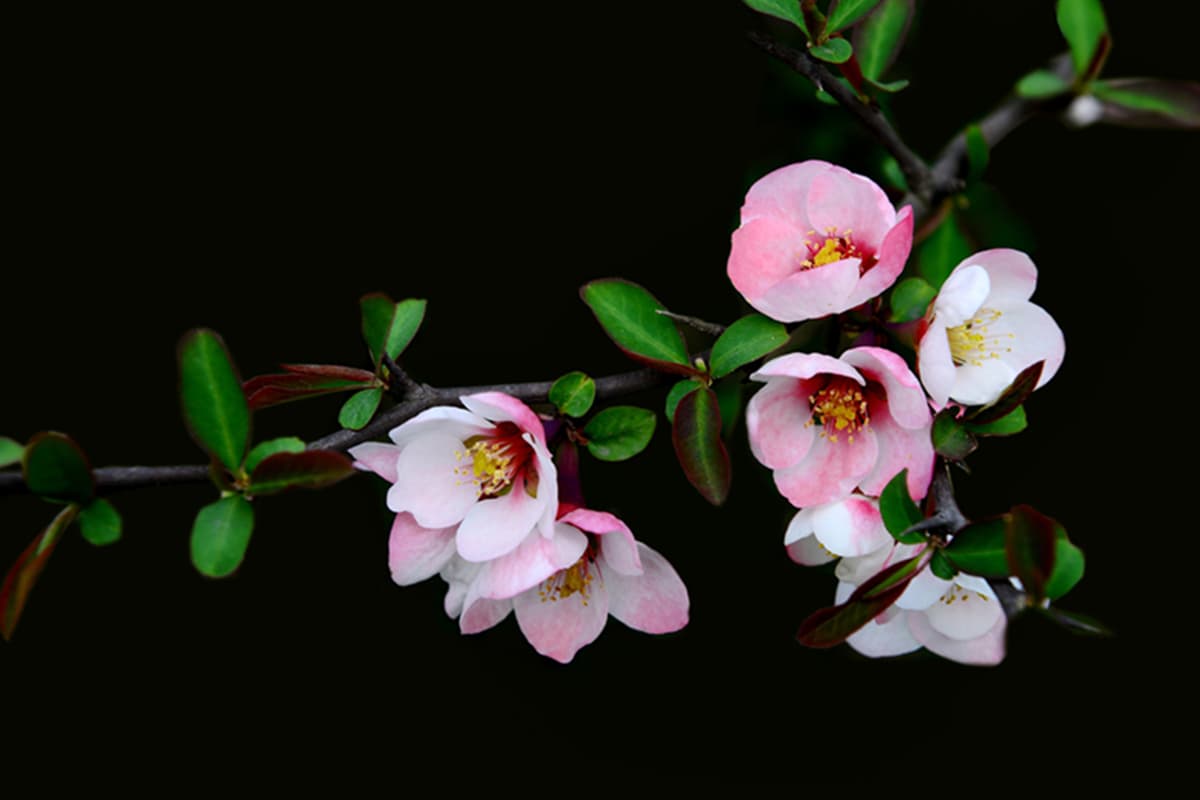
The flowers are large and often double, with colors that can range from orange-red, deep red, pure white, light green, and even combinations of large red, pink, light green, pure white, and white flowers with red stripes, petals, or edges on a single plant.
The flowering period is extended, lasting up to two months. Common varieties include ‘Oriental Splendor’, ‘Longevity Joy’, and ‘Longevity Crown’.
Chinese Quince grows on slopes, at the edge of forests, along roads, and can be cultivated or grow wild. It thrives at elevations of 900 to 2,500 meters.
The Chinese Quince is robust and prefers a warm, humid, and sun-drenched environment. It is cold-resistant, able to withstand temperatures as low as -20℃. It has good drought resistance but fears waterlogging.
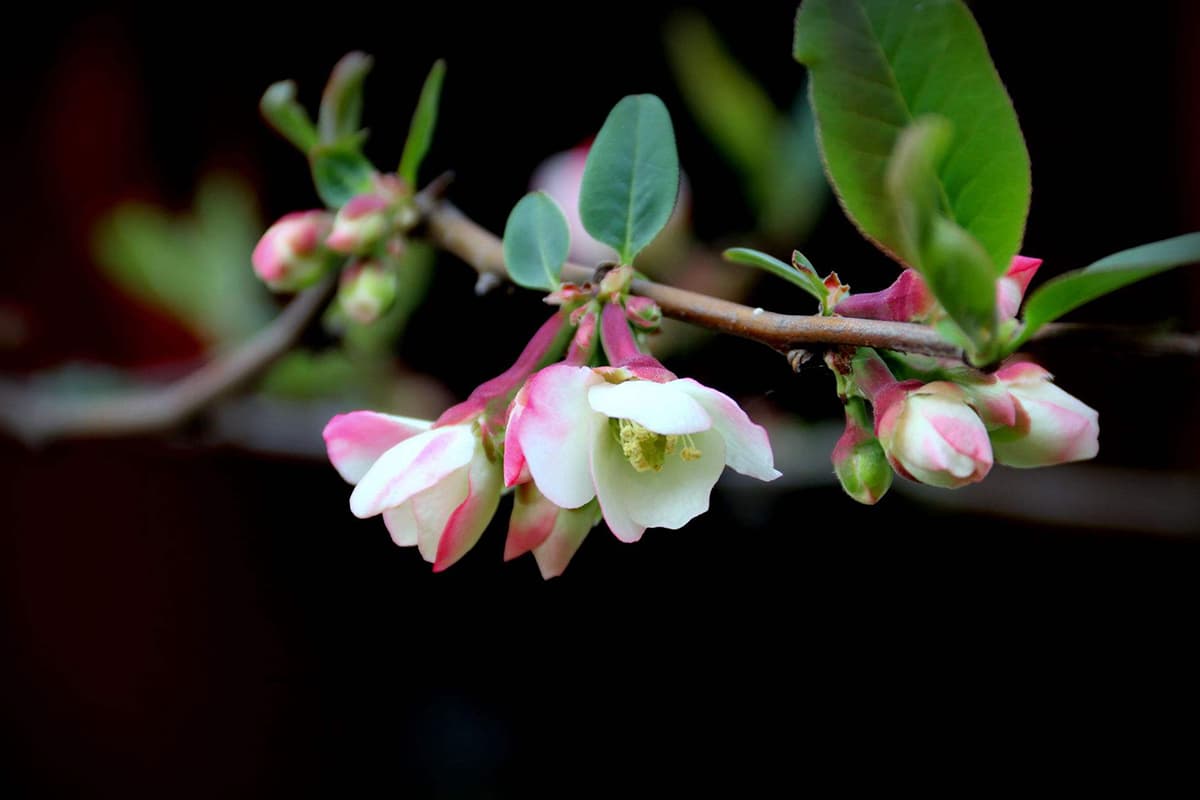
It is not demanding in terms of soil, but it grows better in fertile, loose, deep, and well-drained soil. It can be planted in sunny, arid places, but not in low-lying areas prone to waterlogging.
Excessive soil moisture can cause the plants to become weak, with thin branches and leaves, and significantly reduce their resilience. Long-term waterlogging of the soil can also cause root rot.
The wooden pear begonia is a deciduous shrub or small tree, standing 2-6 meters tall; its branches stand upright, with short thorns.
The twigs are cylindrical and slightly curved, hairless, purple-brown, with sparse light brown lenticels; the winter buds are triangular-ovate, pointed at the tips, hairless, and purple-brown in color.
The leaves are elliptical, lanceolate to ovate-lanceolate, 5-11 cm long, 2-4 cm wide, pointed or gradually pointed at the tips, wedge-shaped to wide wedge-shaped at the base, with awn-shaped finely serrated edges, sometimes doubly serrated in the upper half, and sparsely toothed in the lower half, sometimes nearly entire.
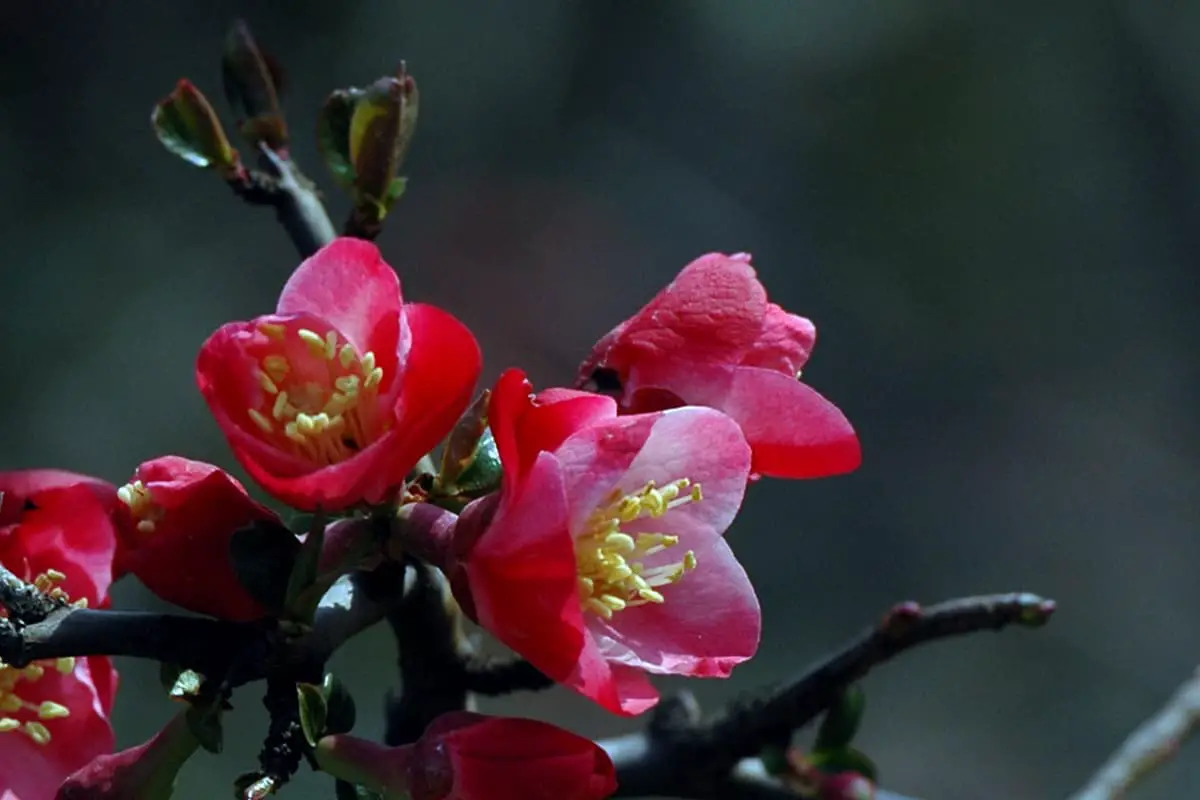
When young, the upper surface is hairless, the lower surface is densely covered with brown woolly hairs, which later fall off to become nearly hairless.
The petiole is about 1 cm long, with or without hair; the stipules are herbaceous, kidney-shaped, ear-shaped or semicircular, with awn-shaped finely serrated edges, and the underside is covered with brown woolly hairs.
The flowers bloom before the leaves, with 2-3 flowers clustered on the two-year-old branches, the flower stems are short and thick or nearly stemless; the flower diameter is 2-4 cm; the calyx tube is bell-shaped, hairless on the outside or slightly hairy.
The calyx lobes are erect, ovate to elliptical, 3-5 mm long, 3-4 mm wide, rounded or truncated at the tips, entire or slightly toothed and yellow-brown ciliate.
The petals are ovate or nearly round, 10-15 mm long, 8-15 mm wide, pale red or white; there are 45-50 stamens, half the length of the petals; there are 5 pistils, fused at the base, the lower half is hairy or woolly, and the stigma is capitate.
The fruit is ovoid or nearly cylindrical, with a protrusion at the tip, 8-12 cm long, 6-7 cm wide, yellow with a red blush, and fragrant. The flowering period is from March to May, and the fruiting period is from September to October.
Although the wooden pear begonia fears waterlogging, it likes a moist environment. If it lacks water for a long time, the leaves will shrink, fall off, or wilt at best, and at worst it will cause the plant to die.
Therefore, the ground-planted plants can be watered once in November to prevent freezing, again in early March to rejuvenate, and once more after flowering; during the summer drought, appropriate watering can be done, and each time it should be thoroughly watered.
Drainage should be paid attention to during the rainy season to avoid root rot caused by excessive water, and watering should be controlled after autumn to facilitate its dormancy.
Fully decomposed farmyard manure should be applied as base fertilizer. 1 to 2 times of compound fertilizer should be applied after flowering each year to replenish the nutrients consumed by flowering and promote the development of fruit.
July to August is the period of flower bud differentiation, and some phosphorus and potassium fertilizer can be applied to promote flower bud differentiation and make the flowering abundant in the following year.
In November, another application of cake fertilizer should be made to increase the vigor of the tree and improve the quality of flowering in the next year.
The wooden pear begonia tolerates pruning. Ground-planted plants can be pruned once a year after the leaves fall in autumn or before the buds sprout in spring.
The tree shape is mainly multi-branched shrub, but it can also be pruned into spherical, cylindrical, flower basket shapes or other shapes, and overlapping branches, cross branches, diseased branches, weak branches, and excessive branches should be pruned to increase the ventilation and light penetration in the crown.
The top of the old branch that has bloomed in the following year should be short-cut, leaving only the base of the branch, in order to concentrate nutrients and produce more flower branches.
The Chinese flowering crabapple is a commonly used species for bonsai, suitable for creating various styles such as upright, slanted, twin-trunk, curved, water-side, exposed-root, group planting, and multi-trunk.
For young trees, the forming mainly involves wiring, supplemented by pruning. The trunk should be twisted and attractive but not overly manipulated. The branches left should not be too dense and should be sparse for the best effect, which gives a fresh and elegant look.
Just a few branches can portray the unique charm of the crabapple, achieving an artistic effect that is “derived from nature, yet surpasses nature.”
Before blooming, moss can be spread on the surface of the pot, and accessories such as rocks, pavilions, and figures can be arranged, giving it a poetic and picturesque appeal.
For old trees that have grown for many years, they should be shaped according to their vigor to create different styles of bonsai.
The crown can either be trimmed into a neat circular shape or left in a natural, casual style, using both pruning and wiring methods to make the branches and leaves flourish.
Some people process the trunk of the crabapple into several bends, called the “wandering dragon style.” However, this kind of bonsai is overly manipulated, lacks a natural feel, and is monotonous in shape, so it should not be overly promoted.
Through artificial control, the bonsai or potted Chinese flowering crabapple can bloom before the Spring Festival. The method is to pot the plant after it sheds its leaves in autumn, and move it into a greenhouse about 45 days before flowering.
The room temperature should be controlled at 10°C to 15°C, and it should be sprayed with water every 2 to 3 days. If the temperature is 20°C, it should be sprayed twice a day. The water sprayed should not be too cold, otherwise the flower buds will stop growing.
The water temperature should be around 30°C. After the flower buds form, to make the flowers robust and the leaves green, the greenhouse temperature should be lowered to 5°C to 8°C for about a week.
Using a temperature of 10°C to 15°C to induce flowering, the flowers can bloom in 30 to 40 days; using a temperature of 20°C, the flowers can be seen in about 25 days; using a temperature of 25°C, the flowers can be seen in 15 to 20 days.
After the flowering treatment, the plants cannot be placed in places below 0°C, otherwise the swelling flower buds will freeze. Once the flower buds swell, they can be sold. They should not wait for the flowers to fully bloom before going on the market, to avoid petal loss during transportation.
The propagation of Chinese flowering crabapple can be done by sowing, dividing, cutting, layering, etc. For some excellent varieties, grafting can also be used for propagation.
This is often used for varieties like Chinese flowering crabapple that have a high fruit setting rate. After the fruit matures in late autumn, peel off the seed coat, remove the pulp, take out the seeds and store them in sand.
The seeds are sown in March of the following year. Before sowing, the seeds can be soaked in warm water to promote germination. The seedbed can be prepared with a mixture of 2 parts decomposed sawdust and 3 parts yellow sand.
After sowing, cover the soil with 2 cm of soil and a plastic film. Keep the soil moist, and seedlings will emerge in about 40 days. After all the seedlings have emerged, remove the plastic film. When the seedlings are 10 cm tall, apply a thin liquid fertilizer.
Do not separate the seedlings in the first year. Transplant them into the ground in February or March of the second year. When the seedlings are 30 cm tall, pinch the tops and set the trunk to promote the growth of new branches. The plants can bloom 2 to 3 years later.
This is often used for clump-forming plants. It is usually done in late autumn or early spring. The method is to dig up the clump-forming mother plant and divide it, each plant should have 2 to 3 branches.
You can also dig up the sucker next to the old plant and transplant it, which is also easy to survive. Plants divided in late autumn should be pseudo-planted to promote the healing of the wound, and then planted in the spring of the following year.
Those divided in early spring can be directly planted.
Cutting propagation can be divided into hardwood cutting and softwood cutting. Regardless of the type of branch used for cutting, in order to promote rooting, ABT rooting powder can be used to treat the cuttings.
The method is to prepare a solution according to the proportion specified in the instructions of ABT rooting powder, soak the base of the cuttings in the solution for 8 to 12 hours, and then proceed with the cutting.
In addition, root cutting can also be done. The cutting medium should preferably be well-drained sand or vermiculite.
For hardwood cuttings, robust and substantial woody branches grown within the year are cut in mid to late September. Alternatively, robust and substantial one-year-old branches can be cut in late March.
The cuttings should be between 0.5 and 1 cm in diameter and about 15 cm long. They should be inserted halfway into the soil. After insertion, water thoroughly and cover with a film for heat preservation.
Maintain soil moisture under the film and ventilate by removing the plastic film when the temperature gets too high. The cuttings should root in about 40 days.
Softwood cuttings are done from May to August. Cut robust and vigorously growing semi-woody branches from the young plants that are healthy and free from pests. To avoid moisture evaporation, cuttings can be taken in the early morning.
The cuttings should be 10 to 15 cm long, with the lower leaves removed and the upper leaves retained. The bottom cut should be close to the axillary bud. The cutting depth should be between half and a third of the cutting’s length.
After insertion, water thoroughly to ensure the medium is tightly coupled with the cuttings. Subsequently, increase air humidity and lower the temperature using a spray method.
A shading net should be used in the early stage of cutting to prevent the leaves from being scorched or wilted by direct sunlight. After rooting, increase light exposure appropriately to promote photosynthesis, nutrient production, and robust seedling growth.
The root cutting method involves combining dividing to obtain robust thick roots, laying them flat in the soil, covering with soil, and soon seedlings will sprout.
Layering is commonly used for creeping Begonia, usually done in spring. The method involves girdling a robust growing branch and pressing it into the soil. After 50 to 60 days, it will root. In the fall or the following spring, separate it from the parent plant and plant it separately.
Grafting uses common Begonia and Papaya Begonia seedlings or cutting seedlings as rootstocks (we use Papaya seedlings as rootstocks), and branches of high-quality Begonia varieties as scions.
Grafting is done in spring, and approach grafting is done in the growing season. The grafting method can be carried out according to the general grafting method of woody plants.
The main disease of the papaya crabapple is rust disease, which when severe, can cause the plant to die. When this happens, a spray should be applied, using a solution of 800-fold liquid of 50% bactericidal special wettable granules, every 10 days.
Continual application 3 to 4 times can control the disease. In addition, if the soil lacks iron or is too alkaline, it can cause the leaves to turn yellow. To improve the soil quality and prevent yellowing of leaves, water with ferrous sulfate can be applied.
The main pests of the papaya crabapple include aphids, red spiders, and yellow thorn moths. A spray of 800-fold liquid of 50% dimethoate or 1000 to 1500-fold liquid of 40% oxidized leuco can be used to prevent and control them.
As a type of traditional crabapple, the papaya crabapple has vibrant flowers and a good tree shape with few diseases and pests, making it an excellent choice for garden greening. It can be planted in clusters in corner walls of the garden, or along the edge of a forest.
In spring, one can appreciate its flowers, and in autumn, its fruits. With a unique branch shape, it is an excellent tree species for garden landscaping.
There are many varieties of papaya crabapple. In the spring, the branches are full of vibrant flowers, giving a feeling of a tapestry of blooms. Some varieties yield golden fruits in the autumn, hanging from the branches and emitting a rich fragrance.
It is a flower and fruit-bearing ornamental plant suitable for courtyards, roadside green belts, and lawns. It can be planted in groups, rows, individually, or as a hedge. It can also be grown in a pot for viewing or made into a bonsai.
The seed kernel has an oil content of 35.99% and an oil yield of 30%. It has no peculiar smell and can be eaten or made into soap. The fruit can be made into preserved fruit after steaming.
It can also be used as a medicine, with the effects of dispelling wind, regulating qi, relaxing muscles, and relieving pain. It can also relieve alcohol and phlegm, stew to stop diarrhea. The flower can be used as a material for sugar-made sauce, with a beautiful flavor.
The bark contains tannin and can be used to extract glue. The wood is hard and can be used to make furniture and other utensils.
In addition to viewing, the fruit of the papaya crabapple can be used as medicine, with effects of relaxing muscles and relieving pain. The crabapple with a stalk is sensitive to ozone in the air and can also be planted as an environmental monitoring plant.

Peggie was once a high school mathematics teacher, but she set aside her chalkboard and textbooks to follow her lifelong passion for flowers. After years of dedication and learning, she not only established a thriving flower shop but also founded this blog, “Flowers Library”. If you have any questions or wish to learn more about flowers, feel free to contact Peggie.
 English
 العربية
 Bahasa Indonesia
 Deutsch
 Français
 Italiano
 Nederlands
 Português
 Русский
 日本語